In the rapidly evolving landscape of digital marketing, selecting the right social media management (SMM) tool is paramount for organizations aiming to optimize their online presence. Among the myriad of solutions available, Buffer and Metricool consistently emerge as prominent contenders, frequently appearing on "best of" lists and catering to a broad spectrum of users. While both platforms are priced competitively and support a similar array of social media channels, a detailed examination reveals distinct philosophies and feature sets tailored to specific operational workflows and strategic objectives. This analysis delves into the core functionalities, pricing structures, and unique selling propositions of Buffer and Metricool, providing a factual basis for informed decision-making for various marketing entities, from solopreneurs to large agencies.
The Evolving Landscape of Social Media Management
The journey of social media management tools mirrors the growth and increasing complexity of social media platforms themselves. What began as simple scheduling utilities has transformed into sophisticated ecosystems offering deep analytics, community engagement, AI-powered content generation, and even ad management. The explosion of platforms, from established giants like Facebook and Instagram to newer entrants like Threads and Bluesky, coupled with an ever-present demand for data-driven insights, has necessitated specialized tools that can streamline diverse marketing efforts. In this context, Buffer and Metricool have carved out their niches, each responding to different facets of this demand. Buffer has historically focused on simplifying content publishing and fostering community interaction, appealing to creators and smaller teams prioritizing ease of use. Metricool, conversely, has cultivated a reputation for robust analytics, competitor tracking, and comprehensive reporting, aligning well with the needs of data-led marketers and agencies.
Key Differentiators and Market Positioning
At a glance, both platforms appear to address similar needs, yet their underlying design principles lead to significant functional divergence. Buffer is engineered for simplicity and flexibility in publishing workflows, coupled with an intuitive approach to managing audience comments. Its appeal lies in its clean interface and straightforward process, making it an ideal choice for content creators, solopreneurs, small businesses, and growing teams who value efficiency and ease of content deployment. The platform’s focus remains squarely on owned content creation, scheduling, and direct audience interaction.
Metricool, on the other hand, is built with a strong emphasis on data analysis and strategic insights. It serves marketers and agencies who require granular competitor tracking, detailed performance reporting, and the ability to present comprehensive data to clients or stakeholders. The platform integrates features like native ad management and in-depth analytical dashboards, positioning it as a more analytical and results-oriented tool for those whose strategies are heavily informed by competitive intelligence and performance metrics.
Pricing Models: A Strategic Comparison
The financial commitment associated with SMM tools is often a critical factor. Both Buffer and Metricool offer free plans and competitive paid tiers, but their pricing models differ fundamentally, impacting overall cost depending on usage patterns.
Buffer’s Flexible, Channel-Based Pricing:
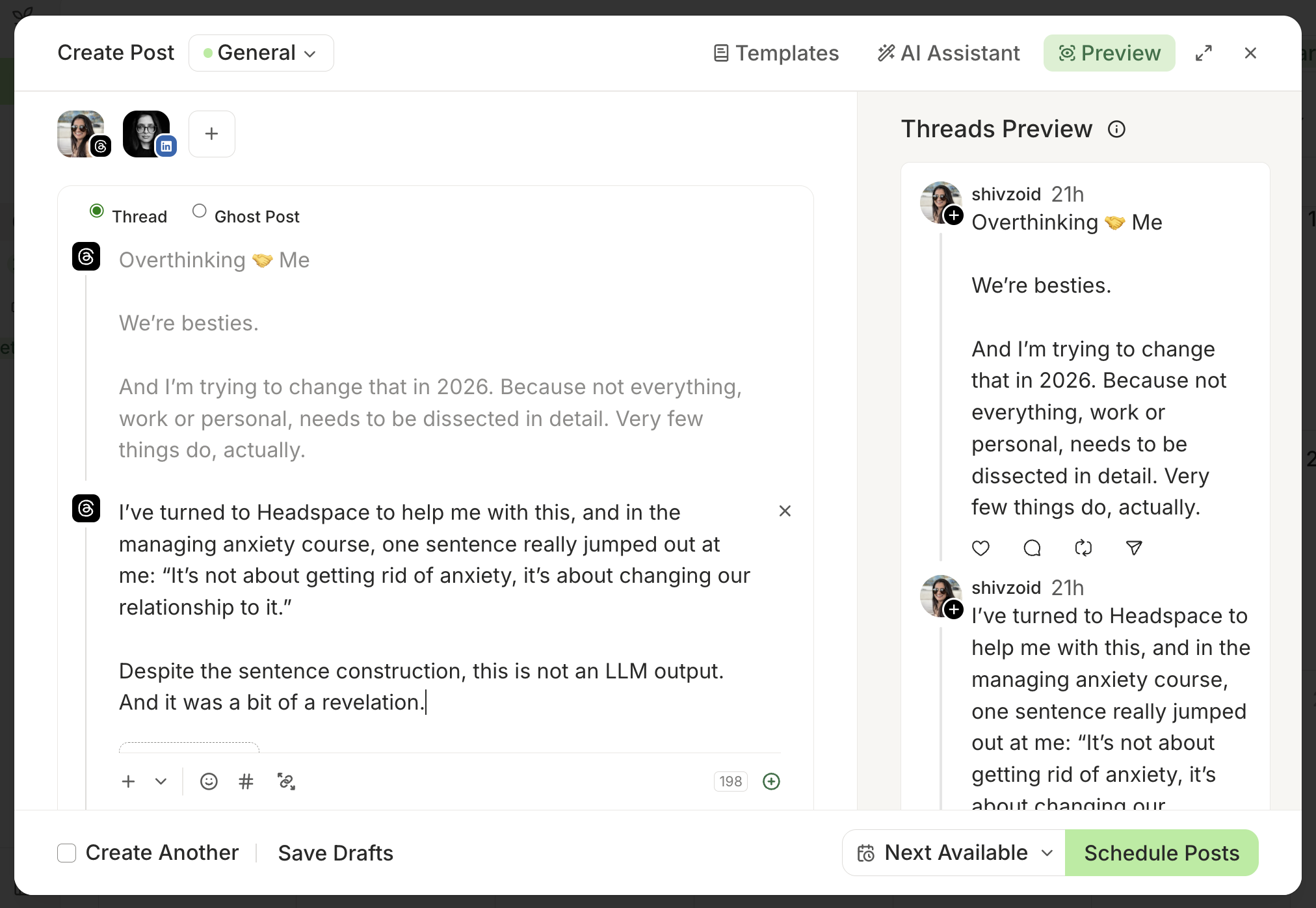
Buffer employs a "per channel" pricing model, allowing users to customize their plan by adding only the social media platforms they actively use. The "Essentials" plan starts at $6 per channel per month, with annual billing offering a 20% saving. For teams, the "Team" plan is priced at $12 per channel per month and includes unlimited users, a significant advantage for collaborative environments. This modular approach means costs scale directly with the number of channels managed, providing flexibility for users whose social media footprint may change over time. Its free plan is notably generous, offering 3 channels and 10 posts per channel (refillable), along with unlimited AI Assistant access and API integration. This robust free offering makes it genuinely usable for individuals or nascent businesses to test the waters without commitment.
Metricool’s Brand-Centric Structure:
Metricool’s pricing revolves around the concept of "brands," where one brand encompasses one account from each supported social platform. The "Starter" plan begins at $25 per month, with annual savings of approximately 20%. While this might initially seem straightforward, Metricool introduces add-on structures that can influence the final cost. For instance, connecting X/Twitter accounts incurs an additional $5 per month. Furthermore, LinkedIn posting requires a paid plan, and users can connect either a LinkedIn profile or a page per brand, but not both simultaneously. The free plan is more restrictive, limited to 20 published posts per month and excluding LinkedIn and X/Twitter. Advanced plans, starting at $67 per month, cater to larger teams and agencies, supporting up to 15 brands.
Practical Pricing Scenarios:
Consider a solo creator managing Instagram, TikTok, LinkedIn, and X/Twitter. With Buffer, this setup would cost $24 per month (4 channels x $6). Metricool’s Starter plan, combined with the X/Twitter add-on, would amount to $30 per month. For a small business with three team members managing eight channels (e.g., two Instagram, two Facebook, two LinkedIn, one TikTok, one X/Twitter), Buffer’s Team plan would be $96 per month (8 channels x $12), offering unlimited users. Metricool’s Advanced plan, at $67 per month plus add-ons, might seem cheaper initially, but its AI caps and specific brand configurations (especially if managing multiple accounts on the same platform, like two Instagram accounts for different business segments) could complicate the workflow and cost efficiency. This disparity highlights that Buffer’s per-channel model often proves more cost-effective and transparent for growing teams and solopreneurs, while Metricool’s brand-based approach suits agencies managing distinct client entities.
Scheduling and Publishing Workflows
Both platforms facilitate cross-platform content scheduling from a centralized dashboard, but their interfaces and underlying philosophies for content deployment diverge.
Buffer’s Streamlined Simplicity:
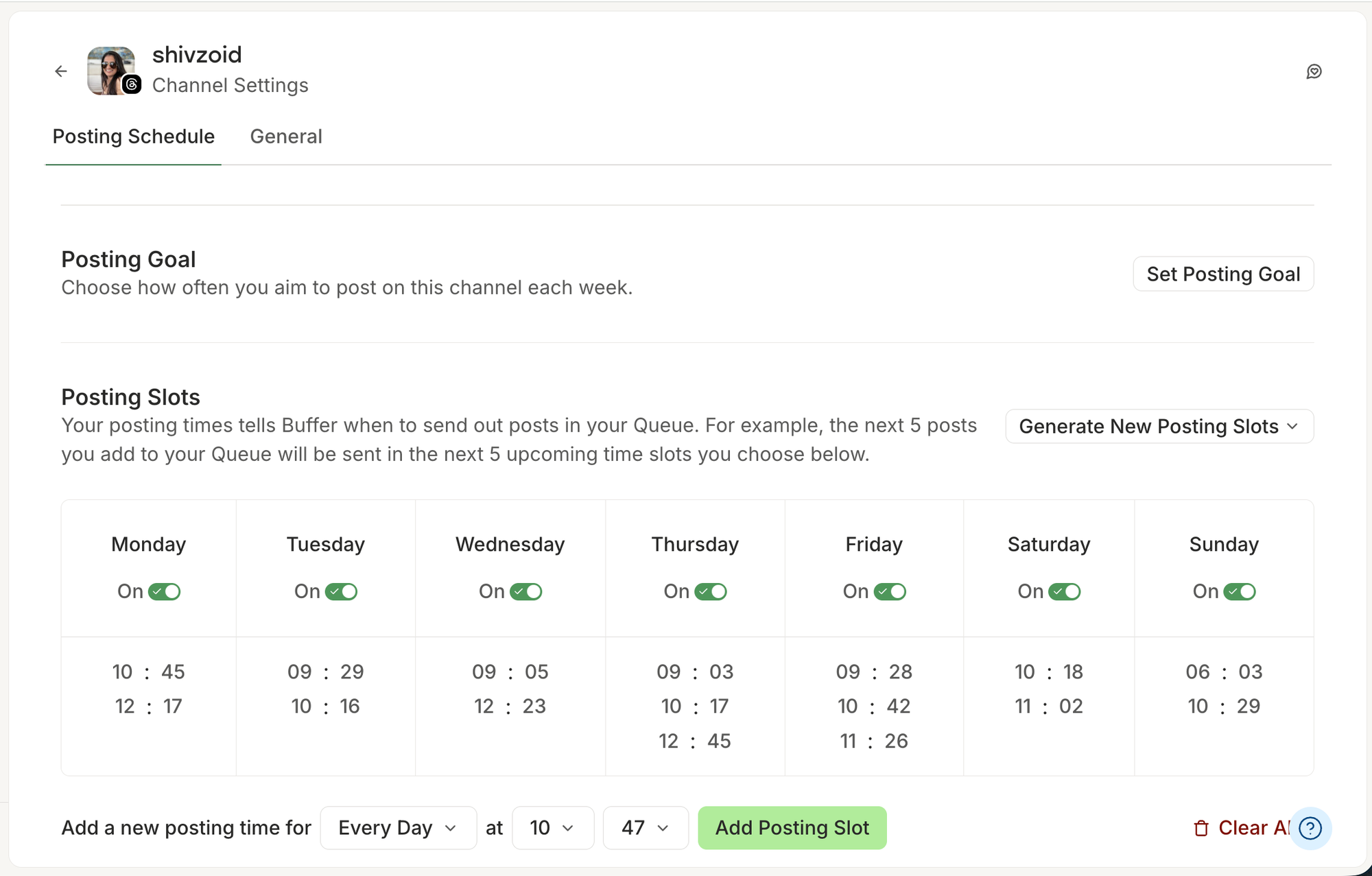
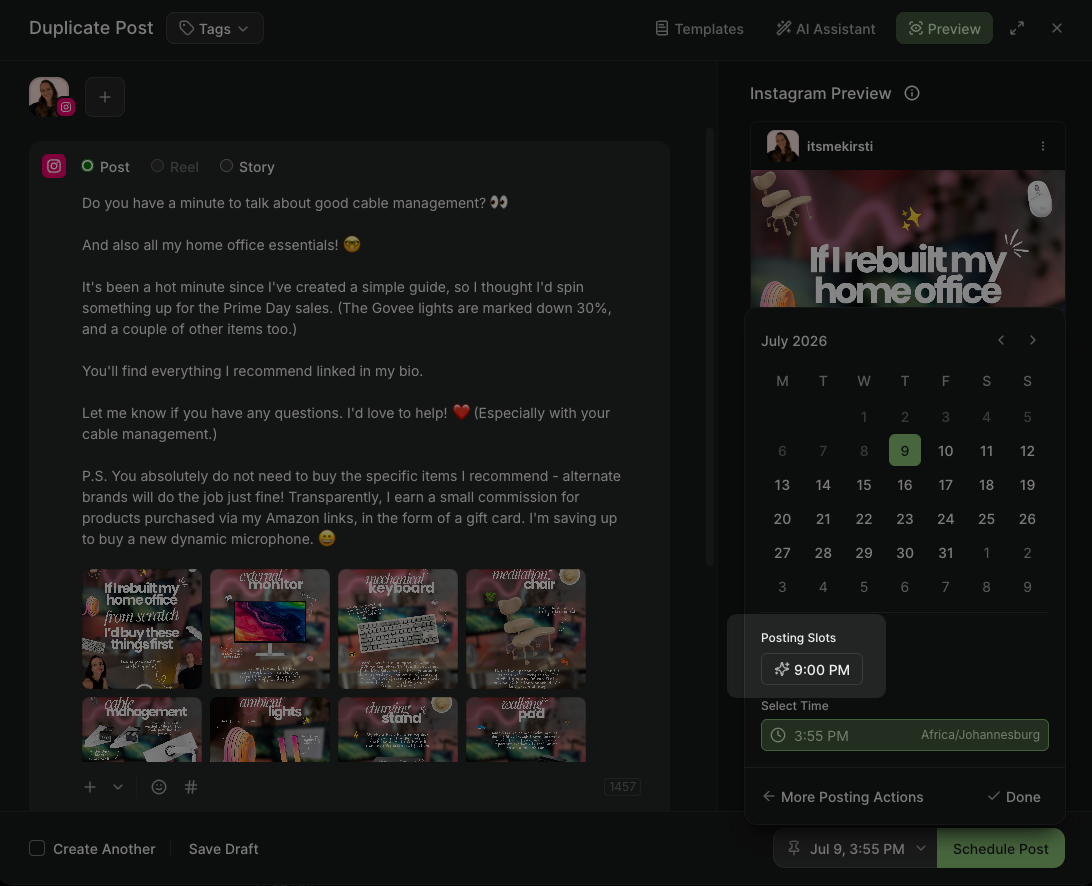
Buffer prioritizes a simple, intuitive scheduling process. Users compose a post, select target channels, customize content for each platform as needed, and schedule. A key feature is the ability to set up "posting slots" for each channel, allowing users to add content to a queue that automatically publishes at the next available optimal time. This "set it and forget it" functionality is particularly valuable for creators and small businesses focused on consistent content output without constant manual intervention. Buffer also leverages its data science team’s insights to suggest optimal posting times for maximum engagement, a feature accessible directly within the composer. For teams, approval workflows are seamlessly integrated, enabling collaborators to request sign-off before publication. Bulk uploading via CSV files further enhances efficiency for large content batches.
Metricool’s Planner-Centric Approach:
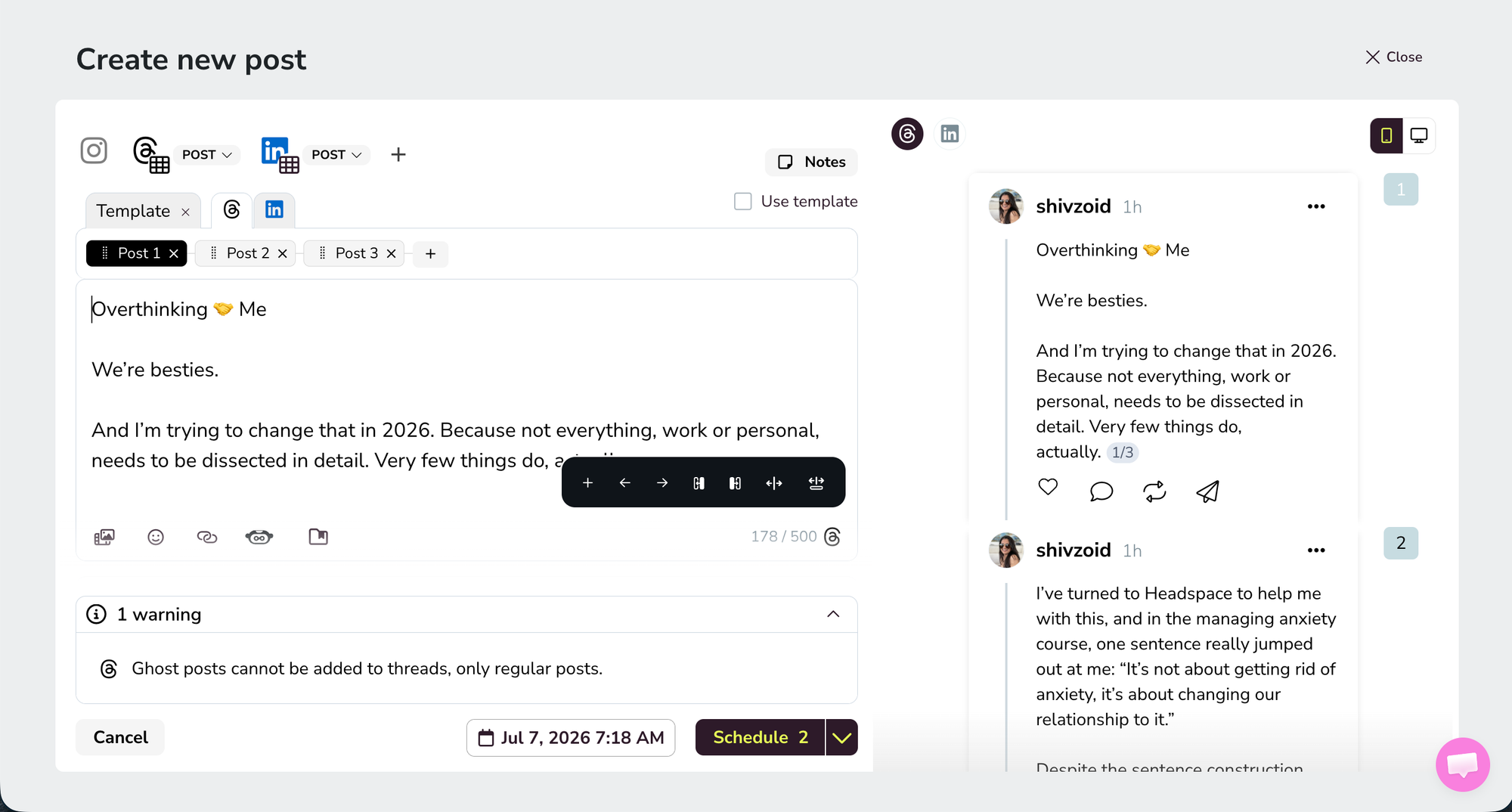
Metricool’s planner operates on a more calendar-centric model. Users open the planner, click on a specific date or the "create post" button, and then compose, customize, and schedule content. While it offers a heatmap indicating optimal posting times for some channels, there’s no inherent "queue" system akin to Buffer’s. Metricool’s unique "autolists" feature allows users to automatically loop evergreen content at pre-defined times or syndicate content from RSS feeds (blogs, YouTube channels). This feature is particularly beneficial for content marketers who regularly recycle or repurpose evergreen material, or for publishers consistently sharing new content from external feeds. However, for fresh, ad-hoc content, the manual scheduling process for each post might require more direct user input compared to Buffer’s queue.
Analytics and Reporting Capabilities
The ability to measure performance is non-negotiable in social media marketing. Both tools offer analytics, but their depth, presentation, and utility for different user needs vary significantly.
Buffer’s Interpretive Insights:
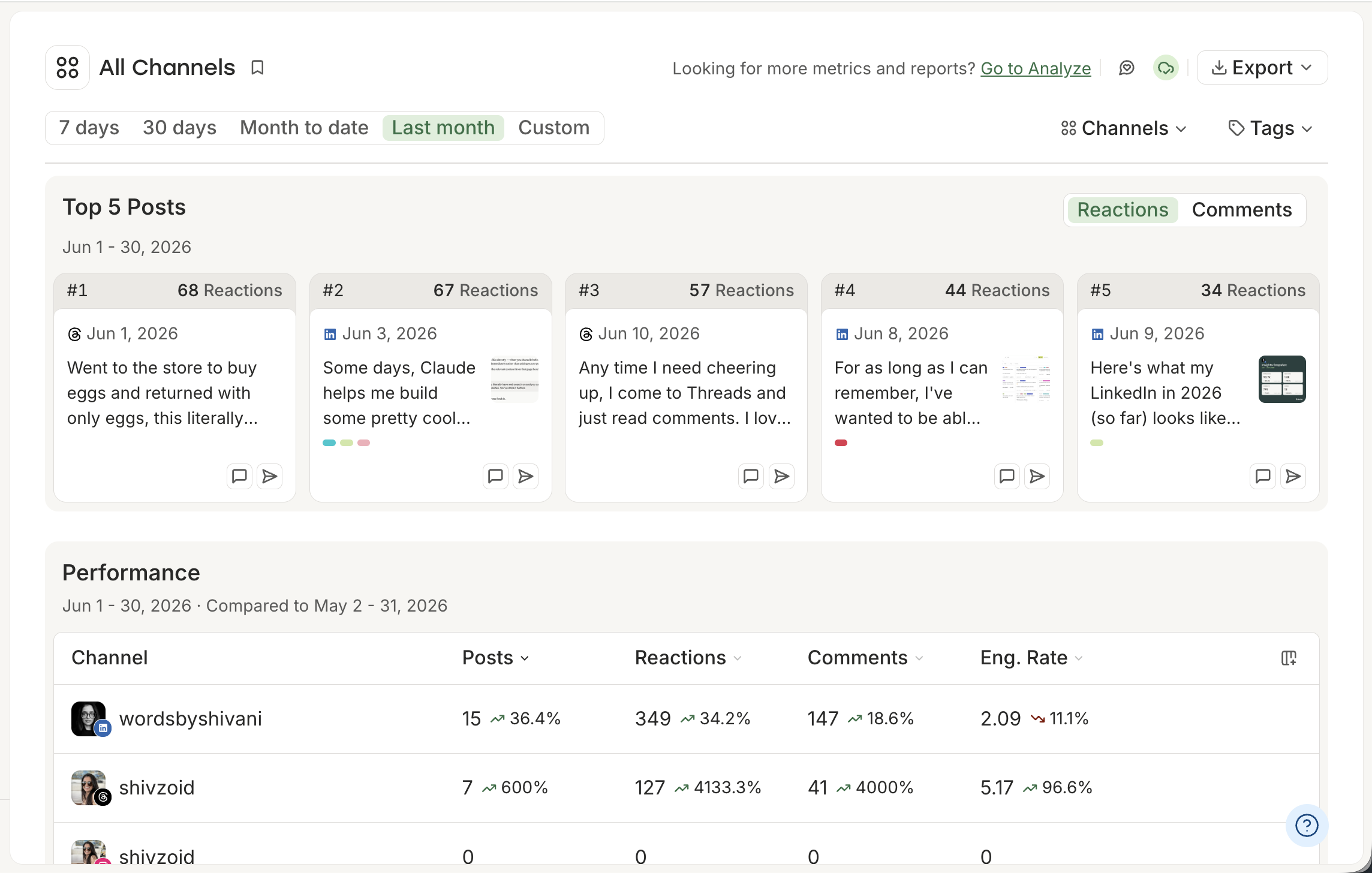
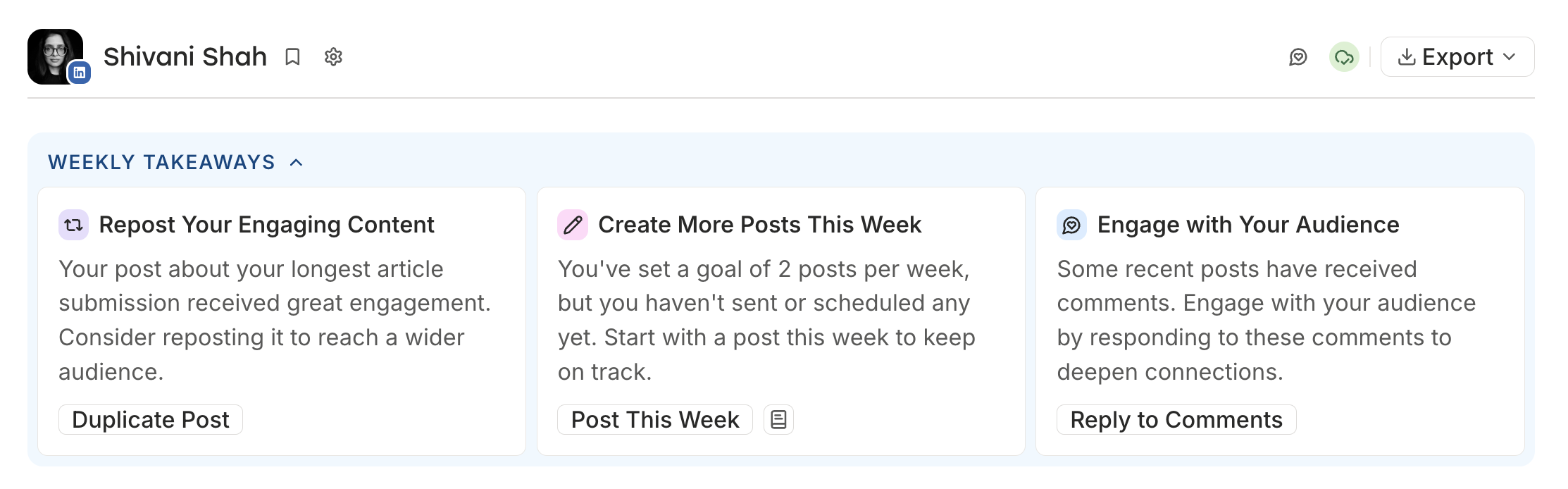
Buffer Insights are designed for clarity and actionable recommendations. Beyond standard post-level performance, channel growth, and follower analytics, Buffer integrates an AI-powered takeaway system. This AI analyzes the data and provides specific, practical suggestions, such as engaging more with the audience, repurposing high-performing content, or experimenting with different content formats. This interpretive layer transforms raw data into understandable directives, making it invaluable for individuals and small teams who need quick, actionable guidance without deep analytical expertise. Insights are available across all plans, with flexible time-range comparisons and export options (PDF, Markdown, CSV) for sharing or further analysis in external tools like LLMs.
Metricool’s Granular, Custom Reporting:
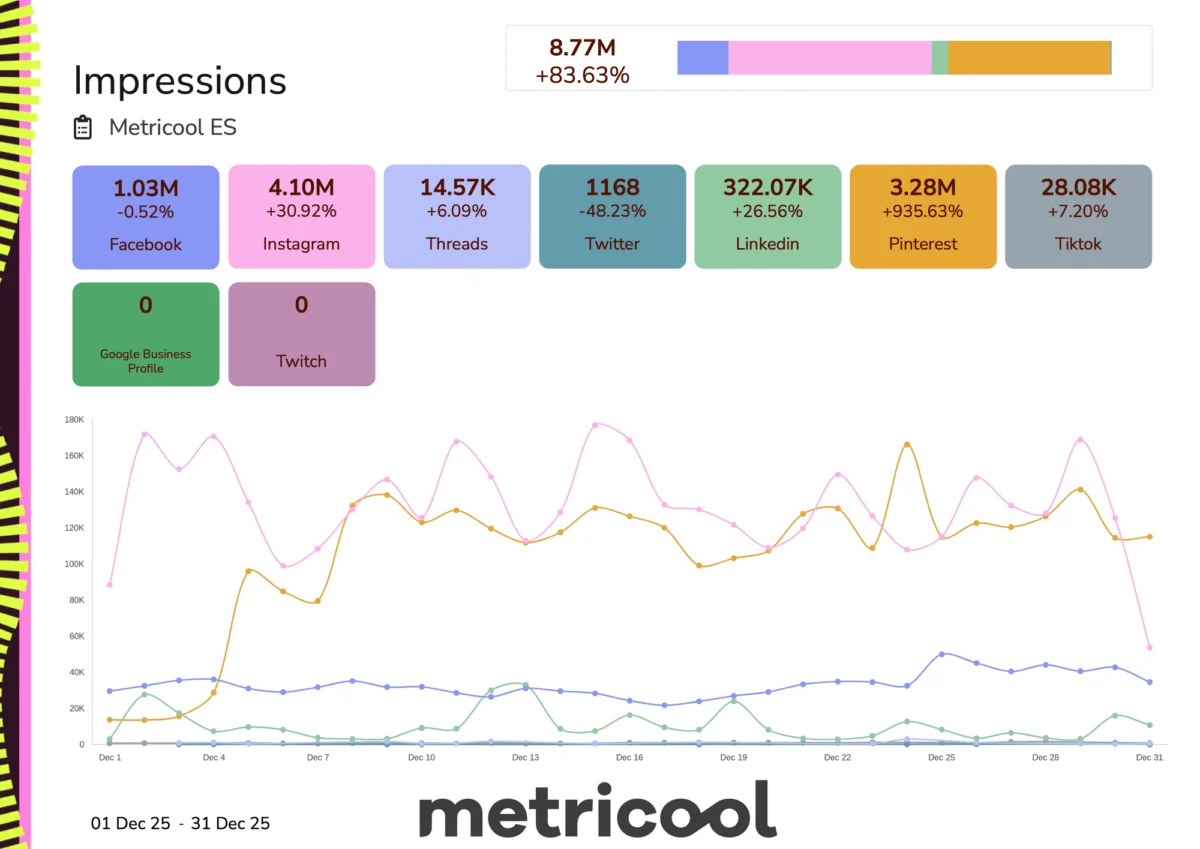
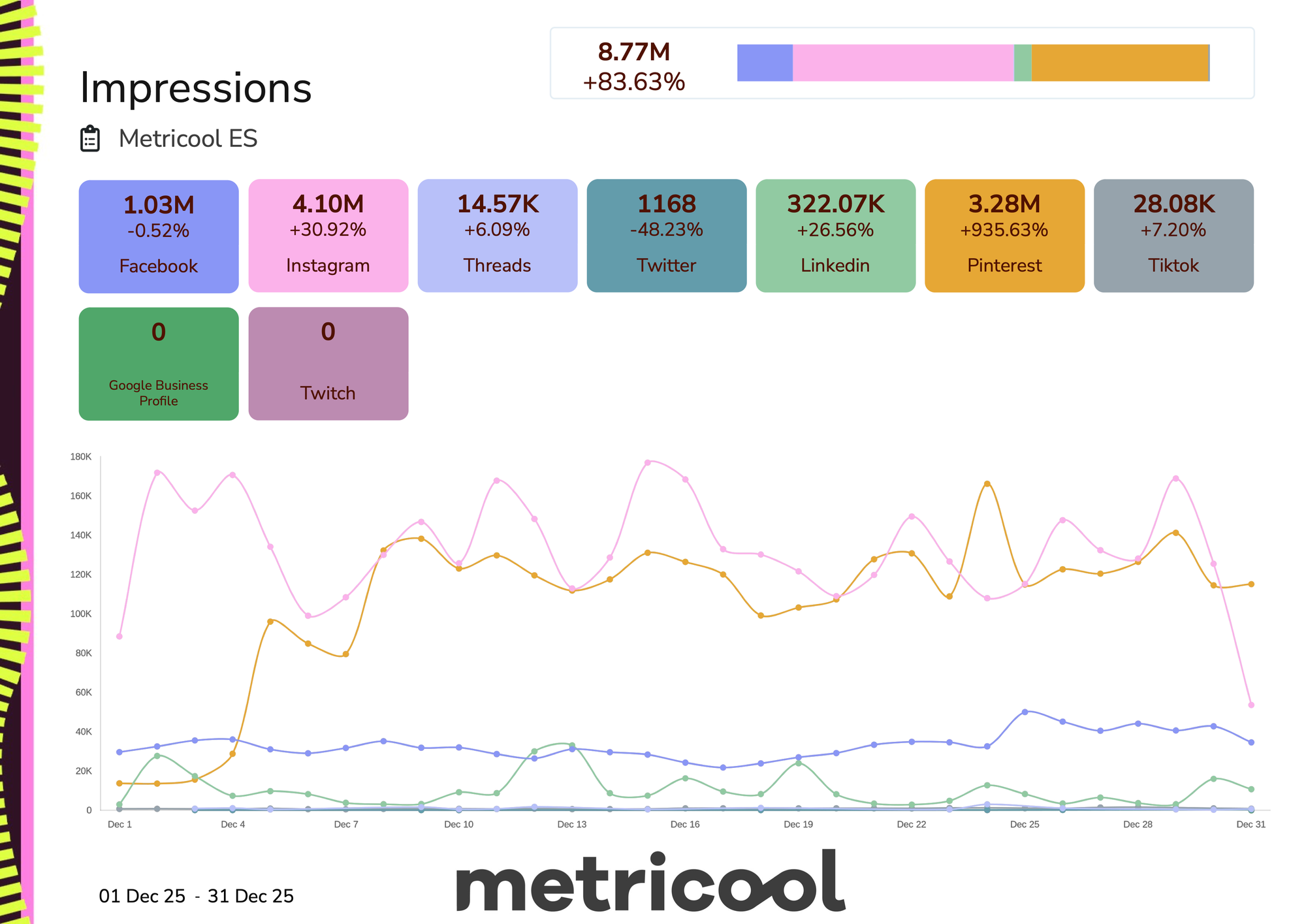
Metricool excels in providing deep, granular analytics and highly customizable reporting, a feature set particularly attractive to data-led marketers and agencies. It offers platform-by-platform breakdowns, a robust custom report builder, detailed post-level data, and audience demographics across all connected channels. Crucially, Metricool can also integrate website analytics, allowing users to track how social media campaigns drive traffic. Paid plans enable users to customize reports extensively, download them in PDF or PowerPoint formats, and schedule automated monthly email reports to multiple recipients with personalized messages. Metricool also offers "Metricool Studio," which utilizes AI to generate advanced reports for brand metrics, brand comparisons, or multi-period analysis. Furthermore, its direct connection to Google’s Data Studio (Looker Studio) allows for even more sophisticated custom dashboard creation, cementing its position as a powerhouse for detailed, client-facing analytics. The optional hashtag tracker provides additional competitive intelligence, albeit at an extra cost.
Inbox and Engagement Management
Effective audience engagement is crucial for community building and customer service. Both Buffer and Metricool offer tools to manage interactions, albeit with different scopes.
Buffer’s Broad Comment Coverage:
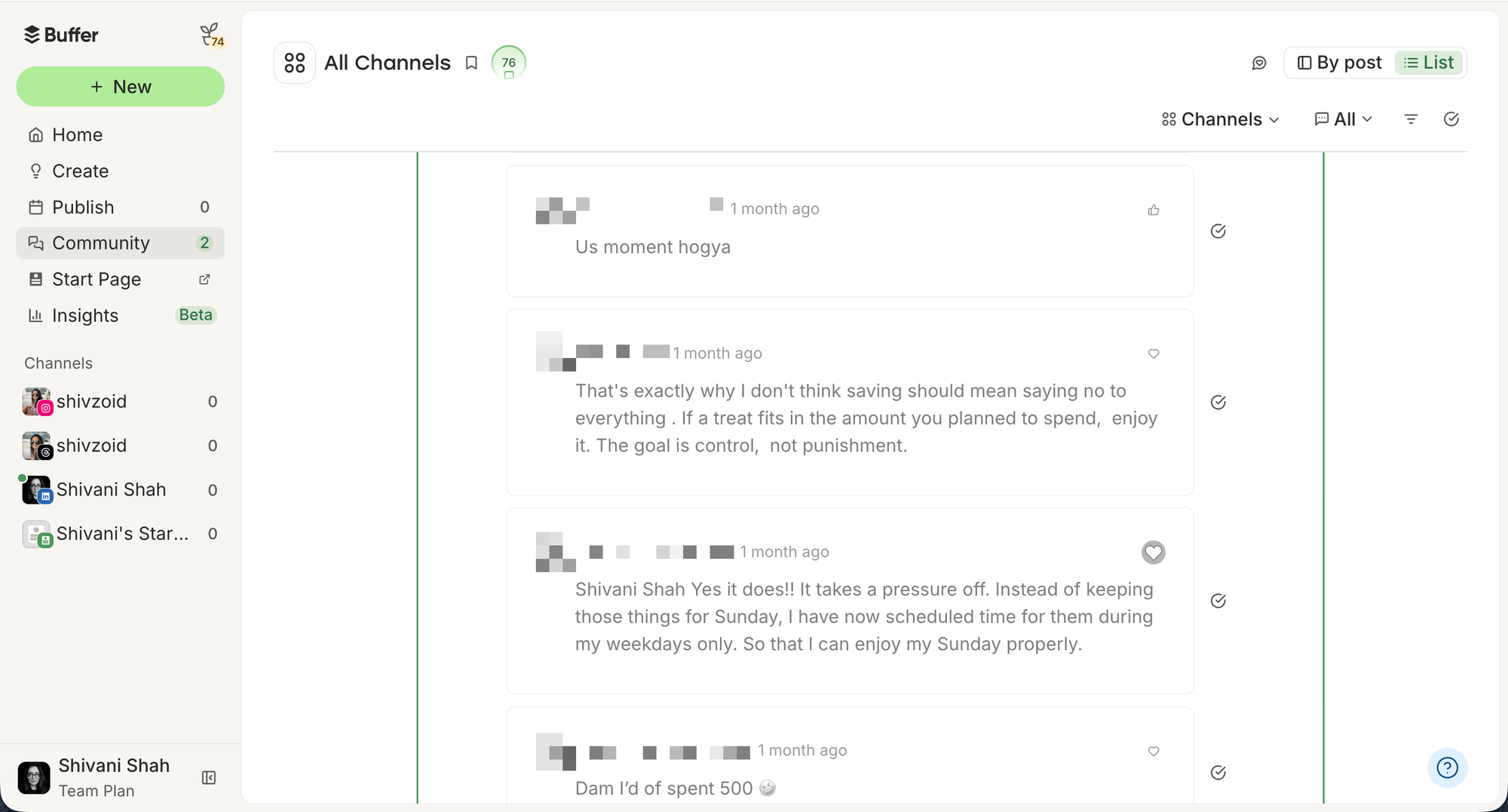
Buffer’s Community inbox focuses on comprehensive comment management across a wide array of platforms, including Facebook Pages, Threads, Bluesky, LinkedIn profiles and pages, X/Twitter, Instagram professional accounts, Google Business Profiles, TikTok, YouTube, and Mastodon. This extensive coverage ensures that users can monitor and reply to comments and mentions from nearly all their active social channels within a single interface. The integrated AI assistant suggests replies, streamlining responses, while features like saved replies for FAQs and a "Comment Score" incentivize timely engagement.
Metricool’s DM Integration:
Metricool’s engagement features cover Facebook Pages, Instagram professional accounts, LinkedIn Pages, X/Twitter, and Google Business Profiles. While its platform coverage for comments is narrower than Buffer’s (not including LinkedIn personal profiles, Threads, Bluesky, TikTok, YouTube, or Mastodon comments), Metricool distinguishes itself by supporting direct messages (DMs) on Facebook, Instagram, and X. This DM integration is a significant advantage for businesses that rely heavily on private messaging for customer support, sales, or lead generation on these specific platforms. The choice here hinges on whether a wider range of public comment management or direct message handling on key platforms is more critical for a user’s engagement strategy.
Competitor Tracking: A Metricool Advantage
One of Metricool’s standout features, and a notable absence in Buffer, is its built-in competitor tracking. This functionality allows users to monitor the performance of other accounts, providing invaluable competitive intelligence. Metricool supports competitor profiles from Instagram, Facebook, Threads, Bluesky, and Twitch on all plans, with YouTube and X/Twitter added for paid subscribers. The free plan allows tracking up to five competitor profiles (though they cannot be edited or deleted once added), while paid plans extend this to up to 100 profiles with full flexibility to swap them out. Marketers can gain insights into competitors’ follower growth, engagement rates (likes, replies, reposts, views, quotes), identify successful content strategies within their niche, benchmark their own performance, and seamlessly integrate competitor data into monthly reports. Buffer, by design, focuses solely on managing a user’s own content and engagement, opting not to offer competitor analysis tools. For businesses operating in highly competitive markets, this feature alone could sway the decision towards Metricool.
API and MCP: Extending Functionality
The ability to integrate SMM tools with other parts of a digital ecosystem is increasingly important for efficiency and automation. Both platforms offer pathways for this, but with different levels of accessibility and scope.
Buffer’s Accessible API and MCP:
Buffer’s API is available across all plans, including the free tier, making it highly accessible for users who wish to build custom integrations or workflows. This open API policy has fostered a community of users who have developed innovative solutions, from content engines to custom apps that consolidate multiple platform integrations. Beyond the API, Buffer also offers a "Marketing Command Platform" (MCP) that connects with popular AI tools like Claude, ChatGPT, Perplexity, Cursor, and Raycast. This allows users to brainstorm ideas, draft posts, check schedules, and even schedule content without leaving their preferred AI environment, significantly enhancing workflow efficiency.
Metricool’s Tiered API Access:
Metricool also features an MCP, available on all plans, but its API access is more restricted. The Metricool API is only available on "Advanced" and "Custom" plans. While it offers comprehensive capabilities for metrics access, data export, and scheduling/publishing automation, its higher-tier availability means it’s targeted more towards larger organizations or agencies with dedicated development resources. The usage caps on Metricool’s AI text generator also apply to posts scheduled via the MCP, a detail users need to be aware of.
AI Features: Strategic Implementations
Artificial intelligence is transforming content creation and analysis. Buffer and Metricool have both embraced AI, but with distinct approaches to accessibility and functionality.
Buffer’s Unlimited AI Assistant:
Buffer’s AI Assistant is a cornerstone of its offering, available on every plan, including the free tier, with no caps on usage. This unlimited access allows users to freely generate post ideas, write drafts, repurpose content for different platforms, create alt text for images, and brainstorm hooks. The AI is deeply integrated into the Community inbox for suggested replies and into Insights, where it provides specific, actionable recommendations based on performance data. This pervasive, unlimited AI functionality empowers users to integrate AI into their daily workflow without concern for credit limits, fostering creativity and efficiency.
Metricool’s Capped AI with Brand Voice:
Metricool’s AI text generator offers similar content creation capabilities, including post ideas, captions, and hashtag suggestions. However, its usage is capped: 5 monthly AI credits on the free plan and 35 credits per brand per month on the Advanced plan. For regular AI users, these limits can be reached quickly, necessitating a more deliberate approach to AI integration. A key differentiating feature of Metricool’s AI is its "brand voice configuration." Users can set custom instructions for each brand and even tailor the voice for individual platforms within that brand. This capability is immensely valuable for agencies or marketers managing multiple clients or diverse brand identities, ensuring platform-specific tones while maintaining brand consistency. Metricool also offers AI-generated reports through its "Studio," available on paid plans. The choice between Buffer’s unlimited, integrated AI and Metricool’s capped, but highly customizable (brand voice) AI depends on the user’s volume of AI usage and the complexity of their brand messaging requirements.
Supported Platforms and Integrations
Platform coverage is a practical consideration for any SMM tool. Both Buffer and Metricool support a wide range, though with subtle differences.
Buffer currently supports 11 platforms: Instagram (personal, creator, business profiles), Facebook, LinkedIn, X/Twitter, TikTok, YouTube (Shorts only), Pinterest, Google Business Profile, Threads, Bluesky, and Mastodon. Notably, Buffer has a history of early adoption for newer platforms like Mastodon, catering to users exploring emerging social networks.
Metricool also supports 11 platforms: Instagram (business and creator profiles only), Facebook, LinkedIn, X/Twitter, TikTok, Threads, Bluesky, YouTube, Pinterest, Google Business Profile, and Twitch. While Metricool supports full YouTube video scheduling (versus Buffer’s Shorts-only), its LinkedIn and X/Twitter support is restricted to paid plans or add-ons. Metricool’s inclusion of Twitch is a niche but valuable offering for streamers or brands active in the gaming and live content space. Furthermore, Metricool offers native ad management for Meta, TikTok, and Google Ads, enabling unified management of organic and paid social efforts from a single interface, a significant advantage for performance marketers.
Ease of Use and User Experience
The user interface and overall ease of adoption can significantly impact productivity.
Buffer’s Immediate Accessibility:
Buffer is designed for immediate usability. Connecting channels, setting a posting schedule, and starting content creation typically takes mere minutes. Its clean, uncluttered interface minimizes the learning curve, allowing users to focus on content production rather than navigating complex menus. This straightforwardness makes it highly appealing to individuals and small teams who need to hit the ground running without extensive training.
Metricool’s Feature-Rich Depth:
Metricool’s interface is denser, reflecting its broader array of features, including detailed reports, competitor tracking, autolists, and ad management. While this depth is invaluable for users who require these advanced functionalities, it necessitates a longer orientation period. The initial learning curve is steeper, but for those whose workflows genuinely benefit from Metricool’s comprehensive toolkit, the investment in learning pays off through enhanced analytical capabilities and integrated management.
Strategic Implications for Different User Segments
The choice between Buffer and Metricool ultimately hinges on a user’s specific needs, scale of operation, and strategic priorities.
Creators and Solopreneurs: For independent creators and solopreneurs, Buffer generally stands out as the superior choice. Its genuinely free plan, unlimited AI Assistant, and flexible per-channel pricing (e.g., $24/month for four channels) offer exceptional value and scalability. The intuitive scheduling and actionable AI insights empower individuals to maintain a consistent, data-informed social presence without overwhelming complexity or prohibitive costs. Metricool’s free plan limitations (20 posts/month, no LinkedIn/X) and higher entry-level paid pricing (around $30/month for a similar four-channel setup) make it less ideal for this segment unless competitor tracking is an absolute priority.

Small Businesses and Growing Teams: Buffer typically remains the stronger option for small businesses and growing teams. The Team plan, at $12 per channel per month with unlimited users and integrated approval workflows, offers a robust and scalable solution for collaborative content management. A five-person team managing eight channels, for instance, would pay $96 per month. This model supports team growth and evolving channel needs without significant price jumps or feature restrictions. While Metricool’s Advanced plan (starting at $67/month plus add-ons) offers team features, its AI caps might prove restrictive for teams heavily reliant on AI for content generation. However, if specific requirements like competitor tracking or detailed, client-facing reports are central to the business strategy, Metricool’s specialized features could justify its adoption even at this scale.
Marketing Agencies: This is the segment where the choice becomes highly dependent on the agency’s core services. Metricool is purpose-built for agency workflows focused on comprehensive reporting, competitor analysis, and multi-brand management. Its per-brand pricing, customizable PDF/PowerPoint reports, and integrated ad management tools are perfectly aligned with managing numerous client accounts and delivering data-rich presentations. Agencies whose daily operations involve managing 10+ client brands and competitive benchmarking will find Metricool’s Advanced plan invaluable. Conversely, Buffer is a stronger fit for agencies whose primary focus is on efficient content creation and scheduling across client accounts. Its clean interface, unlimited users on the Team plan, and per-channel pricing offer a low-overhead, adaptable tool for content-centric agency operations, particularly for those prioritizing streamlined publishing and community engagement over deep competitive analytics.
Data-Led Marketers: For marketers whose roles are heavily centered around analytics, reporting, and data-driven strategy, Metricool is the clear preference. Its deep platform-by-platform metrics, custom report builders, and integration with tools like Google Data Studio provide the granular data and flexibility required for advanced analysis and strategic planning. Buffer’s analytics, while actionable and AI-enhanced, are not designed to be a comprehensive, deep-dive analytical platform in the same vein as Metricool.
Rounding Up: A Decision Framework
The comparison between Buffer and Metricool illustrates a common theme in software selection: the "best" tool is the one that most effectively addresses specific user needs and workflow priorities.
Buffer shines for its simplicity, flexible pricing, and user-centric approach to content scheduling and engagement. Its genuinely usable free plan, unlimited AI Assistant, and straightforward interface make it an excellent choice for creators, solopreneurs, small businesses, and growing teams who prioritize efficient content production and direct community interaction without unnecessary complexity. Its per-channel pricing model offers transparent and scalable costs, adapting naturally to changes in social media presence.
Metricool, conversely, caters to a more data-intensive, agency-centric workflow. Its robust competitor tracking, granular analytics, highly customizable reporting, and integrated ad management make it an indispensable tool for marketers and agencies whose strategies are heavily informed by competitive intelligence and detailed performance metrics. While its interface might be denser and its AI usage capped, the depth of its analytical and reporting features provides significant value for those who require comprehensive data insights for client presentations and strategic planning.
Ultimately, both platforms offer free options, making direct experimentation the most reliable method for determining the optimal fit. By engaging with each tool for a week, users can gain firsthand experience with their respective interfaces, workflows, and feature sets, allowing the right choice to emerge based on practical application and individual requirements. For those seeking a powerful yet intuitive platform focused on streamlined publishing and intelligent insights, Buffer presents a compelling solution. For those requiring a deep dive into analytics, competitor landscapes, and comprehensive reporting, Metricool stands as a formidable contender. The digital marketing ecosystem is diverse, and thankfully, so are the tools designed to navigate it.