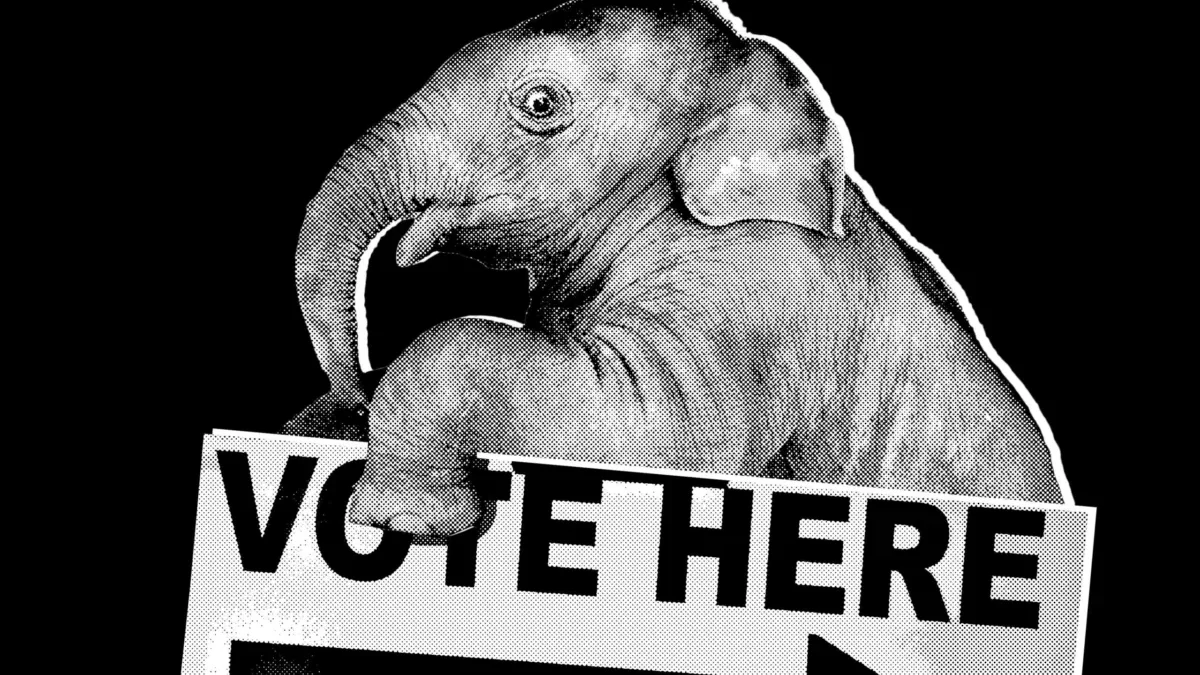
President Donald Trump has repeatedly assured his inner circle that the Republican Party could defy historical headwinds and outperform expectations in the upcoming November midterm elections, maintaining an optimistic public and private posture despite a severely deteriorating political landscape. While the president points to internal campaign metrics suggesting that individual House races are tighter than national numbers imply, a starkly different realization is taking shape among senior aides and veteran strategists. Behind the scenes, the White House is increasingly coming to terms with a grim mathematical reality: the distinct possibility of losing both the House of Representatives and the Senate majorities, a catastrophic outcome that would dramatically shift the balance of power in Washington during the final two years of his term.
The disconnect between the president’s bullish outlook and the private panic of his staff highlights a defining tension within the current administration. A veteran Trumpworld operative, speaking anonymously to reflect private assessments, offered a blunt evaluation of the party’s prospects, stating simply that Republicans are on course to suffer a severe electoral defeat. This private anxiety is fueled by cascading indicators, most notably a recent Wall Street Journal poll that placed Trump’s national approval rating at an unprecedented low of 37 percent. Historical data shows this figure represents the lowest approval rating of any sitting president heading into a midterm election since tracking began in 1990, eclipsing the previous troughs recorded during periods of acute economic or legislative distress.
The Quest for Strategic Foreign Policy Wins
To counteract the mounting domestic headwinds, the administration launched a concerted effort in the weeks leading up to the fall campaign to secure high-profile foreign policy victories that could galvanize the core MAGA base and shift the national narrative. This strategy culminated in late September with the signing of a strategic agreement between the United States and Denmark. The accord successfully expanded the operational footprint and deployment capabilities of American military forces in Greenland, falling just short of the outright territorial acquisition that President Trump had frequently championed but proving substantial enough to present as a significant geopolitical achievement.
Simultaneously, the administration announced a sweeping diplomatic and economic framework involving Venezuelan oil reserves. However, the administration’s aggressive timeline and transactional approach encountered immediate legal and structural complications. The proclaimed deal relied on a proposed 100-year concession for oil production—a provision that directly contravenes Venezuela’s national hydrocarbons law, which explicitly bars such extended monopolistic practices. Industry experts and legal analysts immediately noted that the agreement would require substantial renegotiation to achieve viability, blunting its immediate utility as a clean, unambiguous political talking point for midterm voters.
Domestic Pressures and Economic Realities
Despite the administration’s focus on international diplomacy and legacy-defining foreign agreements, voter sentiment has remained overwhelmingly anchored to immediate domestic concerns, chief among them the persistent strain of inflation and consumer costs. Economic metrics heading into the final stretch of the campaign cycle underscored these frustrations. According to data compiled by the American Automobile Association (AAA), regular retail gasoline reached a national average of $4.43 per gallon, while diesel prices surged to historic highs earlier in the month.
Compounding these economic pressures, the administration found itself misaligned with public opinion on several key technological fronts. Debates surrounding federal regulation of artificial intelligence and the rapid expansion of power-hungry data centers became flashpoints in technology-dependent districts, where voters expressed anxiety over utility costs and the socioeconomic impacts of automated labor. Rather than neutralizing these vulnerabilities, the administration’s tech policy stances frequently reinforced the perception among swing voters that Washington was out of touch with everyday economic realities.
The White House Defense Strategy and Legal Fortification
Recognizing that the legislative agenda faces an imminent standstill should Democrats capture Capitol Hill, the center of gravity within Trumpworld has decisively shifted toward contingency planning. Senior aides and legal advisers are dedicating significant resources to preparing an institutional defense against what they anticipate will be an immediate, aggressive wave of congressional subpoenas and oversight investigations. The anticipated onslaught is viewed by the administration not merely as a political annoyance, but as a systematic campaign designed to paralyze executive branch operations through relentless inquiry.
The administration’s primary defense mechanism relies on a dual-track legal strategy: the aggressive assertion of executive privilege coupled with an expanded application of attorney-client protections. This defense framework has been structurally reinforced by the legacy of the Supreme Court’s landmark 2024 presidential immunity ruling, which substantially broadened the protective scope surrounding internal executive deliberations. Legal scholars note that the high court’s decision created unprecedented hurdles for federal courts and congressional investigators attempting to examine confidential policy discussions at the highest levels of government.
A defining characteristic of President Trump’s second term has been the systematic integration of his personal legal representation into the formal structure of government agencies and White House offices. This integration has created a continuous, overlapping network of institutional and personal protections designed to insulate the administration from external scrutiny.
Key figures within this legal apparatus include former personal defense attorney Todd Blanche, who was appointed Attorney General, and Stanley Woodward, a prominent former campaign lawyer who assumed a high-ranking position within the Department of Justice leadership structure. Furthermore, Will Scharf transitioned from White House staff secretary to White House counsel, replacing former counselor David Warrington. By populating critical legal and advisory posts with attorneys steeped in personal defense work for the president, the administration has constructed a formidable institutional barrier intended to frustrate oversight efforts for years to come.
Precedents and Post-Election Implications
Administration officials frequently cite historical precedents to validate their confidence in this defensive architecture. They point to the protracted legal battles surrounding former White House Counsel Don McGahn during the first term, where congressional attempts to secure testimony regarding the Mueller investigation were delayed for years through executive privilege claims, ultimately resulting in testimony occurring only after Trump had left office. The current legal team aims to replicate and expand upon these delay tactics, utilizing the fortified privileges of government-employed personal attorneys to run out the clock on hostile congressional committees.
As voters prepare to cast their ballots, the conventional political narrative suggests that the conclusion of the midterm elections on November 3 will mark the end of a turbulent cycle. For the inner circle of the Trump administration, however, the election night results—win or lose—represent merely the opening phase of a much larger institutional struggle. With the specter of divided government, economic discontent, and an impending barrage of congressional inquiries looming large, the White House is bracing for a protracted conflict that will define the remainder of the presidential term.