The landscape of digital communication has undergone a profound transformation, placing the practice of content moderation at the very center of modern brand strategy and corporate governance. Content moderation—the systematic process of reviewing, filtering, and responding to user-generated comments, direct messages, public mentions, and reviews across social media channels—has evolved from a purely manual customer service chore into a sophisticated, multi-layered enterprise operation. As organizations grapple with escalating digital volumes, the core mission remains straightforward: ensuring that real audiences receive authentic engagement while systematically filtering out spam, malicious trolls, and harmful material before it can damage a brand’s reputation.
The urgency of this practice is underscored by shifting regulatory frameworks and technological advancements. Modern moderation strategies now rely on a collaborative model where artificial intelligence handles high-volume first-pass filtering, while human professionals manage nuanced, sensitive, and context-dependent interactions. This comprehensive analysis examines the critical dimensions of content moderation, exploring the five primary methodologies, industry best practices, regulatory pressures in 2026, and the enterprise tools reshaping brand safety.

The Strategic Importance of Brand Protection and Customer Service
Content moderation serves as a critical defense mechanism for maintaining corporate reputation and customer trust. Industry analysts and brand strategists emphasize that a proactive approach to managing user-generated content directly impacts three foundational business pillars: customer service delivery, brand image preservation, and crisis management.
First, social media platforms have effectively become primary customer support channels. Consumers frequently turn to public comments and direct messages to seek assistance, report product failures, or voice grievances. Effective content moderation ensures these incoming queries are triaged and answered promptly, preventing minor customer service friction from escalating into public relations liabilities.
Second, unchecked negativity and toxic commentary can slowly erode a brand’s market equity over time. While initial negative remarks may attract superficial sympathy, prolonged exposure to toxic comment sections alters consumer perception, associating the brand with online chaos rather than its intended marketing message. This dynamic is particularly detrimental when organizations collaborate with digital creators and influencers. If a partner creator’s work is met with unmitigated hostility in the comments section, the pipeline for user-generated content quickly dries up, harming long-term advocacy campaigns.

Finally, content moderation functions as an early-warning system for crisis management. Sudden spikes in hostile commentary, coordinated bot attacks, or viral misinformation can accelerate rapidly across digital networks. Monitoring teams equipped with proper analytical tools act as the first line of defense, identifying unusual patterns in consumer sentiment and looping in public relations, executive leadership, or legal counsel before a developing issue spirals out of control.
The Five Core Types of Content Moderation
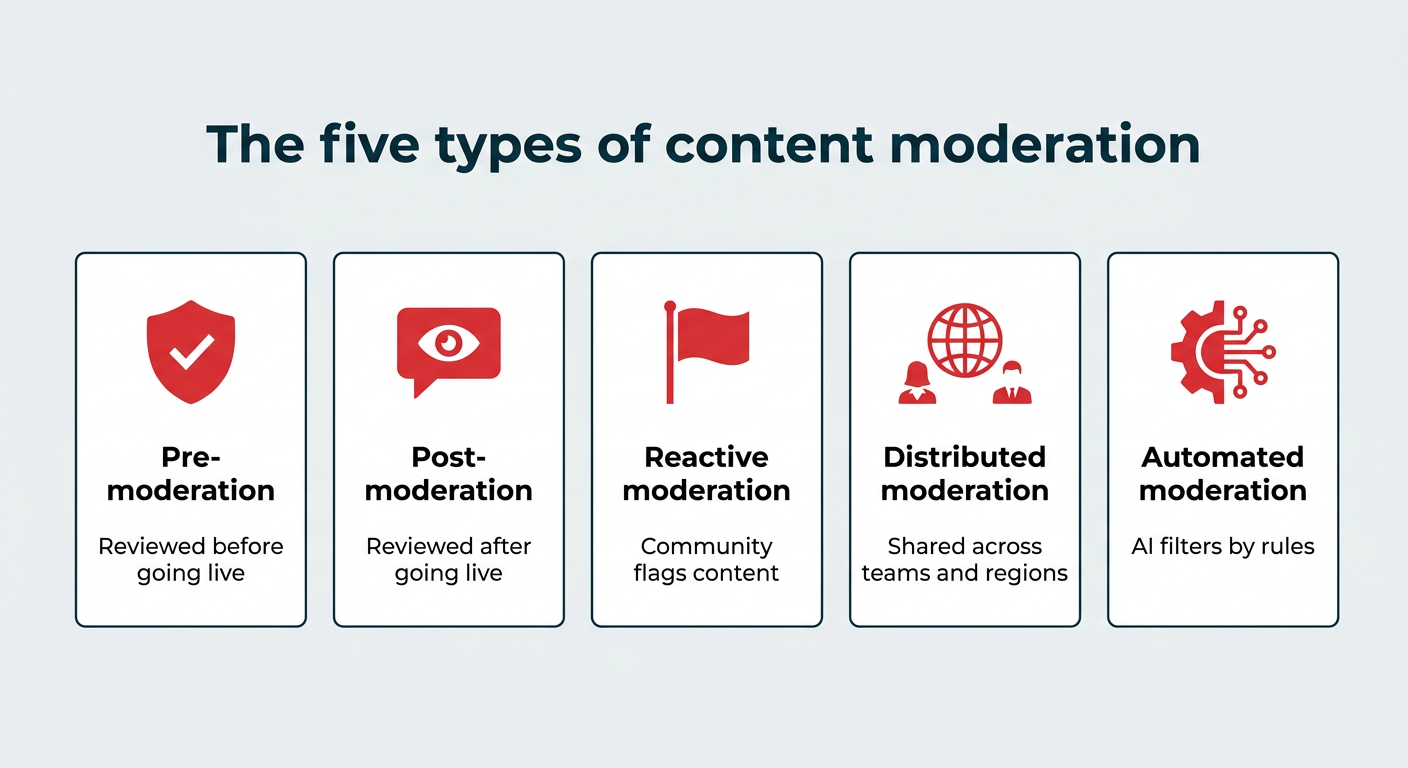
Organizations deploy a diverse array of moderation methodologies, rarely relying on a single approach. Instead, enterprise brands combine multiple frameworks to balance speed, operational scale, and the necessity of human oversight.
-
Pre-moderation: This method requires moderators to review and approve all user-generated content before it becomes visible to the public. While it offers the highest level of brand safety by ensuring zero unauthorized material reaches an audience, it introduces significant friction and slows down the conversational flow. Pre-moderation is primarily utilized in high-risk, heavily regulated sectors such as healthcare and financial services, where strict compliance requirements carry severe legal consequences that supersede the need for instantaneous communication.
-
Post-moderation: In this framework, user content is published immediately and reviewed retrospectively. This approach maintains real-time conversational momentum but introduces the vulnerability that harmful or inappropriate material may briefly remain visible before staff can intervene. Most consumer brands rely on post-moderation for everyday community interactions and direct messaging where speed is prioritized over absolute control.
-
Reactive moderation: This decentralized approach depends on the online community to flag policy violations through reporting mechanisms. Once content is reported, moderation teams evaluate the flagged material against established community standards. This model is exceptionally effective for massive digital communities where real-time monitoring of every individual post is logistically impossible.
-
Distributed moderation: Responsibility is shared across a global network of moderators segmented by geographic region, operating time zone, or specific digital platform. This decentralized structure ensures consistent enforcement across international markets without risking severe burnout among localized teams, making it the preferred standard for multinational enterprise corporations.
-
Automated moderation: Utilizing advanced machine learning algorithms and artificial intelligence, automated systems flag, filter, and remove objectionable content based on predefined parameters such as profanity lists or spam indicators. Statistical transparency reports from major platforms, such as TikTok’s Digital Services Act disclosure, illustrate the sheer scale of this technology, noting that automated systems routinely handle upwards of 90 percent of all enforcement actions without direct human intervention.
The Intersection of Artificial Intelligence and Human Judgment
The contemporary consensus across digital platforms and enterprise organizations centers on a definitive operational division: artificial intelligence manages volume, while human professionals exercise judgment.
Modern AI-driven moderation leverages advanced natural language processing (NLP) to interpret intent, sentiment, and context, moving far beyond simplistic keyword blocklists. Similarly, sophisticated image and video recognition technologies instantly detect visual violations, including illicit content, graphic violence, or unauthorized product counterfeiting. Pattern recognition algorithms also excel at identifying coordinated botnets and systematic spam campaigns across multiple accounts.
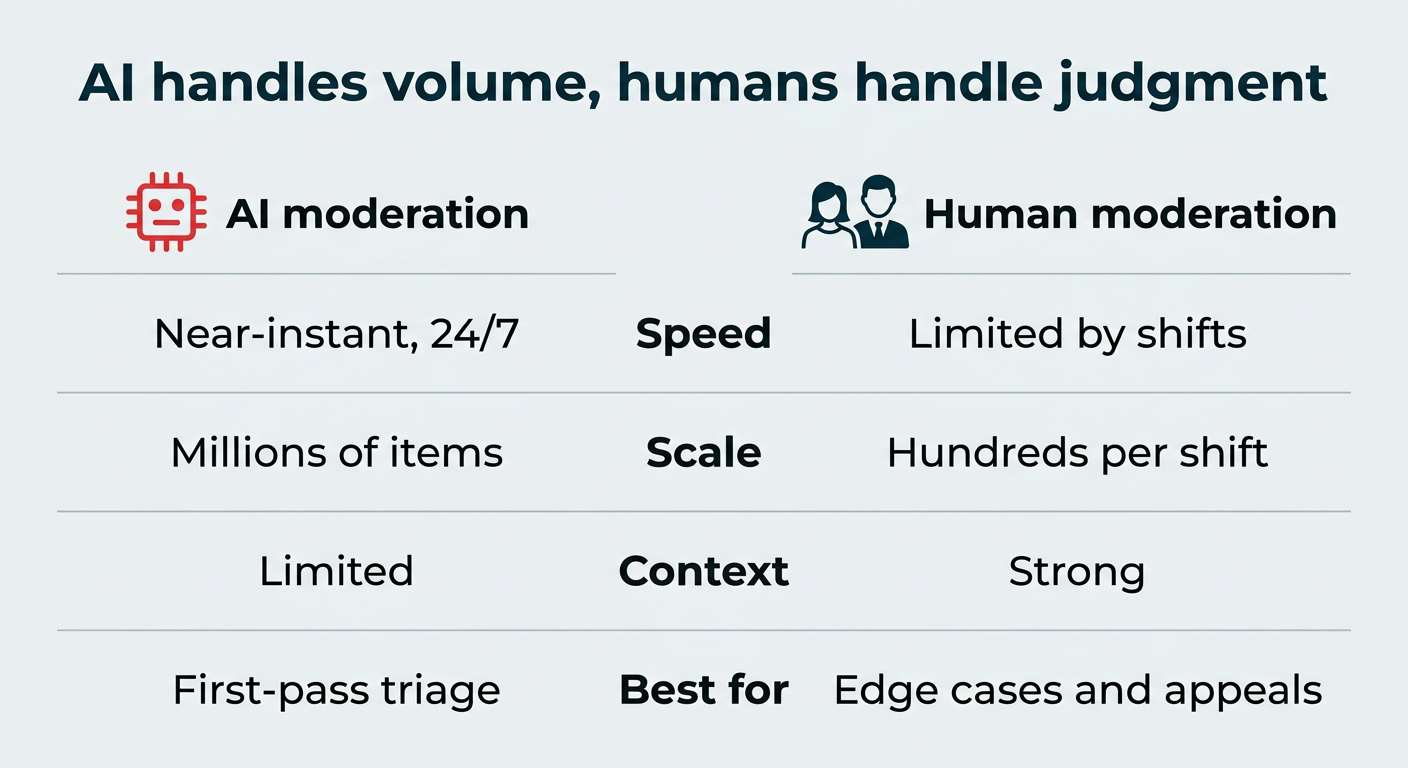
However, artificial intelligence continues to struggle with contextual nuances. Sarcasm, regional slang, coded language, shifting cultural idioms, and community-specific in-jokes frequently bypass automated filters, generating both false positives—which mistakenly suppress harmless user expression—and false negatives, which permit actual harm to pass through.
| Evaluation Factor | AI Moderation | Human Moderation |
|---|---|---|
| Operational Speed | Near-instantaneous, 24/7 processing | Constrained by staffing levels and shift rotations |
| Operational Scale | Capable of processing millions of items simultaneously | Limited to hundreds of items per shift |
| Accuracy on Obvious Violations | High proficiency with spam, profanity, and visual violations | High accuracy, though significantly slower execution |
| Contextual Understanding | Limited; frequently struggles with sarcasm, irony, and intent | Strong comprehension of human context and subtle meaning |
| Cultural & Linguistic Nuance | Uneven performance across diverse regional languages | Strong performance, particularly with native speakers |
| Cost Efficiency | Low cost per individual item reviewed | High labor cost per item reviewed |
| Decision Consistency | Highly consistent, though prone to repeating algorithmic errors | Subject to individual variance between moderators |
| Optimal Application | First-pass filtering, bulk sorting, and initial triage | Handling edge cases, user appeals, and sensitive communications |
Because algorithms lack genuine comprehension, human oversight remains indispensable. Organizations must deploy automation to clear routine spam and protect internal staff from severe graphic material, while routing ambiguous, complex, or sensitive edge cases to trained human teams.
Best Practices for Effective Social Media Moderation
To maintain operational consistency and protect staff well-being, industry experts recommend six foundational best practices for implementing an effective social media moderation strategy.

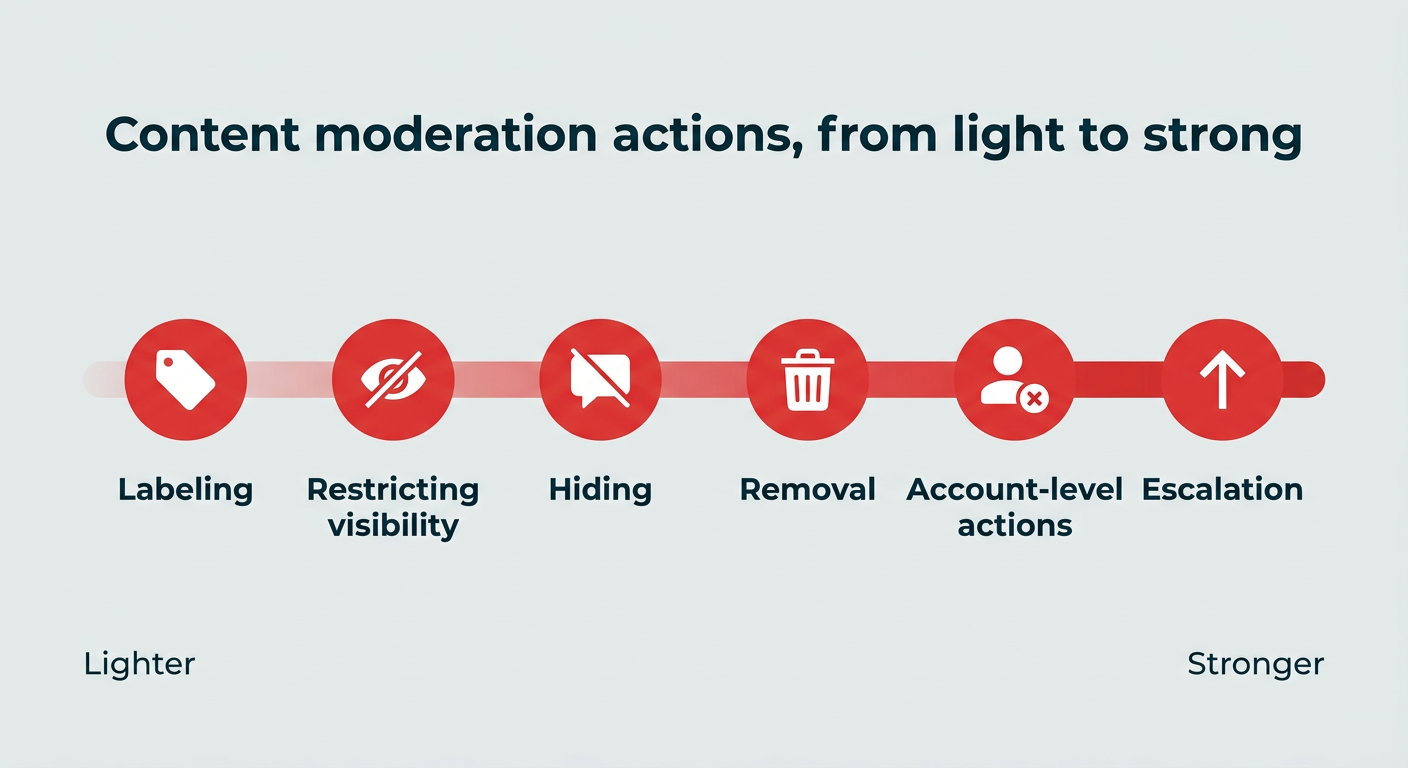
Establishing clear, documented content moderation guidelines is paramount. Without explicit policies, individual moderators are forced to make subjective judgment calls, leading to erratic enforcement and potential brand exposure. These internal guidelines should dictate precise thresholds for acceptable engagement, outline specific actions for various violation types, and integrate seamlessly with broader corporate crisis management plans.
Furthermore, organizations must commit to responding to genuine customer inquiries. Sophisticated filtering tools should be utilized to segregate authentic customer support requests from automated spam, ensuring that legitimate consumer voices are never ignored. When addressing frustrated or difficult consumers, staff must maintain a professional, objective tone, keeping in mind that public interactions serve as a direct reflection of corporate values to a broader audience.
Proactive automation of repetitive tasks further optimizes team performance. Deploying automated response templates and smart routing systems ensures common inquiries are handled instantly, freeing human agents to concentrate on complex problem resolution. Centralized operating systems, such as Hootsuite Social OS and its customer care extensions, bridge the gap between social media engagement and traditional customer service workflows.

Crucially, organizations must prioritize the mental health and psychological well-being of their moderation staff. Sustained exposure to toxic, abusive, or graphic digital content carries a proven psychological toll. Progressive brands implement robust support systems, regular wellness check-ins, mandatory decompressions periods, and treat moderators as skilled specialists rather than interchangeable labor.
Finally, enterprise brands must establish rigorous governance and compliance frameworks. Moderation workflows must align with internal policies, external platform terms of service, and recognized standards such as the National Institute of Standards and Technology (NIST) AI Risk Management Framework. Maintaining transparent audit trails of moderation decisions is particularly critical in highly regulated sectors, where unapproved claims or mismanaged data can trigger severe regulatory penalties.
Regulatory Landscape and Compliance in 2026
The operational parameters governing digital content moderation are increasingly shaped by a combination of stringent regional legislation and evolving platform-specific policies.
On the legislative front, the European Union’s Digital Services Act (DSA) stands as a primary regulatory benchmark. The legislation places significant obligations on digital intermediaries regarding illegal content suppression, transparent notice-and-action mechanisms, and mandatory reporting on moderation decisions. While these primary legal burdens fall upon hosting platforms rather than corporate brand accounts, the resulting compliance requirements heavily influence the reporting structures, transparency tools, and appeal workflows accessible to enterprise marketers. Additionally, the implementation of the EU AI Act introduces risk-based classifications for artificial intelligence deployments, directly governing how automated moderation software is engineered and utilized.
Concurrently, major digital platforms—including Meta, TikTok, LinkedIn, and X—enforce distinct community standards and proprietary moderation protocols. Organizations managing branded channels or private online communities bear the operational responsibility of enforcing these platform rules locally while maintaining compliance with domestic laws.
The practical implication for marketing executives and communications teams is clear: moderation workflows must be fully documented, auditable, and transparent. Maintaining systematic archives of moderation decisions ensures organizations can readily demonstrate compliance when subjected to external review.

Enterprise Content Moderation Tools
To navigate high volumes of user interaction safely and efficiently, brands frequently deploy specialized software solutions designed to integrate seamlessly with core social media management ecosystems.
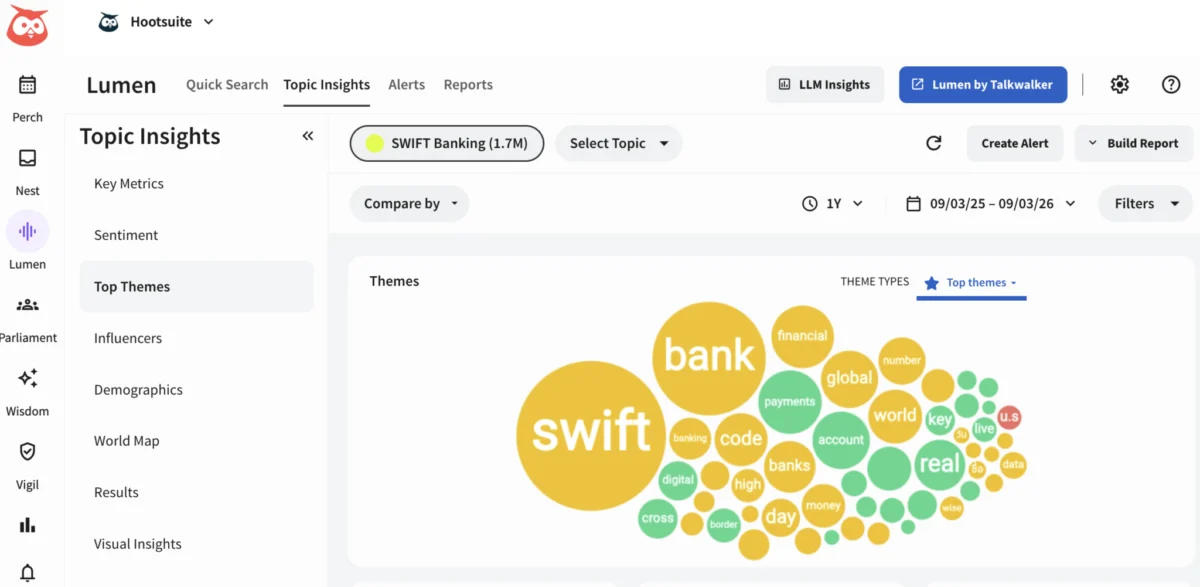
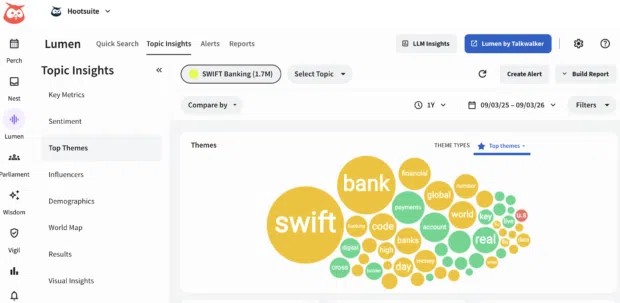
Hootsuite Social OS provides a comprehensive enterprise infrastructure supported by modular applications tailored for insights, customer care, and governance. Its listening component, Lumen, allows brands to track macro-level conversations across the broader web before they materialize in direct comment sections. Nest, the platform’s unified customer care inbox, consolidates public comments, direct mentions, dark posts, and direct messages into a single operational interface. Advanced AI layers within the suite assist with predictive replies and intelligent message routing, while governance tools maintain strict permissions and traceability for regulated enterprise environments.
Dedicated third-party applications also offer targeted safety enhancements. Respondology provides automated protection against spam, scams, and abusive behavior, functioning as a specialized trust-and-safety layer for high-profile creators and brands. BrandFort utilizes machine learning to decipher semantic intent on Meta properties, automatically hiding hate speech, profanity, and negative sentiment across global, multi-language accounts. Similarly, Smart Moderation employs adaptive machine learning that continuously refines its understanding of brand-specific appropriateness across major social channels, integrating directly with enterprise dashboards to streamline day-to-day community management.

Ultimately, as digital ecosystems continue to expand in complexity, the success of a modern brand relies on a harmonious integration of intelligent automation and empathetic human oversight. By establishing transparent policies, leveraging advanced technological infrastructure, and prioritizing team well-being, organizations can safeguard their reputation while fostering authentic, constructive engagement with their global audiences.