Meta Platforms has officially announced a significant expansion for its Muse artificial intelligence ecosystem, granting its AI agents sophisticated speaking capabilities and expressive digital avatars. This strategic update is designed to make artificial intelligence interactions more conversational, intuitive, and engaging for everyday users. By introducing voice capabilities, Meta aims to transition AI from a text-heavy utility into an interactive, dynamic partner capable of assisting users with complex brainstorming, professional preparation, and day-to-day organization.
The newly deployed features allow users to select personalized voices for their AI agents and conduct natural, fluid audio queries. Rather than relying heavily on precise text prompts, users can now articulate rough concepts, talk through problems, and let the AI help structure their ideas organically. Industry observers note that this development reflects a broader technological shift across the artificial intelligence sector toward multimodal interfaces, where voice, vision, and text blend seamlessly to replicate natural human communication.
Enhancing Productivity and Professional Preparation
Meta is heavily marketing the practical applications of Muse’s new voice capabilities, particularly in professional and educational contexts. According to company statements, certain tasks are inherently easier to rehearse and refine out loud rather than through silent typing.
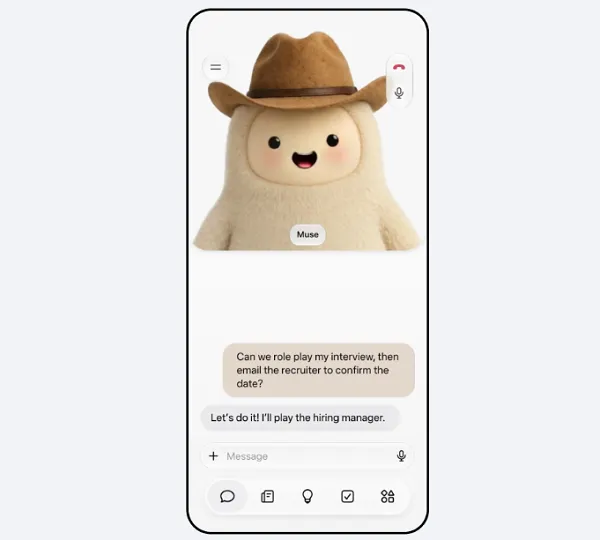
By leveraging the Muse voice agent, users can simulate high-stakes professional environments. The system is engineered to help individuals prepare for job interviews, run through complex business presentations, and rehearse sales pitches or creative proposals. Because the AI can respond dynamically in real time, the exchange mimics a genuine dialogue. This immediate feedback loop allows users to adjust their tone, refine their arguments, and build confidence before facing a live human audience.
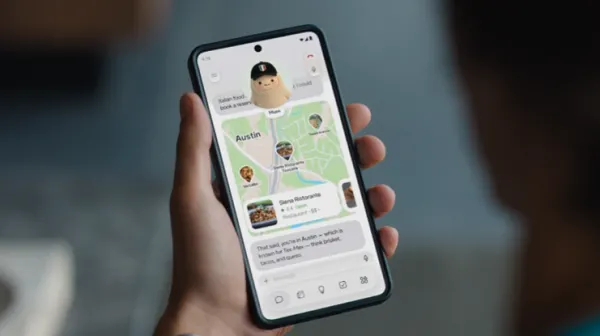
Furthermore, Meta has integrated expressive visual elements into the Muse experience. The accompanying digital avatars are designed to display subtle facial expressions and hand gestures that mirror the emotional tone and content of the conversation. These avatars actively react while the user is speaking, providing visual cues that signal the AI is genuinely following along. Users maintain granular control over their level of immersion, with options ranging from an audio-only experience to a standard side-by-side avatar interface, or a full-screen mode designed for face-to-face interactions.
Custom Voices and Novelty Features: A Controversial History
As part of the personalization suite, Meta is introducing custom voice options that allow users to assign distinct accents and stylistic personas to their Muse agents—ranging from regional dialects like a New York accent to imaginative character archetypes like a pirate. While this feature aims to inject personality and entertainment into the user experience, it also brings to light a checkered history of similar personalization attempts by the social media giant.
The tech industry has watched Meta repeatedly attempt to integrate novel persona-based AI features, often with mixed or disappointing commercial results. To understand the current trajectory of Muse, it is essential to examine the chronology of Meta’s previous experiments in conversational and persona-driven artificial intelligence.
The Evolution of Meta’s Persona and Voice AI Initiatives
The timeline of Meta’s consumer-facing generative AI deployments reveals a continuous effort to find the right formula for engaging user interactions:
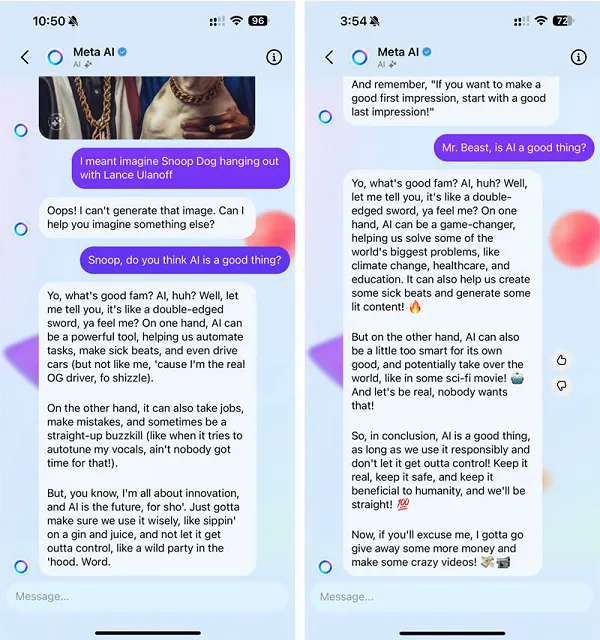
- September 2023: Meta introduced celebrity-styled AI chatbots across its messaging platforms, including Messenger and WhatsApp. These bots allowed users to text with artificial intelligence personalities modeled after and endorsed by well-known cultural figures and athletes.
- July 2024: Following a lack of consumer traction and widespread indifference toward text-only celebrity bots, Meta officially retired the feature, acknowledging that the novelty had failed to retain an active user base.
- August 2024: Undeterred by the initial setback, Meta pivoted to an audio-centric approach. The company reportedly invested millions of dollars to license the voices of prominent actors and public figures—including Judi Dench, Keegan-Michael Key, and Awkwafina—for specialized AI chatbots.
- April 2025: Investigative reporting by The Wall Street Journal revealed that certain users had bypassed safety filters to generate unauthorized, explicit, and sexually suggestive content voiced by these high-profile celebrity avatars. This controversy severely damaged the viability of the project and forced Meta to abandon plans for an expanded public rollout.
Given this historical context, industry analysts view the inclusion of custom and novelty voices in the Muse update with a degree of skepticism. Critics question whether users truly desire novelty accents and character roleplay features, or if these additions risk repeating past engagement pitfalls. Nevertheless, Meta remains committed to giving users expansive creative control over how their digital assistants sound and present themselves.
Implications for the Consumer AI Market
The rollout of Muse’s speaking capabilities places Meta in direct competition with other major technology conglomerates vying for dominance in the consumer AI assistant space. Companies such as OpenAI, Google, and Apple have all heavily invested in native voice modes for their respective AI platforms, transforming assistants into responsive, conversational companions.
Meta’s unique differentiator lies in its massive social ecosystem and the integration of expressive avatars. By combining vocal synthesis with animated visual representations, Meta is betting that users will form stronger psychological connections with their AI agents. This approach aligns with the company’s broader vision of the metaverse and ambient computing, where digital avatars serve as standard intermediaries for human-computer interaction.
However, challenges remain. Privacy advocates and consumer watchdogs continue to monitor how voice data is processed, stored, and utilized for model training. Additionally, sociological considerations surrounding public AI usage—such as individuals walking in public spaces conversing audibly with digital avatars—will likely spark ongoing cultural discussions regarding digital isolation and public etiquette.
As Meta continues to refine the Muse ecosystem, the success of these expressive voice agents will ultimately depend on their practical utility rather than their novelty appeal. Whether professionals will routinely rely on Muse for interview preparation, or if users will simply experiment with custom accents before moving on, remains to be seen. What is clear, however, is that Meta is doubling down on voice as the next critical frontier in making artificial intelligence an indispensable part of daily life.