The Semiconductor Bottleneck and Supply Chain Realities
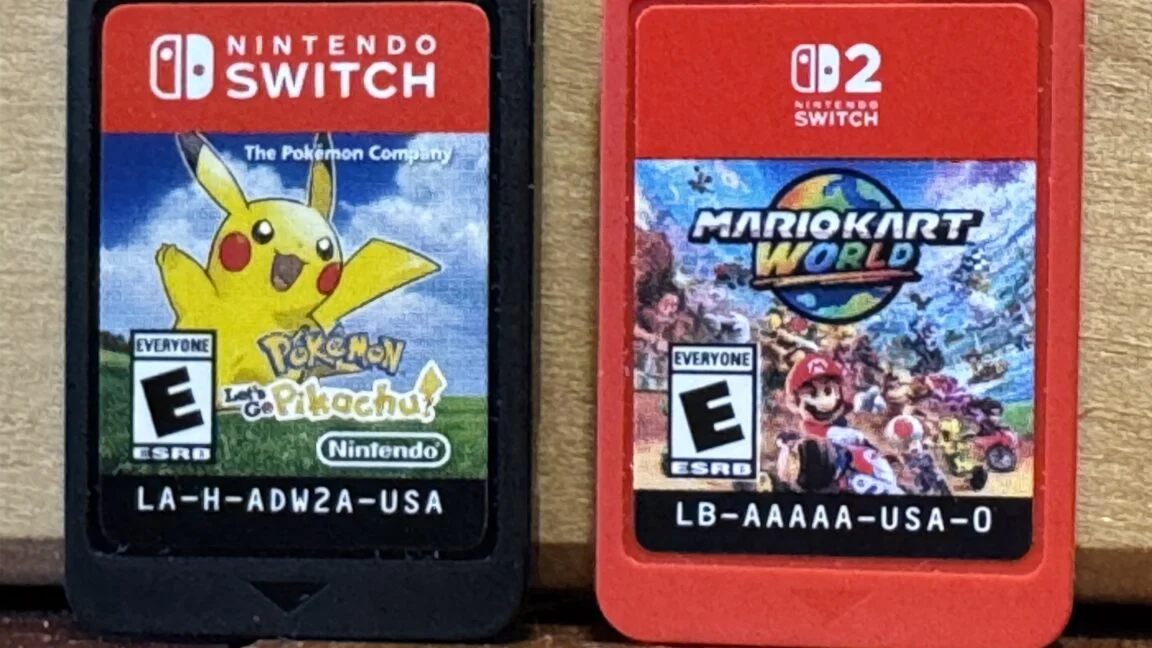
The production of Nintendo’s proprietary game cartridges is not merely a matter of plastic assembly; it is an intricate process tied to the specialized Read-Only Memory (ROM) chips required for data storage. As the gaming industry moves toward higher-capacity, high-fidelity titles, the reliance on legacy manufacturing partners becomes a point of potential failure. Nintendo currently relies on specialized suppliers, including Rohm and Lapis Semiconductor, to manufacture these essential components.
The challenge lies in the diminishing returns of legacy chip manufacturing. As global semiconductor fabrication facilities prioritize modern, high-demand nodes for artificial intelligence and consumer electronics, the production lines dedicated to the specific ROM chips utilized by Nintendo cartridges become increasingly expensive to maintain. This cost pressure is not theoretical; it is a direct operational expense that Nintendo must account for when setting wholesale pricing for third-party publishers.
Analysts have observed that these manufacturing constraints create a "cost floor" for physical media. Unlike digital downloads, which benefit from economies of scale and near-zero marginal distribution costs once the store infrastructure is in place, physical cartridges carry a heavy weight of logistics, raw materials, and fabrication fees. When those fabrication fees rise due to the limited number of suppliers capable of producing the necessary ROM chips, the retail price of the physical product inevitably feels the pressure.
A Chronology of the Physical-to-Digital Shift
The divergence between physical and digital pricing models has become increasingly apparent over the last 24 months. The following timeline illustrates the accelerating tension between Nintendo’s legacy commitments and modern economic realities:
- Late 2025: Industry reports emerge indicating that the introduction of lower-capacity, cost-optimized cartridges for the next-generation Nintendo hardware was essential for smaller publishers. Publishers like Inin Games explicitly noted that the release of R-Type Dimensions III was only financially viable due to the availability of these specific, smaller-capacity storage solutions.
- Early 2026: Nintendo formally shifts its internal pricing strategy, marking the first time the company began charging higher wholesale prices for physical game cartridges compared to their digital counterparts. This move served as an acknowledgment that the "parity" model—where physical and digital games cost the same—was no longer sustainable given current production costs.
- Mid-2026: Sony’s strategic moves to minimize physical presence in certain markets highlight the contrast with Nintendo. While Sony aggressively promotes a digital-first ecosystem, Nintendo reaffirmed its intent to support physical media, though it did not explicitly guarantee that such support would remain cost-neutral for the consumer.
- Q2 2026: Market data confirms that digital software sales have officially crossed the 61.5 percent threshold of Nintendo’s total business. This represents a steady, year-over-year climb that signals a permanent change in consumer preference, even among Nintendo’s historically physical-focused user base.
The Economics of Cartridge Production
The fundamental issue facing Nintendo is the "capacity-cost paradox." Modern gaming requires significantly more data storage than the early days of the Switch. High-definition assets, uncompressed audio, and complex texture maps require cartridges with higher storage capacities, which are exponentially more expensive to produce than standard, lower-capacity chips.
When a publisher chooses to release a game physically, they must decide between paying the premium for a high-capacity cartridge or compressing the data, which often results in a sub-par user experience or a mandatory "day-one" patch that renders the physical cartridge incomplete. For independent or mid-sized publishers, this cost can be prohibitive. The result is a shrinking ecosystem of physical releases, limited primarily to first-party titles or major third-party blockbusters that can justify the higher retail price point.
Nintendo’s management has addressed this periodically in investor briefings. While the company maintains that it understands the value players place on ownership and the ability to trade or resell games, it has not committed to subsidizing these costs indefinitely. The current model—passing the increased manufacturing costs on to the consumer—is a temporary buffer that keeps the physical format alive, but it arguably accelerates the transition to digital by making physical copies a "premium" product.
Digital Dominance and Market Trends
The shift toward digital is not solely a Nintendo phenomenon. Across the global gaming market, the convenience of instant access and the prevalence of high-speed internet have made digital distribution the path of least resistance. According to industry analyst David Gibson, the 61.5 percent digital sales figure for Nintendo is a critical benchmark. It suggests that the "tipping point" has already been passed; digital is no longer an alternative, but the primary mode of distribution.
If the trend toward digital continues at its current pace, Nintendo may find itself in a unique position where the cost of maintaining the physical supply chain outweighs the revenue generated by the diminishing physical market. However, there is a counter-argument: the "balancing act." As demand for physical cartridges drops, it is possible that the manufacturing infrastructure could consolidate to a level where it becomes highly efficient for a niche, collector-focused market. In this scenario, physical games would cease to be the standard format and instead become a boutique offering, similar to the resurgence of vinyl records in the music industry.
Official Responses and Strategic Outlook
Nintendo’s official stance remains one of cautious optimism regarding the longevity of physical media. During recent shareholder meetings, executives emphasized the importance of the "physical experience," particularly for younger players and gift-giving scenarios, which remain significant drivers of hardware and software sales. The company has explicitly stated it has no immediate plans to abandon physical distribution, viewing it as a vital component of its brand identity and market reach.
However, the silence regarding long-term cost mitigation suggests that Nintendo is prepared for a world where physical media is a secondary, high-cost option. The company’s focus on the Nintendo Account system and the eShop infrastructure indicates that they are building a robust digital safety net should the manufacturing of physical cartridges become commercially untenable.
Broader Implications for the Industry
The implications of this shift extend beyond Nintendo. As a major player, Nintendo’s support for physical media acts as a stabilizing force for the entire industry. If Nintendo were to significantly reduce its physical output, the impact on retailers—many of whom still rely on physical game sales to drive foot traffic—would be severe. Retailers such as GameStop and various big-box electronics stores have already seen their physical media sections shrink; a total abandonment of the format by Nintendo would likely signal the end of the physical gaming aisle as a fixture of modern retail.
Furthermore, the environmental and logistical footprint of digital-only distribution is a subject of growing debate. While digital distribution avoids the plastic and transport costs of physical goods, it creates massive demand for server infrastructure and data centers. The transition is not merely a move from plastic to bits; it is a move from one set of operational complexities to another.
In conclusion, Nintendo finds itself at a crossroads. By choosing to sustain the physical format, the company is catering to a loyal consumer base, but at a cost that is increasingly visible at the checkout counter. The "limping along" of physical media is a deliberate, albeit expensive, strategy. Whether this strategy will eventually evolve into a sustainable niche model or whether the market forces will necessitate a total migration to digital remains the central question for the next generation of Nintendo hardware. For now, the cartridge survives, but its role in the industry is fundamentally changing, shifting from a universal standard to a premium convenience.