As the United States approaches the high-stakes 2026 midterm elections, the digital landscape of social media platform X (formerly known as Twitter) has become a chaotic battleground of political messaging, hyper-partisan grievance, and unexpected pop culture appropriations. Amidst a turbulent political climate characterized by persistent inflation concerns, foreign policy friction in the Middle East, and shifting voter sentiment, conservative influencers, MAGA-aligned political commentators, and high-profile tech figures have turned an unlikely source into their primary vehicle for political discourse: the fictional antagonists of George Lucas’s Star Wars and J.K. Rowling’s Harry Potter universes.
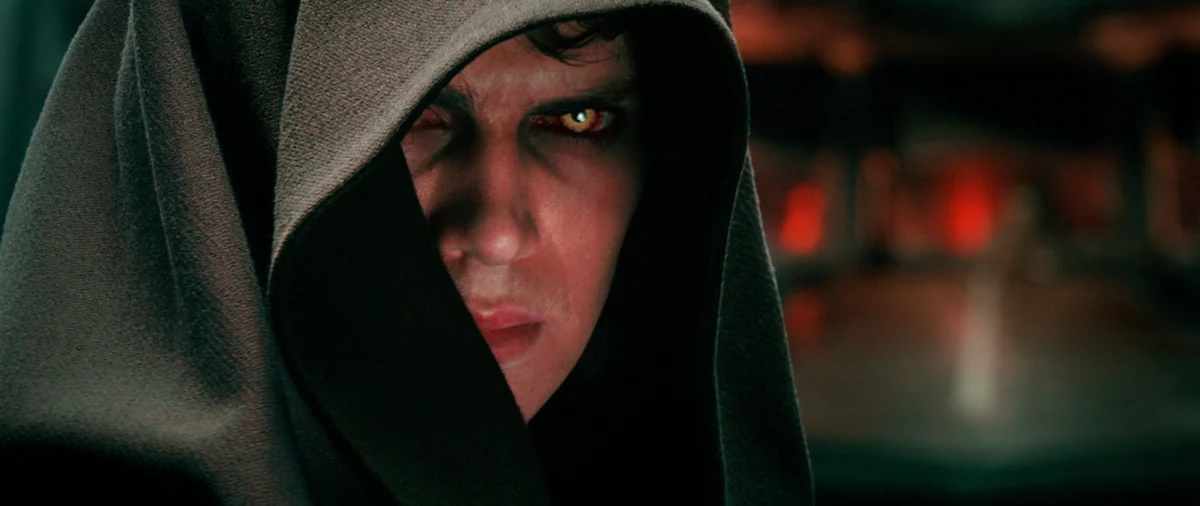
This surreal digital phenomenon reflects a broader trend of weaponized nostalgia and meme-based political signaling. Rather than relying solely on traditional policy debates or conventional campaign advertisements, various segments of the online right-wing ecosystem have embraced complex, villainous fictional characters—most notably Anakin Skywalker, who transforms into the ruthless Sith Lord Darth Vader—as archetypes of modern political disenfranchisement and anti-progressive rebellion.
The Genesis of the Anakin Skywalker Meme Wave
The digital trend gained significant traction in the weeks leading up to the 2026 midterms, coinciding paradoxically with the indefinite closure of the popular fan-fiction community Archive of Our Own (AO3). With traditional fan-fiction spaces offline, conservative commentators and online content creators began producing and amplifying narratives centered on the Star Wars prequel trilogy protagonist, casting his descent into the dark side as a righteous reaction against a corrupt and hypocritical political order.
Christian streamer Kangmin Lee publicly framed Anakin Skywalker as the ultimate "archetypal disenfranchised chud," arguing that the character’s radicalization stems from the realization that the Galactic Republic’s established political institutions are inherently wicked and hypocritical. This sentiment was quickly echoed by right-wing commentators across Substack and X, with writer Max Mersault describing the flood of Anakin-related posts as a culturally significant phenomenon, claiming it constituted a potent "anti-progressive memetic virus."
The meme reached unprecedented visibility when billionaire tech entrepreneur and prominent Republican mega-donor Elon Musk shared an AI-generated image depicting Anakin Skywalker seated upon a dark throne, flanked by Padmé Amidala, their children Luke Skywalker and Princess Leia, and an honor guard of Imperial stormtroopers. The post was captioned with the phrase, "This is what they stole from us," echoing a familiar populist lament regarding cultural and societal decline.
Political analysts note that the ambiguity of terms like "they" and "this" is entirely intentional. Within the insular ecosystem of hardline conservative social media, the imagery serves as a flexible Rorschach test, allowing users to project their individual grievances—ranging from immigration policies and diversity, equity, and inclusion (DEI) initiatives to deep-seated frustrations with the current administration—onto a universally recognized piece of pop culture.
From Malfoid to Imperial Ambitions: A Chronology of Digital Reactionism
The Anakin Skywalker meme wave did not emerge in a vacuum; it represents the latest evolution in a series of surreal pop-culture appropriations favored by online conservative factions. In the months preceding the Star Wars trend, X experienced a widespread craze centered around "Malfoid"—an internet subculture derived from Harry Potter fan fiction that introduces a gender-flipped, female iteration of the antagonist Draco Malfoy as a romantic foil.
Remarkably, various online factions and even institutional accounts attempted to rebrand this internet subculture into reactionary political messaging. The United States Department of Education’s official digital channels briefly engaged with the meme ecosystem before pivoting toward the Anakin Skywalker imagery, signaling an unprecedented blending of official government communication channels and esoteric internet subcultures.
The mainstream political apparatus has increasingly embraced this surreal aesthetic. Katie Miller, a political podcaster and the spouse of high-ranking Trump administration advisor Stephen Miller, publicly engaged with the trend on X, posting, "Thi have zero unregretted user seconds spent on Anakin postings," underscoring how deeply entrenched these internet memes have become within the inner circles of modern conservative political operations.
Sociological and Psychological Interpretations
The adoption of Darth Vader as an aspirational figure presents a striking paradox. In the Star Wars narrative, Anakin Skywalker is systematically manipulated, groomed, and exploited by a deceitful political mastermind (Palpatine) to dismantle a democratic republic, ultimately resulting in authoritarian rule, widespread planetary destruction, and the tragic slaughter of innocents.
Yet, digital commentators on the political right have largely dismissed these narrative realities, arguing that the ends justify the means when challenging a system they view as fundamentally broken. Some prominent X accounts have gone so far as to declare that the meme phenomenon "is not a meme anymore," framing it as a monumental "zeitgeist victory" capable of reversing a decade of perceived cultural damage in a matter of days.
Media scholars and cultural historians suggest that such phenomena highlight the gamification of political discourse. By reducing complex ideological struggles to cinematic tropes, participants can bypass nuanced policy debates in favor of emotionally resonant, tribal imagery. Wanting to identify with an omnipotent villain, psychologists note, often reflects an underlying sense of political powerlessness—a desire for absolute control in a chaotic and unpredictable sociopolitical environment.
Hayden Christensen, the actor who portrayed Anakin Skywalker in the Star Wars prequel trilogy, offered a starkly different interpretation of the character during a 2023 interview with Variety. Christensen noted that while depicting the character’s journey to the dark side humanized his struggles, Anakin ultimately remained a "pathetic person" who found himself "trapped in this life that perhaps he didn’t really want."
Critics of the conservative meme wave have been quick to draw parallels, suggesting that political influencers tethered to a vulnerable administration may find themselves similarly trapped in escalating cycles of performative radicalism, doubling down on increasingly esoteric digital content to maintain engagement among their base.
Broader Implications for Modern Political Campaigns
As the 2026 midterm elections reach their climax, the intersection of science fiction, AI-generated imagery, and partisan politics underscores how radically campaign communication has evolved. Traditional press releases and stump speeches now compete directly with algorithmic memetic warfare, where the lines between political philosophy, internet irony, and literal authoritarian fantasy are increasingly blurred.
Whether these digital strategies resonate with undecided, mainstream voters outside the insular echo chambers of X remains highly doubtful. Electoral analysts emphasize that issues such as economic stability, healthcare access, and geopolitical security continue to dictate voting behavior far more than cinematic allegories. Nevertheless, for the political right’s digital vanguard, the Anakin Skywalker phenomenon has proven to be an effective tool for internal mobilization—ensuring that regardless of the electoral outcome at the ballot box, the culture wars of tomorrow will likely continue to be fought with the fictional weapons of yesterday.