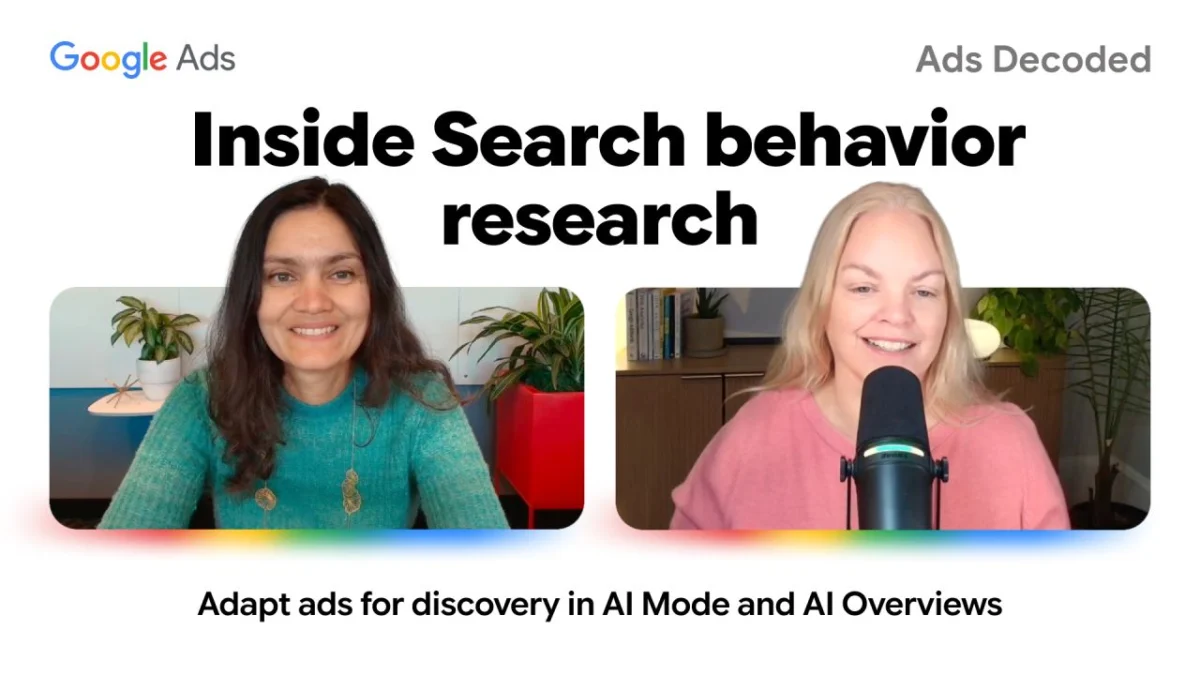
The digital search landscape is undergoing a structural transformation as artificial intelligence redefines the relationship between user intent and information discovery. Recent insights shared by Google executives suggest that the era of the short-tail, keyword-based query is rapidly giving way to a more conversational, exploratory, and multimodal interaction model. This shift, highlighted in the October 28 episode of the Google Ads Decoded podcast, features Ginny Marvin, Google’s Ads Product Liaison, and Shivani Mohan, Search Vice President of Data Science and User Experience Research. As the industry looks toward 2027, the data suggests that advertisers must move beyond traditional keyword strategies to address the nuanced, multi-step decision-making processes now occurring within AI-powered search environments.
The Shift Toward Conversational Complexity
Data presented by Google indicates that users are engaging with search engines in increasingly complex ways. One of the most significant metrics to emerge from recent internal analysis is that users are asking questions that are approximately three times longer than those submitted in traditional search interfaces. This surge in query length is not merely a change in volume but a change in behavior; users are utilizing voice and image inputs to provide personal context, allowing them to iterate through complex decision-making processes directly within the search results page.
Historically, search engine optimization (SEO) and paid search strategies were built on the assumption that a user was looking for a specific product or service to solve an immediate, well-defined problem. Today, the "Search" experience has become a hybrid of exploration and evaluation. A user might begin with a broad query about a specific pain point, then refine that query based on the AI-generated response, effectively navigating the sales funnel without ever leaving the Google ecosystem. For advertisers, this means that the initial search term is no longer the sole indicator of intent. The subsequent, longer-tail questions asked during a conversation often reveal specific anxieties or technical concerns that a standard product landing page or static service description may fail to address.
A Chronology of the AI Search Evolution
To understand the current state of search, it is necessary to look at the timeline of Google’s recent deployments. The integration of AI into Search has been a multi-year project, accelerated significantly by the industry-wide pivot toward Generative AI in 2023 and 2024.
- May 2026: Google published its comprehensive "U.S. AI Mode Report," which provided the foundational data for current discussions. This report identified the emergence of multimodal searching—the ability for users to combine text, images, and voice—as a critical pillar of modern user behavior.
- Late 2026: Google began expanding its ad formats to align with the conversational nature of AI-generated results, aiming to integrate sponsored content into the "exploratory" phase of the user journey rather than just the "transactional" phase.
- October 28, 2027: The Google Ads Decoded podcast episode served as a formal briefing for the advertising community, synthesizing findings from the previous 18 months of user behavior data and providing actionable takeaways for 2027 campaign planning.
The Demand for Human Authority
Despite the technical prowess of AI summaries, Google’s internal research confirms a paradox: as AI provides more immediate answers, the value of human experience increases. Shivani Mohan highlighted that while users appreciate the "streamlined clarity" of AI-generated content, they remain fundamentally driven by a desire for lived experience and the "earned authority" found on the open web.
This insight poses a significant challenge for marketing teams. When a consumer reaches the evaluation stage of a purchase, they often bypass generic marketing copy in favor of forums, podcasts, and independent video reviews. The implication for advertisers is clear: if an advertisement or a landing page simply repeats the marketing specifications found in a product catalog, it fails to provide the "human" context that users are actively seeking. To remain relevant, brands must pivot toward creating content that highlights real-world performance, limitations, and user tradeoffs—elements that AI models can summarize but cannot authentically "experience."
Implications for Paid Search Strategy
The transition toward conversational search requires a re-evaluation of how performance marketing teams define success. In the comments following the Google Ads Decoded episode, practitioners raised critical questions regarding the management of campaigns in this new environment. Specifically, there is uncertainty regarding how traditional metrics—such as click-through rate (CTR) and conversion attribution—will function when the user journey is non-linear and contained within an AI-powered interface.
For 2027, advertisers are encouraged to adopt a more diagnostic approach to campaign management. Instead of focusing solely on high-volume keywords, brands should:
- Analyze Query Nuance: Audit the search query reports to identify the "exploratory" questions being asked. These questions represent a roadmap of customer concerns that are not being addressed in existing ad copy.
- Evaluate Content Gaps: Determine if the brand’s website or video content provides the "lived experience" that users are seeking when they pivot from AI summaries to the open web.
- Bridge the Gap: Ensure that landing pages act as a bridge between the AI-provided summary and the final decision, offering deep-dive reviews, user testimonials, and objective comparisons that help the user feel confident in their choice.
Critical Analysis of the Data
While the data provided by Google offers a valuable glimpse into future trends, it is essential to view these statistics with a degree of analytical rigor. The "3x longer" query statistic, while impressive, serves as an average and does not account for the wide variance in search tasks. A user researching a complex medical decision, for example, will naturally ask longer questions than someone looking for a local restaurant.
Furthermore, while Mohan cited "billions of clicks to the open web," the lack of a clear timeframe or comparative growth rate makes it difficult to ascertain the health of organic traffic. Advertisers should be wary of assuming that a general increase in AI-driven interaction will automatically lead to a commensurate increase in traffic to their specific domains. The search landscape is becoming more competitive, and simply being present in the conversation is no longer sufficient; brands must now optimize for the "evaluation phase" of the conversation to convert exploratory interest into tangible action.
The Road to 2027
As we approach the next fiscal cycle, the consensus among industry analysts is that the "AI-first" search experience will favor brands that prioritize transparency and depth. The ability to answer the "why" and "how" behind a product, rather than just the "what," will become the primary differentiator.
Google’s own positioning suggests that it will continue to refine the balance between AI utility and open-web traffic. For the advertiser, the goal is not to compete with the AI but to complement it. By identifying the specific concerns that arise during the exploratory phase of a search, and by providing authentic, human-centric content to address those concerns, businesses can secure their place in the new search ecosystem.
In conclusion, the shift toward longer, conversational queries is a call to action for marketers to stop treating search as a series of isolated events and start treating it as a continuous relationship with the consumer. Those who succeed in 2027 will be the ones who recognize that while AI may facilitate the discovery of their brand, it is the quality of their human-focused content that will ultimately drive the conversion.