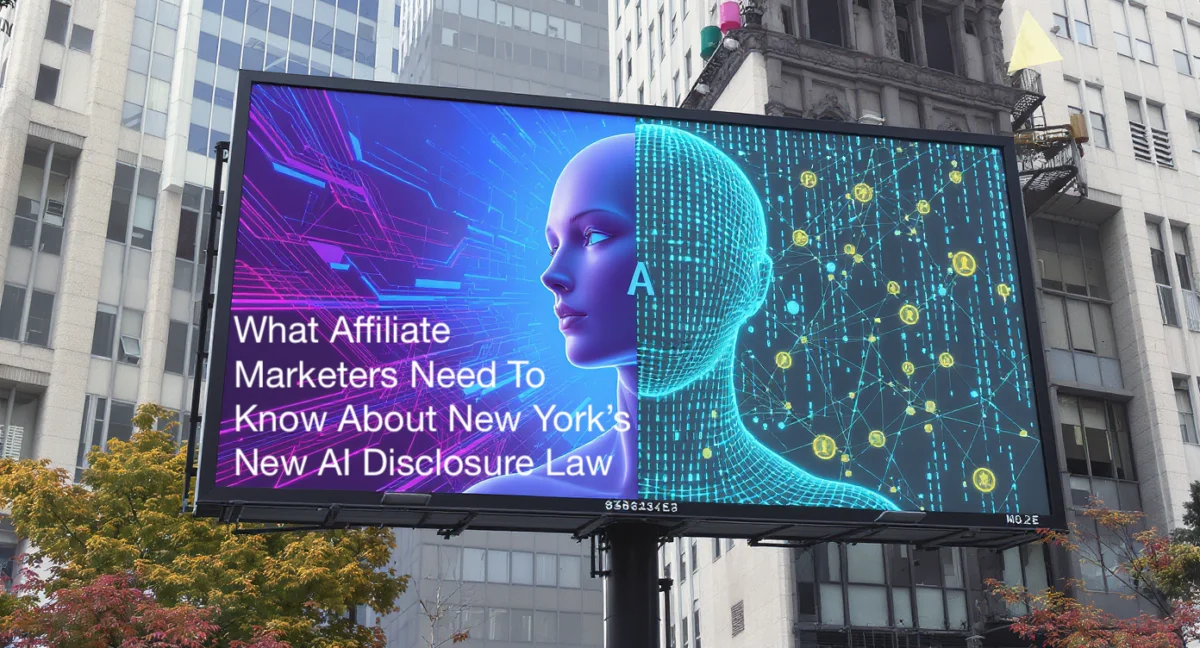
The rapid ascent of generative artificial intelligence has fundamentally altered the landscape of digital advertising, prompting a legislative response from New York State that marks a significant shift in how brands must approach human-like digital assets. On December 11, 2025, New York Governor Kathy Hochul signed into law S.8420-A/A.8887-B, a landmark statute that establishes clear, enforceable transparency requirements for advertisements featuring "synthetic performers." This legislation represents one of the most proactive state-level efforts in the United States to regulate the intersection of artificial intelligence and commercial speech, setting a precedent that digital marketers, agencies, and brand managers must navigate to avoid mounting financial liabilities.
The Legislative Context and Timeline
The passage of S.8420-A occurs against a backdrop of intensifying debate regarding the ethics of digital likenesses. As generative tools become more accessible, the ability to create hyper-realistic avatars that mimic human performance—without the cost or logistical hurdles of traditional talent—has become a staple of modern advertising. However, this convenience has raised concerns regarding consumer deception and the potential for audience manipulation.
The timeline leading to this mandate reflects a broader movement toward AI governance. Following years of rapid development in Large Language Models (LLMs) and image synthesis, state legislatures began drafting bills throughout 2024 to address the ambiguity surrounding digital personas. The New York bill moved through the Senate and Assembly with the primary goal of protecting the consumer’s right to distinguish between human-led campaigns and algorithmically generated performances. With the law now on the books, businesses have until June 2026 to bring their creative assets into full compliance. This transition period is designed to allow advertisers to audit existing campaigns, update creative workflows, and ensure that internal marketing processes align with the "conspicuous disclosure" standard.
Defining the Synthetic Performer
Central to the legislation is the specific definition of a "synthetic performer." The law characterizes such an asset as a digitally created, reproduced, or modified persona generated via artificial intelligence or a software algorithm. To fall under the scope of this law, the asset must be intended to create the impression that it is engaging in an audiovisual or visual performance of a human who is not recognizable as any identifiable natural person.
This distinction is crucial. It differentiates between a "deepfake" of a real, known person—which is often subject to right-of-publicity laws—and a purely fabricated, non-identifiable persona created to serve as a brand ambassador or model. By targeting the latter, New York is effectively closing a loophole that allowed companies to deploy "influencers" that never existed, often without the audience realizing the human interaction was entirely manufactured by code.
Disclosure Standards and Compliance Obligations
The mandate requires that any person, firm, or corporation engaged in commercial advertising that utilizes a synthetic performer must provide a "conspicuous disclosure." While the statute does not mandate a specific script, such as "this is AI-generated," it demands that the disclosure be prominent, unavoidable, and clearly noticeable. Burying a disclaimer in fine print at the bottom of a webpage or at the end of a video will likely fail to meet the "conspicuous" threshold defined by the law.
For digital marketers and affiliate managers, the burden of proof rests on the advertiser. If a party has actual knowledge that a synthetic performer is used, the obligation to disclose is absolute. This places significant pressure on agencies to conduct thorough audits of their supply chain. If a third-party creator or an AI vendor produces a campaign, the primary brand or the agency distributing the ad remains responsible for ensuring the disclosure is present. Experts suggest that brands should implement formal verification processes—often referred to as "AI provenance checks"—to confirm the nature of the assets they are distributing to New York-based audiences.
Financial Penalties and Litigation Exposure
The enforcement mechanism of the new law is designed to serve as a powerful deterrent. Violations are treated as civil offenses, carrying a penalty of $1,000 for the first infraction and escalating to $5,000 for every subsequent violation. While these figures may seem manageable for large-scale national brands, the cumulative effect of a non-compliant campaign running across thousands of ad impressions can lead to staggering statutory penalties.
Beyond the immediate financial costs, non-compliance invites heightened scrutiny from state regulators and the potential for consumer class-action litigation. In the current climate of heightened public sensitivity toward AI, a failure to disclose can also result in significant reputational damage. Brands that rely on consumer trust are increasingly viewing transparency not just as a legal requirement, but as a critical component of their public relations strategy.
Exclusions and Statutory Limitations
The legislature recognized that a blanket requirement for all digital media could stifle creative industries. Consequently, the law includes specific exclusions. Advertisements for "expressive works"—including feature-length films, television programs, documentaries, and video games—are generally exempt, provided that the use of a synthetic performer in the promotional material is consistent with its role within the work itself. This acknowledges the industry standard of using digital effects to enhance storytelling in entertainment.
Furthermore, the law does not apply to AI used solely for language translation, such as dubbing or subtitling a commercial for a global market. There is also a narrow exemption for certain media outlets and platforms that merely distribute the content, provided they did not have a hand in the creation or production of the synthetic asset. These carve-outs are intended to keep the law focused on deceptive marketing rather than general creative content.
The Broader Regulatory Environment: A Conflict of Laws
The implementation of S.8420-A is complicated by the shifting federal landscape. In late 2025, the White House issued an executive order aimed at fostering national AI innovation. A key component of this directive was the assertion of federal authority to preempt state laws that might create "obstruction" to a unified national AI policy. Legal analysts are currently debating whether New York’s strict disclosure requirements will be challenged on the grounds that they conflict with federal initiatives intended to streamline AI development.
Despite this potential for federal intervention, the current consensus among legal counsel is that advertisers should proceed as if the New York law is fully enforceable. Relying on a potential federal preemption defense is a high-risk strategy that could leave companies exposed to enforcement actions in the interim.
Interaction with Right of Publicity Laws
Adding to the regulatory complexity is the companion legislation, S.8391/A.8882, which strengthens the posthumous right of publicity in New York. This law creates a robust legal framework protecting the likeness, voice, and name of deceased individuals from unauthorized commercial use by "digital replicas."
The two laws combined signal a rigorous effort by New York to categorize and regulate digital likenesses. While the synthetic performer law focuses on fake people, the right of publicity law protects real people (even after death). Advertisers must now ensure they have explicit consent from the heirs or executors of any deceased personality before using a digital replica, with violations potentially resulting in damages of $2,000 or the total profits generated from the unauthorized use—whichever is greater.
Recommendations for Industry Practitioners
For those in the affiliate marketing, influencer, and digital advertising sectors, the path forward requires a multi-pronged approach:
- Legal Audit: Review all current and upcoming campaign materials to identify the presence of synthetic performers.
- Contractual Indemnification: Update agreements with AI vendors, creative agencies, and influencers to clearly delineate responsibility for AI disclosure and include robust indemnification clauses that protect the advertiser in the event of non-compliance.
- Process Integration: Build compliance into the pre-production workflow. Before any creative material is finalized, there should be a sign-off process verifying that the AI-generated elements are clearly disclosed according to the "conspicuous" standard.
- Monitoring and Surveillance: Implement internal auditing procedures to scan for and track the use of synthetic human likenesses across all media placements, especially those targeted at the New York market.
The era of unfettered AI implementation in marketing is coming to a close. As New York takes the lead, other states are expected to observe the economic and social impacts of this legislation before proposing their own variations. For advertisers, the message is clear: transparency is the new standard of operation, and those who fail to integrate it into their core business model do so at significant peril to their brand and their bottom line.