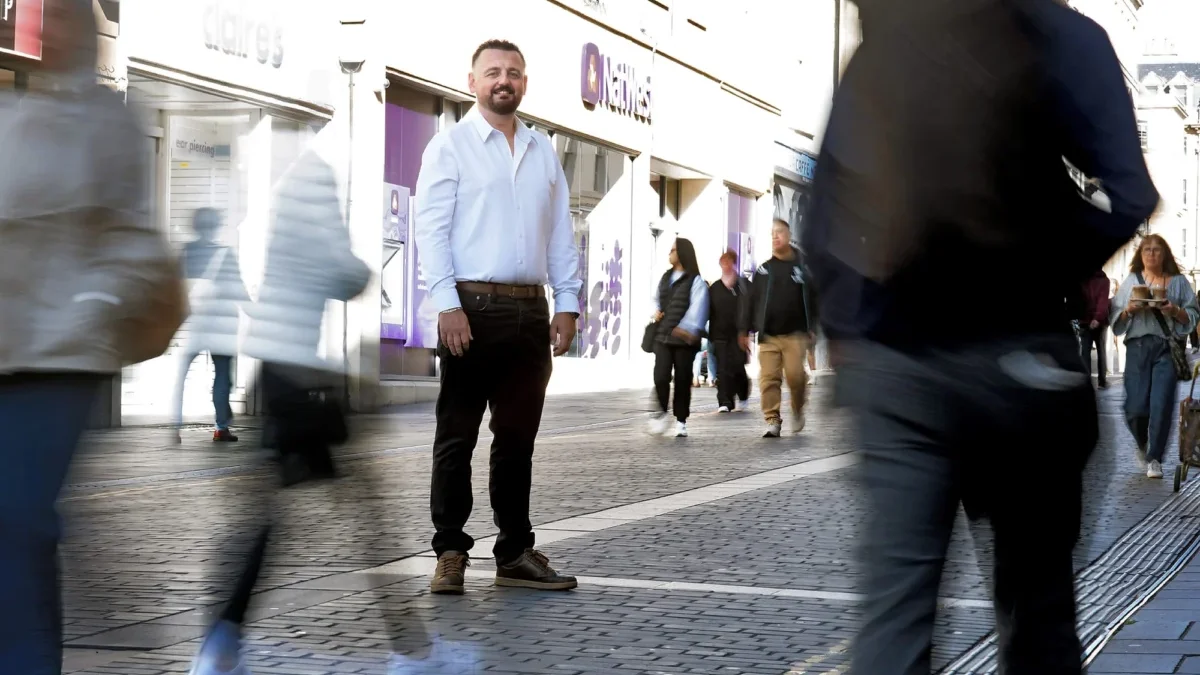
The landscape of private investigations and public safety in the United Kingdom is undergoing a profound technological shift following the launch of a pioneering initiative designed to turn millions of residential and vehicular cameras into a cohesive, rapid-response surveillance grid. Charles Land, a veteran private investigator and the founder of Wiltshire-based SPI Surveillance, Protection & Investigation (SPI), has officially introduced SPI Vision. This free-to-use platform seeks to bridge the critical gap between private technology owners and emergency search operations, addressing one of the most persistent hurdles in modern law enforcement and missing persons investigations: the race against time to secure vital, ephemeral digital evidence.
In an era where millions of households across the United Kingdom are equipped with smart doorbells, home security systems, and dashboard cameras, a vast percentage of public-facing urban and suburban space is continuously recorded. However, when a vulnerable individual wanders away from home, a child goes missing, or a crime is committed, accessing this distributed network of video data has traditionally relied on slow, manual procedures. SPI Vision aims to dismantle these logistical bottlenecks by creating a pre-registered, GDPR-compliant network of camera owners who can be alerted within seconds of an incident in their vicinity.
The Mechanics of SPI Vision: Technology Meets Public Safety
Operating on principles of strict data privacy and rapid deployment, SPI Vision functions by establishing a localized database of willing participants who have registered their doorbell, security, or dash cameras. When a missing person search is initiated within a specific geographic radius, registered members in that area receive an automated alert detailing a precise time window.
Participants are then prompted to review their private footage and submit relevant clips for analysis by SPI’s team of investigators. The platform has been engineered to adhere strictly to the UK’s General Data Protection Regulation (GDPR) and the Data Protection Act 2018. Personal data is never shared without explicit permission, and strict data lifecycle protocols are enforced: irrelevant footage is deleted immediately upon review, while any unreviewed data is automatically purged from the system after a 14-day period.
For Land, who established SPI in 2018 following an extensive career in private and legal investigative work, the motivation behind the platform stems from both professional experience and a deeply personal family trauma. Law enforcement agencies across the UK frequently highlight the reality of the initial search window—commonly referred to by investigators as the "golden hours"—during which the likelihood of locating a missing person safely is at its highest.
"Right now, finding that footage means knocking on doors," Land explains. "It takes hours, and by then the footage has often been overwritten. In a missing person search, the first few hours matter most. I have spent my career finding people and gathering evidence. I know how much one clear piece of footage can change the outcome, and I wanted to put that to work for families when it matters most."
A Personal History: The 2003 Trowbridge Abduction Attempt
The urgency driving Land’s technological solution is rooted in an event that occurred more than two decades ago, permanently shaping his family’s perspective on public safety and child abduction.

The incident took place on a Wednesday afternoon in October 2003. Land’s sister, Amy Land—then just 13 years old—was walking home from her secondary school in Trowbridge, Wiltshire. Having been dropped off by the school bus near the church on Wyke Road at approximately 3:30 PM, Amy began the familiar walk home. Almost immediately, she noticed a black Vauxhall Corsa traveling slowly behind her, repeatedly moving forward and halting in a manner that immediately aroused her suspicion.
As the vehicle paused, Amy maintained her pace. However, as she reached the halfway point of the road, a slim man with dark hair, dressed in a navy-blue hoodie and jeans, approached her from behind. Without warning, the assailant grabbed her and attempted to forcefully pull her toward the idling car. Exhibiting remarkable presence of mind, the 13-year-old fought back, kicking her attacker and managing to break free from his grip. She sprinted the remaining distance to her home in a state of severe shock, prompting her parents to contact emergency services immediately.
Despite an intensive response, the outcome highlighted the limitations of policing capabilities during that era. Amy and her mother spent three to four hours being driven through Trowbridge in a police cruiser in a desperate attempt to locate the black Vauxhall Corsa, yielding no results. Approximately two weeks later, the vehicle was discovered abandoned in London, but the perpetrator was never identified or apprehended.
Reflecting on the harrowing episode, Amy Land, now 36 and residing in the Warminster area, emphasizes the psychological longevity of such trauma and the societal necessity for proactive protective measures.
"This experience has stayed with me," she notes. "I was only 13 years old, walking home from school, when a stranger grabbed me and tried to pull me towards his car. I was fortunate that I managed to fight him off and escape, but it was a frightening experience that no child should ever have to go through. Now I’m a parent myself and I don’t want this happening to my child. I think SPI Vision is a positive and worthwhile idea. I hope that by speaking about what happened, I can help raise awareness and support efforts to prevent other children from experiencing something similar. I also hope it will encourage parents and young people to be aware of unusual behaviour, trust their instincts and take sensible steps to keep themselves safe."
Scale of the Crisis: Missing Persons in the United Kingdom
To understand the operational necessity of platforms like SPI Vision, one must examine the staggering volume of missing persons cases handled annually across the United Kingdom. According to data compiled by the national charity Missing People, an individual is reported missing in the UK every 90 seconds. Cumulatively, approximately 160,000 people are reported missing each year, with numerous individuals experiencing multiple episodes within a single twelve-month period.
While a significant proportion of missing persons are located within the first 24 hours, a distinct subset of cases involves high-risk categories where traditional search methodologies face severe constraints. This includes vulnerable elderly adults—particularly those suffering from Alzheimer’s disease or other forms of dementia who may become disoriented and wander away from residential care or family homes—as well as teenagers experiencing acute mental health crises.
In these scenarios, establishing a directional trail is paramount. Traditional search parties and canine units, while invaluable, rely heavily on scent trails or physical sightings reported by human witnesses, which can be notoriously unreliable or delayed. Security and dashcam footage offers an objective, time-stamped digital timeline capable of mapping an individual’s precise movements down to the second.
Beyond Missing Persons: Multi-Agency Applications and Crime Prevention
While the primary focus of SPI Vision is the urgent location of missing children and vulnerable adults, the infrastructural framework holds profound utility for a wider array of public safety and criminal investigative challenges.
Law enforcement agencies frequently struggle to gather timely evidence for property crimes due to the localized nature of modern residential burglaries and vehicle thefts. SPI Vision’s network design allows investigators to cross-reference timestamps during break-ins, potentially capturing the arrival and departure routes of suspects, vehicle registration plates, and identifying physical characteristics.
Furthermore, the platform is expected to assist in investigations concerning:
- Vehicle-Related Crime: Targeting persistent issues such as catalytic converter thefts, which often rely on quick-getaway vehicles operating within residential housing estates.
- Hit-and-Run Collisions: Assisting victims and traffic police in tracing motorists who fail to stop at the scene of accidents on suburban streets.
- Criminal Damage and Anti-Social Behavior: Aggregating recurrent incidents of vandalism or harassment to establish patterns and secure actionable evidence for local policing teams.
Despite the expansive potential of the network, Charles Land is quick to emphasize that SPI Vision is structured as an auxiliary support mechanism rather than a replacement for statutory emergency services.
"This is about supporting the police and search teams, not replacing them," Land reiterates. "Every camera on the map is another pair of eyes when someone needs to be found."
Privacy, Compliance, and Future Expansion
The integration of private surveillance networks into investigative procedures naturally invites public scrutiny regarding civil liberties, data ownership, and surveillance creep. In designing SPI Vision, the development team prioritized data sovereignty to mitigate privacy concerns. Camera owners retain total autonomy over their hardware; the platform does not establish continuous live feeds into private properties. Instead, functionality is strictly request-based, utilizing field-of-view checks and advanced privacy masking tools to ensure that only relevant public-facing spaces—such as driveways, pavements, and roadways—are scrutinized during an active search.
Initially rolling out across Wiltshire, SPI Vision is positioned for a phased regional expansion across the South West of England before scaling toward a nationwide UK footprint. Registration for camera owners is entirely free and accessible via the SPI official portal.
As the boundaries between private technology and public safety continue to blur, initiatives like SPI Vision represent an evolving paradigm in community-driven defense and emergency response. By harnessing the ubiquity of modern digital lenses, the platform seeks to transform passive domestic technology into an active, protective shield for communities across Britain.