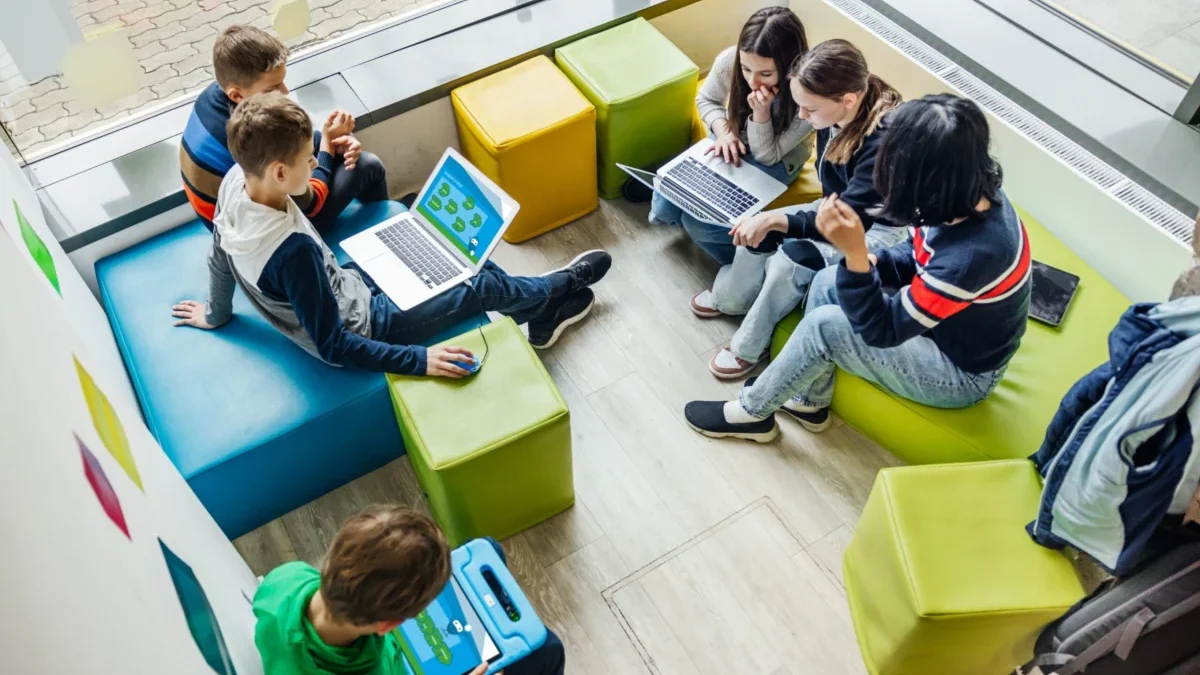
The rapid integration of artificial intelligence into the K-12 classroom has sparked a fierce debate regarding educational equity. While proponents argue that AI-powered tutoring platforms will democratize access to personalized instruction for underprivileged students, a growing cohort of educators and policymakers warns of an emerging socio-economic divide. The emerging concern is that in the coming decade, the education system may bifurcate: lower-income students will rely heavily on AI-driven interfaces for their primary instruction, while families with higher disposable incomes will continue to pay for the irreplaceable nuance, mentorship, and human connection provided by flesh-and-blood teachers.
The Current Landscape of AI Adoption in Schools
The shift toward AI-assisted learning is already well underway, though it is manifesting in ways that diverge across demographic lines. Data from the Pew Research Center highlights a stark disparity in usage patterns: approximately 20% of teenagers from households earning less than $30,000 annually report using chatbots for nearly all of their homework. In contrast, only 7% of teenagers from households earning $75,000 or more report similar reliance on these tools.
This trend suggests that for many families, AI is not merely a supplement but a primary educational crutch. The implications of this are significant. While these tools can provide instant feedback and explanations, they also risk fostering a "cognitive offloading" effect. Students who utilize AI to bypass the labor of critical thinking, research, and composition may inadvertently atrophy the very skills necessary for independent academic growth.
A Chronology of Educational Technological Shifts
The trajectory of this issue can be traced through several key developments in recent years:
- 2020–2021: The COVID-19 pandemic necessitated a mass, rapid shift to remote, screen-based learning. While intended as a temporary measure, the move established the digital infrastructure for mass-scale virtual instruction.
- 2023–2024: The public release of advanced large language models (LLMs) catalyzed an explosion of "AI Tutor" startups, marketed as the solution to the global teacher shortage.
- 2025: Research institutes, including the Wharton School, began publishing empirical data suggesting that while AI can improve performance on immediate practice tasks, it often leads to a decline in retention and problem-solving abilities when students are tested without AI assistance.
- 2026: The U.S. Department of Education formally prioritized AI development in the allocation of federal grants, signaling an institutional commitment to integrating these tools into the standard curriculum.
Empirical Evidence: The Risks of AI Over-Reliance
The experiment conducted by the Wharton School serves as a critical warning for policymakers. By comparing three groups of students—those using standard ChatGPT, those using specialized tutoring bots, and a control group using no AI—researchers discovered a "dependency trap." While the AI groups performed better during the learning phase, they failed to internalize the underlying logic of the subject matter. On a final exam administered without the aid of bots, the group that used standard ChatGPT performed 17% worse than the control group.
This evidence suggests that the convenience of AI, when used as a surrogate for effort, acts as a barrier to true mastery. Educators point out that the process of struggling with a math problem or agonizing over a paragraph is not wasted time; it is the fundamental mechanism by which cognitive neural pathways are strengthened.
The Human Element: Why Teachers Cannot Be Replaced
The argument for the necessity of human teachers transcends mere pedagogical instruction. Education is fundamentally a social and emotional process. Educators serve as motivators, moral guides, and role models who can identify when a student is struggling not with the curriculum, but with their environment or self-esteem.
Consider the case of students from disadvantaged backgrounds who rely on schools for mentorship. A human teacher provides the belief and validation that can keep a student in the classroom when they might otherwise drop out due to external pressures. An algorithm can provide the correct answer to an equation, but it cannot empathize with a student’s life circumstances, nor can it provide the mentorship that transforms a student’s trajectory.
The Economic Drivers of the AI Pivot
The push for AI in schools is being fueled by an urgent, systemic crisis: the global teacher shortage. UNESCO estimates that the world will require an additional 44 million teachers by 2030 to meet basic educational needs. In the United States alone, tens of thousands of teaching positions remain vacant.
Faced with these shortages and the pressures of tightening budgets, many school districts are looking at the bottom line. With teacher salaries accounting for approximately 30% of total public school expenditures, there is significant fiscal incentive for administrators to view AI as a "cost-effective" alternative. The risk is that the definition of a teacher’s role will be downgraded from an active mentor to a "platform operator"—a technician who oversees the smooth running of software and intervenes only when an automated system flags a performance metric issue.
Official Responses and Policy Implications
The U.S. Department of Education’s inclusion of AI development in its federal grant priorities has drawn mixed reactions. While the Department has acknowledged the need to preserve the "human element," the final policy text remains heavily focused on AI-led instruction for students falling behind. Critics argue that this policy risks creating a two-tiered system: one where the wealthy pay for the "human premium" of small class sizes and experienced mentors, while public school students are increasingly "managed" by algorithms.
Academic stakeholders and teacher unions have expressed concerns that without rigorous safeguards, the rush to adopt AI will be driven more by budgetary convenience than by evidence-based pedagogy. There is a fear that the "digital divide" of the early 2000s—which centered on access to hardware—is being replaced by an "intellectual divide," where the quality of one’s guidance is determined by their family’s ability to opt out of the automated school system.
The Broader Impact on Future Generations
As AI capabilities continue to outpace the benchmarks designed to evaluate them, the cost of implementing these technologies is plummeting. This makes AI an attractive, albeit dangerous, panacea for failing school districts. However, the long-term cost may be far higher than the price of a teacher’s salary.
If schools move toward a model where students primarily interact with machines, they may be sacrificing the development of critical soft skills: negotiation, conflict resolution, creative collaboration, and ethical reasoning. These are the very skills that distinguish humans from machines in the modern labor market.
Ultimately, the decision of how to deploy AI in the classroom will determine the character of the next generation. If AI is used as a tool to support teachers, it could revolutionize education. If it is used to replace them, it will likely entrench social inequality, leaving behind a generation that is technically proficient in inputting prompts but fundamentally lacking in the independent thinking and human resilience that only a real teacher can cultivate.
The task ahead for policymakers is to ensure that while the technological landscape of the classroom is updated, the foundation of the education system—the teacher-student relationship—remains at the center of the pedagogical mission. Failure to do so may turn schools into nothing more than data-processing centers, providing access to information while failing to facilitate the pursuit of true wisdom.