The landscape of modern web development continues to evolve at a rapid pace, driven by collaborative efforts within standards organizations, browser vendors, and the front-end engineering community. Over the recent development cycle, a series of significant proposals, experimental features, and practical methodologies have emerged, redefining how developers approach user interface design, layout management, and progressive enhancement. From advanced tooltip mechanics and native HTML geolocation enhancements to innovative syntax highlighters and forward-looking CSS selectors, the current ecosystem reflects an industry-wide push toward greater native performance and cleaner codebases.
Main Facts and Core Developments in Web Standards
Recent weeks have yielded substantial updates across browser engines and web standards documentation. Among the most notable discussions is the refinement of user interface interactions, specifically concerning tooltips. Developer Abhishek Jakhar recently analyzed the fundamental usability issues inherent in traditional tooltip implementations, arguing that tooltips should feature an initial delay to prevent accidental triggers, followed by an immediate dismissal mechanism once the user’s focus shifts away from the interactive element. Expanding upon this concept, developer Chris Coyier demonstrated a modern implementation leveraging upcoming HTML and CSS specifications centered around interest invokers. These proposals introduce specialized properties—namely interest-delay-start and interest-delay-end—which natively manage the timing of interactive states. While current support for interest invokers remains restricted to Google Chrome, the technique serves as a prime example of progressive enhancement in modern web architecture.
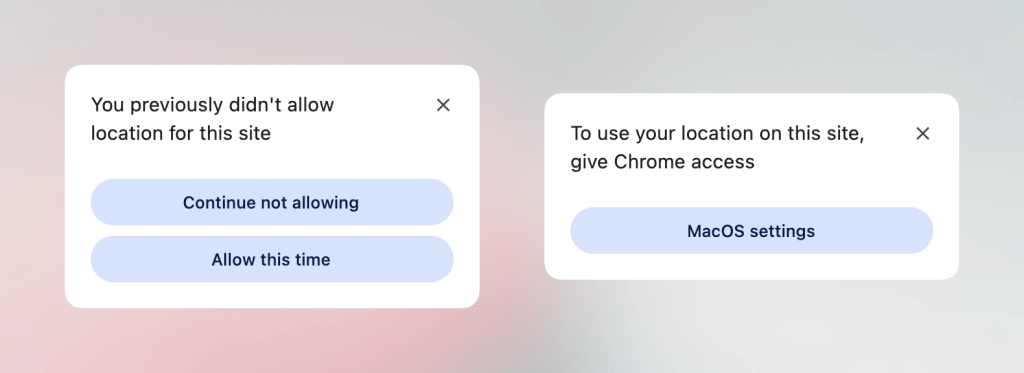
Concurrently, the introduction of the native <geolocation> HTML element aims to streamline one of the web’s historically cumbersome APIs. Historically, managing geolocation required complex interactions involving external hardware parameters, such as GPS satellites, Wi-Fi triangulation, and cellular tower data, often compounded by frustrating permission management workflows. The proposed <geolocation> element addresses these friction points, albeit introducing minor design and styling constraints. Because browser adoption for this element is currently limited to Chrome, developers have devised transitional workflows that combine the new HTML element with the legacy Geolocation API, ensuring backward compatibility while preparing codebases for future standards.
Chronology of Recent CSS and HTML Innovations
The progression of web platform updates over the past quarter highlights a systematic effort to solve long-standing layout and performance bottlenecks. The timeline of these architectural discussions highlights how community-driven tools quickly transition into formal browser implementations:
- Early August: Discussions surrounding progressive enhancement intensify with new documentation on the Custom Highlight API. Developer Dave Rupert releases MicroLighter, a lightweight syntax highlighter built entirely around the
::highlight()CSS pseudo-element, bypassing heavy JavaScript-based DOM manipulation. - Mid-August: Layout engineering receives a major boost as Temani Afif publishes methodologies for extracting CSS grid metrics—such as row and column counts, as well as individual cell coordinates—directly into CSS custom properties. This technique enables advanced spatial awareness, including hover-proximity calculations.
- Late August: Bramus introduces two major CSS proposals: the class prefix selector (
.something-*) for high-performance multi-class targeting, and the@supports named-feature()function designed to query granular browser capabilities that were previously undetectable. - Concurrently: Browser engines begin experimenting with layout balancing features, notably Chrome’s introduction of
flex-wrap: balance, which applies automated distribution logic to flex items analogous totext-wrap: balancefor typography.
Supporting Data and Technical Implementations
The shift toward native browser capabilities is largely motivated by the pursuit of execution performance and reduced JavaScript overhead. A clear illustration of this trend is Dave Rupert’s MicroLighter. By utilizing the native Custom Highlight API rather than traditional span-based DOM tokenization, developers can apply syntax highlighting via CSS alone. This approach drastically minimizes memory consumption on large codebases, as the browser handles text styling without altering the underlying document object model.
Similarly, the proposed class prefix selector addresses a persistent performance bottleneck in stylesheet authoring. Traditionally, targeting elements with shared naming conventions required attribute selectors such as [class^="something-"] or [class*=" something-"]. These selectors are computationally expensive for browser layout engines because they force string-matching operations across every class attribute in the DOM. The proposed .something-* syntax provides a dedicated, highly optimized parser instruction, delivering cleaner syntax while maintaining superior rendering performance.
In the realm of layout design, Temani Afif’s exploration of CSS grid variables bridges the historical gap between styling and layout state. By successfully piping grid track counts and index positions into custom properties, developers can dynamically alter child element behaviors based on their precise spatial coordinates within a grid container. This breakthrough has immediate applications in interactive UI design, such as calculating mouse proximity relative to specific grid cells without relying on continuous JavaScript event listeners.
Official Responses and Industry Discourse
The introduction of these features has sparked robust debate within the front-end development community. Architectural decisions regarding native dark mode implementations, for instance, have highlighted divergent philosophies among leading web engineers. The debate centers on whether user interfaces should utilize a two-state toggle (light versus dark) or a tri-state model (light, dark, and system default). While accessibility advocates and developers like Bramus present compelling arguments for tri-state controls to give users absolute manual override, others, such as Lea Verou, advocate for streamlined two-state interactions, while community voices like Vale.Rocks propose an "auto-until-overridden" hybrid model.
Furthermore, reactions to browser-specific implementations—such as Chrome’s adoption of flex-wrap: balance—reflect cautious optimism. Frontend expert Ahmad Shadeed noted that balancing wrapped flex items across rows and columns significantly enhances the visual rhythm of card layouts and responsive navigation bars, eliminating the jagged visual weight often produced by uneven final rows. However, developers continue to emphasize the necessity of fallback strategies to ensure cross-browser consistency while non-Chromium engines evaluate similar layout specifications.
Broader Impact and Future Implications
The cumulative effect of these evolving standards points toward a leaner, more capable web platform where tasks historically delegated to JavaScript frameworks are increasingly handled natively by CSS and HTML. By reducing reliance on third-party libraries for syntax highlighting, tooltip management, and layout coordination, modern web development practices are trending toward improved Core Web Vitals, faster initial page renders, and reduced maintenance overhead.
As browser vendors continue to evaluate and implement proposals like named-feature() support queries and class prefix selectors, the development community faces a transitional period characterized by strategic progressive enhancement. Developers must balance the adoption of cutting-edge platform capabilities with robust fallbacks for legacy environments. Ultimately, these ongoing refinements demonstrate the web ecosystem’s capacity for continuous adaptation, ensuring that developers are equipped with the native tools necessary to build sophisticated, performant, and accessible digital experiences as the industry transitions into the autumn development cycle and beyond.