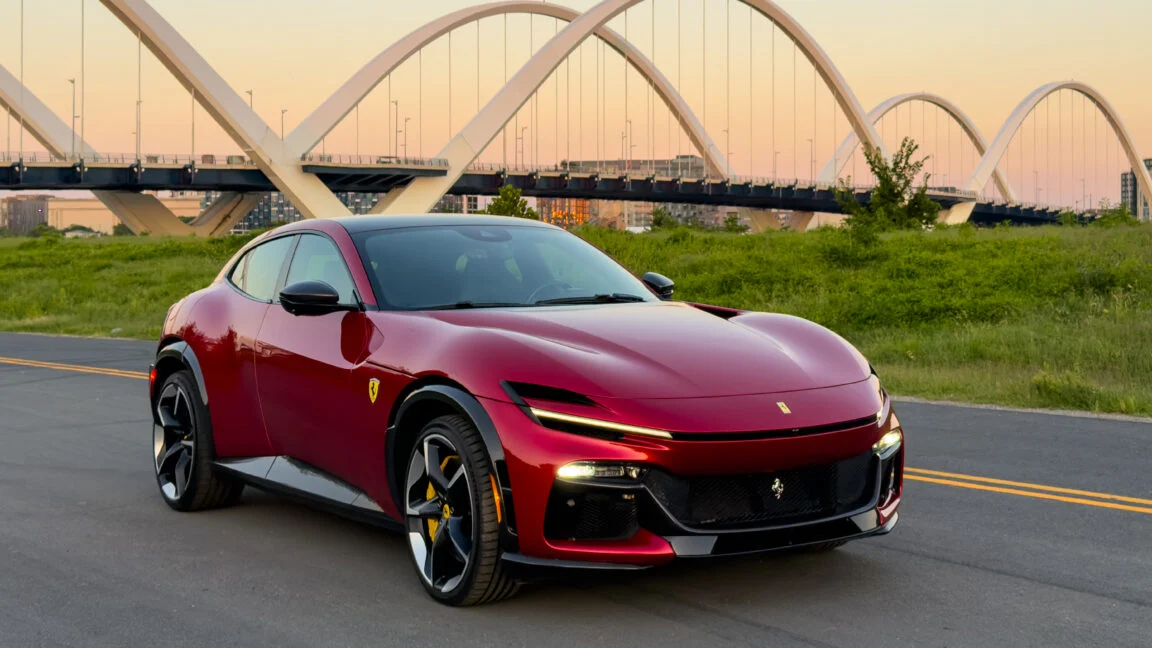
The automotive landscape has witnessed a paradigm shift with the arrival of the Ferrari Purosangue, a vehicle that attempts to reconcile the storied performance heritage of Maranello with the practical demands of a luxury utility vehicle. Positioned not as a traditional SUV but as a "four-door, four-seater" performance car, the Purosangue represents a critical juncture in Ferrari’s history. With a base price starting at approximately $393,350, it enters a market segment populated by established titans such as the Lamborghini Urus SE and the Aston Martin DBX707. However, the Purosangue distinguishes itself through a naturally aspirated V12 powertrain and a design philosophy that prioritizes driving dynamics over high-riding utility.
Evolution of the Maranello Utility Concept
The development of the Purosangue follows a decade of internal debate at Ferrari regarding the feasibility of a utility-oriented vehicle. Historically, Ferrari executives, including the late Sergio Marchionne, were vocal about the brand’s resistance to the SUV trend. The shift in strategy, officially signaled in 2018 during the company’s Capital Markets Day, was driven by a need to expand the brand’s demographic while maintaining the exclusivity and technical prowess of its sports car lineup.
The Purosangue serves as a departure from the mid-engine architecture that defines the 296 GTB and SF90 Stradale. By moving to a front-mid-engine layout, Ferrari engineers sought to maintain a near-perfect weight distribution, utilizing a sophisticated active suspension system developed in partnership with Multimatic to counteract the inherent physical limitations of a taller vehicle.
Ergonomics and Human-Machine Interface Analysis
A defining characteristic of the Purosangue’s interior is its commitment to physical tactile feedback, a notable divergence from the industry’s current trend toward fully capacitive touch-based cockpits. In the 296 GTB, Ferrari utilized a capacitive touch interface that drew criticism for its lack of precision; the Purosangue rectifies this by employing high-quality physical buttons on the multifunction steering wheel. This design choice ensures that critical functions, such as navigation of the Apple CarPlay interface, can be performed without requiring the driver to divert their focus from the road.
However, the vehicle’s secondary controls represent a more complex integration. The climate control and seating adjustments are managed through a pop-out rotating controller mounted in the dashboard. While this mechanism is mechanically impressive, the interface requires users to interact with small touchscreen targets, which can prove challenging during active driving scenarios. A secondary, identical dial is positioned between the rear seats, ensuring that passengers maintain control over their environment, though the ergonomic challenges remain consistent across both rows.
Notably absent is a traditional central infotainment screen. In its place, the passenger is provided with a dedicated, high-definition display. Engineered with specialized polarization, the screen is designed to remain invisible to the driver, effectively mitigating distractions. While this allows passengers to engage with native media applications, the limitation remains that smartphone mirroring, such as CarPlay, cannot be projected onto the passenger-side display, a restriction that may frustrate tech-forward users.
Performance and Daily Usability Specifications
At the heart of the Purosangue is a 6.5-liter naturally aspirated V12 engine, a rarity in an era of turbocharging and hybridization. The engine produces 715 horsepower and 528 lb-ft of torque, capable of propelling the vehicle from 0 to 60 mph in approximately 3.3 seconds. These figures position it as a direct competitor to the most potent SUVs on the market.
Despite its performance credentials, the Purosangue is marketed as a vehicle suitable for daily use. This is reflected in the interior appointments, which prioritize material quality and comfort. The rear seats are fully bucketed and offer levels of lateral support comparable to the front seats, a necessary feature given the vehicle’s ability to generate significant lateral G-forces.
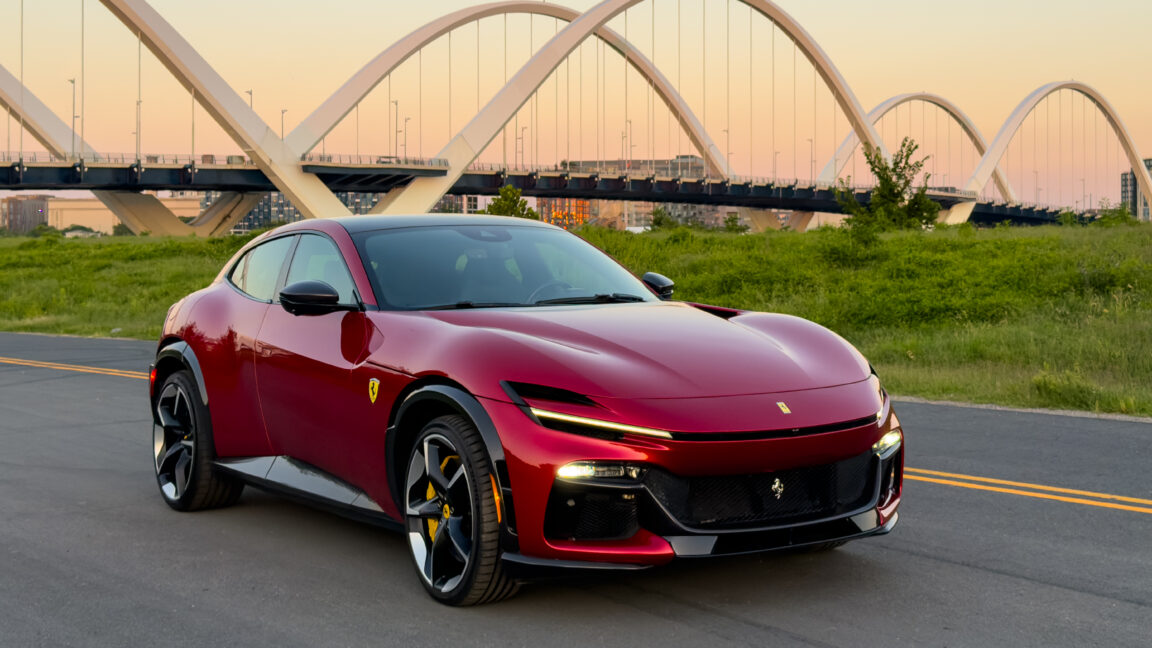
However, the trade-off for this performance is fuel efficiency. With a combined fuel economy rating of 12 mpg (19.6 L/100 km), the Purosangue is significantly less efficient than many of its hybrid counterparts. Ferrari acknowledges this, positioning the Purosangue as a V12 enthusiast’s vehicle, while the upcoming battery-electric "Luce" is intended to address the segment of the market seeking zero-emissions transportation.
Market Positioning and Customization
The financial barrier to entry for the Purosangue is substantial. While the base MSRP is $393,350, the reality of Ferrari ownership involves an extensive options list. As evidenced by test vehicles reaching price points of $576,544, the cost of customization—through programs like "Atelier" and "Tailor Made"—can inflate the final price by hundreds of thousands of dollars.
This pricing strategy places the Purosangue in a unique position relative to rivals. The Lamborghini Urus SE and Aston Martin DBX offer similar utility and performance metrics at a lower base price point. Ferrari’s pricing strategy relies on the brand’s "halo" effect; the Purosangue is not merely competing with other SUVs but is competing against the luxury of the Ferrari nameplate itself.
Technical Implications of the Active Suspension
The most significant technical innovation in the Purosangue is the Ferrari Active Suspension Technology (FAST). Utilizing 48-volt actuators, the system can adjust the stiffness of the dampers at each corner independently and near-instantaneously. This allows the vehicle to maintain a flat cornering posture without the need for traditional anti-roll bars.
From an engineering perspective, this represents a significant achievement in managing the center of gravity of a vehicle that stands taller than a typical grand tourer. The implications for the automotive industry are profound: as consumers continue to favor SUVs, manufacturers are increasingly looking to active suspension systems to bridge the gap between utility and sports-car handling.
Broader Impact and Future Outlook
The Purosangue is not designed for the mass market; its production is strictly capped at 20 percent of Ferrari’s total annual output to ensure the exclusivity that sustains the brand’s valuation. By maintaining this scarcity, Ferrari ensures that the Purosangue remains a status symbol rather than a common utility vehicle.
The success of the Purosangue will likely influence the trajectory of other ultra-luxury manufacturers. We are already seeing competitors adapt their product roadmaps to include higher-performance utility vehicles that lean into the "sports car first, utility second" ethos.
For the prospective buyer, the Purosangue offers a compromise: the ability to transport four adults in a vehicle that retains the auditory and visceral experience of a V12 engine. While the infotainment interface presents a learning curve and the fuel economy reflects the engine’s displacement, these factors are unlikely to deter the core demographic of the Ferrari brand.
In conclusion, the Ferrari Purosangue occupies a narrow but lucrative niche. It successfully navigates the tension between the functional requirements of an SUV and the performance expectations of a supercar. Whether it will serve as the blueprint for future Maranello designs or remain an outlier in the brand’s history remains to be seen, but its arrival marks the most significant expansion of the Ferrari identity in the 21st century. As the automotive world moves toward electrification, the Purosangue stands as a definitive, high-octane statement on the endurance of the internal combustion engine in the luxury performance segment.