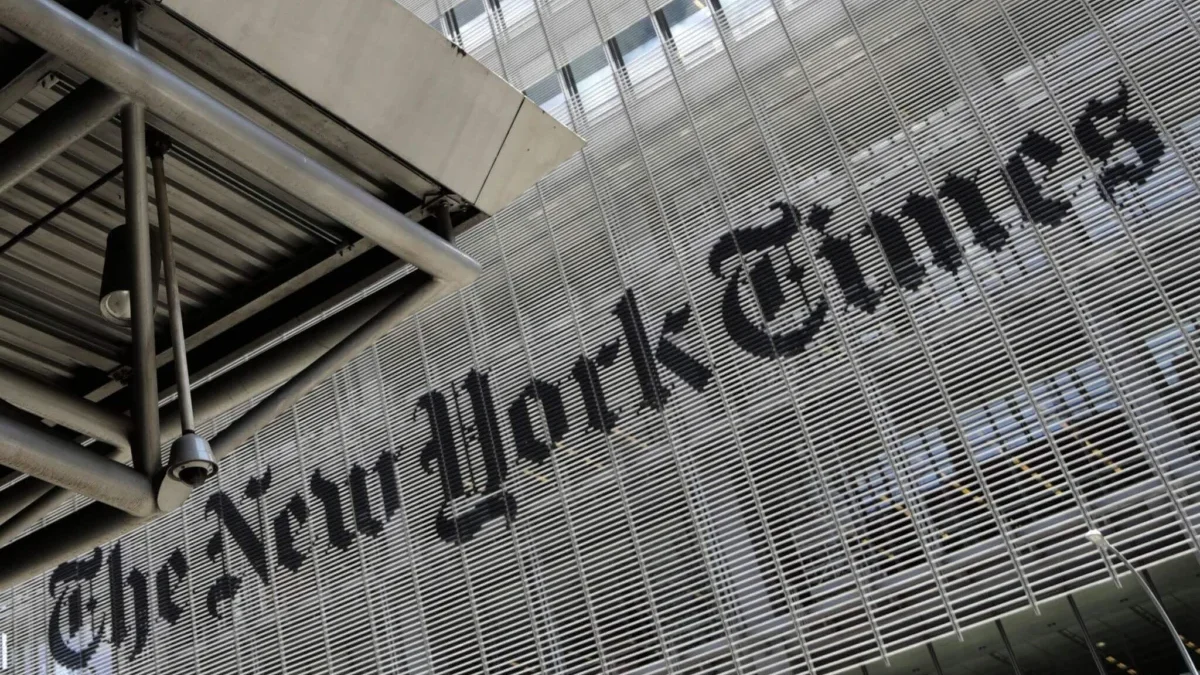
The landscape of American journalism reached a significant milestone on September 18, 2026, as The New York Times celebrated its 175th anniversary. Founded on September 18, 1851, by Henry Jarvis Raymond and George Jones, the publication has evolved from a local broadsheet into a global digital-first institution. To commemorate the occasion, the organization rang the opening bell at the New York Stock Exchange, a symbolic gesture reflecting its transition from a print legacy to a multinational subscription-based media powerhouse.
The history of the publication is marked by a persistent commitment to original, fact-based reporting, a mission that has remained the bedrock of its business model. Today, The New York Times commands the largest newsroom in its history, employing thousands of journalists across the globe. This expansion has been fueled by a digital strategy that has garnered millions of subscribers, far exceeding the circulation figures of the mid-20th century, often referred to as the "golden age of print."
A Historical Retrospective and Editorial Transparency
The 175th anniversary is not merely a celebration of longevity but an exercise in institutional reflection. David Shipley, the editor overseeing the anniversary coverage, has curated a series of nearly 50 stories designed to interrogate both the triumphs and the failures of the newspaper. This effort, which will continue through mid-December, includes a special issue of The New York Times Magazine and a commemorative section, all of which will be accessible to the public without a paywall.
The project intends to confront difficult chapters in the newspaper’s history, including the 2003 Jayson Blair fabrication and plagiarism scandal, which forced a major internal reckoning regarding editorial oversight, and the 2004 admission of reporting failures concerning Iraq’s weapons of mass destruction. Shipley argues that these moments of self-correction are essential to the institution’s credibility. By documenting past errors, the publication aims to demonstrate that its commitment to truth is not static but a process of constant refinement. This transparency is intended to build reader trust in an era defined by media skepticism and polarized discourse.
Chronology of The Times’ Evolution
- 1851: The New-York Daily Times is founded for the price of one penny.
- 1896: Adolph Ochs purchases the paper, introducing the slogan, "All the News That’s Fit to Print."
- 1920s-1940s: The paper establishes its reputation for authoritative foreign correspondence, earning multiple Pulitzer Prizes.
- 1971: The publication of the Pentagon Papers, a watershed moment for press freedom in the United States.
- 2003: The Jayson Blair scandal leads to a comprehensive overhaul of editorial workflows.
- 2011: The introduction of a digital paywall, signaling the beginning of the modern subscription-first business model.
- 2026: The 175th anniversary, marking a transition toward multimedia, audio, and gaming content as part of a diversified digital portfolio.
The data supports the claim of significant growth. In recent fiscal reports, the company highlighted that its digital-only subscribers represent the primary engine of its revenue, allowing for consistent reinvestment in investigative reporting. This financial stability is a critical factor in the newspaper’s ability to maintain a large, specialized staff capable of deep-dive reporting, a rarity in an industry that has seen drastic reductions in newsroom personnel over the last two decades.
Professional Standards and the Texas Football Incident
While the media industry reflects on institutional ethics, a separate incident in collegiate athletics has highlighted the importance of professional conduct between public figures and the press. Following the University of Texas’ victory over Ohio State last Saturday, head coach Steve Sarkisian drew widespread criticism for his dismissive treatment of veteran ESPN sideline reporter Holly Rowe.
The incident occurred during a post-game interview attempt. Video footage captured Sarkisian walking away from the interview mid-question, an act that many sports media observers characterized as unprofessional. Initially, the University of Texas attributed the departure to technical difficulties, a claim that was met with skepticism given the visual evidence of the coach’s intentional departure.
The situation was further exacerbated by comments made by Texas quarterback Arch Manning, who was captured on video laughing at an AI-generated clip depicting the coach striking the reporter. The incident gained traction on social media, leading to a public outcry regarding the treatment of journalists and the normalization of disparaging imagery involving violence against women.
Official Responses and Accountability
By Thursday, the situation had evolved from a localized sideline dispute into a broader discussion on accountability. Steve Sarkisian addressed the media, expressing regret for his actions and clarifying that the encounter was not the result of technical failure, but a lapse in judgment.
"If hindsight is 20/20, if I could do it all over again, I would have exuded more patience in that moment," Sarkisian stated. He emphasized his long-standing professional relationship with Rowe, dating back to his tenure as a player at Brigham Young University, and acknowledged the role of ESPN as a vital partner in the collegiate sports ecosystem.
Regarding Arch Manning’s involvement, Sarkisian addressed the player’s apology to Rowe. "Arch recognizes he made a mistake, and it’s an unfortunate one. Nowhere do we condone domestic violence or violence against women," the coach said. "I think if he could take it back, he would."
The incident carries added weight due to the personal circumstances of Holly Rowe, who has been navigating a period of significant grief following the death of her mother on August 31. Rowe’s professional resilience throughout the week, while mourning, has been widely noted by her peers in the sports journalism industry.
Broader Implications for Media and Public Relations
The juxtaposition of The New York Times’ milestone and the Texas football controversy underscores a fundamental tension in modern public life: the role of the press as an intermediary between powerful institutions and the public.
For an institution like The New York Times, the challenge remains to navigate a rapidly changing information environment while maintaining the "stubborn persistence of values" that Shipley identified as the key to their 175-year survival. In an era where information is instantaneous and often unfiltered, the necessity of the "gatekeeper" function—the process of verifying facts before they reach the public—is arguably more critical than at the time of the paper’s inception in 1851.
Conversely, the Sarkisian incident serves as a case study in the consequences of poor media management. In the modern era, where every interaction is captured by cameras and amplified by social media, the ability of high-profile figures to maintain professional standards is not merely a courtesy to the reporter, but a necessity for institutional reputation. The delay in the Texas football program’s apology highlights how a minor lapse in professional etiquette can, through social media amplification and public scrutiny, escalate into a multi-day controversy that detracts from the success of the team itself.
As the industry looks forward, the lessons from both the historic endurance of The New York Times and the recent missteps in college athletics point to a singular conclusion: in the digital age, the currency of any public-facing institution remains its integrity and the consistency of its behavior. Whether through a 175-year commitment to investigative journalism or a post-game interview on a sideline, the expectation of accountability remains the primary standard by which observers measure the success and character of an organization.
The upcoming months will likely see further analysis of both events. For The Times, it is a period of inward examination to ensure that their next century of reporting remains as robust as their first. For the University of Texas, it is a period of recovery, as the program attempts to realign its culture with the expectations of professional conduct that define the intersection of sports and media. Both cases demonstrate that in the modern information age, yesterday’s actions—whether they are centuries-old editorials or five-day-old sideline interactions—remain essential components of today’s narrative.