The digital landscape is defined by a relentless competition for human attention. In an era where the average attention span of an internet user is estimated at approximately eight seconds—a figure widely cited by digital marketing analysts and consumer behavior researchers—the opening lines of a blog post or digital article serve as the primary gatekeeper for audience retention. While search engine optimization (SEO) and compelling headlines are critical for discovery, the success of a piece of content is ultimately determined by its ability to transition a reader from the initial click to the body of the text.
The Anatomy of Reader Engagement
Data from user experience studies indicates that nearly 55% of visitors spend fewer than 15 seconds on a webpage. This "bounce rate" is heavily influenced by the immediate perceived value of the content’s introduction. Writing professionals argue that the opening paragraph functions similarly to a high-stakes handshake; it establishes credibility, sets the narrative tone, and creates a "contract" with the reader. If the introduction fails to deliver on the promise of the headline, the reader will inevitably navigate away, regardless of the quality of the subsequent analysis.
Historical Context and Evolution
The discipline of crafting effective "leads" originated in print journalism, where the "inverted pyramid" style was developed to ensure essential information was delivered in the first few sentences. In the age of digital content, this technique has evolved. Bloggers and content strategists now prioritize psychological engagement over mere information density. By moving beyond the standard "who, what, where, when, and why," modern writers are utilizing emotional triggers, behavioral psychology, and narrative tension to keep readers scrolling.
11 Proven Strategies for Audience Retention
1. Pinpointing User Needs
Effective content often begins by identifying a specific pain point. When a writer articulates a reader’s frustration or an unresolved question, it establishes an immediate sense of shared experience. By signaling that a solution is forthcoming, the writer creates a narrative "loop" that the reader must close by continuing through the article.
2. The "Yes" Response Technique
Psychologically, eliciting a silent "yes" from a reader creates an early commitment. By asking a question to which the reader is almost certain to answer affirmatively, the writer aligns their objectives with the reader’s intent. This technique leverages the "consistency principle," a cognitive bias suggesting that people have a desire to act in ways that are consistent with their previous answers.
3. Strategic Curiosity Gaps
Posing an intriguing or counter-intuitive question creates a "curiosity gap." Humans are naturally driven to resolve ambiguity; when a writer presents a provocative query, the reader is compelled to finish the piece to satisfy their intellectual curiosity.
4. The Power of Personal Anecdotes
Personal narratives act as a "pattern interrupt" in a feed of standardized content. A surprising or humorous story—even one that seems tangential at first—can humanize a brand and establish a rapport that formal, dry prose cannot achieve.
5. Utilizing Analogies and Metaphors
Abstract concepts are often difficult for readers to process quickly. By opening with a metaphor, a writer can translate complex technical or theoretical information into a familiar mental framework, making the topic instantly accessible.
6. Assertive Claims and Promises
In professional settings, a bold, verifiable claim can signal authority. By explicitly stating what a reader will gain, a writer creates a clear value proposition. However, this strategy carries the risk of "over-promising"; the content must immediately substantiate the opening claim to avoid damaging the writer’s credibility.
7. Leveraging Controversial Stances
Controversy, when handled with journalistic integrity, is a powerful driver of engagement. Challenging a status quo or an industry-standard practice can stimulate critical thinking and encourage readers to engage in discourse. This method is effective for thought leadership pieces where the goal is to shift public perception.
8. Visualizing Scenarios
Engaging the reader’s imagination is a high-level engagement tactic. By asking the reader to "picture" a specific outcome—whether positive or negative—the writer creates a sensory experience that is far more memorable than a list of bullet points.
9. Integrating Startling Statistics
Data-driven openings provide an immediate factual anchor. A statistic that highlights the scale of a problem or the effectiveness of a solution provides the reader with an objective reason to invest time in the article.
10. Authority via Quotation
Opening with a well-placed, relevant quote from a recognized expert or historical figure can provide instant legitimacy to an argument. It grounds the article in a broader context and signals that the content is well-researched.
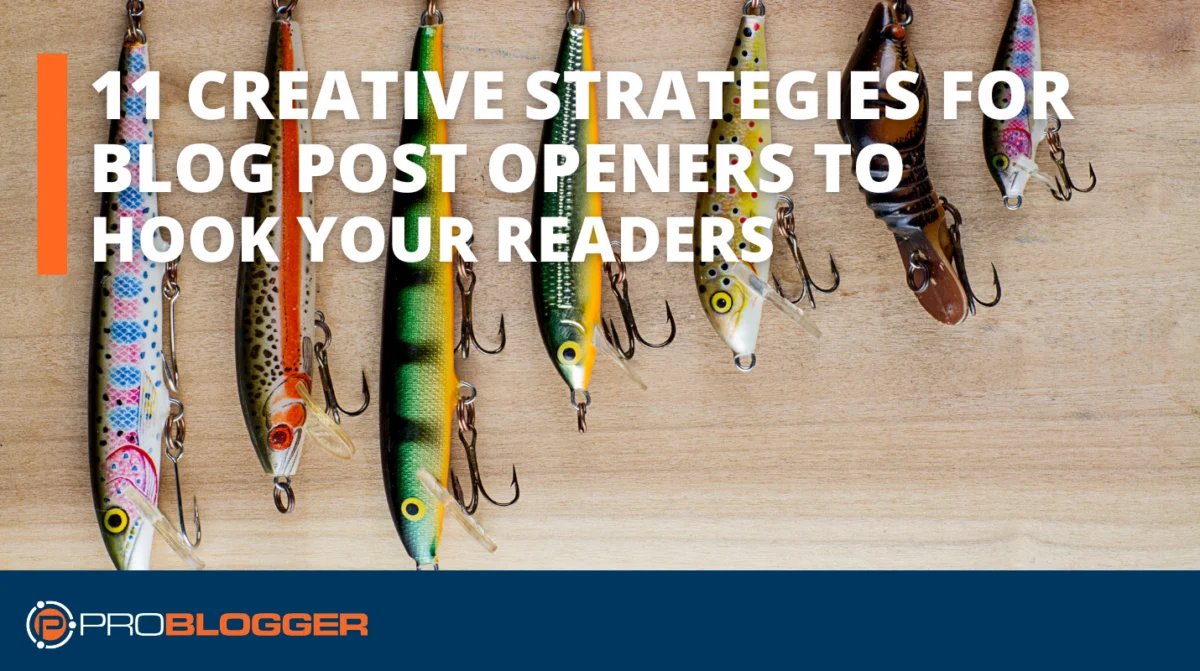
11. Visual-First Storytelling
In modern digital design, the opening image is as important as the first sentence. A compelling, high-quality image that aligns with the topic can act as a "hook" that draws the eye before the text is even processed. Statistical analysis of blog performance shows that articles featuring high-impact, relevant imagery receive significantly higher levels of social sharing and engagement compared to text-only posts.
Analysis of Implications
The shift toward more engaging, narrative-driven introductions has profound implications for digital communication. As content saturation increases, the "commodity" nature of information means that facts alone are no longer enough to secure readership. Publishers and content creators must now act as both journalists and storytellers.
The implications for business are equally significant. For organizations, the ability to craft an effective opening line is a core component of brand strategy. A successful hook not only drives immediate traffic but also fosters brand loyalty, as readers come to expect high-quality, engaging content from the source. Conversely, failure to master these techniques can lead to high bounce rates, low SEO rankings, and ultimately, a loss of market presence.
Conclusion and Future Outlook
The landscape of content creation will continue to favor those who can bridge the gap between information and engagement. As algorithms become more sophisticated at measuring "dwell time" and user interaction, the pressure to craft compelling opening lines will only intensify. Future trends suggest that interactive elements, such as embedded video hooks or personalized data visualizations, may eventually join the list of essential strategies for capturing the elusive, fast-moving attention of the modern digital audience.
For the professional writer, the task remains unchanged: understand the audience’s needs, respect their time, and provide an immediate, tangible reason to remain present in the conversation. By refining these 11 strategies, creators can ensure that their work stands out in an increasingly crowded and competitive information economy.