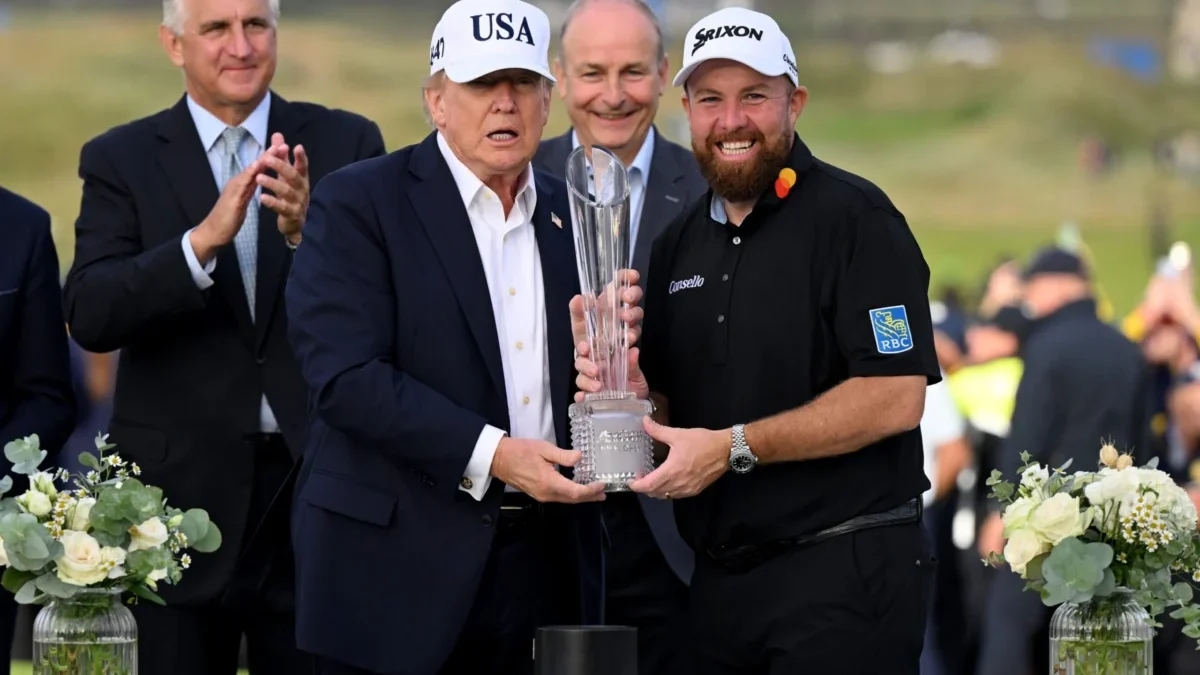
In an unexpected announcement delivered against the backdrop of the Irish Open golf tournament, President Donald Trump declared his intention to eliminate the 10 percent tariff currently imposed on Irish whiskey imports to the United States. The pronouncement, made during the event’s trophy presentation, marks a significant shift in trade policy for the spirits sector and arrives after sustained lobbying efforts from international trade associations, golf industry figures, and stakeholders in the transatlantic beverage market.
The decision represents a formal pivot from the protectionist trade stance that has characterized much of the current administration’s approach to European Union imports. While the logistics regarding the exact timeline for the removal remain pending, the move is widely expected to ease the financial burden on distributors, retailers, and consumers who have navigated a volatile pricing landscape since the inception of these levies.
A Backdrop of Diplomatic and Sporting Diplomacy
The announcement was made during a high-profile sporting event that has long served as a venue for informal diplomacy. Addressing the crowd, President Trump noted that he had been repeatedly approached by participants and spectators throughout the tournament regarding the status of the spirits tax.
“Everybody’s been bugging me,” the President remarked during the ceremony, acknowledging the persistent pressure from various sectors. Following the cheers of the assembled spectators, he stated, “On behalf of the United States of America, I am going to take the tariffs off.”
This casual yet consequential declaration follows a pattern of executive action driven by personal interaction and diplomatic meetings. Earlier this year, in April, President Trump similarly granted a tariff exemption to United Kingdom whiskey producers—specifically Scotch and spirits produced in Northern Ireland—following a high-level meeting at the White House with King Charles III and Queen Camilla. At that time, the President attributed the success of those negotiations to the rapport established with the British monarchy, stating on social media that the King and Queen had achieved what others could not.
Chronology of Tariff Escalations and Reductions
The 10 percent tariff on Irish whiskey is part of a broader set of trade measures implemented by the U.S. government on various goods originating from the European Union. The trajectory of these tariffs has been marked by periodic adjustments:
- Initial Imposition: Broad tariffs were enacted on various EU goods, impacting the spirits industry as a byproduct of disputes in unrelated sectors, such as civil aviation and industrial subsidies.
- May 2024: The Irish Whiskey Association formally petitioned the U.S. government for the removal of these tariffs. Their argument centered on the negative economic impact on U.S.-based importers and the unnecessary market uncertainty created for consumers.
- July 2024: The U.S. administration reduced the tariff rate on Irish whiskey from 15 percent to 10 percent, a move seen as a minor concession but one that failed to satisfy industry leaders seeking a complete repeal.
- July 24, 2024: The Scotch Whisky Association officially confirmed that a zero-tariff policy had been implemented for U.K.-origin spirits, creating a competitive imbalance between Scotch and its Irish counterpart.
- Present Day: President Trump’s commitment at the Irish Open signals the final step in aligning the tariff status of Irish whiskey with that of its U.K. counterparts.
The Economic Significance of the Spirits Trade
The Irish whiskey industry has experienced a renaissance over the past decade, with exports becoming a vital component of Ireland’s agricultural and manufacturing economy. According to data from the Distilled Spirits Council of the United States (DISCUS), the U.S. remains the largest and most valuable market for Irish whiskey globally.
Prior to the introduction of tariffs, the category had seen double-digit annual growth in the American market. The imposition of taxes forced importers to either absorb the costs or pass them on to consumers, which hindered growth in the premium and super-premium segments. Economists have noted that the 10 percent tariff, while modest in isolation, created a "drag" on the supply chain. By removing these barriers, the U.S. government effectively lowers the cost of entry for small-to-medium-sized Irish distilleries that lack the capital reserves of larger multinational conglomerates.
Furthermore, the removal is expected to provide stability for U.S. distributors who have been managing unpredictable inventory costs. The Irish Whiskey Association has consistently highlighted that the tariffs penalized U.S. companies that hold significant portfolios of Irish products, thereby inadvertently harming American businesses.
Industry Reactions and Market Implications
The announcement has been met with optimism from industry trade bodies. In statements following the President’s speech, representatives from the Irish spirits sector expressed gratitude for the recognition of their economic contribution. Analysts suggest that the move is not merely a gesture of goodwill but a calculated strategic adjustment to ensure the American spirits market remains competitive and diversified.
"The removal of the tariff is a positive development that will restore competitive parity," said an industry analyst familiar with the spirits trade. "When Scotch whiskey was granted a zero-tariff status, it created a structural disadvantage for Irish whiskey in the retail aisle. This reversal levels the playing field."
However, observers caution that the implementation phase is critical. The market is currently awaiting a formal directive from the Office of the United States Trade Representative (USTR) to clarify the effective date of the removal. Until the Federal Register reflects the change, importers must continue to account for the tariff in their landed cost calculations.
Broader Implications for U.S.-EU Trade Relations
The decision to lift the tariff at the Irish Open serves as a reminder of the unique intersection between personal politics and international trade. By framing the removal as a direct response to public discourse, the President has bypassed traditional bureaucratic channels, highlighting a preference for direct executive decision-making.
This move also carries broader implications for U.S.-EU trade relations. Critics of the administration’s previous tariff policies have long argued that such taxes damage the relationship with European allies. By systematically removing these levies—first for the U.K. and now for Ireland—the administration appears to be recalibrating its trade policy to favor bilateral agreements over the previous broad-based protectionist measures.
However, some economists warn that such "ad-hoc" tariff removals could lead to market volatility. When trade policy is determined by individual negotiations rather than comprehensive, multi-year frameworks, stakeholders struggle to plan long-term investments. The uncertainty surrounding future trade policy remains a concern for businesses operating across the Atlantic.
Conclusion
The commitment to eliminate the 10 percent tariff on Irish whiskey is a significant milestone for a sector that has been lobbying for relief for months. As the administration moves toward formalizing this policy, the focus will shift to the logistical details of the tariff’s expiration and the subsequent impact on consumer prices.
While the President’s announcement at the Irish Open provided an immediate boost to the morale of the industry and the attendees at the tournament, the long-term impact will be measured by the ability of Irish distillers to reclaim market share and the willingness of U.S. distributors to reinvest in the category. For now, the move stands as a notable example of how high-level diplomatic settings—even those centered on sport—can serve as catalysts for significant shifts in international economic policy.
As the industry awaits further guidance from the U.S. Department of Commerce and the USTR, the consensus remains that this reversal is a necessary step toward normalizing the transatlantic spirits trade and fostering a more stable environment for both American businesses and international producers. The total impact of this decision, when combined with previous tariff adjustments, effectively marks the end of a difficult chapter for the Irish whiskey industry in its largest global market, clearing the way for a potential surge in imports as the holiday season approaches.