After weeks of stagnant regional diplomacy and escalating military friction, a rare high-level meeting between Iran and its Persian Gulf neighbors has emerged as a potential pivot point in the ongoing maritime crisis. Foreign ministers from the Gulf Cooperation Council (GCC)—comprising Saudi Arabia, the United Arab Emirates, Qatar, Kuwait, Bahrain, and Oman—are scheduled to convene with their Iranian counterpart this coming Monday. This development, confirmed by sources familiar with the diplomatic itinerary, marks the first such multilateral engagement since the eruption of direct hostilities between Tehran, the United States, and Israel.
The announcement of these talks has already rippled through global markets, reflecting the sensitivity of the region’s energy infrastructure. Brent crude oil prices retreated 2.9% to $104.52 per barrel on Friday, as investors weighed the possibility of a de-escalation that could restore reliable transit through the world’s most critical oil chokepoint.
The Strategic Landscape of the Strait
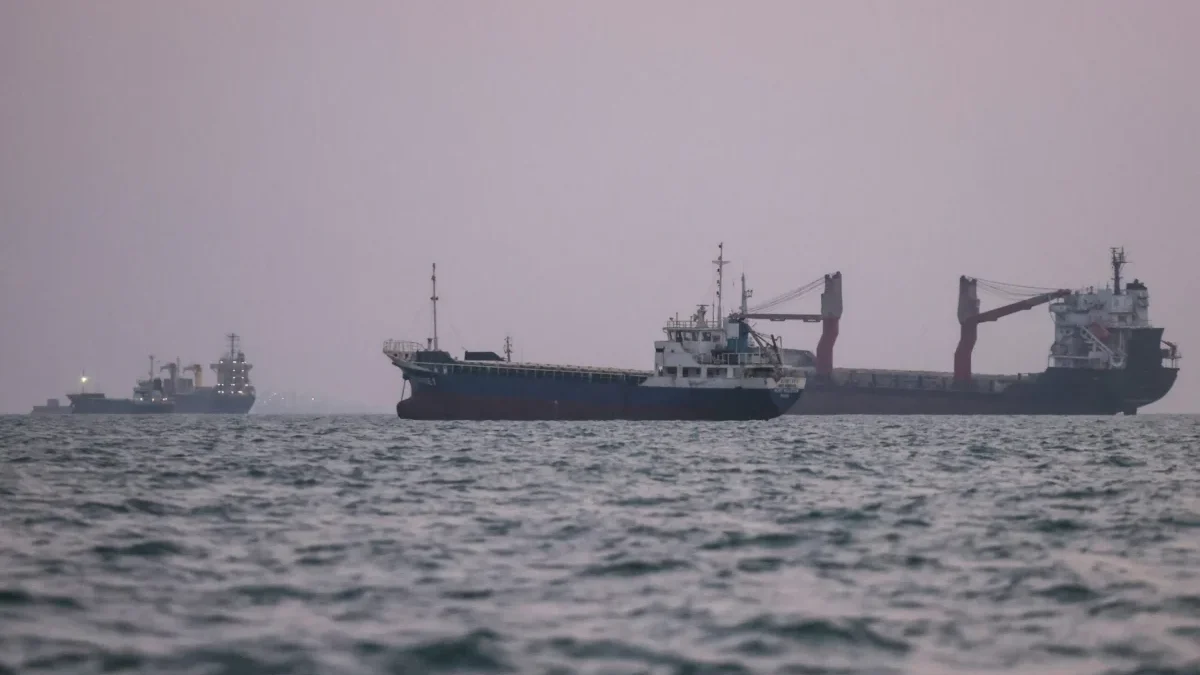
The Strait of Hormuz remains the juggernaut of global energy markets. Approximately 20% of the world’s total oil consumption transits through this narrow passage daily. The current stalemate has effectively bifurcated this flow: a U.S.-led naval blockade has successfully throttled Iranian oil exports, while Iranian retaliatory measures—ranging from drone strikes to missile salvos—have compromised the ability of other regional exporters to maintain pre-conflict volume levels.
The core of the upcoming negotiation centers on an Iran-Oman proposal designed to manage shipping traffic temporarily. However, the diplomatic path is fraught with complexity. Tehran maintains that any substantive progress on shipping is contingent upon the United States honoring the specific terms of a ceasefire agreement brokered in June. For the GCC, the primary objective is functional: ensuring that maritime transit remains viable. As one diplomatic source noted, the GCC seeks to ensure that any temporary framework does not inadvertently validate Iranian claims of sovereignty over the international waterway.
A Chronology of Escalation
The current crisis is the culmination of months of deteriorating security in the Middle East. The timeline of recent events highlights the rapid shift from localized skirmishes to a broader regional confrontation:
- June 2026: An initial ceasefire agreement is reached between the U.S. and Iran, aimed at stabilizing energy flows, though implementation quickly falters.
- July–August 2026: Hostilities intensify. Iran targets U.S. naval assets and initiates missile strikes on regional military bases. Simultaneously, Houthi forces in Yemen expand their operations to threaten the Bab al-Mandab Strait, a vital maritime corridor linking the Red Sea to the Arabian Sea.
- Late August 2026: Saudi Arabia attempts to pivot its oil transit to its East-West Pipeline to avoid the Hormuz bottleneck, only for the pipeline and accompanying tanker infrastructure to become targets for Houthi drone and missile strikes.
- September 2026: U.S. intelligence indicates that while non-Iranian oil flows have been partially restored to two-thirds of prewar levels through naval escort operations, the overall security environment remains untenable.
Analysis of the Economic and Military Imbalance
The U.S. strategy of providing guided transit for non-Iranian tankers has served a dual purpose: maintaining global energy supplies while stripping Iran of its ability to weaponize the Strait of Hormuz entirely. By facilitating these shipments, the U.S. has significantly weakened Tehran’s leverage, yet the cost of this policy is an unsustainable military posture. The naval blockade has severely depressed the Iranian economy, pushing Tehran toward increasingly erratic military responses.
The shift toward the Bab al-Mandab Strait as a secondary bypass has proven equally precarious. By empowering Houthi allies to strike Saudi infrastructure, Iran has demonstrated that it can project power far beyond its immediate coastal waters. This tactical shift has forced the GCC to realize that military solutions—even those backed by U.S. intelligence—cannot fully guarantee the security of energy exports.
The Limits of Superpower Patronage
The security architecture of the region is currently undergoing a stress test, most notably in the relationship between Riyadh and Washington. Despite the gravity of the Houthi threat to Saudi oil exports, the United States has shown limited appetite for direct intervention.
Reports from the Axios news outlet indicate that Saudi Crown Prince Mohammed bin Salman engaged in multiple high-level discussions with President Donald Trump on Thursday, specifically requesting direct U.S. strikes against Houthi positions. The administration, however, declined these requests. Instead, the U.S. pivot is toward providing intelligence and targeting data while reserving its own kinetic assets for the defense of the Strait of Hormuz. This decision underscores a broader strategic shift: the Trump administration is prioritizing the protection of the global energy chokepoint over regional proxy conflicts, aiming to avoid being dragged into a protracted multi-front war in Yemen.
The Pakistani Dilemma
The complexity of the situation is further illustrated by the position of Pakistan. As a nation with a formal defense pact with Saudi Arabia, Islamabad finds itself in a delicate geopolitical bind. Pakistan has deployed troops to bolster the Saudi-Yemen border, yet its dependence on energy shipments passing through both the Strait of Hormuz and the Red Sea makes it highly vulnerable to any disruption.
Pakistan’s current stance is one of calculated neutrality. Government officials in Islamabad have publicly distanced themselves from any potential military response to Houthi aggression, emphasizing instead the necessity of diplomatic mediation. The Pakistani army chief’s recent communication with Iranian Foreign Minister Abbas Araqchi reflects a desperate push to prevent a regional conflagration that would devastate the Pakistani economy and force the nation into a conflict it is ill-equipped to manage.
Implications and Future Outlook
The upcoming meeting between the GCC and Iran represents a high-stakes gamble. For the GCC, the goal is a restoration of the status quo ante—a functioning maritime environment where oil prices can stabilize and infrastructure remains secure. For Iran, the goal is the lifting of the suffocating naval blockade that is currently strangling its domestic economy.
If the talks fail, the result will likely be a further hardening of positions. Iran may feel compelled to escalate its maritime harassment to force a concession, while the GCC states may find themselves increasingly disillusioned with the limitations of U.S. support. Conversely, a successful agreement—even a limited or temporary one—could provide the necessary breathing room for more comprehensive diplomatic efforts.
However, any deal remains vulnerable to the underlying lack of trust between Tehran and Washington. As long as the U.S. naval blockade remains in place, and as long as Iran views the disruption of global energy supplies as its primary bargaining chip, the Strait of Hormuz will remain a volatile nexus of international conflict. The world’s energy markets will continue to react to every movement in these diplomatic chambers, underscoring that in the modern Middle East, the flow of oil and the flow of information are inextricably linked.
As observers look toward Monday’s meeting, the expectation is not for a total resolution of deep-seated ideological or regional rivalries, but for a pragmatic acknowledgment that the current level of instability is unsustainable for all parties involved. The question remains whether the regional powers possess the agency to craft a regional solution, or if the fate of the Strait of Hormuz will continue to be decided by the broader, more intractable contest between the United States and Iran.