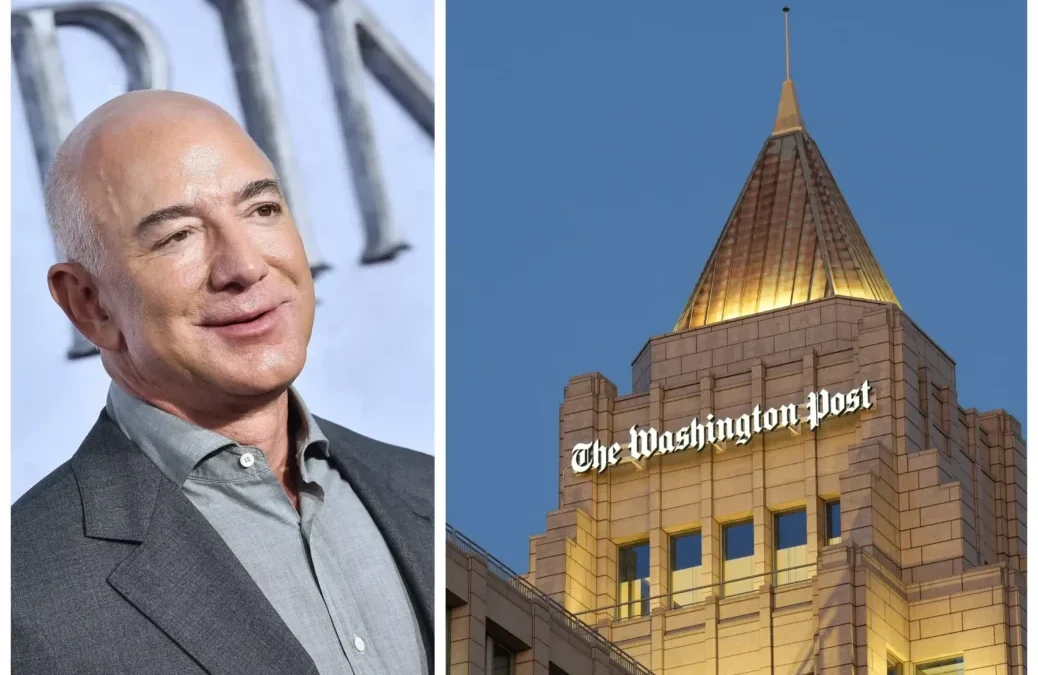
The Washington Post has announced that it is officially on track to break even this year, marking a critical turning point for the legacy publication following a turbulent period of severe financial distress, sweeping editorial cuts, and leadership transitions. The financial milestone was revealed alongside the permanent appointment of Jeff DOnofrio as the publications Chief Executive Officer and publisher, a promotion that formalizes his stewardship after serving in an interim capacity earlier in the year.
DOnofrio, who previously held the position of chief financial officer at The Washington Post before stepping up as acting CEO, assumes permanent leadership following a challenging era for the publication. He succeeds former CEO Will Lewis, whose departure in February came just days after executing a devastating round of mass redundancies that eliminated more than 300 newsroom jobs and shuttered several vital operational desks. Despite the deep wounds inflicted by those cuts, DOnofrio and the broader executive team are signaling a aggressive pivot toward modern media sustainability, aiming to steer the paper out of the red and back into long-term profitability.
A Strategic Pivot Toward Modern Sustainability
In a comprehensive memo addressed to the newsroom staff, DOnofrio outlined his vision for the future of the institution, emphasizing a blend of journalistic integrity and commercial modernization. He underscored that while the core pillars of the publication remain anchored in rigorous reporting and opinion journalism, the business model must fundamentally evolve to survive the shifting digital landscape.
We have made significant progress together over the last seven months, but our work is never done, DOnofrio wrote to employees. News and Opinions are at our gravitational centre, and our mission doesnt change. What will change is that we will build a modern media company with new revenue streams that move us from break-even to profitability, so we can reinvest in our journalism.
According to updates provided by a Washington Post spokesperson, the publication is currently pacing toward ending the fiscal year on its closest path to profitability in five years. This trajectory represents a remarkable rebound for a newsroom that slipped back into financial losses in 2022 after enjoying a sustained period of profitability following its acquisition by billionaire tech entrepreneur Jeff Bezos.
A Timeline of Turmoil: From Endorsement Backlash to Massive Layoffs
The path to DOnofrios permanent appointment has been fraught with internal friction, public scrutiny, and economic hurdles. The modern era of turbulence at The Washington Post intensified dramatically in late 2024, when a controversial decision by owner Jeff Bezos blocked the editorial board from endorsing a candidate in the United States presidential election. The move sparked an immediate and severe consumer backlash, resulting in the reported cancellation of approximately 200,000 subscriber accounts within a matter of days. That single decision triggered an estimated minimum $8 million hit to the papers subscription revenue, destabilizing its financial foundation at a delicate time.
The economic fallout from the endorsement controversy compounded existing structural pressures within the industry, culminating in a leadership crisis and a desperate need for cost-cutting measures. In early 2025, former CEO Will Lewis instituted dramatic contractions across the newsroom. These cuts included the complete closure of the books and sports departments, alongside devastating reductions to the foreign and local reporting desks.
The February 2025 layoffs eliminated roughly one-third of the total newsroom staff, generating immense outrage among readers, media watchdogs, and remaining employees. Reports from outlets such as The New York Times indicated that the February cuts triggered an additional wave of more than 60,000 subscription cancellations. While Washington Post representatives publicly disputed the exact metrics provided by external reports, they acknowledged that the organization faced a steep retention challenge during the restructuring phase.
Amidst this exodus, Lewis stepped down from his role, paving the way for DOnofrio—then serving as chief financial officer—to take over executive duties on an interim basis. DOnofrio brought a diverse corporate background to the crisis, having previously served as the chief financial officer of digital advertising powerhouse Raptive and as the chief executive officer of the blogging and publishing platform Tumblr.
Rebuilding Subscriber Bases and Audience Metrics
To combat the steep losses sustained over the previous two years, leadership has focused heavily on acquisition funnels, digital advertising optimization, and high-impact partnership agreements. Although The Washington Post maintains a policy of withholding exact, real-time subscriber totals from the public—with its last officially verified milestone standing at approximately 2.5 million subscribers recorded in October 2024—the business side has shared encouraging indicators regarding new sign-ups.
Company representatives reported that the publication has successfully sold more than 300,000 individual new subscriptions throughout the year, demonstrating that a core audience remains willing to pay for the brands journalism despite the recent controversies.
Concurrently, the publication has sought to prove its ongoing journalistic value through aggressive investigative reporting. Newsroom leaders highlighted that the paper has produced more than 200 exclusive stories and investigative scoops over the course of the year. Notably, August saw the publication drop 35 exclusive reports—the highest single-month total for scoops since April 2020, signaling that despite a heavily depleted workforce, the remaining reporters are maintaining high-volume investigative output.
Audience reach metrics, however, present a complex, dual-sided narrative common across the contemporary digital media ecosystem. While The Washington Post reported a 20% year-on-year increase in total audience reach for the month of August through its broader syndication and platform footprint, traditional web traffic indicators displayed contraction. Data from digital intelligence firm Similarweb revealed that the publications direct website visits dropped by 17% year-on-year and 12% month-on-month, pulling monthly visits down to approximately 53.7 million. This drop positioned The Washington Post as the 20th largest news website in the United States.
Media analysts note that The Posts traffic decline is far from an isolated incident. Industry-wide data indicates that 41 of the top 50 news websites in the United States experienced a year-on-year drop in digital traffic during the same period, driven by changes in social media referral algorithms, search engine shifts, and changing consumer consumption habits.
Financial Recovery Through Advertising and Strategic Partnerships
To offset fluctuations in direct reader traffic, DOnofrios administration has engineered a aggressive monetization strategy focused on programmatic advertising and lucrative corporate alliances.
The financial gamble appears to be yielding tangible results. The Washington Post reported a staggering 53% year-on-year increase in programmatic advertising revenue. Furthermore, the commercial division has successfully closed multiple high-value partnership contracts ranging in the six- and seven-figure brackets, securing a diversified income cushion that reduces the publications historical over-reliance on traditional subscription models.
This strategic diversification has earned the full endorsement of the papers billionaire proprietor, Jeff Bezos. In a public statement addressing DOnofrios permanent appointment, Bezos expressed absolute confidence in the new leadership team.
Over these months, I’ve heard from many that Jeff has been doing an outstanding job, and that’s been my experience as well, Bezos stated. Jeff has led with discipline and care—following the data and sweating the details, and he has my complete confidence as we chart our future.
Industry Implications and Future Outlook
The stabilization of The Washington Post under DOnofrios guidance serves as a fascinating case study for the broader prestige press as it navigates the post-peak digital subscription era. The paper’s trajectory illustrates the delicate balancing act required of modern media companies: managing sudden, politically or editorially motivated subscriber boycotts, absorbing massive workforce reductions, and simultaneously transitioning toward technological and advertising-driven revenue streams.
By pivoting away from traditional revenue models toward high-yield programmatic advertising and corporate partnerships, DOnofrio is attempting to insulate the publisher from the volatility of consumer sentiment. If the paper successfully hits its break-even targets and establishes a sustainable foundation for profitability, it could provide a blueprint for other legacy print publications struggling to survive the migration to purely digital ecosystems.
However, significant challenges remain. Critics and journalism advocates continue to question whether a newsroom operating with one-third fewer staff members can permanently sustain the rigorous, daily investigative depth that once defined the institution’s global prestige. Maintaining quality while aggressively pursuing profit margins will undoubtedly remain the central challenge for DOnofrio as he steers The Washington Post into its next chapter.