
In an increasingly digital world, social media has transitioned from a supplementary marketing tool to an indispensable platform for financial institutions seeking to connect with current and prospective customers. Beyond mere visibility, an active and strategic social presence is now a critical driver for business outcomes, including lead generation, customer retention, and brand awareness. The shift in consumer behavior, particularly among younger generations, underscores the urgency for banks to fully embrace and optimize their social media strategies.

The Evolving Landscape of Financial Information Consumption
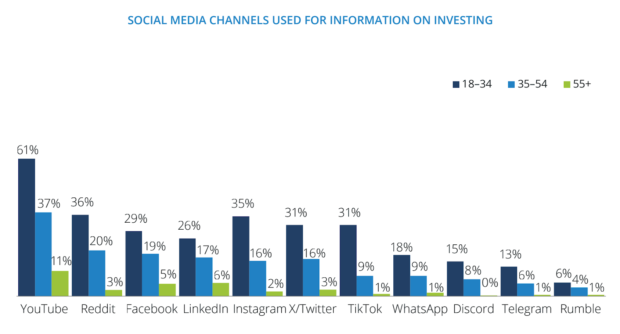
Social media platforms are fundamentally reshaping how individuals, especially younger investors, acquire financial knowledge and make crucial monetary decisions. Data from the FINRA Foundation reveals that 29% of investors actively utilize social media and online message boards to generate investment ideas. Platforms such as YouTube, Reddit, Facebook, and LinkedIn have emerged as primary conduits for this type of information exchange, highlighting a significant pivot from traditional sources. This phenomenon presents both a profound opportunity and a substantial responsibility for banks. While audiences are actively seeking financial education, the current environment is characterized by fragile trust, as evidenced by reports like the Edelman Trust Barometer. Consequently, the dissemination of clear, accurate, and transparent information is paramount, particularly within highly regulated industries where credibility forms the bedrock of customer relationships.

The influence of social media extends deeply into Gen Z’s financial decision-making. A recent Gallup poll indicated that 42% of Americans aged 18 to 29 rely on social media for financial advice. Alarmingly, 61% of investors under 35 have acted on recommendations from "finfluencers" – financial influencers who create engaging content, often on platforms like TikTok. These finfluencers excel at delivering bite-sized, relatable financial content tailored to their demographic. Banks can draw inspiration from this approach, developing their own short-form video series and educational carousels focused on practical financial literacy, advice, and strategic planning, thereby positioning themselves as trusted educators rather than just service providers.
Digital as the Cornerstone of Bank Marketing
The banking industry has undergone a profound digital transformation, with online channels now representing the primary means by which banks engage and educate customers. Digital marketing currently accounts for nearly 62% of bank marketing budgets, signaling that social media is no longer an optional or experimental endeavor but a core component of the overall marketing mix. With consumer banking digital ad spending approaching $370 million per quarter, a robust and active social media presence is essential for banks to remain competitive and relevant. The industry’s broad adoption is evident, with a 2023 ABA report showing that nine out of ten banks acknowledge the importance of social media, and 88% report being actively engaged on their accounts. This competitive landscape means that any bank not actively participating online risks ceding ground to rivals who are successfully connecting with potential customers and articulating their value propositions.
Strategic Platform Selection: Reaching the Right Audience

The optimal social media platforms for banks are determined by their specific audience demographics and strategic objectives. While a presence across all platforms might seem appealing, a targeted approach based on audience research is far more effective than simply following trends. As Leen Li, Chair of the Wealthsimple Foundation, aptly puts it, "You can have the best product and content, but if you can’t distribute to your audience on the proper platform, you’re not going to hit your goal." Her organization’s strategic investment in paid content across YouTube, TikTok, and Instagram, followed by data analysis, definitively favored YouTube for their specific goals.
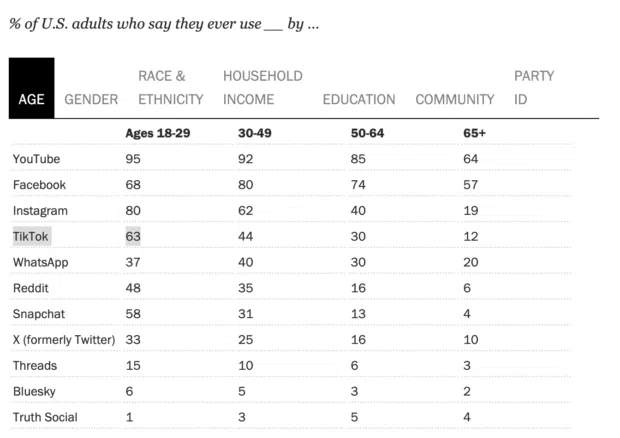
Pew Research Center data illustrates the varying reach of platforms across age groups. YouTube maintains the broadest appeal, with 95% of adults aged 18-29 using it, making it a foundational platform for most banks. Facebook continues to offer strong reach among adults aged 30 and above. For Gen Z, who often prefer concise financial videos over traditional advisory appointments, TikTok and Instagram represent crucial investment avenues.
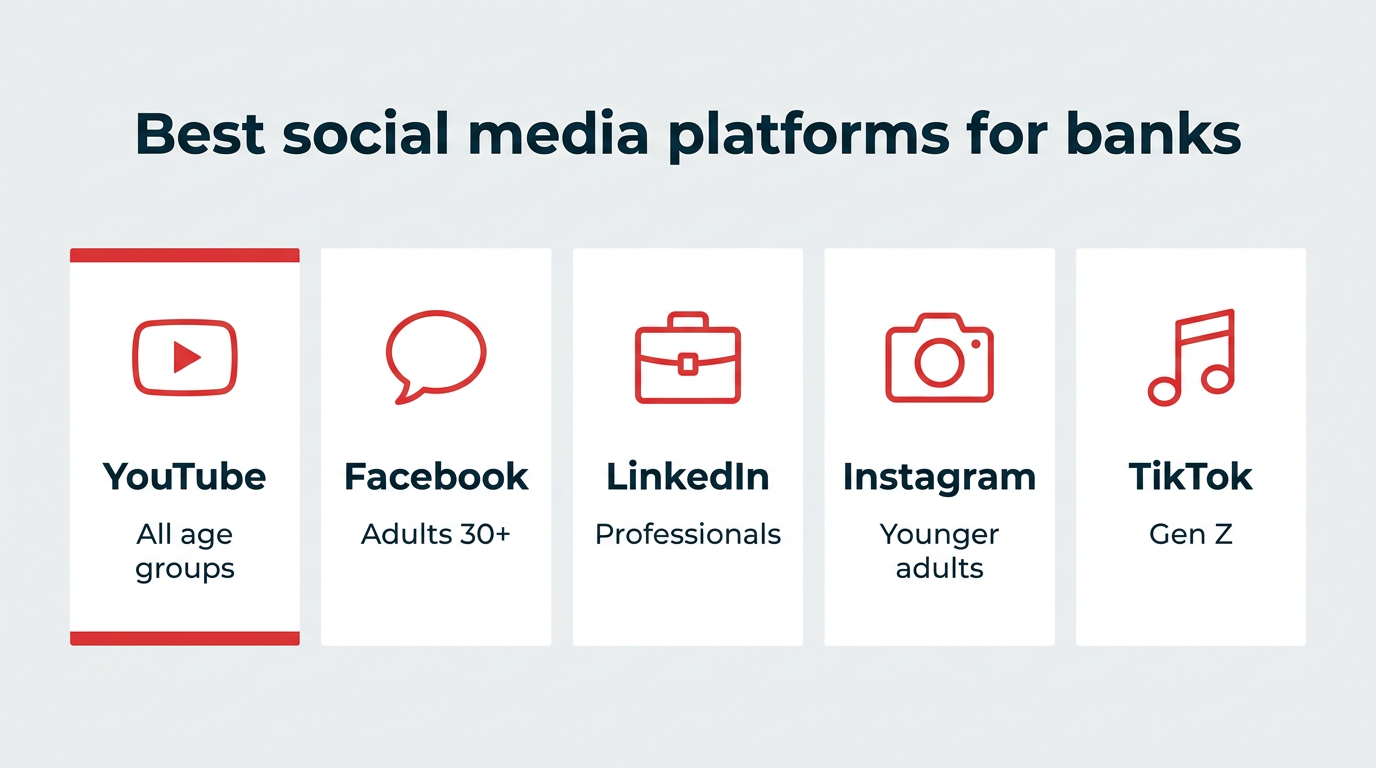
Here’s a breakdown of major platforms and their banking utility:
- YouTube: Offers broad reach across all age groups. Ideal for long-form video content, webinars, and detailed explainers, making it excellent for comprehensive financial education.
- Facebook: Primarily targets adults aged 30 and up. Best for community updates, local engagement, sharing links, and connecting with an older customer base.
- LinkedIn: Attracts professionals and older adults. Suited for thought leadership, B2B engagement, corporate news, and recruitment efforts, enhancing brand authority.
- Instagram: Popular with younger adults. Effective for Reels, carousels, and Stories, promoting financial literacy through visually engaging content and building brand awareness.
- TikTok: Dominant among Gen Z and younger millennials. Specializes in short-form video and finfluencer-style content, providing direct access to younger audiences.
The key lies in prioritizing platforms where the target audience is most active and where content can be tailored to their preferred learning and engagement styles.
Crafting Credibility: Content Strategy for Financial Institutions
Effective social media content for banks moves beyond mere product promotion, focusing instead on education, trust-building, and showcasing the human element of the institution. A balanced content mix is crucial for sustained audience engagement and for instilling the confidence required to entrust a bank with personal finances. The success of finfluencers offers a valuable lesson: they gain attention by leading with education and personality, not aggressive sales pitches. Banks can adopt this approach by creating short-form videos, carousels, and threads that demystify financial concepts and offer practical insights.
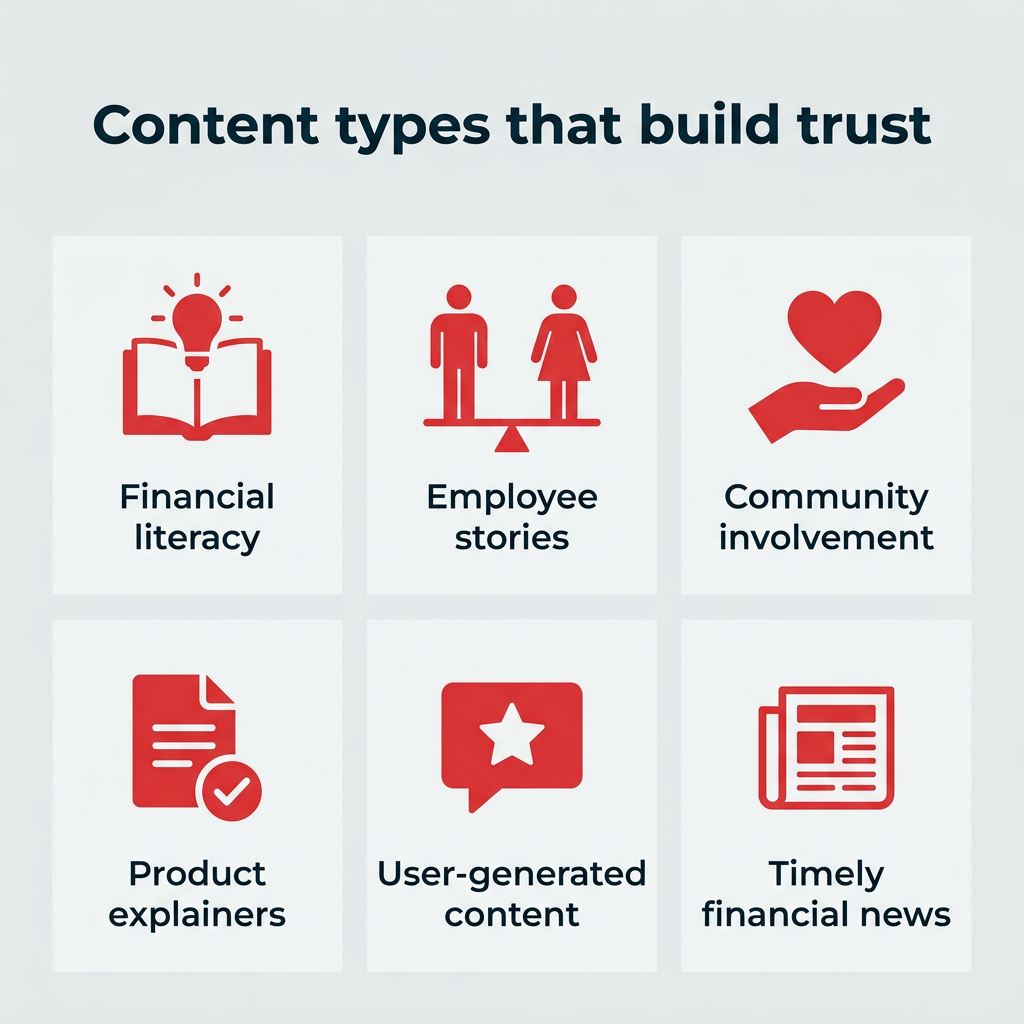
Content types that resonate strongly and build trust include:
- Educational Content: Financial tips, explainers on complex products, budgeting advice, investment basics, and fraud prevention.
- Behind-the-Scenes: Showcasing employee stories, daily operations, and the human side of the bank.
- Community Involvement: Highlighting charitable activities, local sponsorships, and partnerships.
- Customer Testimonials/Success Stories: Authentic accounts of positive customer experiences, often through user-generated content (UGC).
- Timely Updates: Information on new services, regulatory changes, or important financial news.
User-generated content (UGC) is particularly powerful for building trust. Securian Financial’s #LifeBalanceRemix campaign, for example, successfully leveraged UGC to boost community engagement. This campaign saw a 38% increase in organic engagement, a 28% rise in reach, and a 20% growth in followers, demonstrating the impact of authentic customer participation.

Ensuring Integrity: Compliance and Risk Management
For banks, social media engagement is inextricably linked with stringent compliance and robust risk management. The highly regulated nature of the financial industry means that any misstep on social media can lead to severe legal and financial repercussions, alongside significant reputational damage.

Regulatory Frameworks: Several key regulatory bodies dictate the parameters of bank social media activity. In the United States, FINRA and the SEC oversee investment-related communications, while the OCC (Office of the Comptroller of the Currency) supervises national banks, and the FDIC (Federal Deposit Insurance Corporation) sets guidelines for advertising and consumer protection. Similar bodies exist globally. Violations, such as sharing confidential customer information or making unsubstantiated claims, can result in substantial penalties.
Cybersecurity and Data Protection: A security breach, whether originating from unauthorized social media activity or a broader cyberattack, poses immense financial and reputational threats. Financial technology service providers like SIX, operating for 130 banks in Switzerland, implement automated cybersecurity measures to monitor and address threats such as fraudulent profiles or malicious content. Their approach led to a 98% reduction in unauthorized accounts, a 99% decrease in impersonations, and 100% compliance with social media governance policies, illustrating the critical role of technology in mitigating risks.

Internal Policies and Employee Education: A comprehensive social media governance policy is non-negotiable. This document should clearly outline the rules of engagement for all employees, encompassing content creation, interaction protocols, data privacy guidelines, and crisis communication procedures. It must align with all other company communication policies (email, text, etc.) and be developed with input from key stakeholders like the chief information officer and chief risk officer. Regular training for internal teams on these guidelines and industry regulations is vital to prevent accidental non-compliance. Employee advocacy programs, leveraging pre-approved content, can extend a bank’s reach while minimizing risk. For instance, Julius Baer, a Swiss private banking group, used such a program to boost its reach by 125%, increase engagement by 225%, and achieve a 95% employee participation rate, all while ensuring brand consistency.
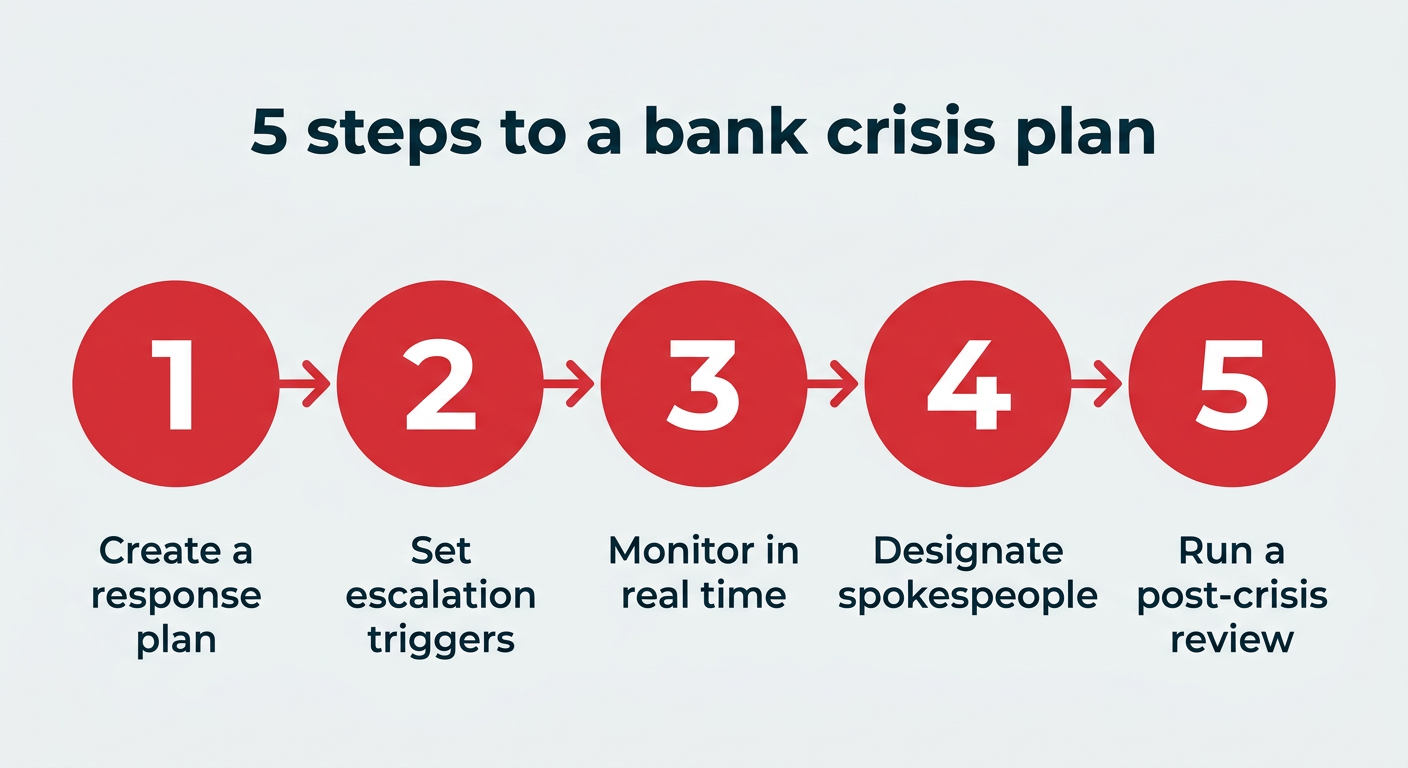
Crisis Preparedness: Given the unique reputational risks faced by banks, a well-defined social media crisis plan is essential. A single mishandled comment or unauthorized post can quickly escalate in a regulated environment. A robust crisis plan should include:

- Identification of potential risks: Anticipate common issues such as data breaches, service outages, or public complaints.
- Monitoring protocols: Implement tools for real-time tracking of brand mentions and sentiment.
- Defined response team and roles: Clearly assign responsibilities for communication and action.
- Pre-approved messaging and FAQs: Prepare standardized responses for common scenarios.
- Escalation procedures: Establish clear pathways for handling severe issues.
- Post-crisis review: Analyze the response to identify lessons learned.
Engaging with Purpose: Building Customer Loyalty
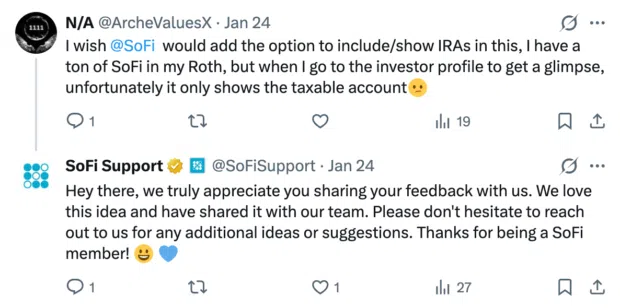
Social media is inherently a two-way street, offering powerful avenues for enhancing customer experience and fostering loyalty. Proactive engagement – responding to comments, replying to direct messages, and participating in relevant conversations – humanizes the institution. This responsiveness demonstrates that the bank values its customers and is accessible beyond traditional channels. Good customer service extends beyond resolving complaints; it involves being open, receptive, and conversational, which significantly contributes to building trust and customer loyalty. Unified inboxes, which consolidate all social media conversations into a single interface, enable teams to respond quickly and consistently, improving the overall customer interaction experience.

Measuring Success and Adapting for the Future
Effective social media strategies for banks require continuous measurement, analysis, and adaptation. Success is gauged by tracking key performance indicators (KPIs) that directly align with business objectives.

Essential Metrics to Track:
- Reach and Impressions: Indicate content visibility and potential audience size.
- Engagement Rate: Measures interactions (likes, comments, shares) relative to reach, reflecting content resonance.
- Website Traffic: Tracks clicks from social media to the bank’s website, indicating lead generation potential.
- Conversion Rate: Measures how many social media leads translate into actual customers or specific actions (e.g., account sign-ups, loan applications).
- Customer Sentiment: Analyzes brand perception and public opinion, crucial for reputation management.
- Follower Growth: Indicates the expanding audience and brand interest.
Utilizing specialized social media management tools is crucial for banks. These platforms offer capabilities for scheduling posts, comprehensive reporting, and creating compliant content, streamlining operations while ensuring adherence to regulations. Beyond general analytics, the financial sector often leverages tools for social listening, competitive analysis, and content archiving to maintain robust oversight.
Regularly reviewing these metrics is paramount. By analyzing performance data, banks can identify successful content types, optimize posting schedules, refine targeting strategies, and adjust budgets accordingly. This iterative process ensures that social media efforts remain aligned with evolving business goals and deliver the best possible return on investment.
Conclusion
The digital evolution has firmly established social media as an indispensable component of modern banking. From serving as a primary source of financial information for younger generations to acting as a critical channel for marketing, customer engagement, and competitive differentiation, its importance cannot be overstated. By strategically selecting platforms, crafting educational and humanizing content, rigorously adhering to compliance standards, preparing for potential crises, and continuously measuring performance, banks can harness the immense power of social media. The future of banking demands a proactive, intelligent, and compliant approach to social media, transforming it from a mere presence into a powerful engine for growth, trust, and sustained customer relationships.