The financial landscape of vehicle ownership in 2026 continues to present a significant challenge for consumers, extending well beyond the initial purchase price. With the average cost of a new car persistently hovering around the $50,000 mark as of July 2026, according to Kelley Blue Book, the focus for many buyers has shifted dramatically towards long-term affordability. This trend is particularly pronounced in the popular SUV segment, where attractive initial pricing can often mask substantial ongoing expenses. Industry insiders and consumer advocacy groups alike are emphasizing the critical importance of evaluating total cost of ownership, with maintenance and repair expenditures emerging as key differentiators in determining true value. This analysis delves into five SUV models that stand out for their exceptionally low maintenance costs, offering a financially prudent path for drivers seeking reliability and value over the lifespan of their vehicle.
The economic climate of 2026 necessitates a more discerning approach to automotive purchasing. Elevated inflation and supply chain complexities have collectively driven new vehicle prices to unprecedented levels. While manufacturers have responded by introducing more budget-friendly base models, the distinction between an affordable sticker price and an affordable ownership experience is becoming increasingly crucial. For consumers navigating this environment, identifying vehicles with a proven track record of low maintenance requirements is paramount. Fortunately, many of the brands consistently lauded for their dependability also offer a robust selection of SUVs that align with these cost-saving objectives. While the most affordable new SUVs can be found starting around the $25,000 mark, the long-term financial implications of their maintenance can vary significantly. This report, drawing on data from leading automotive analytics firms such as RepairPal and CarEdge, identifies five SUVs that not only offer competitive initial pricing but also promise to keep owners’ wallets fuller by minimizing ongoing repair and upkeep expenses.
Toyota RAV4: A Benchmark in Reliability and Affordability
The Toyota RAV4 has long been a cornerstone of the compact SUV market in the United States, consistently ranking among the top-selling vehicles and earning a reputation for unwavering dependability. As of the current sales year, it holds the position of Toyota’s second-best-selling model, trailing only the venerable Camry. The 2026 RAV4, with a starting price of $31,900 (inclusive of a $1,595 destination charge), offers a competitive entry point within its segment. However, its true financial advantage lies in its remarkably low cost of ownership, particularly concerning maintenance.
Toyota’s unparalleled reputation for reliability is a significant factor contributing to the RAV4’s enduring appeal. This reputation is not merely anecdotal; it is substantiated by extensive data. RepairPal reports that the average annual maintenance cost for a Toyota RAV4 is approximately $429. This figure is notably lower than the segment average of $521 for 2026, representing a saving of $92 per year. Further reinforcing this data, CarEdge indicates a five-year average maintenance cost of $1,938 for the RAV4. Over a decade of ownership, this cost is projected to reach around $6,004, a figure that is still approximately $2,500 less than the average for SUVs across the entire market. This consistent performance in minimizing upkeep expenses solidifies the RAV4’s position as a leading choice for budget-conscious SUV buyers who prioritize long-term financial predictability.
Hyundai Ioniq 5: Electric Innovation with Low Running Costs
The automotive industry’s rapid embrace of electric vehicles (EVs) has brought forth innovative models capable of demonstrating their long-term viability and cost-effectiveness. The Hyundai Ioniq 5, introduced in 2021, has firmly established itself within this burgeoning segment. While Hyundai previously offered a compelling incentive of three years of complimentary limited maintenance for the Ioniq 5, this program was discontinued in 2025 due to escalating costs, underscoring the inherent efficiency of the vehicle’s design and operation. Despite this change, data indicates that the Ioniq 5 remains an exceptionally economical choice for long-term ownership.
A critical consideration for any Ioniq 5 owner or prospective buyer involves the Integrated Charging Control Unit (ICCU). While not every vehicle is affected, potential faults with this integral component can arise. Hyundai addresses these issues proactively, offering complimentary repairs and extending the warranty for the ICCU to an impressive 15 years or 180,000 miles. In many instances, software updates are sufficient to resolve ICCU-related concerns without the need for a complete unit replacement. This robust manufacturer support mitigates a significant potential expense for owners.
Beyond the specific ICCU warranty, the overall maintenance costs for the Ioniq 5 are remarkably low. CarEdge data reveals a five-year average maintenance cost of just $1,712, positioning the Ioniq 5 as one of the most affordable SUVs to maintain according to their analysis. Edmunds further supports this assessment, with their data showing an average first-year ownership cost of approximately $213 for the Ioniq 5. These figures highlight the inherent cost advantages of electric powertrains, especially when combined with Hyundai’s commitment to addressing potential issues through extended warranties and software solutions.
Honda HR-V: Compact Dimensions, Compact Costs
Stepping down in size from the popular RAV4, the Honda HR-V represents a compelling option for those seeking a subcompact SUV that offers a practical blend of versatility and maneuverability. Designed with urban environments in mind, the HR-V provides a more spacious alternative to traditional sedans without the bulk of larger SUVs. This design philosophy translates into a more accessible price point, with the 2026 model starting at $26,600 (including a $1,450 destination fee). While some competitors may offer a slightly lower initial purchase price, the HR-V distinguishes itself through its exceptional long-term cost savings, particularly in maintenance.
Honda consistently ranks among the most reliable automotive brands, and the HR-V embodies this commitment to durability. RepairPal data indicates that Honda vehicles, on average, incur an annual repair cost of $428. The HR-V, however, significantly outperforms this already impressive average, with an annual maintenance cost of just $301. This makes it one of the most affordable gasoline-powered SUVs to maintain. CarEdge data corroborates this, reporting a five-year maintenance cost of $2,347 for the HR-V. While this figure is slightly higher than that of the Toyota RAV4, it remains substantially lower than many other vehicles in its class. Furthermore, the HR-V is also economical in terms of fuel consumption. The Environmental Protection Agency (EPA) estimates an average annual fuel cost of $2,200, which aligns precisely with the average for new cars in 2026. This combination of low maintenance and fuel efficiency makes the Honda HR-V a standout choice for practical, cost-conscious urban dwellers.
Subaru Crosstrek: Rugged Capability with Low Upkeep
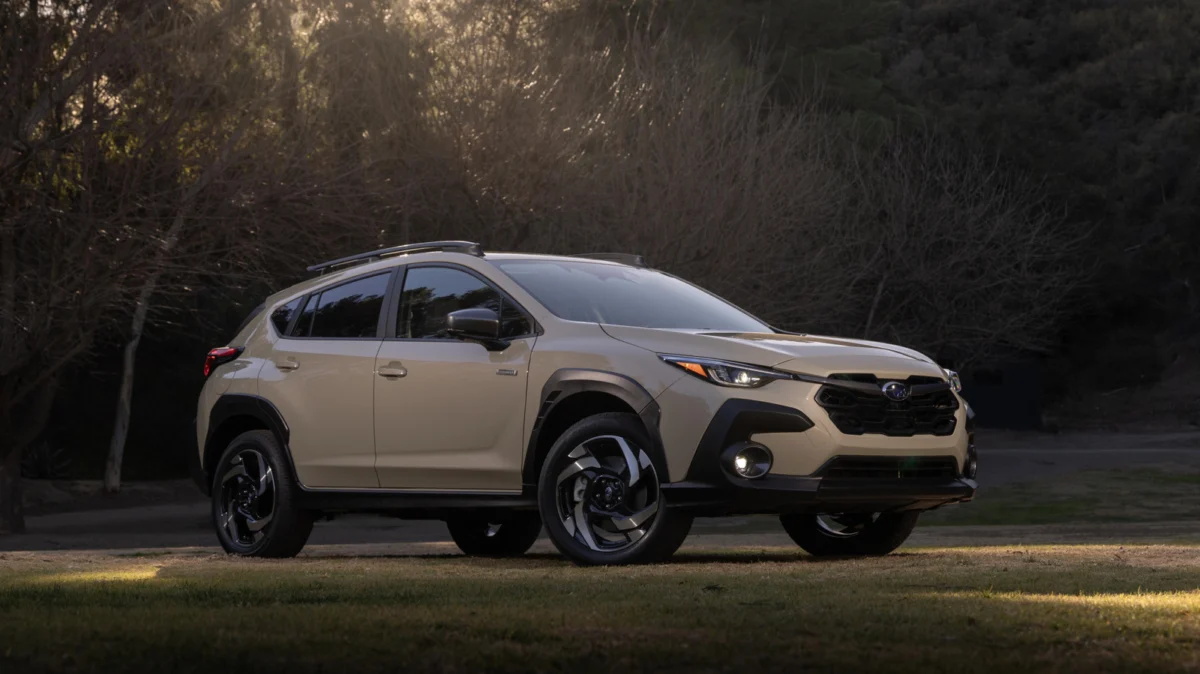
Subaru, much like Toyota, has cultivated a strong reputation for reliability, a fact underscored by its sixth-place ranking in J.D. Power’s 2026 Vehicle Dependability Study. The Subaru Crosstrek, a compact SUV, has earned particular acclaim within its segment, being recognized as the most reliable in its class for the current year. With a base price of $26,995 (plus a $1,420 destination charge), the Crosstrek offers compelling value, particularly when considering its standard all-wheel-drive system and nearly nine inches of ground clearance. These features lend themselves to light off-roading capabilities, making the Crosstrek a versatile option for adventurers. The inherent reliability of the Crosstrek is a significant asset for those who plan to utilize its off-pavement potential, as it minimizes the risk of unexpected and costly repairs in challenging conditions.
The Crosstrek’s strong dependability directly translates into lower maintenance expenditures. RepairPal data indicates an average annual maintenance cost of approximately $492 for the Crosstrek, positioning it as a leader in its segment for reliability. Edmunds further highlights the Crosstrek’s affordability, reporting that maintenance costs remain below $750 for the first three years of ownership. While costs may increase as the SUV ages, this initial period of low expense provides significant financial relief to owners. The Crosstrek’s ability to combine robust capability with economical long-term ownership makes it an attractive proposition for consumers seeking an SUV that can handle diverse terrains without demanding excessive financial commitment.
Toyota Highlander: Three-Row Practicality with Surprising Economy
Returning to Toyota, the Highlander, a larger sibling to the RAV4, emerges as another strong contender in the affordable maintenance category, further solidifying Toyota’s standing as a manufacturer of dependable vehicles. Positioned as a mid-size SUV with a touch of premium appeal without venturing into luxury pricing, the 2026 Highlander has a starting price of $46,270, with an additional $1,495 destination fee. While a fully redesigned all-electric model is anticipated for the 2027 model year, the current iteration, featuring standard all-wheel drive across all trims in the United States, offers a wealth of comfort features at a compelling value proposition, especially considering its low running costs.
Toyota’s engineering prowess is evident in the Highlander’s maintenance figures. RepairPal reports an average annual maintenance cost of $489 for the Highlander. This figure is remarkably low for a three-row SUV, demonstrating Toyota’s ability to deliver practicality and efficiency even in larger vehicle formats. CarEdge data further supports the Highlander’s cost-effectiveness, indicating a five-year maintenance expenditure of approximately $2,048. Even over a decade of ownership, the total maintenance cost is projected to reach $6,224, with annual expenses consistently remaining below $1,000. For consumers seeking the utility of a larger SUV with a near-luxury feel, without the associated premium maintenance bills, the Toyota Highlander presents a highly attractive and financially sound option.
Methodology: A Data-Driven Approach to Identifying Value
The selection of these five SUVs was guided by a rigorous methodology that prioritized data-driven insights from reputable sources. The research encompassed an extensive review of automotive analytics platforms, including RepairPal, Edmunds, Kelley Blue Book (KBB), and CarEdge. These outlets provide comprehensive data on vehicle maintenance and repair costs, spanning both short-term ownership (e.g., annual or first-year costs) and long-term projections (e.g., five-year and ten-year averages).
The primary criterion for inclusion on this list was a consistent track record of low maintenance costs across multiple data sets. Each model was cross-referenced to ensure that its reported maintenance expenses were demonstrably below the average for its respective segment and for SUVs as a whole. This comparative analysis allowed for the identification of vehicles that not only offer competitive initial pricing but also demonstrate exceptional long-term financial prudence. The focus remained on objective data to provide consumers with reliable information to make informed purchasing decisions that prioritize both immediate affordability and sustained economic benefit.