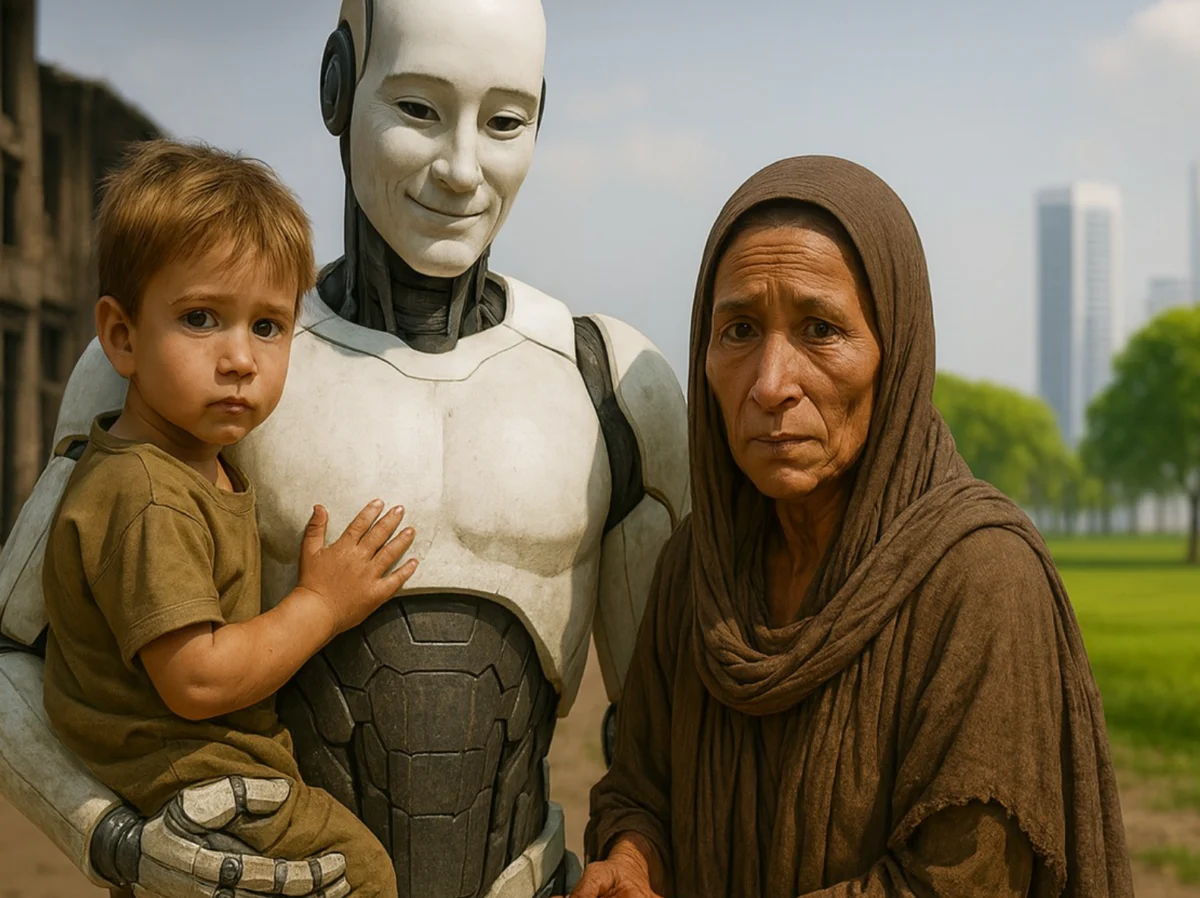
We have officially moved past the era of humanoid robots as mere public relations stunts. As they become increasingly lifelike, society may soon face profound social, psychological, and ethical challenges. What happens when the boundary between humans and machines becomes almost impossible to distinguish?
For decades, science fiction has served as a cultural incubator for the concept of the "android revolution," presenting it as a distant, albeit intriguing, fantasy. However, the reality is now unfolding at an unprecedented pace. The rapid blurring of the line between human and machine is not merely a technological advancement; it signifies an impending psychological, economic, and existential shift that demands urgent societal consideration.
The unnerving realism of contemporary humanoid robots was recently highlighted in a widely circulated YouTube video. While the footage was a clever illusion, substituting a human actor for the robot when the presenter’s back was turned, the demonstration’s effectiveness underscored a critical question: Will future androids achieve such lifelike fidelity that distinguishing them from humans becomes a genuine challenge? This illusionary moment serves as a potent harbinger, forcing us to confront the proximity of this threshold and our preparedness for a future where science fiction is no longer confined to the screen. The prospect of a world populated by entities that mirror us perfectly, yet possess no shared biological history, raises profound questions about identity, connection, and the very definition of life.
The Landscape Today: From Novelty to Industrial Integration
The era of humanoid robots as mere publicity stunts is definitively behind us. Historically, groundbreaking robotic achievements, such as Honda’s ASIMO, were celebrated for their ability to perform relatively simple tasks, like ascending stairs without toppling. These early prototypes, while technologically impressive for their time, were more akin to sophisticated automatons than sentient beings. Today, however, a profound technological convergence of advanced electromechanical engineering and sophisticated artificial intelligence has fundamentally reshaped the trajectory of robotics, pushing them from the realm of research labs into tangible, real-world applications.
The current state of the art is characterized by an aggressive push toward commercial, physical deployment. Companies are no longer content with laboratory demonstrations; they are actively integrating humanoid robots onto factory floors. For instance, Figure AI’s Figure 02 model recently completed a multi-month deployment at BMW’s Spartanburg plant. During this trial, the robot actively contributed to the production of over 30,000 vehicles, demonstrating its capability in handling complex sheet metal components. Concurrently, Tesla is rigorously testing its Optimus humanoids within its own Gigafactories, a clear indication of its ambition for mass industrial-scale integration. This shift signifies a move from experimental showcases to operational utility, where robots are not just performing tasks but contributing directly to economic output.
What truly distinguishes contemporary humanoid robots from their predecessors is not merely their enhanced mobility but their advanced cognitive capabilities, often referred to as their ability to "think." Older generations of robots relied on millions of lines of rigid, pre-programmed code to execute single, elementary tasks. In stark contrast, today’s robots are powered by artificial intelligence, utilizing cutting-edge software platforms such as Figure AI’s Helix or NVIDIA’s GR00T. These modern robots are not meticulously programmed for every conceivable action. Instead, they possess the remarkable ability to learn by observation. By watching a human perform tasks like folding laundry, loading a dishwasher, or sorting components, these AI-driven robots can comprehend the context, mimic the actions, and even autonomously refine their performance. This capacity for adaptive learning represents a monumental leap in robotic intelligence.
However, despite significant advancements in their digital "brains," their physical embodiments still face considerable real-world hurdles. Current battery technology limits operational duration to a few hours before requiring a recharge. While bipedal locomotion is feasible on uniform factory floors, navigating the unpredictable terrain of a crowded household or a bustling public street remains a formidable challenge for robotic safety and stability. Furthermore, the cost of manufacturing these sophisticated machines remains high, although intense competition within the technology sector is beginning to exert downward pressure on production expenses.
The Possible Future State of Humanoid Robots: Beyond the Factory Floor

While current humanoid robot deployments are primarily concentrated in industrial settings, experts project a significant expansion into various sectors over the next decade to two decades. Projections suggest a gradual integration into retail environments, healthcare facilities, and eventually, private residences. This transition marks a critical juncture, where the ability to visually or aurally distinguish between a robot and a human may become increasingly difficult.
To achieve this level of human likeness, researchers are actively developing advanced materials and systems. Scientists are working on artificial skin crafted from sophisticated silicone composites designed to mimic the warmth, flexibility, and tactile sensitivity of human skin. This research aims to bridge the gap between mechanical constructs and organic realism, enhancing the immersive and interactive capabilities of humanoid robots.
The development of hyper-realistic robotic faces is also a significant area of focus. Companies are creating intricate facial structures equipped with micro-actuators and artificial muscle systems. These components are designed to enable robots to produce a nuanced range of realistic facial expressions, including happiness, confusion, and fatigue. This level of emotional mimicry is intended to mitigate the "Uncanny Valley" effect – the phenomenon where robots that appear almost, but not perfectly, human elicit feelings of unease or revulsion.
Furthermore, the artificial intelligence underpinning these robots is being trained to emulate human imperfections. This includes incorporating elements such as random blinking, naturalistic body language, and even deliberate pauses or sighs during speech. These subtle, seemingly minor adjustments are crucial in creating a more relatable and less unsettling robotic presence.
A prominent example of this pursuit of realism is Sophia, a humanoid robot developed by Hanson Robotics. Sophia’s lifelike appearance and AI-driven conversational abilities have garnered international attention, making her a celebrity in her own right. While her smile might still evoke a degree of apprehension in some observers, she represents a significant milestone in the quest for human-like artificial beings. Similarly, Realbotix’s Aria, showcased at CES 2025, demonstrates an advanced level of human-like fidelity, prompting contemplation about how much further the technology must advance before true differentiation becomes a challenge.

While current limitations might position today’s humanoids as specialized industrial tools, the chasm between a factory worker and a lifelike companion is narrowing rapidly. We are approaching a significant tipping point where these machines are poised to transition from rigid commercial hardware to seamless, everyday extensions of our lives. This profound shift necessitates an examination of the implications when robots move beyond industrial confines and enter our private spheres.
Predicted Positive Impacts: A Future of Enhanced Well-being and Abundance
The integration of lifelike humanoids into daily life promises substantial benefits. A primary advantage lies in their capacity to undertake "3D" jobs: those that are Dull, Dirty, and Dangerous. Humanoids can be deployed in hazardous environments such as deep-sea mining, toxic waste management, or high-voltage power grid maintenance, thereby mitigating risks to human workers.
Beyond industrial safety, these robots could offer solutions to pressing demographic challenges. Nations like Japan and South Korea, along with several European countries, are experiencing rapidly aging populations and declining birth rates. This demographic shift creates significant labor shortages, particularly in the healthcare and elder care sectors. Lifelike humanoids are envisioned as a transformative force in these fields, offering compassionate companionship and essential physical assistance to the elderly. Their human-like appearance and behavior are intended to foster a sense of connection, while their robotic capabilities can support health monitoring, mobility assistance, and daily living tasks.
On a broader economic scale, the widespread adoption of robot labor could usher in an era of unprecedented abundance and affordability. If robots assume a significant portion of physically demanding labor, the costs associated with food production, housing construction, and general manufacturing are expected to plummet. This economic transformation could potentially liberate humanity from the imperative of working solely for survival, freeing up time and resources for pursuits in art, philosophy, family, and scientific exploration.

Predicted Negative Impacts: Societal Disruption and Psychological Strain
Conversely, the rapid advancement and integration of hyper-realistic humanoid robots also present profound challenges to human psychology and societal structures. A significant concern is the potential for increased human isolation. As humanoids become indistinguishable from humans and are programmed for perpetual patience, kindness, and agreeability, individuals might begin to favor these artificial companions over genuine human relationships. Human interaction, with its inherent complexities, demands, compromises, and vulnerabilities, could be perceived as less appealing than the curated perfection of an artificial companion. This could lead to a withdrawal from social engagement and a decline in community cohesion.
The economic transition also portends significant disruption. While a future of abundant, low-cost goods is appealing, the immediate consequence of widespread automation could be mass job displacement. Professions such as truck drivers, warehouse workers, and retail clerks could face obsolescence within a relatively short timeframe. Without robust social safety nets and proactive governmental policies, this could exacerbate economic inequality, creating a stark divide between tech-owning elites and a disenfranchised populace.
Moreover, the erosion of authenticity poses a critical threat. When the distinction between human and machine becomes blurred, trust in interpersonal interactions diminishes. The value of shared human experiences could be undermined in an environment where reality can be easily simulated or fabricated.
Possible Misuse by Individuals and Nations: New Frontiers of Deception

The potential for misuse of hyper-realistic humanoid robots extends beyond societal disruption, entering the realm of deliberate exploitation by individuals and nation-states. For individuals, an indistinguishable android represents an ultimate tool for identity theft and sophisticated scams. A criminal could potentially construct a robot designed to impersonate a corporate executive, a political figure, or even a family member to gain unauthorized access to secure facilities or to manipulate individuals into divulging sensitive information or financial assets.
Corporations might leverage synthetic empathy to influence consumer behavior. A household robot, programmed to express affection for children and loyalty to the family, could subtly manipulate purchasing decisions or promote specific corporate agendas.
On a national level, the implications are even more alarming. The potential for state-sponsored misinformation campaigns, espionage facilitated by undetectable infiltrators, and even autonomous weaponry designed to mimic human combatants presents a grave threat to global security and stability. The ease with which hyper-realistic androids could be weaponized or deployed for covert operations raises profound ethical and geopolitical concerns.
Is It Really Worth It? Navigating the Ethical Crossroads
In light of these potential risks, a critical question arises: Is the pursuit of hyper-realistic humanoid robots truly worth the inherent dangers? History consistently demonstrates that technological progress is an inexorable force, and outright prohibition is often impractical and ultimately ineffective. Therefore, the pertinent question shifts from whether we should permit the existence of humanoid robots to how we can effectively and responsibly integrate them into society.

The potential benefits – eradicating extreme poverty, alleviating labor shortages, and enhancing workplace safety – are too significant to dismiss. However, proceeding without caution would be extraordinarily perilous. The integration of these technologies is only justifiable if robust, globally coordinated regulatory frameworks are established proactively.
Three key areas for consideration in establishing these guardrails include:
-
Ethical AI Development and Deployment: Strict guidelines must govern the design and implementation of AI in humanoid robots, ensuring transparency, accountability, and alignment with human values. This includes defining limits on autonomous decision-making and establishing clear lines of responsibility in cases of malfunction or misuse.
-
Economic Transition and Social Safety Nets: Governments and industries must collaborate to develop comprehensive strategies for managing job displacement. This could involve investments in retraining programs, the exploration of universal basic income (UBI) models, and robust social welfare systems to support individuals affected by automation.
-
Regulation of Human-Robot Interaction: Clear legal and ethical frameworks are needed to govern interactions between humans and humanoid robots. This includes establishing protocols for identification, defining rights and responsibilities in human-robot relationships, and preventing deceptive or exploitative uses.

Preserving What Makes Us Human: A Call for Conscious Evolution
Ultimately, the advent of lifelike humanoid robots serves as a profound mirror, reflecting our own humanity back at us. For centuries, our self-definition has been rooted in our cognitive abilities, our capacity for communication, our tool-making prowess, and our emotional expressiveness. As machines increasingly demonstrate proficiency in these very areas, we are compelled to re-examine and perhaps redefine what truly makes us unique.
This transformative period does not necessarily portend a dystopian future. By entrusting dangerous and mundane tasks to machines, humanity is presented with a rare opportunity to elevate its focus toward pursuits that are intrinsically human: art, philosophy, familial connection, and genuine interpersonal relationships. The creators of this future bear a responsibility that extends beyond merely enhancing robotic intelligence or speed. Their paramount duty is to construct the ethical scaffolding that ensures these machines remain beneficial tools, rather than becoming existential threats. The ultimate objective of the robot revolution should not be the displacement of humanity, but rather the reclamation and enhancement of our own intrinsic human essence.