At the NATO summit in Ankara, Turkey, on July 8, 2026, former President Donald Trump made a striking assertion regarding the burgeoning energy demands of artificial intelligence. Trump, a vocal proponent of aggressive AI development within the United States, claimed that the AI industry alone requires "more energy than the entire country produces right now," further adding, "In fact, some people say almost double." This statement immediately drew scrutiny from energy economists, environmental advocates, and policy experts, who widely characterized the claim as a significant overestimation, bordering on the fantastical, despite acknowledging the legitimate and rapidly growing energy footprint of AI technologies. While the AI industry’s energy requirements have indeed snowballed in recent years, prompting genuine concern among consumers, local governments, and environmental groups, expert analysis indicates that its current and projected demand is nowhere near the scale suggested by Trump.
The Escalating Energy Footprint of Artificial Intelligence
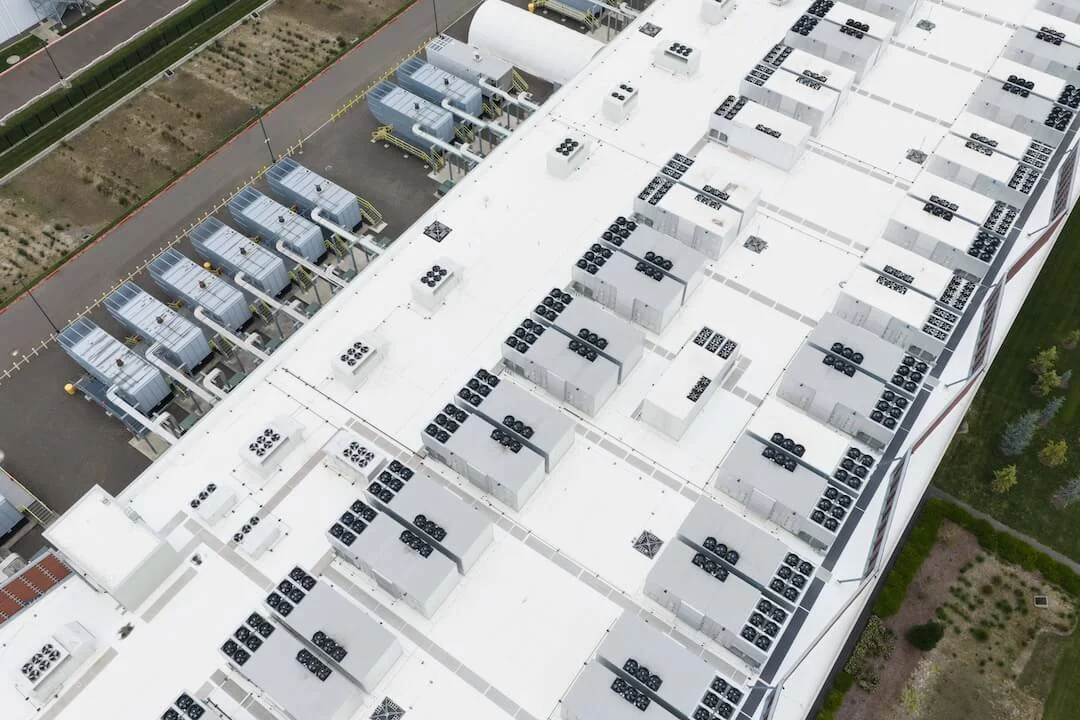
The rapid ascent of artificial intelligence, particularly the development and deployment of large language models (LLMs) and other sophisticated neural networks, has fundamentally reshaped technological landscapes and sparked a global "AI race." However, this technological marvel comes with a substantial physical cost, primarily in the form of immense energy consumption. The core of AI’s energy hunger lies in its operational requirements: the "training" of LLMs, which involves running vast arrays of specialized computers (GPUs, TPUs) continuously for weeks or even months, and the subsequent "inference" – the actual use of these models to generate content, answer queries, or perform tasks. These processes are housed within massive data centers, facilities that are effectively nerve centers of the digital world, operating 24/7 and consuming prodigious amounts of electricity not only for computation but also for essential cooling systems.
The energy intensity of AI models has grown exponentially. For instance, the training of early prominent models like OpenAI’s GPT-3 consumed an estimated 1,287 MWh, equivalent to the lifetime carbon footprint of over 100 U.S. cars. As models grow in size, complexity, and capability, these figures only climb, making AI a significant and increasingly visible contributor to global electricity demand. The International Energy Agency (IEA) has highlighted data centers as one of the fastest-growing areas of electricity demand globally, projecting a doubling of their electricity consumption worldwide between 2022 and 2026. This trajectory underscores the very real concerns about AI’s environmental impact and its potential strain on existing energy grids.
Fact-Checking the Claim: Expert Consensus on AI Energy Projections
Despite the undeniable growth in AI’s energy appetite, the assertion that the industry demands more electricity than the entire United States currently produces — or double that amount — stands in stark contrast to credible projections from federal sources and energy-focused think tanks. The U.S. Energy Information Administration (EIA) and various independent analyses consistently present a more nuanced and significantly lower picture.
Brendan Pierpont, director for electricity at Energy Innovation Policy and Technology LLC, an influential energy and climate policy think tank, directly refuted the scale of Trump’s claim. "I don’t see a pathway for data center demand to exceed total electricity demand in the U.S., or even approach anything close to that level," Pierpont stated, reflecting a consensus among experts. The White House, when approached for comment regarding the President’s estimate, did not provide a response.
A review of multiple studies focusing on projected AI energy loads in the U.S. reveals a consistent range that, while significant, remains a fraction of the nation’s total electricity production. These estimates generally project that by various points between 2028 and 2050, data centers, including those powering AI, could account for approximately 6% to 25% of total U.S. electricity demand. For instance, some analyses suggest that by 2030, data centers could consume between 4% and 6% of U.S. electricity, potentially rising to 10-15% by 2040 under high-growth scenarios. Even the most aggressive projections do not reach 100% or 200% of the country’s total generation capacity.
Kenneth Gillingham, a Yale University economist specializing in energy and environmental issues, affirmed the discrepancy, noting, "Trump’s estimate is very high relative to credible projections." While some studies indicate that AI’s energy use footprint in the U.S. could double from its current level in the coming years, this refers to a doubling of its share of total electricity consumption, not a doubling of the entire nation’s production. For context, current estimates place data center electricity consumption in the U.S. at roughly 2-3% of the total, meaning a doubling would bring it to 4-6%, a substantial increase but still far from surpassing the entire country’s output.
Historical Context and the Evolution of AI’s Energy Concerns
The concern over AI’s energy footprint is not entirely new but has intensified dramatically with the advent of generative AI. In the early 2010s, as deep learning models began to gain traction, researchers recognized the increasing computational demands. However, the scale was still relatively modest. By the mid-2010s, the "ImageNet moment" and the widespread adoption of neural networks led to a steady increase in data center expansion. Companies like Google, Amazon, and Microsoft began building hyperscale data centers globally, each consuming hundreds of megawatts.
The real inflection point came in the late 2010s and early 2020s with the transformer architecture and the subsequent explosion of large language models. The computational resources required to train models like GPT-2, GPT-3, and their successors grew at an astonishing pace, far outstripping Moore’s Law. This period marked a shift from general data center energy concerns to specific anxieties about the energy intensity of AI itself. Researchers began publishing papers detailing the carbon footprint of AI training, bringing the issue into the public and policy discourse. The release of ChatGPT in late 2022 democratized access to powerful AI, accelerating adoption and, consequently, the demand for underlying computational resources. This chronology underscores a legitimate, rapidly escalating energy challenge, even if the scale remains distinct from the President’s assertion.
Understanding Data Center Consumption Beyond AI
It is crucial to distinguish between total data center electricity consumption and the portion specifically attributable to AI. While AI is a significant and growing driver, data centers also power a vast array of other essential digital services: cloud computing, streaming media, e-commerce, enterprise applications, and traditional data storage. The overall growth in data center demand is a confluence of these factors.
A typical data center’s energy consumption is distributed across several key components:
- IT Equipment (Servers, Storage, Networking): This is the primary consumer, accounting for roughly 50-60% of total energy use. AI workloads, particularly GPU-intensive training, disproportionately contribute here.
- Cooling Systems: To prevent overheating, data centers require sophisticated cooling infrastructure, which can consume 30-40% of the total energy. This includes chillers, computer room air conditioners (CRACs), and pumps.
- Power Delivery Infrastructure: Uninterruptible power supplies (UPS), transformers, and power distribution units (PDUs) incur energy losses, typically around 5-10%.
- Lighting and Auxiliary Systems: A smaller but still present component.
Industry efforts have focused on improving Power Usage Effectiveness (PUE), a metric that compares total facility energy to IT equipment energy. A PUE of 1.0 is ideal (meaning all energy goes to IT equipment), while a PUE of 2.0 means that for every watt used by IT equipment, another watt is used by supporting infrastructure. Modern data centers strive for PUEs closer to 1.1-1.2. However, these efficiency gains are often outpaced by the sheer growth in the number and power of servers deployed, especially for AI.
Broader Implications for U.S. Energy Infrastructure and Sustainability
The sustained growth in data center and AI energy demand, even at the more conservative expert-projected rates of 6-25% of U.S. electricity, poses significant challenges for the nation’s energy infrastructure and sustainability goals.
- Grid Stability and Capacity: An aging U.S. electricity grid, already grappling with increased electrification and the integration of intermittent renewable sources, could face substantial strain. Large, concentrated loads from new data centers require robust transmission and distribution infrastructure, often necessitating costly upgrades or new construction. There is a growing need for significant investment in generation capacity, particularly dispatchable clean energy, to meet this rising demand without compromising grid reliability.
- Renewable Energy Integration: Many leading tech companies have pledged to power their operations, including data centers, with 100% renewable energy. While this is a positive step, the sheer scale of demand means that sourcing sufficient renewable energy (solar, wind) becomes a monumental task. It puts pressure on utilities and policymakers to accelerate the build-out of renewable generation and associated storage, and to develop smarter grid management solutions.
- Water Usage: Beyond electricity, data centers are also significant consumers of water, primarily for cooling purposes. Evaporative cooling systems, common in many facilities, can use millions of gallons of water annually. As AI demand grows, so too will the water footprint, raising concerns in drought-prone regions and adding another layer to the environmental impact debate.
- Land Use: The physical footprint of hyperscale data centers, along with their associated power infrastructure, can also lead to land use conflicts, particularly in areas with high population density or agricultural value.
Policy and Industry Responses
Recognizing the gravity of the situation, both governmental bodies and the tech industry are exploring various responses:
- Government Initiatives: The U.S. Department of Energy (DOE) and the Environmental Protection Agency (EPA) have programs aimed at improving data center energy efficiency and promoting sustainable practices. There are ongoing discussions within Congress about potential regulations, reporting requirements for data center energy and water use, and incentives for building energy-efficient facilities powered by renewables. The Biden administration, while encouraging AI innovation, has also emphasized the need for responsible development, including addressing environmental impacts.
- Industry Commitments: Major tech players like Google, Microsoft, Amazon, and Meta have set ambitious renewable energy targets and are investing heavily in new, more efficient data center designs. They are exploring advanced cooling technologies (e.g., liquid cooling, immersion cooling) and are actively researching more energy-efficient AI algorithms and hardware architectures (e.g., specialized AI chips like ASICs, neuromorphic computing). Some companies are strategically locating new data centers in regions with abundant renewable energy resources or cooler climates to reduce cooling loads.
- Research and Development: There is a concerted push in academic and industrial research to develop "green AI" – methods that achieve high performance with significantly reduced energy consumption. This includes optimizing model architectures, developing more efficient training techniques, and exploring federated learning approaches that reduce centralized computation.
The Path Forward: Innovation and Sustainable AI
The discourse surrounding AI’s energy consumption, spurred in part by claims such as Trump’s, highlights a critical juncture for technological development. While the former President’s specific figures were largely unsubstantiated, the underlying concern about AI’s growing energy footprint is entirely valid and requires serious attention. The path forward involves a multi-pronged approach:
- Continued Hardware Innovation: Developing more energy-efficient processors specifically designed for AI workloads (e.g., custom ASICs, next-generation GPUs) is paramount.
- Algorithmic Efficiency: Research into less computationally intensive AI models, sparse models, and more efficient training methodologies can significantly reduce energy demand at the software level.
- Advanced Cooling Technologies: Implementing innovative cooling solutions that reduce water consumption and energy overhead in data centers.
- Renewable Energy Sourcing: Accelerating the transition to 100% renewable energy for data center operations, coupled with grid modernization and energy storage solutions.
- Policy and Transparency: Establishing clear reporting standards for data center energy and water consumption, along with policies that incentivize sustainable practices and responsible AI deployment.
- Site Selection: Strategic placement of data centers in locations with access to abundant renewable energy and naturally cooler environments.
In conclusion, while the assertion that the AI industry’s energy demand will soon exceed the entirety of U.S. electricity production is demonstrably false according to current expert projections, it nonetheless serves as a stark, albeit exaggerated, reminder of the significant energy challenges posed by this transformative technology. Addressing AI’s genuine energy footprint will require concerted effort from researchers, industry, and policymakers to ensure that the advancements in artificial intelligence are matched by an equally robust commitment to environmental sustainability and grid resilience. The future of AI is inextricably linked to the future of our energy systems.