likely Return to Nvidia
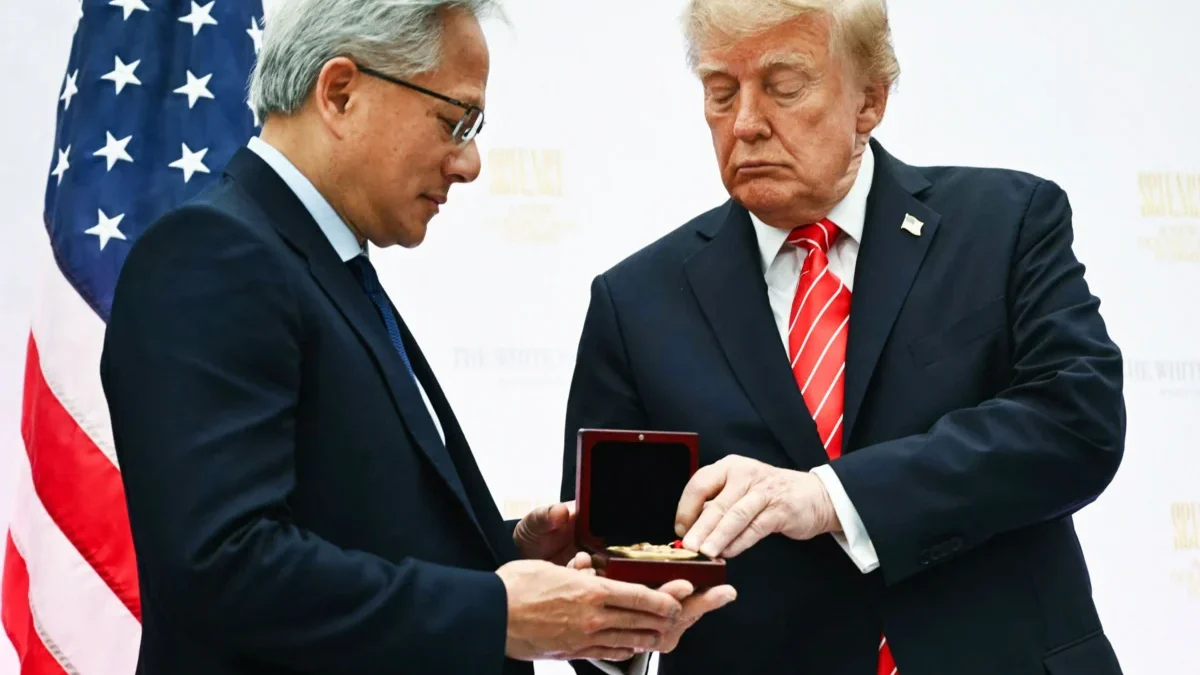
Just days ago, the prospect of Jensen Huang returning to the helm of Nvidia seemed vanishingly remote. Prediction markets on platforms like Polymarket and Kalshi placed his odds of reinstatement at a meager 10 percent by early Sunday morning on the East Coast. Yet, in a stunning corporate and political about-face, Huang was officially back in charge by Monday morning. The rapid swing in fortune highlights not only the volatile nature of modern executive leadership in the artificial intelligence sector, but also the profound, unorthodox influence of presidential politics on corporate governance.
The swift resurrection of Huang’s tenure offers a fascinating case study in how prediction markets operate during high-stakes political and corporate crossovers, shedding light on the mechanics of insider trading monitoring, the malleability of corporate boards under political pressure, and the overarching dominance of Washington in Silicon Valley boardrooms.
The Scandal and Sudden Fall of an AI Titan
The turmoil began earlier this month when Jensen Huang abruptly resigned as the chief executive officer of Nvidia following damaging internal and external reports detailing multiple extramarital affairs. Among the allegations was a relationship with a woman purportedly tied to Chinese intelligence services, raising severe national security alarms within the company.
As further investigative reporting uncovered increasingly erratic and concerning workplace behavior—including allegations that Huang had threatened employees with bizarre statements about authority—the Nvidia board of directors took a firm stance. Insiders repeatedly insisted that the board had zero intention of reinstating the disgraced CEO, leaving the company’s leadership vacuum wide open.
The immediate fallout was catastrophic for Nvidia’s market capitalization. As the foundational hardware giant of the global artificial intelligence boom, any instability at the top directly impacts the broader technology sector and the wider US economy. Share prices plummeted, setting off alarm bells not just among institutional investors, but within the highest corridors of the federal government.
Chronology of a Comeback: From 10 Percent Odds to Boardroom Reinstatement
The turnaround of Huang’s political and corporate fortunes can be mapped through a distinct timeline driven largely by public signals and presidential intervention:
- Earlier This Month: Jensen Huang resigns from Nvidia amid revelations of personal misconduct and alleged foreign intelligence exposure. The board firmly rules out reinstatement.
- Late Last Week: Pseudonymous prediction market traders and seasoned "sharps" begin taking positions on the longshot possibility of a return, noting the historic malleability of corporate boards under duress.
- Sunday Morning: Prediction markets on Polymarket US price Huang’s probability of returning at a dismal 10 percent.
- Sunday Evening (Washington Time): President Trump publishes a Truth Social missive explicitly calling for Huang’s reinstatement, citing the urgent need to stabilize the plunging stock market and support US tech dominance. Concurrently, Trump drops hints to journalists, such as a PBS NewsHour reporter, indicating that Huang would soon regain power.
- Sunday Night (Within 40 Minutes of Truth Social Post): Polymarket US odds for Huang’s return surge by six percentage points in less than an hour.
- Monday Morning: Nvidia officially announces that Jensen Huang has returned to his position as CEO, catching traditional analysts off guard but rewarding traders who factored Washington’s influence into their models.
The Weight of Presidential Influence and Market Reactions
The primary catalyst that shifted market sentiment was not an internal memo or a change of heart by independent directors, but a direct intervention from the White House. According to reports from The New York Times, President Trump played a crucial role in lobbying and convincing the Nvidia board to bring Huang back into the fold.
Trump’s public statements, delivered via Truth Social and remarks to the press, emphasized the necessity of revitalizing the stock market after Nvidia’s valuation plunged in the wake of the scandal. This dynamic caught the attention of prediction market traders who understood that corporate governance in the era of artificial intelligence is inextricably linked to national economic policy.
Betting Intelligence, a prediction market intelligence firm, tracked the trajectory of these odds across platforms like Kalshi and Polymarket. According to the firm’s data, odds predictably rose whenever Huang signaled openness to a return, cratered whenever the board pushed back, and surged decisively the moment President Trump threw his political weight behind the former CEO.
Insider Trading Scrutiny and Market Anomalies
While the public trajectory largely followed the news cycle, data analytics firms observed underlying market anomalies that hinted at potential non-public movements. Both Betting Intelligence and prediction market forensics firm MSR Decode identified distinct clusters of heavy trades favoring Huang’s return that could not be easily correlated with public statements or breaking news items.
Representatives for Kalshi and Polymarket have declined to comment on whether they are actively investigating potential insider trading regarding the Huang markets. However, industry experts note the structural limitations of information leakage in such scenarios.
Dan Zimmermann, CEO of Betting Intelligence, pointed out that the group of individuals with direct, advance knowledge of the board’s deliberations was inherently small. Consequently, the vast majority of volume in these markets consisted of headline chasers and longshot buyers rather than systemic leaks. "The market was mostly headline chasers and longshot buyers," Zimmermann observed.
Trader Perspectives: How the Sharps Played the Boardroom Drama
For savvy prediction market participants, the episode served as a masterclass in reading power dynamics rather than getting bogged down in corporate ethics or HR scandals.
Isaac Rose-Berman, a professional sports bettor and research and policy fellow at the American Institute for Boys & Men, netted approximately $10,000 on Kalshi by wagering on Huang’s comeback. Rose-Berman placed his trade immediately after Huang posted on X that he was open to reclaiming his role, reasoning that the board’s fiduciary duty to maintain stock performance would ultimately override concerns regarding national security or personal misconduct.
"It’s 2026 and Trump is president, scandal schmandal," Rose-Berman remarked, reflecting a cynical yet pragmatic view of modern governance. "Should’ve bet more."
Similarly, a pseudonymous high-volume trader known in the community as Domer cleared roughly $600,000 by executing an early wager last week. Domer emphasized that his strategy relied on an understanding of institutional psychology rather than direct inside knowledge of Trump’s schedule. "Boards can be very malleable," he noted.
Conversely, those who ignored the political tea leaves suffered financial losses. Aaron Courtney, a data analyst and co-founder of a prediction market analytics firm, admitted to taking a financial loss on his Huang position because he failed to properly weigh the commentary emanating from Trump and administration officials over the weekend. "Trump saying he hoped Nvidia would bring Jensen back would be the clearest signal," Courtney reflected.
Broader Implications for Corporate Governance and AI Leadership
The reinstatement of Jensen Huang under political duress marks a watershed moment for corporate governance in the United States, particularly within the critical and geopolitically sensitive artificial intelligence sector.
For decades, standard corporate procedure dictated that severe executive misconduct involving alleged security vulnerabilities, personal dishonesty, and major governance scandals would result in permanent termination. The swift reversal of Nvidia’s board demonstrates that economic hegemony, market capitalization preservation, and direct executive pressure from the highest levels of government can successfully override conventional risk management protocols.
Furthermore, the incident underscores the growing financial maturity and predictive relevance of prediction markets. Platforms like Polymarket and Kalshi are increasingly functioning as real-time barometers of institutional and political probability, capturing shifts in elite consensus far faster than traditional financial analysis or journalistic reporting.
As the dust settles on Nvidia’s executive suite, the broader implications for the technology industry remain complex. Jensen Huang resumes control of an AI titan that is more deeply intertwined with federal politics than ever before. For Wall Street, Silicon Valley, and the growing community of prediction market traders, the central takeaway from the crisis is unmistakable: in the modern political economy, never discount the power of the presidency to reshape corporate reality.