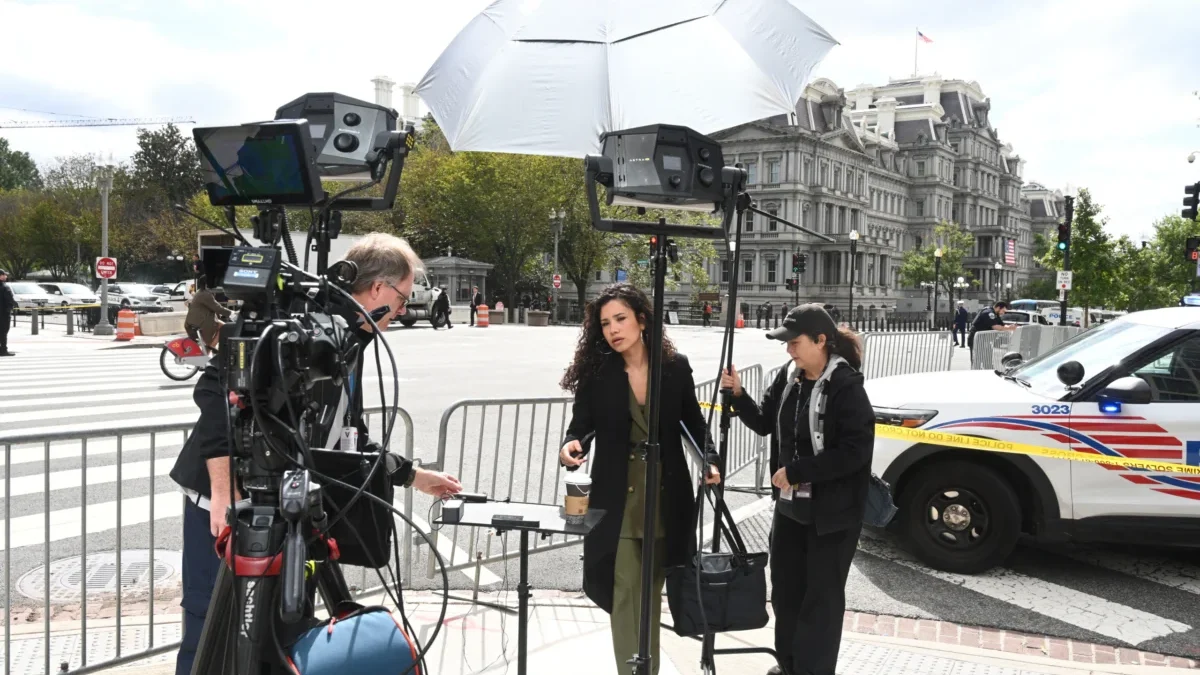
The tension between the executive branch and the American media reached a critical juncture when the White House enforced an unprecedented ban on journalists from major news organizations. This aggressive maneuver triggered a wave of legal battles, a temporary suspension of television pool operations, and renewed questions regarding the constitutional boundaries of press freedom.
The conflict unfolded against the backdrop of high-level diplomacy, as foreign heads of state visited Washington, D.C., exposing deep institutional friction between the administration and the independent press corps.
Chronology of a Crisis: From Bans to Courtroom Battles
The confrontation began days prior to a scheduled diplomatic visit, when the administration arbitrarily revoked the hard security passes of reporters representing CNN, MS Now, and Politico. The sudden expulsion signaled a dramatic escalation in the administration’s ongoing hostilities toward mainstream news outlets.
Journalists attempting to cover the arrival of Chinese President Xi Jinping at the White House faced immediate exclusion. Betsy Klein of CNN reported being turned away from the gates three times, while Laura Barrón-López of MS Now found her security badge flashing red after Secret Service agents deactivated her access.
Legal intervention was swift. At approximately 1:00 a.m. on the day of the summit, Judge Timothy J. Kelly of the U.S. District Court for the District of Columbia issued an emergency court order halting the ban. The ruling mandated the immediate reinstatement of press access for the affected journalists for a fourteen-day period while litigation proceeds.
Despite the judicial mandate, the administration continued to obstruct access. Later that evening, journalists from CNN and MS Now were barred from attending a formal state dinner. Days later, CNN was excluded from an Air Force One press travel delegation to Tennessee, severely disrupting established rotation schedules.
Media Solidarity and the Breakdown of the TV Pool
In response to the initial ban, the unified television pool—comprising CNN, ABC, CBS, NBC, and Fox News—took the historic step of suspending operations in a display of solidarity. This coordinated withdrawal of camera and reporting crews denied the administration standard visual coverage of key events, including the arrival ceremony of the visiting Chinese delegation.
Political observers noted the profound irony of the situation. While domestic journalists protected by constitutional guarantees of a free press were physically barred from the grounds, state-run foreign media representatives were permitted inside the Oval Office.
By the end of the week, however, internal pressures among network executives led to a fracturing of the unified front. Major networks signaled a return to standard pool duties on a case-by-case basis. Media analysts warned that resuming the pool arrangement effectively hands the administration increased leverage to cherry-pick which news organizations receive close-up access to presidential events, thereby undermining collective bargaining power within the press corps.
Official Rationales and Judicial Skepticism
To justify the revocation of press credentials, the White House press office issued formal letters citing national security concerns. Documents sent to Politico pointed to specific reporting, accusing the outlet of publishing classified information and verifiable falsehoods regarding national security matters.
Investigative reports soon dismantled the administration’s justification. Investigative reporting revealed that the source for one of the contentious stories was a background briefing conducted by Vice President JD Vance, exposing a glaring disconnect within the executive branch’s internal communications and strategic planning. Additional reports indicated that the bans were executed on a whim following conservative media clips shown to the president.
During court proceedings, legal representatives for the media outlets argued that the administration’s stated rationale was a post hoc pretext. Judge Kelly echoed this skepticism in his ruling, noting that the court doubted national security was the genuine motivation behind the revocation of the passes and stating that the action likely violated constitutional due process rights.
Broader Implications for Press Freedom
While the physical exclusion of reporters from the White House grounds generated intense public attention, media watchdogs emphasize that it represents only one facet of a broader campaign against independent journalism.
The administration has increasingly relied on subpoenas targeting journalists in an effort to uncover confidential sources. Concurrently, regulatory bodies such as the Federal Communications Commission have faced accusations of weaponization, utilizing administrative power to exert subtle pressure on broadcasters and influence editorial direction.
These actions compound existing economic strains across the media industry. Ongoing legal battles, including retaliatory lawsuits filed by the executive against international and domestic news organizations, consume substantial legal resources. Furthermore, the administration has implemented significant policy changes affecting public media funding, restricted access to Pentagon briefings, and swept journalists into broader immigration enforcement actions.
Strategic Distraction and the Politics of Spectacle
Political analysts suggest that continuous friction with the media serves a strategic purpose for an administration facing domestic policy hurdles, rising inflation metrics, and foreign policy challenges. By framing the press as an adversarial political actor, the executive branch maintains a reliable foil to mobilize political support.
Legal experts and historians emphasize that the preservation of an independent press remains a cornerstone of democratic governance. As litigation regarding White House access proceeds through the federal court system, the collective response of the journalism community will determine the future framework for reporting on the executive branch.