Navigating the Evolving Landscape: Essential Content Optimization Tools for the AI-Driven Search Era of 2026

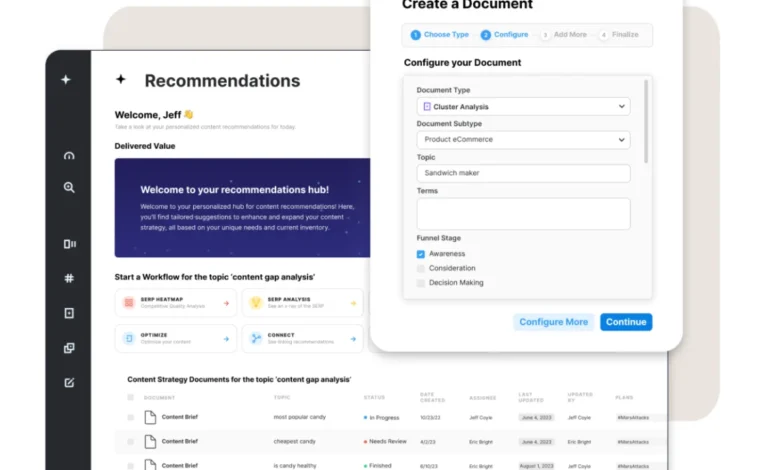
Organic search continues to be a cornerstone of effective digital marketing strategies, consistently delivering robust returns on investment. However, the landscape of how users discover and consume information has undergone a profound transformation by 2026. The ascendancy of AI search engines, exemplified by Google AI Overviews, Perplexity, and ChatGPT, has ushered in a new era where content visibility is no longer solely dictated by traditional search engine ranking algorithms. Marketers who fail to adapt their content optimization strategies to this AI-first environment risk becoming invisible to a significant portion of their target audience, directly impacting buyer research and ultimately, sales pipelines. This comprehensive guide delves into the most effective content optimization tools available in 2026, categorized by their specific use cases, offering insights for both building a new content technology stack and enhancing existing workflows to thrive in this evolving digital ecosystem.
The core challenge facing marketing teams today is that AI search engines do not select and present information in the same manner as their traditional counterparts. While conventional SEO focuses on ranking pages in a list of results, AI-driven platforms prioritize synthesizing information into direct answers, summaries, and conversational responses. This fundamental difference means that content optimized exclusively for Google rankings may not be readily surfaced or cited in AI-generated answers, effectively rendering it invisible to prospective buyers increasingly relying on these intelligent agents for their research. Therefore, understanding and implementing Answer Engine Optimization (AEO) has become as critical as traditional SEO.
The Paradigm Shift: From SEO to AEO in 2026
The journey from rudimentary search engine optimization to the sophisticated demands of AEO has been swift and impactful. For decades, SEO revolved around keywords, backlinks, and technical site health, aiming to secure top positions on search engine results pages (SERPs). Content creators focused on keyword density, topical relevance, and building domain authority to signal trustworthiness and expertise to algorithms like Google’s. This approach yielded predictable results, with higher rankings generally correlating with increased organic traffic.
However, the advent of large language models (LLMs) and their integration into search experiences marked a significant inflection point around 2023-2024. Google’s introduction of AI Overviews (formerly Search Generative Experience, SGE), alongside the rapid adoption of standalone AI assistants like ChatGPT and Perplexity, fundamentally altered user behavior. Instead of clicking through multiple links to find answers, users now frequently encounter synthesized summaries directly within their search interface or engage in conversational queries with AI chatbots. Data from industry analysts suggests that by late 2025, over 40% of online information queries in certain sectors began with or directly involved an AI search component, impacting traditional organic click-through rates by as much as 15-20% for top-ranking pages in affected categories. This trend is only projected to accelerate through 2026, making AI visibility a non-negotiable aspect of content strategy.

The critical distinction lies in how AI search engines "understand" and "cite" information. Instead of merely matching keywords, AI employs advanced natural language processing (NLP) and semantic analysis to grasp the deeper meaning and context of content. It seeks clear, concise, and authoritative answers, often prioritizing well-structured content that directly addresses user intent. Furthermore, AI engines are increasingly focused on identifying and attributing information to credible sources, placing an even greater emphasis on content quality, author expertise, and overall brand authority. Marketers must now consider how their content can be easily parsed, summarized, and trusted by an AI to be cited accurately and prominently.
Key Categories of Content Optimization Tools for the Modern Marketer
To navigate this complex environment, marketers require a sophisticated toolkit. These tools are no longer about just "getting found" but about "being understood" and "being cited" by intelligent systems. The following categories represent the essential components of a robust content optimization stack in 2026:
On-Page Optimization and Content Scoring: Crafting AI-Ready Content
These tools are crucial for analyzing and benchmarking content against top-performing competitors, providing specific, actionable recommendations. Their reliance on NLP and semantic analysis, rather than outdated keyword density metrics, makes them indispensable for both traditional SEO and emerging AEO.
-
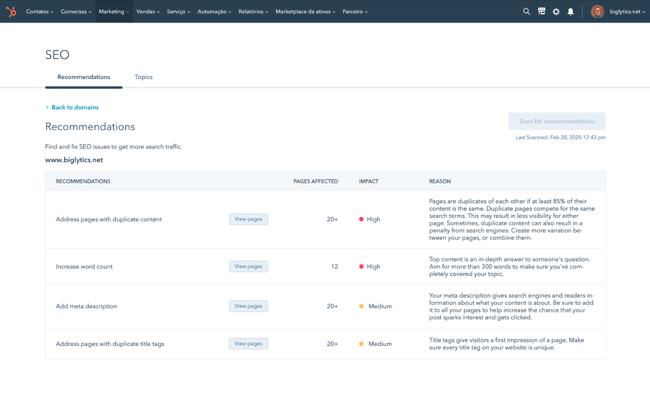
HubSpot SEO Marketing Software: Integrated directly into Marketing Hub, HubSpot’s SEO Marketing Software offers a centralized view of SEO performance, on-page recommendations, and topic cluster structure. Its unique advantage lies in connecting these SEO insights directly to a brand’s actual content and CRM data. This allows teams to identify pages needing optimization, implement changes within the same platform, and track the downstream impact on traffic, leads, and pipeline without manual data stitching. Rob Freedman, VP of Marketing at SureCam, attests to this, stating, "I use HubSpot’s content editor, SEO recommendations, and content calendar to plan, publish, and optimize website and blog content, then tie each asset directly to campaigns so I can report on pipeline and revenue impact in our CRM." This integrated approach is particularly beneficial for mid-market and enterprise teams requiring quantifiable content ROI. Key features include on-page SEO recommendations, keyword tracking, topic cluster analysis, and seamless integration with CRM for full-funnel reporting.
-
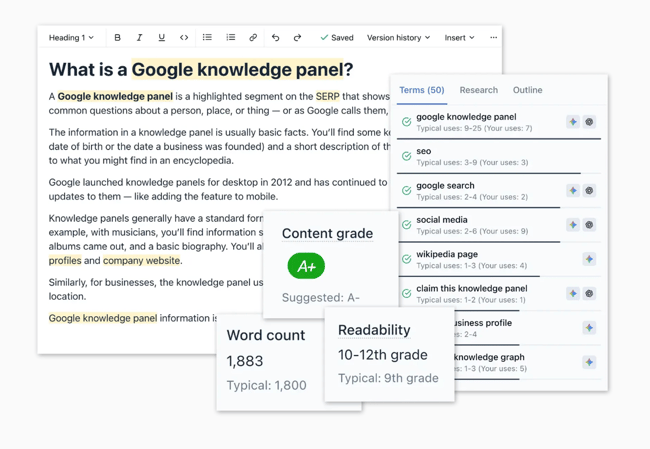
Clearscope: As a leading content discoverability platform, Clearscope covers the entire content workflow: from in-depth topic research and AI-assisted drafting to on-page optimization, content monitoring, and internal linking. Crucially, it now includes AI search visibility tracking across major platforms like ChatGPT and Gemini. Its clean, fast interface makes it easy to standardize across writing teams. The "query fan-out" feature is particularly valuable for AEO, revealing the secondary searches AI platforms might trigger to build comprehensive answers, guiding content teams on where to invest. "Clearscope has been a huge part of how I scale content with new writers," remarks Cassy Aite, co-founder of Postbeam.ai and Hoppier.com, emphasizing its role in reducing SEO research and streamlining editing for optimized content. Starting at $129/month, Clearscope is ideal for enterprise content teams and agencies seeking a unified platform with unlimited user seats.
-
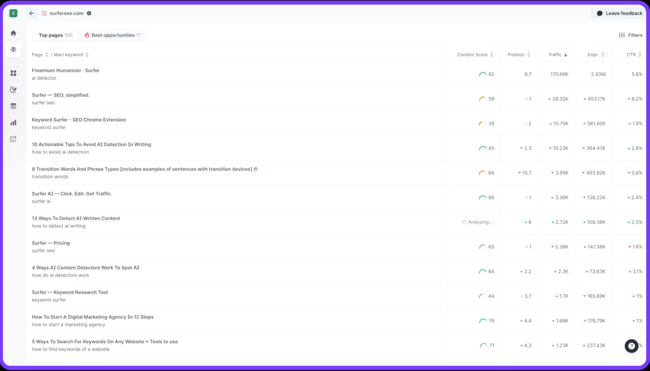
Surfer: Surfer has evolved into an AI visibility platform that merges on-page content optimization with AI search tracking, topical authority planning, and competitive intelligence across Google and key AI engines (ChatGPT, Perplexity, Gemini, Google AI Overviews). Its "Mention Gap" feature is a significant asset for AI search strategies, allowing teams to pinpoint which AI engines are citing competitors for specific topics. This provides a concrete starting point for addressing visibility gaps. Chris Coussons, founder at Visionary Marketing, shared a compelling case study: "We did a test of Surfer SEO… and optimized 50% of a client’s aged blogs… The uplift on the optimized blogs was higher than I think everyone expected, with an average increase of 4 places (zero for the control) and 43% clicks in the 3 months that followed. We’ve used it ever since." Surfer’s pricing starts at $119/month, making it suitable for content teams and SEO specialists managing high-volume publishing and multi-brand strategies.
Research, Briefs, and Content Writing Accelerators: Fueling Efficient Creation
Effective content optimization begins long before a single word is written. These tools empower teams to plan strategically, develop robust content briefs, and accelerate first-draft creation, all while grounding content in real-time keyword and user intent data.
-
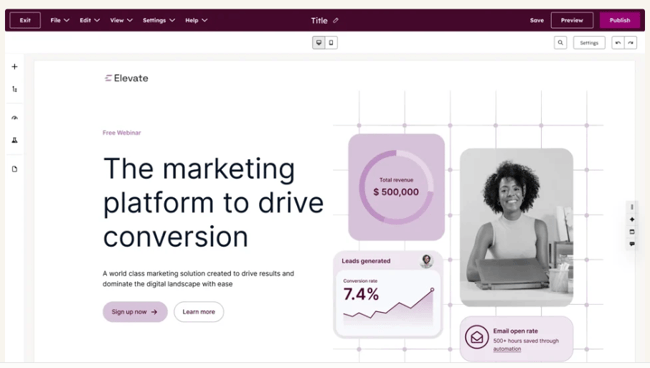
HubSpot Content Hub: HubSpot’s CMS platform stands out with its built-in AI content creation, drag-and-drop editing, and comprehensive content optimization features. It’s designed for teams seeking a single environment for building, publishing, and optimizing content. Beyond accelerating publishing, Content Hub’s AI content writer produces clear, extractable content, making it easier for both human readers and AI search engines to parse and cite. This inherent structure is a significant advantage for Answer Engine Optimization (AEO), as it aligns with how generative AI evaluates and pulls from sources. Kshitij Chaudhary, founder of Dintellects, praises its integrated nature: "I love using the HubSpot Content Tools. It helps me to organize how I work with content and see how my blog posts are doing… It keeps all my content and marketing work in one place." Content Hub’s key features include AI content generation, an intuitive content editor, content analytics, and integration with CRM.
-
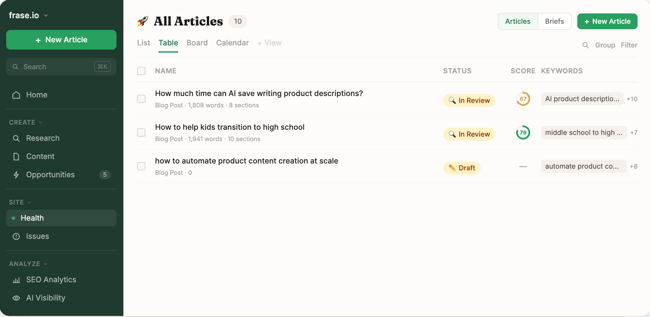
Frase: Frase operates as an agentic SEO and GEO (Generative Engine Optimization) platform, consolidating research, writing, optimization, AI-driven visibility tracking, and content maintenance. It covers the full content strategy spectrum, from SERP research and brief creation to AI-powered drafting, combined SEO + GEO scoring, and automated content decay detection. What sets Frase apart is its ability to provide a single, unified score that accounts for both Google rankings and AI visibility, addressing the crucial question for marketers: "Are we optimizing for the right things now that AI search matters?" Chaudhary also notes, "I use this tool for quick content research. It helps me to create outlines for my articles and to discover what people are looking for online." Frase starts at $49/month, making it an excellent choice for teams aiming to consolidate a fragmented tool stack into one powerful platform.
-
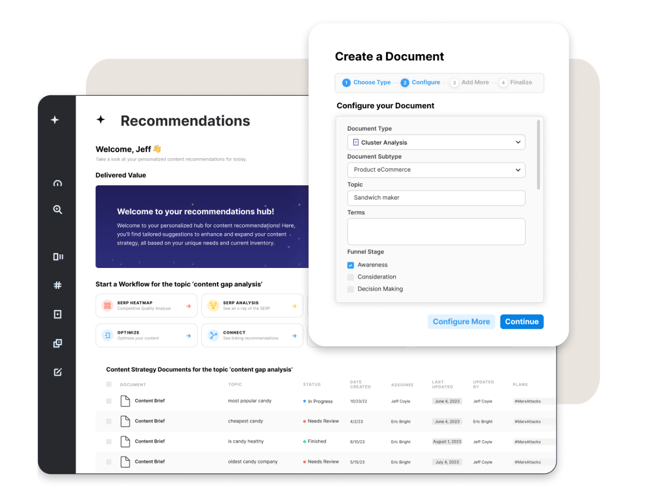
MarketMuse: This content intelligence platform leverages AI to identify content gaps, prioritize topics, and assess content quality across an entire website. MarketMuse helps marketers efficiently build a comprehensive content library that addresses target topics and high-priority gaps, preventing duplication and focusing efforts on areas with the most strategic impact. Its key features include content audits, topic clustering, competitive analysis, and AI-powered content briefs. With a free plan available and paid plans quote-based, MarketMuse is best suited for enterprise and mid-market teams managing extensive content libraries (100+ pages) who require a strategic, site-wide view of their content performance.
Internal Linking and Site Structure Support: Building a Cohesive Digital Ecosystem
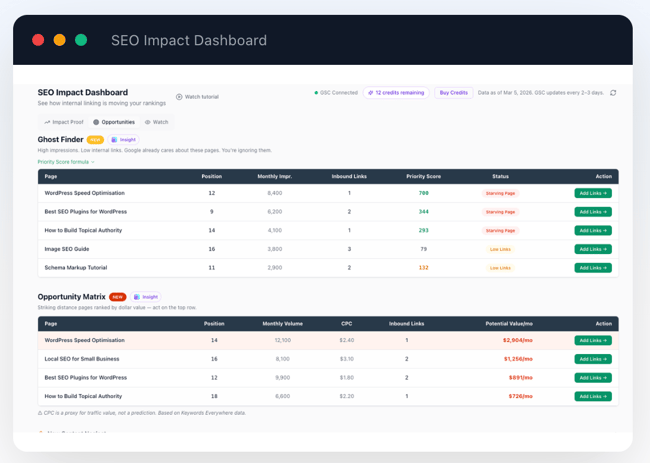
Strong internal linking is more important than ever, helping both traditional search engines and AI understand topical authority, improving crawlability, and distributing "link equity" across related pages. A well-structured site is inherently more readable and understandable for AI, increasing the likelihood of accurate citation.
-
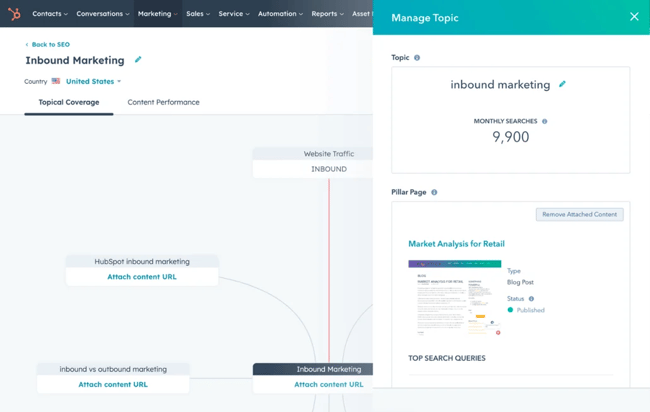
HubSpot SEO Topic Clusters (via Marketing Hub): HubSpot’s topic cluster tool provides a visual map of how pillar pages and cluster content connect across a site. It efficiently flags missing links and identifies orphaned content, streamlining the creation of semantic architecture favored by both traditional and AI search engines. Unlike standalone auditing tools, this map is integrated directly into Marketing Hub, linking recommendations to the same pages, contacts, and pipeline data used by the rest of the marketing team. This direct connection allows teams to see the measurable impact of improved content clusters on leads and revenue. Key features include visual topic maps, orphaned content detection, and integration with Marketing Hub analytics. This tool is especially useful for teams building or expanding topic clusters as part of an AEO strategy.
-
Link Whisper: A popular WordPress plugin, Link Whisper uses AI to suggest and automatically insert internal links as content is being written. It also provides site-level reporting for orphaned pages, broken links, and overall link structure. By automating the often tedious process of internal linking, it frees up valuable time for content creators. The integration with Google Search Console further enhances its utility by surfacing terms Google already associates with a brand’s pages as potential linking targets. Keran Smith, Co-Founder and Chief Marketing Officer at LYFE Marketing, highlights its efficiency: "Link Whisper saves me hours by letting me implement anchor text across multiple keywords with a single click. We have thousands of pages on our site, so it helps us improve our anchor text efforts at scale." Starting at $97/year, Link Whisper is ideal for WordPress-based content teams with large archives seeking to improve internal linking at scale.
-
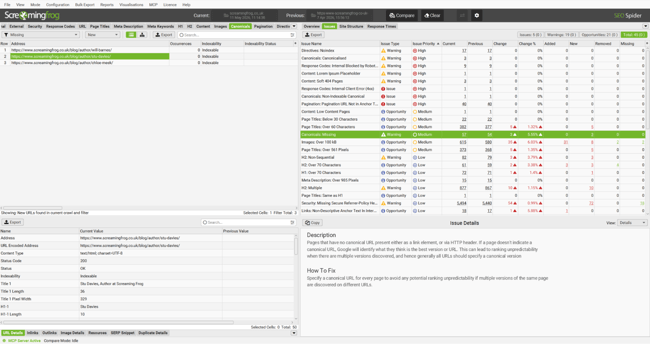
Screaming Frog: This technical SEO crawler for various operating systems audits site structure, identifies over 300 SEO issues, and uncovers internal linking gaps. Screaming Frog offers unparalleled depth of crawl data, which is essential for maintaining a healthy and AI-friendly site architecture. Its recent AI integration allows SEO teams to conduct content quality checks or custom extraction prompts at scale during a crawl, streamlining complex technical SEO workflows. Robertas Voroneckis, Head of SEO and Growth at Demo Agency, considers it indispensable: "Screaming Frog is my go-to for technical SEO audits because it gives a very detailed view of crawl issues, metadata, internal linking, indexation signals, and site structure." Priced at $279/year (with a free version available), it’s best for SEO specialists and technical teams requiring deep site crawls for migrations, major content pushes, or CMS changes.
Experimentation and Content QA: Validating User Engagement and AI Readability
Publishing content is merely the beginning of the optimization journey. These tools assist teams in testing content effectiveness and auditing existing assets to ensure they meet both user experience and AI readability standards.
-
Hotjar: Now part of Contentsquare, Hotjar is a behavior analytics platform that visualizes how real users interact with content pages through heatmaps, session recordings, funnels, and on-page surveys. It answers a crucial question that most SEO tools cannot: "Do people actually read, engage with, and understand our content?" For content teams running optimization sprints, combining Hotjar’s behavioral data with post-publish performance metrics closes the loop between content quality and user engagement. Smith also uses Hotjar, noting, "The ability to view actual recordings of how our website visitors navigate the site is extremely insightful." With a free plan and paid options starting at $49/month, Hotjar is best for content and demand generation teams who need behavioral data to inform content QA and page-level optimization decisions, especially for high-traffic landing pages and pillar content.
-
Google Search Console: Google’s free tool remains the baseline for monitoring search performance, providing essential data on clicks, impressions, CTR, and average position by query and page. While it doesn’t directly track AI citations, the query data it provides is invaluable for identifying content that is close to ranking but underperforming, which can then be optimized for AEO. Voroneckis emphasizes its foundational role: "Google Search Console is usually my starting point because it shows how a business is already being found, which pages have traction, and where the easiest optimization opportunities are." It is a non-negotiable tool for all marketing teams.
Performance Reporting and Strategy Tools: Measuring AI Impact and ROI
Proving the return on investment (ROI) of content marketing has always been challenging. In the AI era, this is compounded by new visibility metrics. These tools help bridge the gap between content creation and quantifiable performance reporting.
-
HubSpot AEO (Answer Engine Optimization): HubSpot’s AEO tool is specifically designed to help marketing teams understand where and how their brand appears in AI-generated answers across platforms like ChatGPT, Perplexity, and Gemini. It identifies the content and entity signals influencing visibility, providing a structured way to track progress. By 2026, a page can rank highly in traditional search yet be absent from AI responses for the same query. HubSpot AEO addresses this by surfacing AI visibility, identifying influencing factors, and connecting this data to the same CRM where leads and pipeline are tracked. This integration is critical for demand generation leaders who need to link content investment to measurable pipeline impact, making AEO visibility metrics (citations, share of AI answers, topical coverage) a vital reporting layer alongside traditional SEO. Pricing starts at $50/month, with deeper CRM integration available for Marketing Hub Professional or Enterprise users.
-
Semrush: This all-in-one digital marketing platform is a powerhouse for SEO, AI-driven visibility tracking, competitive intelligence, content optimization, advertising, and PR. The addition of its AI Visibility Toolkit and Semrush One bundle means teams no longer need separate tools to track both traditional search rankings and AI citation visibility. Chaudhary praises its versatility: "I use this tool for finding keywords and seeing what my competitors are doing… Semrush helps me make a plan for my website." Key features include comprehensive keyword research, competitor analysis, site audits, AI content tools, and robust performance reporting. Starting at $139.95/month, Semrush is ideal for mid-market and enterprise SEO and content teams seeking a full-suite platform for organic strategy.
-
Ahrefs: Ahrefs is another formidable AI marketing platform offering SEO intelligence, backlink analysis, content research, and AI-driven search visibility tracking. Its Content Explorer is particularly useful for content strategy, allowing marketers to search for high-traffic content on any topic, filtered by date, domain rating, and linking domains. This feature helps uncover competitive gaps that keyword research alone might miss. Key features include site explorer, keyword explorer, content explorer, and site audit. Starting at $129/month, Ahrefs is best for SEO strategists and content teams needing deep competitive intelligence and integrated AI visibility tracking.
The Imperative of Integrated Marketing Stacks
In 2026, the fragmentation of marketing tools presents a significant hurdle to effective content optimization. Relying on disparate platforms for SEO, AI writing, AEO tracking, and CRM can lead to siloed data, inefficient workflows, and an inability to accurately attribute content’s impact on business goals. The most successful marketing organizations are increasingly adopting integrated platforms that unify these functions. Solutions like HubSpot’s comprehensive ecosystem, which connects SEO recommendations, AI writing capabilities, AEO visibility, and CRM-attributed performance reporting, offer a distinct advantage. This integrated approach not only streamlines operations but also provides a holistic view of content performance, enabling marketers to make data-driven decisions that directly impact lead generation and revenue.
The Future of Content: Quality, Authority, and Adaptability
As AI continues to reshape the search landscape, the foundational principles of excellent content remain paramount. The concept of E-E-A-T (Experience, Expertise, Authoritativeness, and Trustworthiness) will only grow in importance, as AI models are designed to prioritize and cite content from credible, human-centric sources. Content creators must focus on producing high-quality, deeply researched, and uniquely valuable information that genuinely addresses user intent.
The evolving skill set for content marketers will include an understanding of AI prompt engineering, entity optimization (ensuring a brand’s key concepts and entities are clearly defined and interconnected), and a nuanced grasp of how AI models interpret and summarize information. Continuous learning and adaptation will be crucial, as AI search technology is still rapidly developing.
In conclusion, content optimization in 2026 is a multifaceted discipline that extends far beyond traditional SEO. It demands a strategic approach that acknowledges the profound influence of AI search engines and leverages a sophisticated array of tools to ensure content visibility, engagement, and measurable ROI. For marketing teams seeking to build a resilient and high-performing content program, investing in an integrated content optimization stack and fostering a culture of continuous adaptation is no longer optional—it is essential for sustained success in the AI age.