Strategies for Combatting Burnout and Enhancing Wellness in the Modern Public Relations Landscape

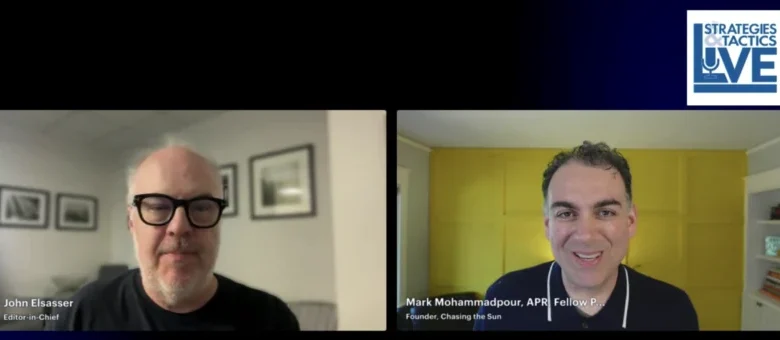
The public relations industry is currently navigating a transformative period characterized by the transition to hybrid work environments, the rise of asynchronous communication, and an increasingly volatile global news cycle. To address the mounting pressure on practitioners, Mark Mohammadpour, APR, Fellow PRSA, joined John Elsasser, editor-in-chief of Strategies & Tactics, for a June 24 session of S&T Live. The monthly livestream series, hosted on LinkedIn, serves as an extension of PRSA’s award-winning publication, offering a deeper dive into the professional and personal challenges facing today’s communicators. During the session, Mohammadpour, a veteran of the industry and a prominent workplace wellness advocate, provided a comprehensive framework for maintaining mental health and professional efficacy in an era of constant connectivity.
The conversation highlighted a critical paradox in modern PR: while the industry’s relevance has never been greater, the toll on its workforce has reached a tipping point. Mohammadpour, who serves as the Workplace Wellness columnist for Strategies & Tactics, emphasized that the shift toward remote and asynchronous work has fundamentally altered the way professionals interact, often at the expense of human connection. He argued that the simple act of picking up the phone to vent to a colleague or friend remains one of the most underutilized yet effective tools for emotional regulation.
The Evolution of Workplace Stress in Public Relations
To understand the context of Mohammadpour’s advice, one must look at the historical trajectory of the PR profession. Historically ranked as one of the most stressful career paths—often appearing alongside emergency first responders and airline pilots in annual surveys—public relations requires constant vigilance and the ability to manage crises in real time. However, the advent of digital communication and the 24-hour news cycle has eliminated traditional "off-hours," leading to a state of perpetual readiness that Mohammadpour describes as "draining."
Mohammadpour’s insights are grounded in two decades of experience at top-tier global agencies, including Weber Shandwick and Edelman. His perspective is further informed by a personal health journey in which he lost and maintained a 150-pound weight loss while navigating the high-pressure agency environment. This dual expertise led him to found Chasing the Sun, a consultancy specifically designed to bridge the gap between high-performance communications and holistic health coaching.
According to Mohammadpour, the "awkward, remote, hybrid, asynchronous era" has exacerbated feelings of isolation. Asynchronous communication—where messages are exchanged through platforms like Slack, email, or project management tools without the benefit of real-time visual or auditory cues—can lead to misunderstandings and a lack of empathy. "Humanizing one another seems basic, but we sometimes forget that," Mohammadpour noted during the livestream, suggesting that the lack of face-to-face interaction can strip away the personal connections that previously acted as a buffer against work-related stress.
Chronology of the S&T Live Session: From Burnout to Action
The June 24 session was structured to move from an assessment of current industry stressors to actionable strategies for individuals and managers. John Elsasser opened the dialogue by questioning how the current landscape impacts the well-being of PR professionals. Mohammadpour responded by identifying the primary drivers of burnout, which he categorized not just by the volume of work, but by the nature of the work.
"The work that we do can be exhausting," Mohammadpour stated. "We’re burned out by pitching the media. We’re burned out by supporting an executive. We’re burned out by crisis." He clarified that even professionals with a seemingly healthy work-life balance in terms of hours can still suffer from burnout if the emotional and mental labor of their specific tasks is consistently high.
The session then transitioned into a discussion on task management, where Mohammadpour introduced the "bucket" method. This strategy is designed to combat the "everything is a priority" mentality that often plagues PR departments and agencies.
The Bucket Method: A Strategic Framework for Priority Management
One of the most significant takeaways from the June 24 discussion was Mohammadpour’s approach to organizational health. He suggested that when work begins to feel overwhelming, professionals should categorize their obligations into three distinct "buckets":
- The Essential Bucket: This contains tasks that are non-negotiable and require immediate attention. These are often tied directly to business goals or urgent crisis management.
- The Delayed Bucket: This includes tasks that are important and must be completed, but do not require immediate action. Categorizing items here allows for mental "breathing room."
- The Delegation Bucket: This contains tasks that can be handled by other team members, allowing the lead professional to focus on high-impact strategic work.
Mohammadpour emphasized that this is not merely a personal productivity hack but a necessary topic for manager-employee relations. "These are conversations you need to be having with your manager on a regular basis," he said. By aligning on what is truly important for the business, employees can reduce the anxiety associated with an endless to-do list.
Supporting Data: The Rising Cost of PR Burnout
The emphasis on wellness in the PR industry is supported by a growing body of data. According to various industry reports, including the 2023 Global Comms Report, a significant percentage of PR professionals report feeling "overwhelmed" at least once a week. Furthermore, the World Health Organization (WHO) has officially recognized burnout as an "occupational phenomenon" resulting from chronic workplace stress that has not been successfully managed.
In the PR sector, burnout leads to higher turnover rates, which in turn increases the workload for remaining staff—a phenomenon often referred to as the "vicious cycle of agency life." By implementing the small changes Mohammadpour suggests, organizations can potentially see improvements in retention and productivity. For example, research into "Zoom fatigue" suggests that reducing video requirements can lower cognitive load, a point Mohammadpour echoed when he advised defaulting to camera-off meetings or phone calls to reduce exhaustion.
Micro-Habits for Long-Term Wellness
Beyond organizational shifts, Mohammadpour focused on small, individual changes that can have a cumulative impact on mood and energy. These "micro-habits" are designed to be integrated into a busy workday without requiring significant time investments.
- The 20-Minute Phone-Free Walk: Mohammadpour recommended a daily 20-minute walk without a mobile device. This practice allows the brain to enter a state of "soft fascination," which has been shown to restore cognitive resources and reduce stress.
- Camera-Off Meetings: Suggesting a "camera-off" policy for internal one-to-one calls can alleviate the pressure of "performing" for the screen and allow for movement, such as walking during the call.
- Prioritizing Sleep: Mohammadpour described high-quality sleep as "underrated," noting that it is the foundation upon which all other wellness habits are built.
- The Power of the Vent: He reiterated the importance of using the phone for its original purpose: voice communication. Sharing frustrations with a trusted peer—not for a solution, but for the sake of being heard—can provide immediate emotional relief.
Official Responses and Industry Implications
The response to Mohammadpour’s advocacy has been largely positive within the PRSA community. As an organization, PRSA has increasingly prioritized the mental health of its members, recognizing that the sustainability of the profession depends on the well-being of its practitioners. The Strategies & Tactics publication and the PRsay blog have become central hubs for these discussions, reflecting a broader shift in the corporate world toward "human-centric" leadership.
Industry analysts suggest that the implications of this wellness movement are far-reaching. Firms that prioritize workplace wellness are likely to become "employers of choice" in a competitive talent market. Conversely, those that continue to reward "hustle culture" at the expense of health may face significant challenges in recruitment and client service quality, as burnt-out employees are more prone to errors and less capable of creative thinking.
Analysis: The Future of PR Professionalism
Mohammadpour’s session on S&T Live underscores a fundamental shift in how "professionalism" is defined in the communications field. In previous decades, the ideal PR professional was often portrayed as an "always-on" operative who sacrificed personal health for client demands. Today, that model is being replaced by one that emphasizes resilience, strategic boundaries, and emotional intelligence.
The "lightning round" at the end of the livestream further humanized these concepts, showing that even wellness experts face daily challenges and must actively choose to implement the strategies they preach. The core message of the event was one of hope: while the PR industry is "here to stay," the way practitioners navigate it must evolve.
As the industry continues to grapple with the complexities of the digital age, the integration of health and communications—as championed by Mohammadpour through his agency, Chasing the Sun—is likely to move from a "nice-to-have" benefit to a core business strategy. The small changes discussed—breaking tasks into buckets, taking phone-free walks, and prioritizing real-time human connection—are the building blocks of a more sustainable and effective PR landscape. By humanizing the workplace and acknowledging the inherent stresses of the job, the industry can ensure that its professionals remain "connected, confident, and healthy" for the long term.