Weeks ago, an unexpected email landed in the personal inbox of Andy Yates, a dedicated engineer at Buffer. The sender was the team behind TRMNL, innovators renowned for their elegantly minimalist e-ink displays and a burgeoning ecosystem of user-contributed plugins. Their mission: to scout and champion the most ingenious plugins being developed on their platform. Their discovery was a private plugin named "Buffer," and their inquiry was straightforward – would Mr. Yates consider releasing it to the wider TRMNL community? What the TRMNL team did not know at the time, however, was the profound irony and impeccable timing of their request: Andy Yates was not just a user of Buffer, but an integral part of the company itself, and Buffer’s public API was merely a week away from its official launch. This remarkable confluence of events has since become a prime example of the innovative possibilities unlocked when a robust, open API is placed into the hands of a creative community. With the Buffer API now generally available, the full narrative behind the plugin currently gracing Mr. Yates’s desk offers compelling insights into modern technological collaboration.
The Genesis of an Innovation: A Personal Project’s Journey
Andy Yates, an engineer at Buffer with a keen eye for utility and design, had recently acquired a TRMNL device. TRMNL displays are built upon a compelling philosophy: to provide a calm, unobtrusive, and aesthetically pleasing way to present essential information on one’s desk. Unlike screens that demand constant interaction, TRMNL devices silently showcase data that matters most to the user, from calendars and weather updates to to-do lists and, increasingly, hundreds of community-built plugins. This ambient information delivery system is designed to inform without interrupting, allowing users to glean critical updates at a glance without the cognitive load of opening applications or navigating dashboards.
Inspired by this ethos, Mr. Yates, already adept at building plugins for his new device, began to ponder the integration of his professional tools with his personal tech. Specifically, he wondered what his Buffer queue – the carefully curated schedule of social media posts – would look like if presented on the crisp, non-distracting surface of his TRMNL screen. This curiosity quickly translated into action, leading him to develop a private plugin. The initial iteration of this "Buffer" plugin was a personal hack, a tool designed solely for his own use to provide a real-time, at-a-glance overview of his social media publishing schedule. It displayed critical metrics such as queue counts and highlighted either a recently sent or an upcoming post, refreshing automatically to ensure the information remained current. This private endeavor, born out of personal utility, was the unheralded precursor to a significant public release.
A Serendipitous Coincidence: Buffer’s API Goes Public
The story takes a pivotal turn with the unforeseen alignment of two distinct timelines: TRMNL’s proactive scouting for exceptional plugins and Buffer’s strategic move to launch its public API. The email from TRMNL to Mr. Yates, inquiring about making his "Buffer" plugin public, arrived precisely when Buffer’s internal teams were finalizing the last preparations for their API’s general availability. This "happy accident" transformed a simple inquiry into a powerful testament to the value of open platforms.
The launch of a public API (Application Programming Interface) is a strategic decision for many technology companies, signifying a commitment to fostering an open ecosystem and empowering external developers. An API acts as a bridge, allowing different software applications to communicate and share data securely. For Buffer, a leading social media management platform, the public API was designed to enable developers, businesses, and even individual users to extend Buffer’s functionality, integrate it with other services, and build custom tools that cater to specific needs. This move reflects a broader trend in the tech industry where companies leverage open APIs to accelerate innovation, enhance product stickiness, and cultivate a vibrant developer community around their core offerings. By opening up its data and functionalities, Buffer aimed to unlock new use cases and integrations that its internal teams might not have envisioned, ultimately enriching the user experience and expanding its utility across diverse digital workflows. The timing of the TRMNL inquiry underscored the immediate and tangible impact such an API could have, demonstrating its potential even before its official unveiling.
From Personal Hack to Public Utility: The TRMNL Partnership
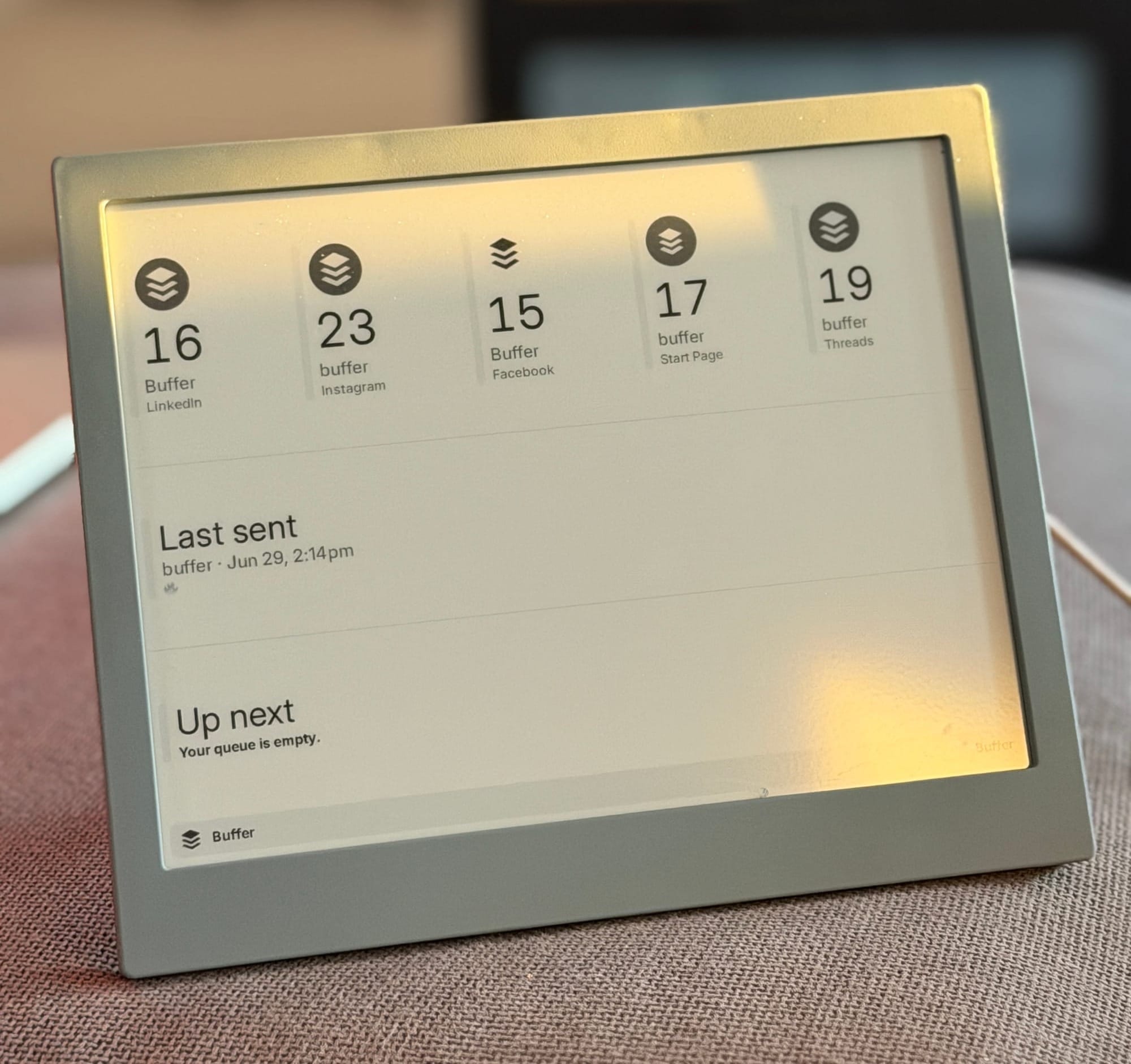
TRMNL’s active engagement with its developer community is a cornerstone of its platform’s success. Their team regularly scouts for compelling plugins that enhance the TRMNL user experience. It was during one such scouting mission that Andy Yates’s private "Buffer" plugin caught their attention. Its elegant solution to a common need – keeping track of one’s social media queue without constant app-switching – resonated with TRMNL’s philosophy of calm, ambient information delivery. Recognizing its potential, TRMNL reached out to Mr. Yates, expressing their desire to make his creation available to all TRMNL users.
What followed was a collaborative effort that transformed a personal project into a polished, public utility. Ikraam, a key member of the TRMNL team, worked directly with Andy Yates. This collaboration was instrumental in refining the plugin, adding new features that enhanced its functionality, and significantly simplifying the setup flow to ensure a seamless experience for new users. This hands-on support from the TRMNL team is a hallmark of their approach to community-driven development, fostering an environment where ideas can flourish and be brought to fruition with expert guidance.
From a technical standpoint, the "Buffer" plugin is a testament to modern, secure development practices. It runs entirely on TRMNL’s platform, eliminating the need for Mr. Yates or any user to set up or maintain a separate server. This architecture simplifies deployment and reduces operational overhead. The plugin connects to Buffer’s API using the OAuth flow with Proof Key for Code Exchange (PKCE), a robust and secure method for applications to gain authorized access to user data without the insecure practice of copying API keys. PKCE ensures that the authorization process is protected against various interception attacks, maintaining a high standard of data security and user privacy.
Furthermore, Ikraam’s contribution extended beyond the plugin’s direct development. He integrated the Buffer connector, utilizing the new API flow, into TRMNL’s public providers repository. This strategic move means that any future developer looking to build their own Buffer-related plugin on the TRMNL platform will have a pre-built, secure, and authenticated connection to the Buffer API, significantly lowering the barrier to entry for new innovations. This "build once, reuse" philosophy is fundamental to cultivating a thriving and efficient developer ecosystem, accelerating the pace of new plugin development and enriching the overall TRMNL experience. The plugin that began as a personal hack is now officially available at trmnl.com/recipes/376448, allowing any TRMNL owner to install it and connect their Buffer account.
The Impact of Ambient Information: Reshaping Workflow and Engagement
The introduction of an ambient display for a tool like Buffer represents a subtle yet profound shift in how users interact with their digital workflows. Traditionally, managing a social media queue involves a deliberate, active process: opening the Buffer application or website, navigating to the queue, and consciously checking its status. This "pull" model of information retrieval often leads to intermittent engagement; users might check their queue daily, every few days, or even less frequently, depending on their workload and memory. The consequence can be a sudden realization that the queue is running low, leading to a scramble to create new content or a missed opportunity for consistent posting.
An ambient display, such as the Buffer plugin on a TRMNL screen, transforms this interaction into a "push" model. The information comes to the user passively, residing in their peripheral vision throughout the day. This constant, yet unobtrusive, presence fundamentally alters how often users notice and respond to the status of their content schedule. If the queue is depleting, the display provides a gentle, persistent reminder, prompting proactive content creation rather than reactive crisis management. This subtle nudge can be particularly valuable for individuals and businesses striving for consistent social media presence, helping them maintain momentum without the added stress of last-minute content generation.
Beyond the practical benefits, there’s a unique psychological satisfaction derived from seeing one’s digital work manifested as a physical object on a desk. Instead of an abstract row in a web dashboard, the Buffer queue transforms into a tangible, dedicated display. This physical representation can enhance a sense of control, accomplishment, and connection to one’s digital output. It integrates the digital workflow more seamlessly into the physical workspace, making the management of social media feel less like a separate task and more like an inherent part of the daily routine. In an increasingly digital world, bridging the gap between virtual data and physical presence can significantly improve user engagement and reduce digital fatigue, promoting a more balanced and integrated approach to productivity.
Celebrating Innovation: The Buffer x TRMNL Giveaway
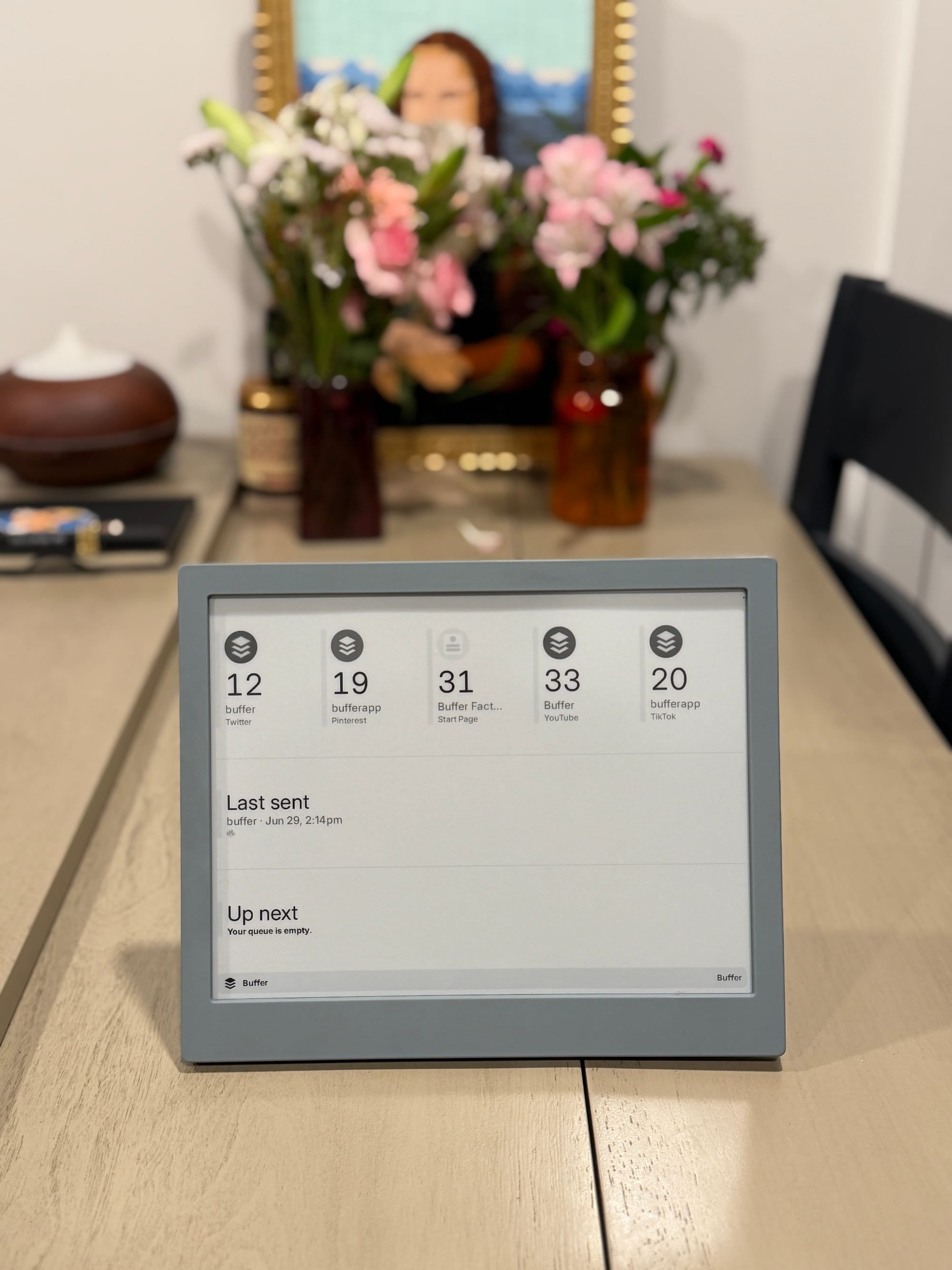
To commemorate the launch of this innovative plugin and celebrate the power of community-driven development, Buffer and TRMNL have partnered to host a special giveaway. This joint promotion serves not only to introduce the Buffer plugin to a wider audience but also to showcase the capabilities of TRMNL devices and highlight Buffer’s commitment to its open API ecosystem.
The giveaway commenced on July 13 and will conclude on July 20, offering participants the chance to win exciting prizes. Four fortunate winners will receive a TRMNL device, allowing them to experience the ambient display philosophy firsthand, complete with the newly released Buffer plugin. Additionally, these winners will receive exclusive Buffer swag bundles, further cementing their connection to the brand.
Participation in the giveaway is designed to be straightforward, requiring three simple steps on Buffer’s official LinkedIn post (linkedin.com/posts/bufferapp_buffer-x-trmnl-giveaway-activity-7482440802204520448-ewxs). The winners of this exciting collaboration will be announced on July 27. For those who enter but do not win, a consolation prize awaits: TRMNL is offering a special discount code, "bufferxtrmnl," providing $10 off any TRMNL device. This offer will be live from July 27 through September 7, ensuring that a broader segment of the community can experience the benefits of a TRMNL display. Full terms and conditions for the giveaway are linked in the first comment of the LinkedIn post. This marketing initiative strategically leverages the excitement around the new integration to drive engagement, expand brand awareness for both companies, and foster a deeper connection with their respective user bases.
Future Outlook: The Expanding Horizon of Open APIs and Integrated Ecosystems
The journey of the Buffer plugin for TRMNL – from a personal engineering project to a publicly available, officially supported integration – serves as a powerful illustration of the transformative potential inherent in open API strategies and thriving developer communities. This event underscores that innovation is not solely confined within the walls of a company but flourishes most robustly when platforms are open, documented, and supported.
For TRMNL, the incident reinforces the strength of its plugin ecosystem. By actively fostering community contributions and providing hands-on support, TRMNL ensures its devices offer unparalleled versatility and cater to a diverse array of user needs. Each new plugin, especially one as practical as the Buffer integration, adds significant value to the TRMNL platform, enhancing its appeal and solidifying its position as a leader in ambient information displays. The "build once, reuse" approach, exemplified by the public Buffer connector, further accelerates this growth, creating a compounding effect where each new contribution simplifies future development.
For Buffer, the episode highlights the immediate dividends of investing in a robust public API. It demonstrates how empowering external developers can lead to organic, creative integrations that extend the utility and reach of Buffer’s core service in unforeseen ways. The TRMNL plugin seamlessly integrates Buffer into users’ physical workspaces, moving it beyond a screen-based application into an ambient, ever-present assistant. This kind of integration enhances user stickiness, broadens Buffer’s ecosystem, and showcases the platform’s adaptability and openness to collaboration.
As the digital landscape continues to evolve, the demand for seamless, integrated experiences will only grow. The success story of the Buffer x TRMNL plugin is a compelling case study for how companies can leverage the creativity of their user base and the power of open technologies to build richer, more interconnected digital lives. It champions a future where tools are not isolated silos but rather fluid components within a larger, user-centric ecosystem, continuously shaped and enhanced by collaborative innovation.
Related posts: