AI’s Impact on Marketing Workflow: Cultural Intelligence, Not Volume, Drives Success, WARC and TikTok Report Finds

The marketing landscape is undergoing a profound transformation, driven by the rapid advancements in artificial intelligence. A new comprehensive report, born from a strategic partnership between global marketing strategy group WARC and the influential social media platform TikTok, sheds critical light on how AI tools are reshaping marketing workflows and, more importantly, how human-led cultural intelligence remains paramount in driving truly impactful campaign performance. This landmark study, titled "The New Creative Advantage: How Community Intelligence is Reshaping Creative Success in the Age of AI," reveals that while AI offers unprecedented efficiencies, the ultimate differentiator for brands lies not in the sheer volume of content produced, but in its authentic relevance and resonance with target communities – a quality AI cannot fully replicate without human guidance and deep cultural insight.
The Accelerating Integration of AI in Creative Marketing
The past few years have witnessed an exponential surge in the adoption of AI across various business functions, and marketing is no exception. Initially, AI’s presence in marketing was largely confined to backend operations: optimizing ad placements, personalizing email campaigns, and predictive analytics for consumer behavior. These applications, while crucial, primarily focused on efficiency and data-driven targeting. However, the advent of generative AI tools, exemplified by large language models (LLMs) and advanced image generators, has dramatically expanded AI’s reach into the creative heart of marketing. These tools promise to revolutionize content creation, from drafting ad copy and generating visual assets to even conceptualizing entire campaign narratives.
This technological leap has instilled both excitement and apprehension within the marketing community. On one hand, the potential for faster content production, greater personalization at scale, and reduced operational costs is immense. Marketers, often constrained by time and resources, see generative AI as a powerful ally in meeting the ever-increasing demand for fresh, engaging content across a multitude of digital channels. Data from Statista indicates that the global AI in marketing market size, valued at approximately $15 billion in 2023, is projected to reach over $100 billion by 2030, underscoring the rapid investment and expected growth in this sector. This trajectory highlights a widespread industry belief in AI’s transformative power to streamline operations and enhance outreach.
On the other hand, concerns about the erosion of human creativity, the potential for generic or biased outputs, and the ethical implications of AI-generated content have become pressing industry-wide debates. The rise of "AI washing" – companies overstating their AI capabilities – and the need for clear disclosure for AI-generated content are just some of the challenges currently being navigated. This report by WARC and TikTok arrives at a critical juncture, offering empirical insights into how marketers are navigating these opportunities and challenges in real-time, providing a practical framework for effective AI integration.
WARC and TikTok: A Strategic Alliance to Decode AI’s Role
The collaboration between WARC, a renowned authority on marketing effectiveness and intelligence, and TikTok, a platform synonymous with cultural trends and community engagement, is particularly significant. WARC brings its rigorous research methodology and deep understanding of global advertising trends, while TikTok offers unparalleled insights into real-time cultural dynamics and user-generated content, making it an ideal partner to explore the intersection of AI and cultural relevance. The study incorporated feedback from a diverse cohort of 400 marketers across key global markets: the U.K., U.S., Australia, and Brazil. This broad geographic scope provides a robust foundation for understanding global perspectives on generative AI’s impact on the creative advertising sector, moving beyond localized anecdotal evidence to provide a more comprehensive industry overview. The primary objective was to examine how marketers are currently integrating AI into their workflows, identify the strengths and weaknesses of these tools, and ultimately, pinpoint strategies for driving better AI outputs and improving overall campaign performance by leveraging community insights. This partnership underscores a growing recognition that technology alone is insufficient; it must be informed by authentic human understanding and real-world cultural context.
The Primacy of Relevance: Cultural Intelligence Outweighs Content Volume
One of the report’s most salient findings challenges a long-held paradigm in digital marketing: that more content inherently leads to greater reach and engagement. Instead, the study emphatically concludes that the key content trend of the moment is relevance rather than mere volume, a nuanced quality that AI tools, in their current iteration, cannot fully replicate. Andy Yang, TikTok’s Global Head of Creative and Brand Ads, articulated this insight succinctly in the report, stating, "The brands winning today are not the ones generating the most content. They are the ones learning fastest from the people they serve. That speed of learning is what we call cultural intelligence: the ability to read what a community values, in the moment it is forming that value, and to respond with something that feels native rather than inserted."
This concept of "cultural intelligence" is central to the report’s thesis. It goes beyond simple demographic targeting or psychographic profiling. Cultural intelligence involves a dynamic understanding of evolving social codes, emerging trends, inside jokes, and shared values that define a specific community at a particular moment. For instance, a brand attempting to connect with Gen Z might find success by referencing a niche meme that is currently trending on TikTok, rather than simply pushing a generic, high-production advertisement. An AI, trained on vast datasets, can identify patterns and popular themes, but it often lacks the intuitive grasp of context, irony, and the fleeting nature of cultural phenomena that human insight provides. Generative AI excels at pattern recognition and content generation based on existing data, but genuine cultural relevance often requires predicting or even shaping trends, understanding subtext, and reacting with agility – capabilities that remain firmly in the human domain. This finding aligns with broader market research indicating that consumers increasingly prioritize authentic brand connections and personalized experiences over generic advertising noise.
AI as an Efficiency Engine: Streamlining Workflow and Asset Production
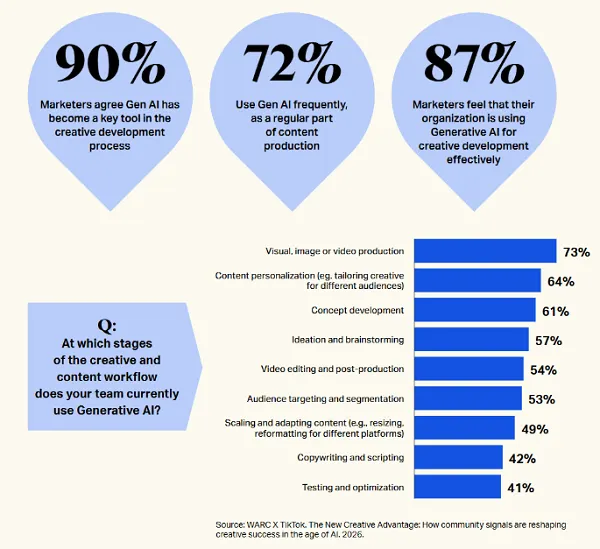
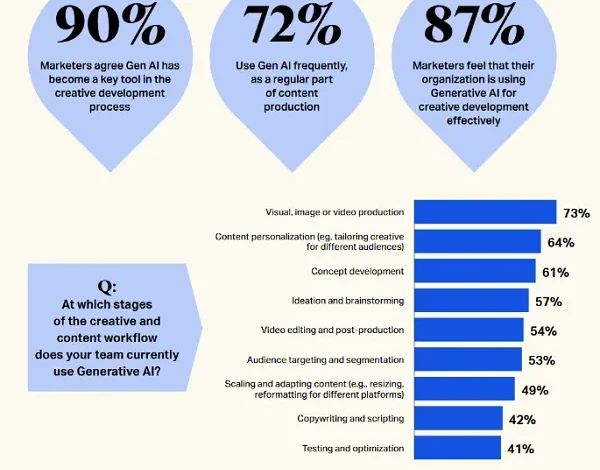
Despite the emphasis on human-led relevance, the report also acknowledges AI’s undeniable utility in enhancing marketing efficiency. The expanded push for content production, fueled by the proliferation of digital channels and the ‘always-on’ nature of modern marketing, has placed immense pressure on creative teams. AI tools have emerged as powerful facilitators in this regard, enabling faster and expanded workflows. The survey results indicate that most marketers found AI tools exceptionally useful for this purpose, with a significant majority agreeing that AI has become a key part of the creative process.
For tasks requiring speed and scale, AI demonstrates clear advantages. These include:
- Initial Draft Generation: AI can quickly produce multiple variations of ad copy, headlines, or social media posts, providing a starting point for human creatives.
- Content Repurposing: Transforming a long-form article into several social media snippets, video scripts, or email newsletters can be automated, saving considerable time.
- Personalization at Scale: Generating tailored messages or visual elements for different audience segments based on their preferences, a task that would be logistically impossible for humans alone.
- Data Analysis and Trend Spotting: AI can process vast amounts of unstructured data to identify nascent trends, consumer sentiment shifts, or emerging cultural patterns, thereby informing creative briefs with timely insights.
- Background Research: Quickly compiling information on a topic, performing competitor analysis, or gathering market insights, which typically consumes significant manual effort.
This efficiency allows human marketers to dedicate more time to strategic thinking, creative conceptualization, and, critically, infusing campaigns with the cultural intelligence that AI currently lacks. The report suggests a future where AI handles the heavy lifting of routine content generation, freeing up human talent to focus on higher-order creative and strategic challenges. This augmentation model is increasingly favored by industry leaders who view AI not as a replacement, but as a force multiplier for human ingenuity.
The Indispensable Human Element: AI’s Limitations in Core Creativity
However, the report also drew clear lines around AI’s current limitations, particularly in areas demanding deep human insight and originality. While useful for generating ideas and facilitating production, the value of AI tools for tasks like copywriting and scripting was notably lower on the marketers’ list of perceived utility. This finding is crucial, as it suggests that while AI can support and accelerate new ideas, simple automation systems cannot undertake the entire creative process without significant human intervention.
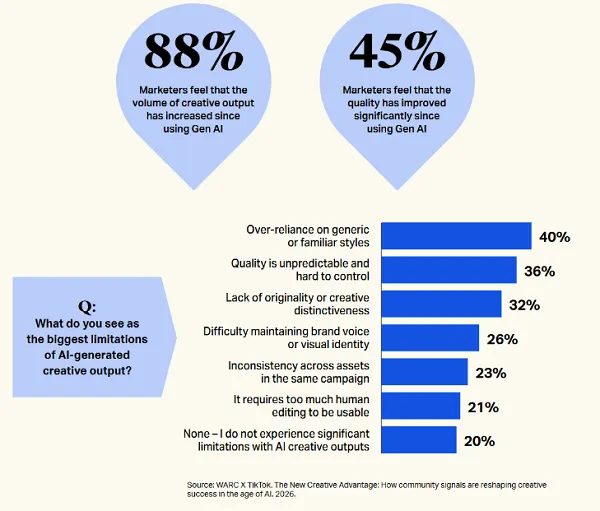
Marketers expressed concerns regarding AI’s "lack of creative originality." This isn’t merely about producing unique words or images; it’s about generating content that genuinely surprises, delights, or provokes thought in an unexpected, culturally resonant way. AI, by its very nature, learns from existing data. This means its outputs, while technically novel combinations, often reflect patterns and styles already present in its training data, leading to a tendency towards the derivative or the average. True originality often involves breaking existing patterns, challenging norms, or inventing entirely new forms of expression – a realm where human intuition, lived experience, and emotional intelligence remain unmatched.
For example, a human copywriter can craft a tagline that plays on a double entendre understood only by a specific cultural group, or write a script that subtly taps into a collective emotion based on a recent socio-political event. An AI might produce grammatically correct and coherent text, but without the "soul" or "spark" that resonates deeply with human audiences. This gap highlights the enduring importance of human creative directors, copywriters, and strategists in shaping the narrative and emotional core of advertising campaigns. Industry analysts often note that while AI can mimic styles, it cannot yet grasp the deeper philosophical or emotional underpinnings that drive truly groundbreaking creative work.
Bridging the Relevance Gap: The Role of Cultural Insights
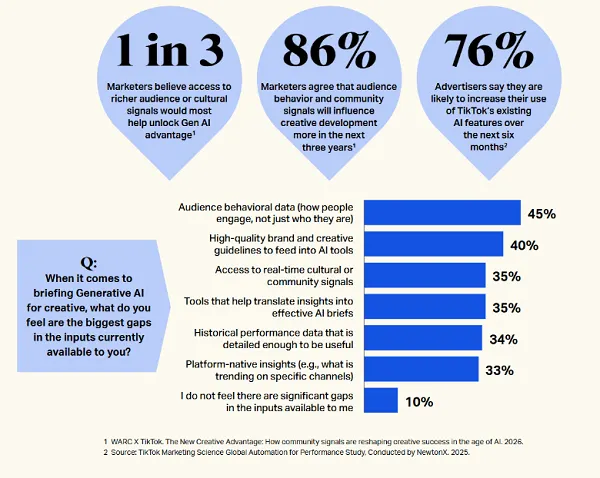
Recognizing these limitations, marketers in the survey pointed towards a clear solution for improving AI outputs: more cultural insights. This implies that the problem isn’t necessarily with AI’s generative capabilities, but with the quality and depth of the contextual data it’s fed. If AI models are trained or guided with a richer understanding of cultural nuances, evolving trends, and community values, their outputs can become significantly more relevant and impactful.
This call for cultural insights underscores a critical shift in how marketers view their role in the age of AI. It moves beyond simply providing a basic prompt to an AI tool and instead emphasizes the strategic input required to guide these tools effectively. Marketers are increasingly becoming "AI whisperers" or "cultural curators," responsible for feeding the AI with the right qualitative and contextual data to ensure its creations are not just technically proficient but also culturally savvy. This involves active listening to communities, analyzing qualitative feedback, and staying abreast of fast-moving social currents. As one inferred marketing director might suggest, "Feeding an AI with raw data is like giving a chef ingredients without a recipe; with cultural insight, you give it the culinary tradition, the taste profile, the desired experience." This approach transforms AI from a mere content generator into an intelligent assistant capable of producing culturally informed work.
TikTok: A Real-Time Barometer of Cultural Dynamics
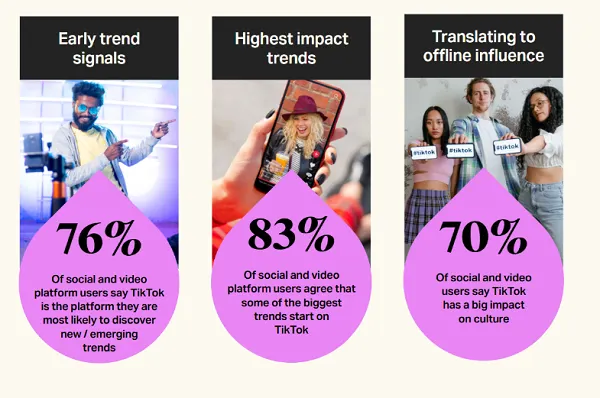
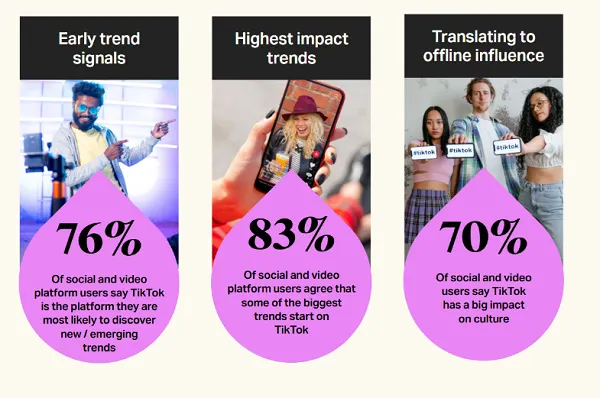
This is precisely where TikTok emerges as a pivotal player, as highlighted in the report. TikTok’s unique platform dynamics make it an unparalleled source of real-time cultural intelligence. Unlike traditional media or even other social platforms, TikTok thrives on user-generated content, rapid trend cycles, and highly engaged communities that often coalesce around niche interests. What’s "gaining traction at any given time" on TikTok often reflects the pulse of popular culture, youth trends, and emergent social conversations.
The report suggests that TikTok’s cultural influence can help guide creative approaches by providing marketers with direct access to these fleeting yet powerful trends. By analyzing what resonates organically on the platform – from specific sounds and visual aesthetics to comedic tropes and challenges – marketers can gain invaluable insights into the collective consciousness of various communities. Understanding these trends and applying them to a creative approach can help marketers:
- Better align with target audiences: Craft messages and visuals that speak directly to current interests and values, fostering a sense of authenticity.
- Create content that resonates: Produce ads that feel native to the platform and the community, rather than intrusive, thereby increasing engagement and acceptance.
- Spark conversations: Generate content that encourages user engagement, shares, and reactions, fostering a sense of community around the brand and amplifying its message organically.
For example, a brand looking to launch a new product could monitor TikTok for trending audio clips or visual styles, then instruct an AI to generate ad concepts incorporating these elements. The AI would handle the technical execution, but the cultural direction would come directly from human observation of TikTok’s dynamic ecosystem. This framework suggests that marketers can refine their creative briefs by incorporating real-time cultural signals, allowing AI tools to interpret these signals and drive improved, contextually aware creative choices. The symbiotic relationship envisioned here posits TikTok as a living laboratory for cultural insight, informing AI for more effective output.
Strategic Implications: Evolving Roles and a Hybrid Future
The findings of the WARC and TikTok report carry significant implications for the future of marketing strategy, organizational structures, and the evolving roles of creative professionals.
For Marketers: The report signals a shift in the core competencies required for success. While technical proficiency with AI tools will be important, the emphasis will increasingly be on developing strong "cultural antennae" and strategic thinking. Marketers will need to become adept at:
- Cultural Curation: Actively monitoring social platforms, forums, and communities to identify emerging trends and sentiments, acting as human filters and interpreters.
- Strategic Prompt Engineering: Crafting precise and context-rich prompts for AI tools, ensuring outputs are aligned with cultural insights and brand values, moving beyond basic keyword inputs.
- Creative Direction: Providing critical human oversight, refining AI-generated content, and injecting it with originality and emotional depth, maintaining brand voice and artistic integrity.
- Ethical Stewardship: Navigating the ethical considerations of AI, ensuring fairness, transparency, and authenticity in AI-assisted campaigns, mitigating risks of bias or misinformation.
For Brands: The takeaway is clear: authenticity and relevance are non-negotiable. Brands that simply churn out generic, AI-generated content risk alienating their audiences. Success will hinge on integrating AI as a complementary component that enhances community connection, rather than replacing it. This means fostering a deeper understanding of target communities and investing in strategies that allow for rapid adaptation to cultural shifts. Brands that effectively marry AI efficiency with cultural sensitivity will gain a significant competitive edge.
For Agencies: The report suggests a hybrid model where human creativity and AI efficiency converge. Agencies might restructure to include dedicated "cultural intelligence units" or "AI strategists" who work hand-in-hand with traditional creative teams. The focus will shift from purely manual content creation to orchestrating AI tools and refining their outputs with human expertise, positioning agencies as expert integrators of technology and culture. This could lead to new service offerings focused on AI prompt optimization, cultural trend analysis, and ethical AI implementation.
Future Outlook and Broader Industry Dialogue
The WARC and TikTok report contributes significantly to the ongoing global dialogue about human-AI collaboration in creative industries. It reinforces the idea that AI is a tool, albeit a powerful one, and its effectiveness is directly proportional to the intelligence and context provided by its human operators. The debate about AI’s potential to diminish human creativity needs to evolve into a discussion about how AI can augment and elevate human creative potential, particularly when guided by profound cultural insights. As the digital landscape continues to fragment and personalize, the ability to connect authentically becomes ever more critical.
This hybrid approach also raises questions about the measurement of effectiveness. How do we quantify "cultural intelligence" or "relevance"? Metrics will need to evolve beyond simple engagement rates to encompass brand sentiment, cultural resonance, and the ability to spark genuine conversations. Furthermore, the report implicitly highlights the need for continuous research into AI bias, as culturally irrelevant or inappropriate content can arise from biased training data or a lack of nuanced understanding. The future will likely see further advancements in AI models specifically designed to better incorporate contextual and cultural data, perhaps through more sophisticated feedback loops and human-in-the-loop validation processes.
In conclusion, the WARC and TikTok study provides a compelling roadmap for marketers navigating the complex terrain of AI-driven creative workflows. It unequivocally states that while AI offers unprecedented capabilities for efficiency and scale, it is human cultural intelligence – the ability to deeply understand and respond to the evolving values of a community – that will ultimately define creative success. Platforms like TikTok serve as invaluable conduits for this intelligence, providing the real-time context necessary to shape AI’s outputs into truly effective, resonant, and conversation-sparking content. The future of marketing is not human versus AI, but human with AI, where the former empowers the latter with the soul and relevance essential for true connection.
Informa, which owns a controlling stake in Informa TechTarget, the publisher behind Social Media Today, is also invested in WARC and Omdia. Informa has no influence over Social Media Today’s coverage.
Related posts: