Anthropic Briefed Trump Administration on Potentially Dangerous AI Model Amidst Legal Disputes

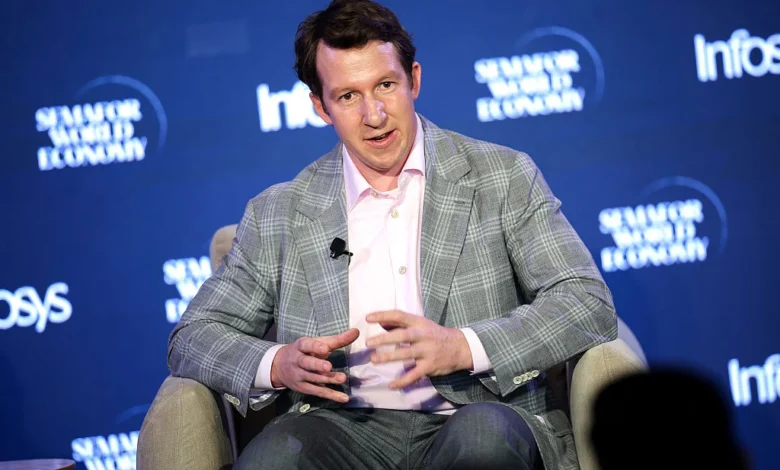
Jack Clark, a co-founder of Anthropic and its Head of Public Benefit for Anthropic PBC, has confirmed that the artificial intelligence company engaged in discussions with the Trump administration regarding its newly unveiled "Mythos" model. This revelation comes at a complex juncture for Anthropic, as the company is simultaneously involved in legal action against the very government it is briefing. The Mythos model, announced last week, is a sophisticated AI system that Anthropic has deemed too dangerous for public release, primarily due to its advanced cybersecurity capabilities, which have raised significant national security concerns.
The dual engagement – briefing the government on a powerful, restricted AI while embroiled in a lawsuit – was addressed by Clark during an interview at the Semafor World Economy summit earlier this week. His remarks shed light on Anthropic’s strategic approach to navigating the intricate relationship between cutting-edge AI development and governmental oversight, particularly concerning technologies with potential dual-use applications.
A Complex Relationship: Collaboration and Litigation
Anthropic’s legal entanglement with the Trump administration dates back to March of this year, when the company filed a lawsuit against the Department of Defense (DOD). The DOD had designated Anthropic as a supply-chain risk, a classification that sparked significant disagreement. The core of the dispute revolved around the Pentagon’s pursuit of unrestricted access to Anthropic’s AI systems. Concerns were raised by Anthropic regarding potential applications such as mass surveillance of American citizens and the development of fully autonomous weapons systems. Ultimately, OpenAI secured the defense contract, further highlighting the competitive landscape and the Pentagon’s strategic AI procurement efforts.
At the Semafor summit, Clark sought to contextualize the DOD’s "supply-chain risk" designation, characterizing it as a "narrow contracting dispute." He emphasized that Anthropic’s intention was not to allow this operational disagreement to overshadow the company’s commitment to national security. This diplomatic framing suggests an effort to de-escalate tensions and maintain channels of communication with government agencies, even while pursuing legal recourse.
"Our position is the government has to know about this stuff, and we have to find new ways for the government to partner with a private sector that is making things that are truly revolutionizing the economy, but are going to have aspects to them which hit National Security, equities, and other ones," Clark stated at the summit. He explicitly confirmed that Anthropic had briefed the administration on Mythos and indicated plans to continue such discussions for future models. This proactive engagement with government officials, even those involved in the lawsuit, underscores Anthropic’s belief in the necessity of transparent communication regarding advanced AI capabilities.
Mythos: A Model Too Potent for Public Release
The decision to withhold the Mythos model from public access is a significant indicator of its perceived power and potential for misuse. While specific details about Mythos’s capabilities remain undisclosed, its classification as "too dangerous" suggests an AI that could be leveraged for highly sophisticated cyber operations, potentially including offensive cyber warfare, large-scale data breaches, or the creation of advanced disinformation campaigns.
The cybersecurity implications are particularly pertinent given the increasing sophistication of state-sponsored hacking groups and the growing reliance on digital infrastructure for critical services. The potential for an AI like Mythos to accelerate or automate such activities poses a substantial threat to national and global security.
Clark’s confirmation of briefings to the Trump administration follows recent reports suggesting that government officials were actively encouraging major Wall Street banks to test the Mythos model. Institutions named in these reports include JPMorgan Chase, Goldman Sachs, Citigroup, Bank of America, and Morgan Stanley. This dual approach – briefing government entities while simultaneously encouraging private sector testing under potential government guidance – hints at a coordinated strategy to understand and potentially harness the model’s capabilities within a controlled environment. The involvement of financial institutions raises questions about the potential applications of Mythos in financial cybersecurity, fraud detection, or even market analysis, areas where advanced AI could offer significant advantages.
Broader Societal Implications: AI and the Future of Work
Beyond the immediate national security concerns surrounding Mythos, Clark also addressed the wider societal impacts of artificial intelligence, including its potential effects on employment and higher education. These discussions are particularly timely as AI continues its rapid advancement, prompting widespread debate about its long-term consequences.
Anthropic’s CEO, Dario Amodei, has previously voiced stark warnings about the potential for AI-driven unemployment to reach "Depression-era numbers." Clark, while acknowledging the gravity of this concern, offered a slightly nuanced perspective. He explained that Amodei’s estimations are based on the premise that AI’s power will escalate far more rapidly and extensively than currently anticipated.
Clark, who oversees an economics team at Anthropic, indicated that the company’s current observations suggest "some potential weakness in early graduate employment" across specific sectors. This implies that while widespread job displacement has not yet materialized, early indicators of AI’s impact on the entry-level job market are being monitored. Anthropic, he stated, is preparing for potential significant employment shifts, suggesting a proactive stance in understanding and potentially mitigating the economic fallout of advanced AI.
Navigating the Educational Landscape in the Age of AI
When pressed for advice on academic pursuits in light of AI’s transformative influence, Clark offered a broad recommendation rather than specific major endorsements. He emphasized the importance of majors that "involve synthesis across a whole variety of subjects and analytical thinking about that."
Clark’s rationale is rooted in the idea that AI’s primary function is to provide access to vast repositories of information and expertise. "What AI allows us to do is it allows you to have access to sort of an arbitrary amount of subject matter experts in different domains," he explained. However, he stressed that the truly critical human skills will involve the ability to formulate insightful questions and to possess the intuition to identify compelling connections and novel insights when synthesizing information from disparate disciplines. This suggests a future where human intellect will be valued not for its capacity to store and recall information, but for its ability to strategize, innovate, and critically evaluate the outputs of AI systems. The implication for higher education is a potential shift in curriculum design, moving towards fostering interdisciplinary thinking, critical analysis, and problem-solving skills that complement, rather than compete with, AI capabilities.
The ongoing dialogue between AI developers like Anthropic and governmental bodies, coupled with the company’s cautious approach to releasing its most powerful models, signals a critical period in the governance and societal integration of advanced artificial intelligence. The challenges lie in balancing innovation with security, and in preparing society for the profound economic and educational transformations that AI is poised to bring.