Persistent Housing Shortages and Geopolitical Turmoil Drive US Home Prices to Record March Highs Amid Declining Sales Volume

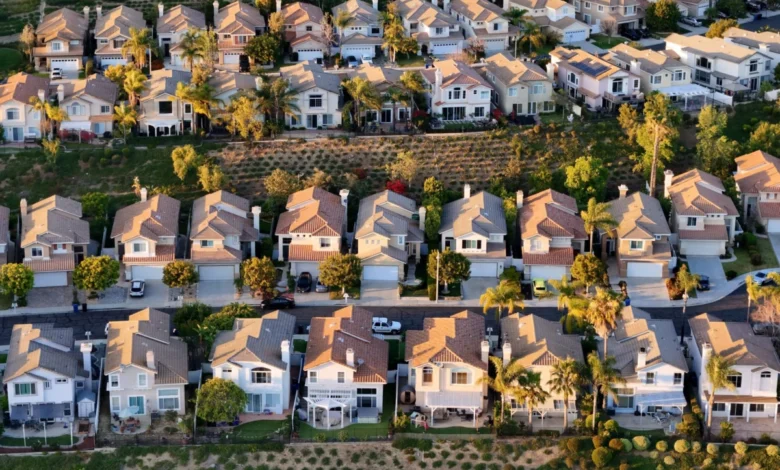
The American housing market reached a significant and sobering milestone this March as the median price of an existing home climbed to $408,800, marking the 33rd consecutive month of year-over-year price increases. According to the latest existing home-sales report from the National Association of Realtors (NAR), this figure represents a record high for the month of March, underscoring a persistent upward trajectory that continues to defy traditional economic pressures. Despite a 3.6% decrease in sales volume from February to March—a period typically characterized by a seasonal surge in activity—the 1.4% year-over-year price appreciation signals a market where demand, though strained, still outstrips a critically limited supply.
This pricing surge arrives at a time of heightened political sensitivity, with housing affordability becoming a central pillar of national and local campaigns. From former President Donald Trump’s promises to revitalize the construction sector to New York City Mayor Zohran Mamdani’s focus on aggressive cost-reduction strategies, politicians are increasingly under pressure to address a crisis that has seen home prices skyrocket by 60% compared to pre-pandemic levels. However, as the latest data suggests, the market remains largely unresponsive to political rhetoric, hampered instead by deep-seated structural deficits and shifting global economic conditions.
A Structural Deficit: The 4.7 Million Home Gap
At the heart of the current pricing crisis is a prolonged and worsening housing shortage. A 2025 report from Zillow estimates that the United States is currently facing a housing deficit of approximately 4.7 million units. This shortage has created a floor for property values that even high interest rates have struggled to break. While new construction has seen sporadic surges in recent years, the inventory of existing homes—which makes up the vast majority of the market—remains historically low.
Dr. Lawrence Yun, Chief Economist for the NAR, emphasized that inventory remains the primary constraint preventing a return to a balanced market. "The inventory-to-sales ratio, or supply-to-demand ratio, is below historical norms," Yun stated. He noted that the market requires an additional 300,000 to 500,000 homes for sale just to approach what economists consider "normal" conditions. Without this influx of supply, the competition for available properties ensures that prices remain elevated, even as the pool of eligible buyers shrinks due to affordability concerns.
The chronology of this shortage can be traced back to the aftermath of the 2008 financial crisis, which led to a decade of under-building. This was further exacerbated by the COVID-19 pandemic, which disrupted supply chains and labor markets, and subsequently by the "lock-in effect," where homeowners with low-interest mortgages from the 2020-2021 era are now unwilling to sell and take on new loans at significantly higher rates.
The Paradox of the "Buyer’s Market" That Isn’t
Recent data from the real estate brokerage Redfin highlights a growing paradox in the 2024-2025 housing landscape. By many technical metrics, the market should be shifting in favor of buyers. In February, there were 46.3% more sellers than buyers active in the U.S. market, representing a gap of 629,808 individuals—the largest such discrepancy in Redfin’s records dating back to 2013. This gap is 30% wider than it was a year ago.
However, this surplus of "sellers" has not translated into lower prices. NAR’s principal economist and director of real estate research noted in a recent interview with Marketplace that the market is currently operating at only about 80% of its typical spring pace. The issue, she explained, is a mismatch between seller expectations and buyer reality. "We’re seeing more homes hit the market," she said, "but many of those homes are still priced above what typical households can comfortably afford."
Sellers, buoyed by years of equity growth, are often hesitant to lower their asking prices, while buyers are facing a "triple threat" of high listing prices, elevated mortgage rates, and stagnating real wage growth. This has created a stalemate where inventory sits on the market longer, but the "clearing price" remains out of reach for the average American family.
Geopolitical Pressure and the Mortgage Rate Environment
The housing market’s struggles are being further compounded by international instability. The ongoing conflict involving Iran has had a direct and measurable impact on domestic housing costs through the energy and bond markets. As the war drove oil prices to peaks above $110 per barrel—and maintained them at a stubborn $94 per barrel recently—inflationary fears have kept Treasury yields high.
Because mortgage rates are closely tied to the 10-year Treasury yield, these geopolitical tensions have prevented the significant rate relief that many buyers were hoping for. Mortgage rates currently hover around 6.37%. While this is slightly lower than recent peaks, it remains more than double the rates seen just three years ago.
Joel Kan, Vice President and Deputy Chief Economist for the Mortgage Bankers Association (MBA), noted that the threat of "higher-for-longer" oil prices continues to keep the financial markets on edge. "The threat of higher-for-longer oil prices continued to keep Treasury yields elevated, and mortgage rates finished last week higher," Kan said in a statement. For a buyer looking at a $400,000 home, the difference between a 3% and a 6.37% interest rate represents hundreds of dollars in additional monthly payments, effectively pricing millions of people out of the market.
The Psychological Toll: Consumer Sentiment and AI Fears
The financial barriers to homeownership are mirrored by a collapse in consumer confidence. The Michigan Consumer Sentiment Index, a long-standing barometer of the American public’s economic outlook, recently plummeted to 47.6. This is the lowest point in the index’s 74-year history, falling below the records set during the high-inflation period of mid-2022.
This pessimism is not solely due to current prices but also to future uncertainty. A growing concern among prospective homebuyers is the rapid advancement of Artificial Intelligence. According to recent surveys, nearly three in five Americans believe that AI will hinder their ability to purchase a home in the future. The primary fear is the "white-collar jobpocalypse," where AI-driven automation could threaten the high-paying professional roles traditionally required to secure a mortgage in expensive urban and suburban markets. This technological anxiety, combined with the immediate pressure of energy costs and inflation, has created a "wait-and-see" mentality among younger generations.
The Generational Shift and the "Bank of Mom and Dad"
The difficulty of entering the market has fundamentally altered the demographics of American homeownership. Last year, the median age of a first-time homebuyer hit 40, a historic high. For comparison, in the 1980s, the median age for a first-time buyer was in the late 20s.
To bridge the gap between stagnant wages and record-high prices, young buyers are increasingly relying on intergenerational wealth transfers. The "Bank of Mom and Dad" has become a critical component of the real estate ecosystem, with many Gen Z and Millennial buyers requiring down payment assistance or co-signing from parents to qualify for a loan.
In an unusual development, even the private sector is beginning to intervene. Some major employers, recognizing that housing costs are hindering their ability to recruit and retain talent, have begun offering housing grants. For instance, Wall Street bank BNY has reportedly offered some workers up to $6,500 in direct assistance to help them get onto the property ladder. While these programs are helpful to the individuals who receive them, they also serve as a stark indicator of how broken the traditional path to homeownership has become.
Wealth Polarization: The Homeowner Advantage
While the current market is a minefield for buyers, it has been a windfall for those who already own property. Dr. Lawrence Yun noted that the "typical homeowner has accumulated $128,100 in housing wealth over the past six years" due to price appreciation. This has created a widening wealth gap between the "landed" class of homeowners and the "renter" class, who find themselves paying record-high rents while their dreams of ownership move further out of reach.
This accumulation of equity provides a cushion for current owners, allowing them to tap into home equity lines of credit (HELOCs) or sell for a significant profit if they choose to downsize. However, for the broader economy, this concentration of wealth in real estate can be a double-edged sword, as it often leads to reduced consumer spending in other sectors and limits labor mobility.
Implications and Future Outlook
The March data from the NAR serves as a reminder that the U.S. housing market is currently caught in a complex web of low supply, high interest rates, and geopolitical volatility. While the 3.6% drop in sales volume suggests a cooling of activity, the record-high prices indicate that the cooling is not yet providing the price relief necessary for a market recovery.
Analysts suggest that for the market to "normalize," several factors must align:
- Inventory Expansion: Significant increases in housing starts and a potential easing of the "lock-in effect" if interest rates eventually stabilize.
- Geopolitical Stabilization: A resolution or stabilization of tensions in the Middle East to lower energy costs and, by extension, Treasury yields.
- Economic Calibration: A narrowing of the gap between seller expectations and buyer affordability, likely requiring either a moderate correction in prices or a significant rise in household incomes.
As the country moves further into the spring buying season, all eyes will be on the Federal Reserve and global oil markets. For now, the American dream of homeownership remains in a state of suspended animation, defined by record costs and a profound mismatch between the promises of politicians and the harsh realities of the marketplace. The $408,800 median price is not just a number; it is a symbol of a market that has become an endurance test for the next generation of American families.