FCC Set to Vote on Major Overhaul of Local TV Ownership Rules, Sparking Debate Over Media Concentration and Localism

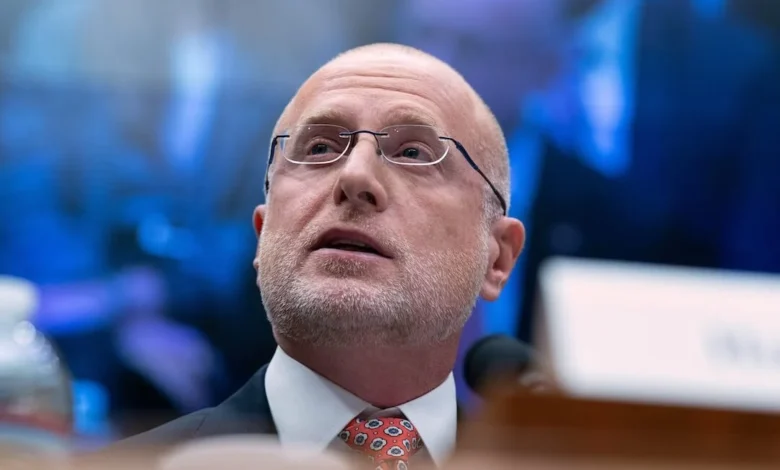
The Federal Communications Commission (FCC) is poised to vote on August 6 on a controversial proposal that could fundamentally alter the landscape of local television ownership in the United States. The initiative, championed by FCC Chairman Brendan Carr, seeks to loosen long-standing limits on the number of stations a single company can own, a move that has ignited a heated debate over media concentration, localism, and the future of broadcast journalism.
Chairman Carr announced the upcoming vote in an exclusive op-ed published by Breitbart, framing the proposal as a necessary step to "restore balance to the broadcast airwaves." His core argument critiques the current ownership cap, which restricts station groups from reaching more than 39% of the U.S. population, asserting that it is an outdated regulation that now inadvertently shields powerful national media conglomerates rather than fostering a competitive local media environment.
The Chairman’s Rationale: A Shifting Media Landscape
Carr’s op-ed articulated a vision where local broadcast TV stations, once vibrant pillars of community information, are increasingly struggling to fulfill their public interest obligations. He posited that "New York and Hollywood interests have steamrolled those local TV stations and the broader media market in recent years in ways that run directly counter to the regulatory framework that Congress and the FCC put in place." This, he argued, has led to a scenario where local broadcasters lack the leverage to preempt or refuse national programming that may not align with their communities’ values.
The FCC Chairman highlighted the economic pressures faced by local stations, noting that national programmers – specifically citing media giants like Disney and Comcast – are demanding ever-increasing fees for their content. These national entities, he pointed out, now reach 100% of the U.S. population through a diverse array of platforms including broadcast, cable, streaming, and other digital avenues. In contrast, local stations, constrained by the 39% national ownership cap, find themselves at a severe disadvantage, struggling to secure the resources needed to produce essential live, trusted, and local news programming.
Carr warned of the grim consequences of inaction, suggesting that many local broadcast TV stations are being "hollowed out" and reduced to mere conduits for content produced far from the communities they are licensed to serve. This, he emphasized, deviates significantly from the original intent of Congress and the FCC in establishing the regulatory framework for local broadcasting. His proposed solution, to be voted on, would technically maintain the 39% cap but introduce a mechanism for "case-by-case" exemptions when the FCC determines such waivers would serve the public interest. However, the specific criteria for these determinations, particularly for companies already owning hundreds of stations, remain undefined, prompting concerns about transparency and potential for unchecked consolidation.
The Evolution of Ownership Caps: A Decades-Long Trend
The 39% national ownership cap itself is a product of legislative and regulatory evolution. It was initially established by the landmark Telecommunications Act of 1996 and subsequently modified by the Consolidated Appropriations Act of 2004. However, the history of broadcast ownership limits stretches back much further, revealing a decades-long trend of deregulation.
The FCC first imposed ownership limits in 1941, restricting any single entity to owning no more than five TV stations. This cap gradually increased over the years, rising to seven stations by 1954 and then to twelve in 1984. By the mid-1980s, Congress shifted the regulatory focus from a simple count of stations to the aggregate audience reach, setting an initial national audience cap of 25%. This threshold was later raised to 35% and eventually to the current 39%.
A pivotal moment occurred in 2002 when the FCC attempted to push the cap even higher, voting to raise it to 45%. This move faced immediate legal challenges, and the 3rd U.S. Circuit Court of Appeals ultimately ruled that only Congress, not the FCC, possessed the authority to make such a significant alteration. In response, Congress specifically directed the FCC to "modify" the ownership cap to 39% in the 2004 Act. This legislative history forms the bedrock of arguments made by opponents of the current proposal, who contend that the FCC is overstepping its statutory authority.
The UHF Discount: An Anomaly in the Digital Age
Complicating the conversation around ownership caps is a lesser-known but highly impactful regulatory quirk: the UHF discount. Under this rule, television stations broadcasting on Ultra High Frequency (UHF) channels (14 and higher) are counted as reaching only half of the households in their respective markets when the FCC calculates compliance with the national ownership cap. Conversely, Very High Frequency (VHF) stations (channels 13 and lower) are counted at their full market value.
This discount originated decades ago when most Americans relied on over-the-air antennas for television reception. At the time, UHF signals generally had a shorter propagation range compared to VHF signals, leading the FCC to reasonably assume that UHF stations reached fewer viewers. However, the advent of cable, satellite, and now ubiquitous streaming services has rendered this technical distinction largely obsolete. Today, a dramatically smaller percentage of U.S. households rely solely on antennas for television viewing. Horowitz Research estimates that only about 20% of U.S. households use them, a significant drop from 32% in 2020.
The persistence of the UHF discount in the digital age means that station groups can technically comply with the 39% ownership cap while, in reality, reaching a far greater proportion of the country through alternative distribution platforms. Critics argue vehemently that the FCC’s calculations no longer accurately reflect how Americans consume television, creating a loophole that facilitates greater concentration. For example, Gabelli Research estimates that without the UHF discount, Nexstar – currently the nation’s largest owner of local TV stations – would already exceed well over half of U.S. households in its national reach, even though the FCC officially pegs its reach at 39%. This disparity underscores the outdated nature of the rule and its impact on the effective enforcement of the ownership cap.
Legal Battles Ahead: The Scope of FCC Authority
The proposed changes are almost certain to face immediate legal challenges, centering on the fundamental question of the FCC’s authority to alter the 39% ownership cap without explicit Congressional action. The legal debate hinges on the interpretation of the word "modify" as it appears in the Telecommunications Act.
The Supreme Court has previously weighed in on the FCC’s power to "modify" telecommunications rules. In a 1993 decision concerning a different provision of the Act, Justice Antonin Scalia famously defined "modify" as connoting "moderate change." He illustrated this distinction with a memorable analogy: "For the body of a law, as for the body of a person, whether a change is minor or major depends to some extent upon the importance of the item changed to the whole. Loss of an entire toenail is insignificant; loss of an entire arm tragic."
Opponents of the FCC’s current proposal, including the American Television Alliance (ATA), argue that the proposed case-by-case exemptions constitute a "major" change, akin to losing an arm, rather than a "moderate" modification. They bolster their argument by pointing to the 2004 Congressional amendment to the Telecommunications Act, which expressly states that the FCC’s periodic review authority "does not apply to any rules relating to the 39 percent national audience reach limitation." This language, they contend, unequivocally vests the authority to alter the national ownership cap solely with Congress, not the commission. The ATA has published a detailed legal paper outlining their case, asserting that the FCC’s move is a clear overreach of its statutory powers.
Immediate Implications: The Nexstar-Tegna Merger
The timing of the FCC’s vote is particularly significant given the ongoing efforts towards what could become the largest local TV consolidation in U.S. history: Nexstar’s proposed acquisition of Tegna. Without any changes to the current rules, the combined entity would reach an estimated 80% of U.S. households, far exceeding the existing 39% cap even with the UHF discount. This merger, therefore, serves as a crucial test case for the FCC’s proposed relaxation of the rules.
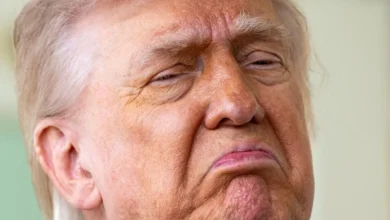
The Nexstar-Tegna deal has also drawn attention from the highest levels of government. Initially, former President Donald Trump expressed opposition to relaxing the cap, citing concerns about "fake news" and media influence. However, less than three months later, he reversed his stance, publicly urging the FCC to approve the deal. In a social media post, he wrote, "Letting Good Deals get done like Nexstar – Tegna will help knock out the Fake News because there will be more competition, and at a higher and more sophisticated level… GET THAT DEAL DONE!" This shift underscored the political complexities and varied motivations at play in media ownership debates.
Even if the FCC proceeds with changing the ownership rules, the Nexstar-Tegna merger faces another formidable hurdle: a lawsuit filed by the attorneys general of eight states. California, Colorado, Connecticut, Illinois, New York, North Carolina, Oregon, and Virginia have collectively sued to block the $6.2 billion deal, citing concerns about potential anti-competitive effects, increased retransmission fees for consumers, and a reduction in local news and diverse voices. This multi-state legal challenge highlights the broad public interest implications perceived by state regulators, regardless of federal policy changes.
Broader Impact and Competing Perspectives
The debate surrounding broadcast ownership caps extends beyond legal interpretations and specific mergers, touching upon fundamental questions about the role of local media in a democratic society.
Arguments for Deregulation:
Proponents, led by Chairman Carr, argue that loosening ownership restrictions is essential for the economic viability of local television in an increasingly fragmented media landscape. They contend that larger station groups can achieve economies of scale, allowing them to invest more in local newsgathering, technology upgrades, and digital expansion. They also posit that without the ability to consolidate and compete effectively, local stations will continue to struggle against the vast resources of national programmers and tech giants. This perspective emphasizes that the current rules, designed for a bygone era of media scarcity, now hinder innovation and competitiveness.
Arguments Against Deregulation:
Critics, including consumer advocacy groups, public interest organizations, and many smaller broadcasters, warn that further deregulation will lead to increased media consolidation, reduced diversity of viewpoints, and a decline in the quality and quantity of local news. They argue that larger, absentee owners are less likely to prioritize the specific needs and interests of individual communities, potentially leading to homogenized content, fewer investigative journalists, and greater susceptibility to partisan influence. Concerns are also raised about the potential for consolidated entities to wield excessive market power, leading to higher retransmission fees for cable and satellite providers, which are ultimately passed on to consumers. The American Television Alliance, for instance, has consistently highlighted the importance of robust localism and the dangers of unchecked consolidation for a healthy media ecosystem.
The Path Forward: Legal Challenges and Political Volatility
On August 6, the Republican-controlled FCC is widely expected to vote in favor of loosening the 39% ownership cap, likely through the proposed "case-by-case" exemption mechanism. This action will almost certainly trigger a fresh wave of litigation from opponents, who will argue that the commission has exceeded its statutory authority and that only Congress can enact such a sweeping change. The ensuing legal battles will likely wind their way through the federal court system, potentially for years.
The long-term fate of these new rules, and the broader trajectory of broadcast media ownership, could also be profoundly influenced by the political climate. Voters will decide whether Democrats regain control of Congress in upcoming elections, a result that could significantly complicate, or even entirely undo, the FCC’s current plans. A change in Congressional leadership could lead to legislative efforts to reinforce the existing cap or even roll back previous deregulatory measures.
Chairman Carr, in his call for action, drew a stark parallel to the decline of local newspapers. He warned that the FCC maintained an outdated rule limiting investment in local newspapers for over 40 years, long after the economic realities had shifted. "Meanwhile," he wrote, "local newspapers shut down by the dozen, and many Americans are now left to choose from a small number of national papers. We can’t let local broadcast TV follow the same path." This cautionary tale underscores the urgency with which the FCC views the need for reform, even as critics remain wary of the potential consequences of such significant regulatory shifts. The impending vote marks a critical juncture for local television, with profound implications for how Americans receive their news and information in an ever-evolving media landscape.