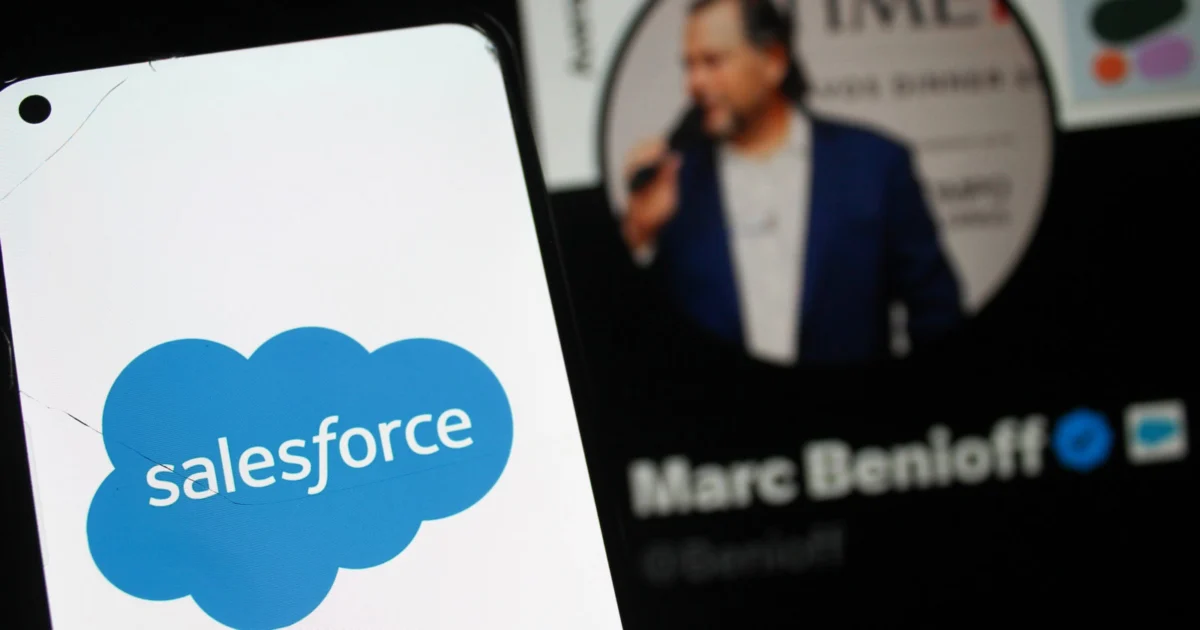
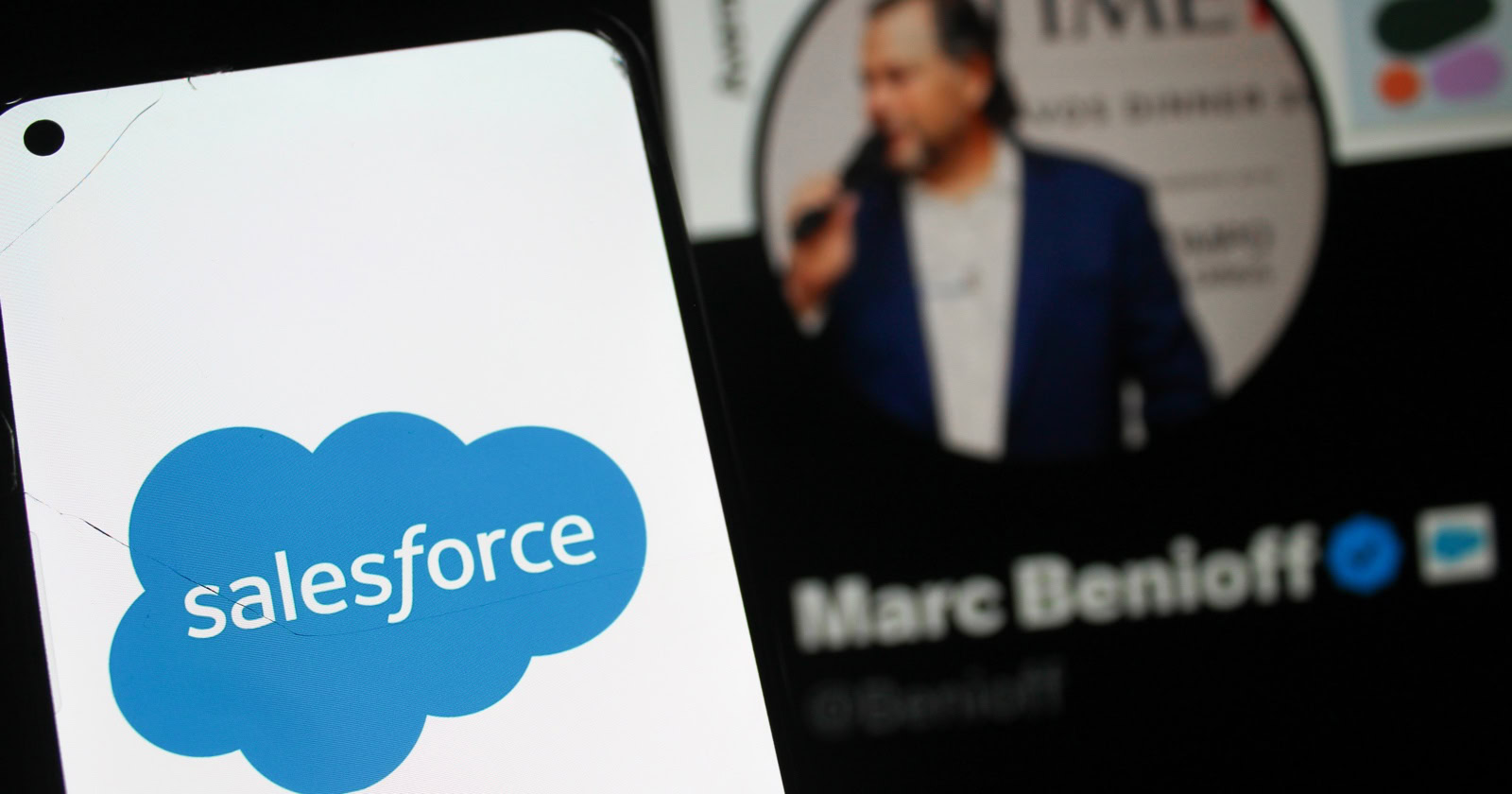
The digital marketing landscape experienced a significant tremor on November 18 when Salesforce CEO Marc Benioff took to X (formerly Twitter) to declare an end to the era of Search Engine Optimization. In a post that quickly reverberated through the professional marketing community, Benioff proclaimed, “Goodbye SEO,” arguing that the fundamental mechanics of how consumers discover products have shifted irrevocably. By stating that customers are no longer performing traditional searches—but are instead querying AI-powered assistants like ChatGPT, Claude, and Gemini for purchase recommendations—Benioff signaled a strategic pivot toward Answer Engine Optimization (AEO).
The pronouncement was designed to champion Palmata, an AI-driven visibility tool recently integrated into the Salesforce ecosystem. However, this bold declaration has created a striking internal paradox. While Benioff suggests that traditional SEO is an antiquated practice that yields “no click, no referral, and nothing in your analytics,” official documentation published by Salesforce paints a much more nuanced, if not contradictory, picture.
A Chronology of the Shift
The narrative surrounding the obsolescence of SEO is relatively new, but the infrastructure behind the argument has been in development for months.
On June 1, Contentful introduced Palmata, a platform designed to monitor brand sentiment and visibility within the outputs of Large Language Models (LLMs). The tool was developed to solve a growing problem for enterprise marketers: how to measure the "black box" of AI answers. On September 1, Salesforce completed its acquisition of Contentful, effectively folding Palmata into its Marketing Cloud suite.
Ten days later, on September 11, Salesforce published a comprehensive guide authored by Graham Hardt, the company’s Senior Director of SEO. The document, intended to provide strategic direction for new businesses, explicitly states that "SEO is still the foundation." Furthermore, the guide emphasizes that SEO and AEO are not mutually exclusive, but rather function as two distinct layers of visibility targeting the same audience. This internal guidance remains linked directly from the Palmata product page, creating a situation where the company’s marketing arm advocates for the very practice its CEO has publicly dismissed.
The Argument for the AI-First Paradigm
Benioff’s critique of SEO centers on the erosion of the traditional referral funnel. In the legacy model, a user enters a query into a search engine, receives a list of links, and clicks through to a destination website, providing the brand with valuable first-party data and attribution.
In the emerging AI-first model, the LLM synthesizes information from various sources and presents a final, curated answer directly to the user within the interface. As Benioff noted, this process often results in the absence of a "click," stripping marketers of the traffic metrics they have relied upon for decades. Palmata’s value proposition is that it provides a "synthetic" view of this process. The tool monitors what AI assistants say about a specific business, offers strategic recommendations to adjust content for better inclusion in these AI responses, and allows marketers to simulate the impact of these changes before they are finalized.
Industry Backlash and the Resilience of SEO
The professional SEO community, which has spent years adapting to algorithm shifts, largely reacted to Benioff’s comments with skepticism. Industry experts argue that the declaration of SEO’s "death" ignores the technical realities of how AI models operate.
Aleyda Solis, founder of the consulting firm Orainti, was among the most prominent voices to challenge the narrative. Solis noted that AI search engines do not operate in a vacuum; they crawl and index the web, relying on the same foundational principles—such as site architecture, topical authority, and high-quality data—that have historically driven organic search performance. "AI search optimization goes beyond traditional SEO, but it certainly doesn’t replace it," Solis stated in a follow-up response.
This sentiment was echoed by former Google technical product manager Pedro Dias. Dias argued that the current debate is fueled by a misunderstanding of what SEO represents. "SEO was never a topic that attracted the interest of decision-makers," Dias remarked, suggesting that the industry’s obsession with "traffic" has long obscured the deeper goal of brand discovery and authority building. He posits that if SEO is viewed merely as a source of referral clicks, it is easily dismissed, but if it is viewed as the engine of organic digital visibility, it remains as relevant today as it was in the early 2000s.
Other experts, such as Lily Ray of Algorythmic, highlighted the saturation of the market. Ray suggested that the pivot toward AEO tools feels like a repetition of previous technological "gold rushes," where vendors promise to solve a problem that is still in its infancy, often ignoring the established practices that already provide the necessary data for AI models to function.
Data-Driven Analysis: The Interdependence of AEO and SEO
While the rhetoric from the C-suite is often designed to generate buzz around new products, the actual data suggests a symbiotic relationship between search and AI.
According to various industry reports, approximately 70% of the training data for major LLMs is derived from public web crawls. This means that a brand’s presence in AI answers is almost entirely contingent upon the quality of its indexable web content. If a brand stops investing in SEO—the practice of making content discoverable, crawlable, and authoritative—it effectively starves the AI models of the information they need to provide positive recommendations.
Salesforce’s own guide reflects this technical reality. By characterizing SEO as the "foundation," the document acknowledges that without a robust technical SEO framework, a business cannot provide the structured data or the high-authority content required for an AI to cite it as a source. The guide suggests that the future of marketing is not the replacement of SEO with AEO, but the integration of both. Marketers are being advised to track two distinct sets of metrics: traditional organic rankings and traffic, and "AI mention" or "AI citation" frequency.
Implications for Marketing Executives
The conflict between Benioff’s public post and Salesforce’s internal documentation poses a challenge for marketing executives. For CMOs and marketing directors, the primary takeaway is the need for a bifurcated strategy.
First, the "SEO as foundation" mandate implies that technical excellence—fast load times, clear site hierarchies, and high-quality content—remains a non-negotiable requirement. Without these, a company risks invisibility in both the traditional search engine results pages (SERPs) and the outputs of generative AI.
Second, the emergence of tools like Palmata highlights a shift toward "Black Box Optimization." Unlike traditional SEO, where rank-tracking tools provide a clear view of how a keyword performs, AEO involves influencing models that change their logic frequently. The requirement for simulation tools, as mentioned in the Palmata pitch, suggests that marketers must now treat AI outputs as a distinct channel requiring continuous monitoring, much like managing a reputation or PR campaign.
Looking Toward the Future
The debate over the death of SEO is, in many ways, a semantic one. When "SEO" is defined narrowly as "getting blue links on a Google search result page," it is clearly evolving and, in some verticals, shrinking. However, when defined broadly as "the art and science of being found online," it remains the bedrock of the internet.
As the industry moves into 2025, the narrative will likely shift from "SEO vs. AEO" to "Integrated Organic Visibility." Salesforce’s dual-pronged approach—market-facing product promotion via the CEO and technically sound best practices via the SEO team—illustrates the tension within the enterprise software market. Salesforce is attempting to capture the market for AI-specific tools while maintaining the integrity of the SEO consulting and management services that remain vital to their clients’ success.
Ultimately, the disagreement highlights a significant transition point in digital marketing. Companies that choose to abandon their SEO investments in favor of purely AI-based strategies may find themselves at a disadvantage. If an AI assistant cannot find a company’s primary website or verify its content through reputable, well-structured data, it is unlikely to recommend that company to a user, regardless of how many AEO tools are deployed. The future of digital visibility appears to be a hybrid one, where the classic tenets of search optimization are upgraded to meet the requirements of the artificial intelligence era.