London-headquartered and Romania-founded B2B software provider FintechOS has successfully closed a $28 million funding round comprising both equity and debt. The capital injection comes entirely from the company’s existing roster of investors, highlighting strong internal confidence in the firm’s operational trajectory and market strategy. The latest financing brings FintechOS’s cumulative fundraising total to more than $150 million since its inception in 2017.
The transaction features equity participation from established venture capital and institutional backers, including Bek Ventures, the International Finance Corporation (IFC) — a member of the World Bank Group focused on private sector development in emerging markets — Cipio Partners, and London-listed venture capital firm Molten Ventures. Complementing the equity investment is a dedicated debt facility provided by Santander Corporate Investment Banking, underscoring the growing maturity of the enterprise software provider and its ability to leverage diverse financing instruments to fuel its next phase of expansion.
Strategic Deployment of Capital
According to executive statements released alongside the funding announcement, the newly acquired capital will be channeled into three core strategic pillars: accelerating market penetration within the United States, expanding the company’s footprint and client acquisition pipeline across Europe, and scaling its proprietary artificial intelligence (AI) technology stack.
FintechOS operates in the competitive financial technology landscape as a specialized infrastructure layer. The company provides advanced software-as-a-service (SaaS) and AI-driven solutions that enable traditional banks and insurance companies to rapidly design, launch, and manage modern financial products and customer experiences. Crucially, the FintechOS platform functions as an agile technological overlay that sits on top of legacy core systems. This architectural approach allows financial institutions to bypass the prohibitive costs, operational risks, and multi-year timelines typically associated with ripping out and replacing legacy mainframe architecture. By bridging the gap between legacy databases and modern digital interfaces, FintechOS empowers financial services providers to innovate at the speed of digital-native fintech competitors without compromising the stability of their core infrastructure.
Financial Milestone and Path to Profitability
The $28 million financing round follows a pivotal operational milestone for the company. FintechOS announced that it achieved operational profitability during the first half of 2026, a financial turnaround accelerated by robust revenue growth in the North American market.
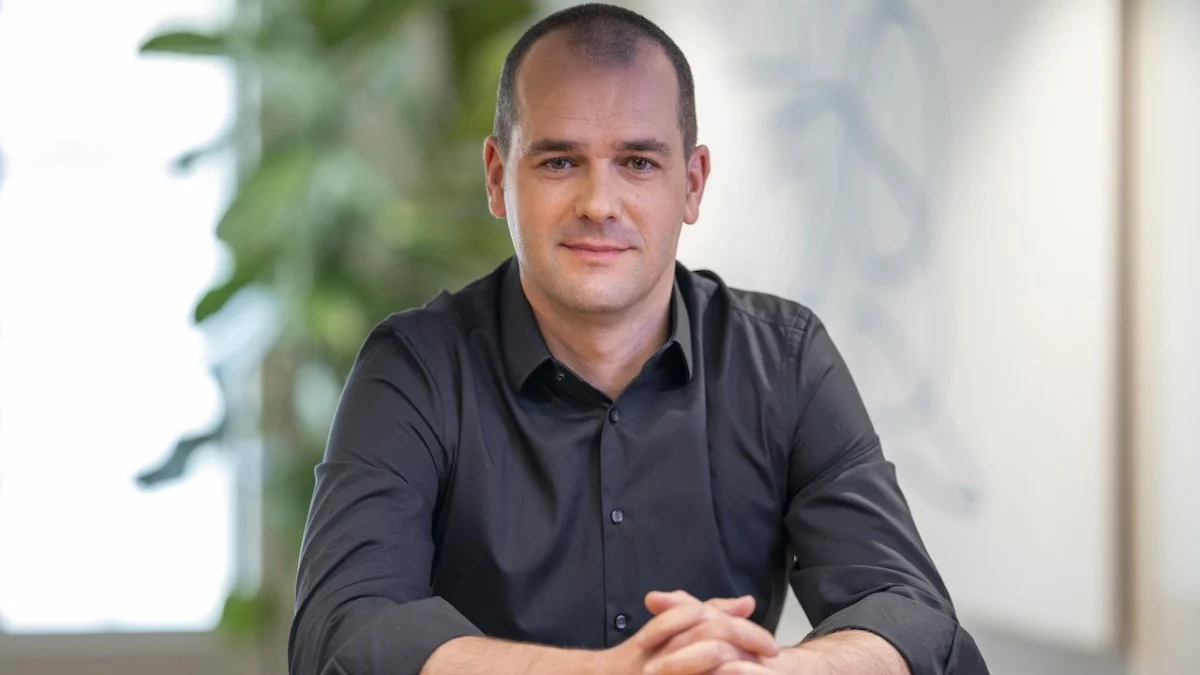
Cyril Desouza, Chief Financial Officer of FintechOS, contextualized the financial milestone as the culmination of rigorous internal restructuring and disciplined capital allocation.
"Reaching profitability was not an accident, it was the outcome of a deliberate, multi-year effort to get our cost base, our margins, and our delivery practice right before we pushed harder on growth again," Desouza stated. "Now that discipline is paying off twice over: the business has reached profitability, and we’ve already made the shift back into high growth, which is exactly the combination that lets us take on a round like this one."
This dual achievement of profitability and renewed top-line expansion positions FintechOS uniquely within the broader venture capital ecosystem. In an economic climate where institutional investors have increasingly prioritized fiscal prudence and sustainable unit economics over unconstrained cash burn, FintechOS’s ability to generate positive operational earnings while continuing to capture market share in lucrative Western markets offers a compelling narrative for its existing syndicate of backers.
Chronology and Corporate Evolution
The trajectory of FintechOS reflects the broader maturation of the Central and Eastern European (CEE) technology ecosystem, which has increasingly produced globally ambitious enterprise software-as-a-service (SaaS) companies.
Founded in Bucharest, Romania, in 2017, the company recognized an acute industry pain point: traditional banking and insurance institutions were struggling to digitize their operations due to rigid, outdated legacy technology stacks. Financial institutions faced a binary choice of maintaining obsolete systems or embarking on high-risk, multi-million-dollar core replacement projects that frequently suffered from cost overruns and operational disruption. FintechOS set out to offer a third alternative: a low-code, high-flexibility orchestration layer capable of modernizing customer journeys and product deployment without touching the underlying core ledger.
As the company expanded its client base across Europe, it established its global headquarters in London to be closer to key financial decision-makers and institutional capital markets, while maintaining strategic operational and engineering hubs in Bucharest. Concurrently, the firm built out its presence in New York to target the vast and lucrative North American banking and insurance sectors, a market characterized by high technology spending and an urgent need to counter nimble digital challengers.
Over the years, FintechOS has steadily raised capital to support its global ambitions:
- Early Funding Rounds: The startup secured early-stage venture backing to build its core product architecture, validate its value proposition with tier-one European financial institutions, and establish its dual-hub operational model between London and Bucharest.
- Scaling Phase ($60m+ Series B and Extensions): As enterprise demand for digital transformation surged—accelerated dramatically by the COVID-19 pandemic—FintechOS attracted institutional heavyweights such as the International Finance Corporation and Molten Ventures, securing larger funding tranches to build out its low-code studio capabilities and AI infrastructure.
- Current Funding ($28m Equity and Debt in 2026): Having surpassed the $150 million mark in total capital raised, the company is now transitioning from a growth-at-all-costs model to a disciplined, profitable expansion phase, leveraging non-dilutive debt alongside insider equity to fund its US push.
Market Context and Industry Implications
The broader macroeconomic and technological environment provides critical context for FintechOS’s recent funding round and strategic objectives. Financial institutions globally are under intense pressure to modernize their technological capabilities. Consumers and business clients increasingly expect seamless, real-time, personalized digital experiences comparable to those delivered by consumer tech giants and digital-native neo-banks.
However, regulatory compliance, cybersecurity mandates, and the sheer operational complexity of migrating decades-old financial data have historically made core system upgrades a daunting prospect for legacy institutions. This dynamic has catalyzed the rise of "composable banking" and enterprise middleware solutions. By decoupling product innovation and front-end user experience from back-end core accounting, software providers like FintechOS enable banks and insurers to test new markets, launch specialized insurance products, and integrate advanced AI analytics in weeks rather than years.
Furthermore, the integration of artificial intelligence into core banking and insurance workflows represents the next frontier of enterprise software adoption. Financial firms are actively seeking secure, scalable ways to harness machine learning for automated underwriting, risk assessment, fraud detection, and hyper-personalized customer advisory services. FintechOS’s stated focus on scaling its AI technology stack aligns directly with these institutional priorities, positioning the company to capture higher-value software contracts as financial institutions move from basic digitization to advanced cognitive automation.
Investor Perspective and Syndicate Dynamics
The decision by existing investors—Bek Ventures, the IFC, Cipio Partners, and Molten Ventures—to fund the $28 million round entirely without external new participants speaks volumes about the internal alignment within the company. In venture capital, "inside rounds" where current backers provide all the capital can signal strong conviction in management’s execution capabilities, particularly when a company has successfully navigated the difficult passage from cash-burning startup to profitable enterprise.
- Molten Ventures: As a prominent London-listed venture capital firm specializing in high-growth technology businesses, Molten’s continued support reflects FintechOS’s alignment with criteria for scalable, category-defining European tech champions.
- International Finance Corporation (IFC): The involvement of the World Bank Group’s private sector arm highlights the broader developmental and market-expansion impact of FintechOS’s software, particularly its potential to foster financial inclusion and operational efficiency across diverse banking markets.
- Cipio Partners and Bek Ventures: These growth and venture capital partners bring deep operational expertise in scaling B2B software enterprises through their crucial expansion phases in North America and Europe.
- Santander Corporate Investment Banking: The inclusion of a major banking institution as a debt provider not only minimizes equity dilution for existing shareholders but also serves as an institutional endorsement of FintechOS’s creditworthiness and financial stability.
Future Outlook
With profitability secured in the first half of 2026 and a fresh $28 million war chest at its disposal, FintechOS enters the remainder of the decade with a stabilized operational foundation. The company’s immediate challenge will be executing its ambitious go-to-market strategy in the fiercely competitive United States enterprise software market while defending and expanding its established European client base.
As legacy financial institutions continue to allocate significant budgetary resources toward digital modernization and artificial intelligence adoption, the demand for non-disruptive, highly flexible middleware layers is projected to remain robust. Whether FintechOS can leverage its newly achieved operational discipline and enhanced capital reserves to capture significant market share across North America will be a key storyline to watch within the global financial technology sector over the coming years.