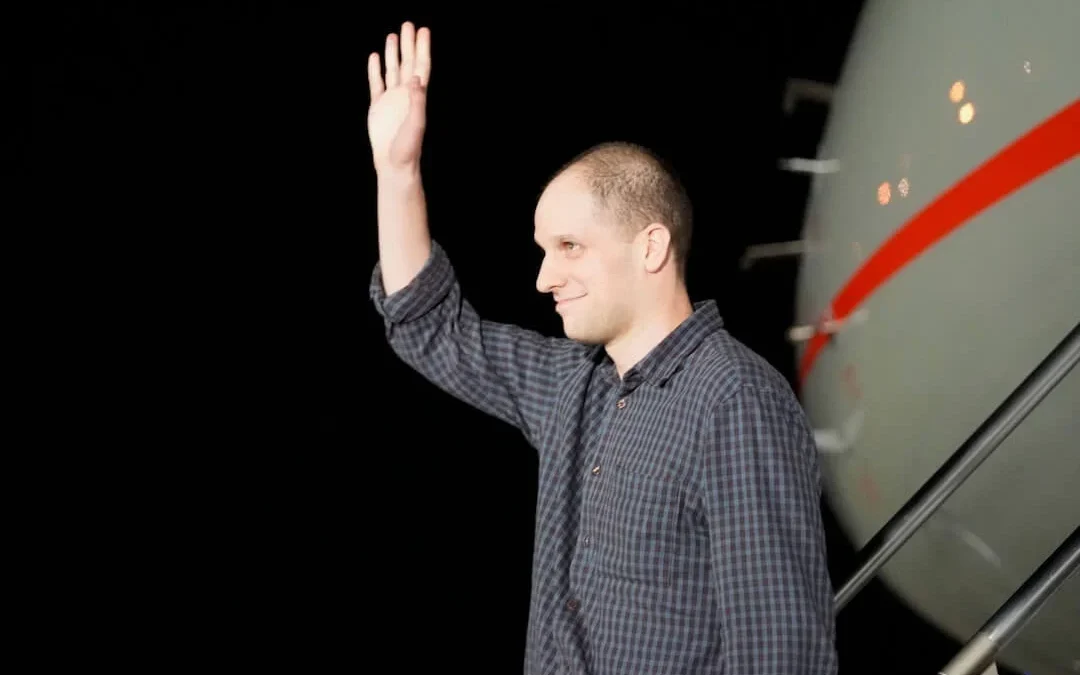
On March 29, 2023, Wall Street Journal correspondent Evan Gershkovich was performing his duties as an accredited journalist in Yekaterinburg, Russia, when his professional life was abruptly interrupted by the Federal Security Service (FSB). What followed was a 491-day ordeal that transformed the 34-year-old reporter into a central figure in international diplomacy and a symbol of the mounting risks facing foreign correspondents in an era of resurgent authoritarianism.
Following his release in a landmark prisoner swap on August 1, 2024, Gershkovich has begun to pull back the curtain on his time in captivity. In a series of high-profile interviews, including a sit-down with ABC News’ George Stephanopoulos and a candid discussion with Wall Street Journal editor-in-chief Emma Tucker, Gershkovich detailed the harrowing moment of his arrest and the psychological toll of his confinement.
The Moment of Arrest and the Reality of Detention
Gershkovich was meeting a source in a local restaurant when six masked FSB officers swarmed the establishment. The arrest was executed with clinical efficiency: he was tackled to the floor, hooded, and transported to an FSB facility. When his captors removed the hood and demanded to know his employer, his confirmation that he worked for The Wall Street Journal was met with an immediate re-application of the hood.
Upon arriving at the detention center, officials informed him that he was being charged with espionage—a grave accusation that carries a potential sentence of up to 20 years in Russia. In an unexpected psychological turn, Gershkovich recalled feeling a sense of "relief."
"Because, one, I’m not going to be tortured," Gershkovich explained, noting that the nature of the charge signaled that he was being held as a political pawn for a future exchange. "But, two, it’s a swap case." This analytical mindset served as a survival mechanism, allowing him to view his imprisonment as a temporary, albeit prolonged, geopolitical maneuver rather than a permanent loss of freedom.
A Chronology of Confinement
The routine of his imprisonment was defined by isolation and the rigid structure of the Russian penal system. For 491 days, Gershkovich lived in a cell with a rotating cast of Russian cellmates, spending 23 hours a day within the confines of their shared quarters. His daily existence was marked by a strict 6 a.m. wake-up call, meticulous cleaning duties, physical exercise within the cramped cell, and long hours of meditation and reading.
Throughout the ordeal, he sought to maintain a tether to his former life. He wrote notes—which he managed to have smuggled out of the facility—and found unlikely common ground with his cellmates, including bonding over the animated series "SpongeBob SquarePants."
The emotional apex of his time in prison occurred during a rare visitation with his parents. Fearing that his family might struggle with the weight of the situation or inadvertently blame him for his precarious position, he was instead met with profound grace. His father’s declaration—“We come here with respect for you”—served as a vital source of resilience, providing the emotional stability he needed to endure the months of uncertainty that followed.
The Diplomatic Endgame
The path to his release required a delicate diplomatic dance. As part of the formal process, Gershkovich was required to pen a pardon request to Russian President Vladimir Putin. In this document, he utilized cautious, diplomatic language, acknowledging that the Russian court system might have "mistakenly" interpreted his journalistic activities as espionage, thereby opening the door for the Kremlin to justify his release through a prisoner swap.
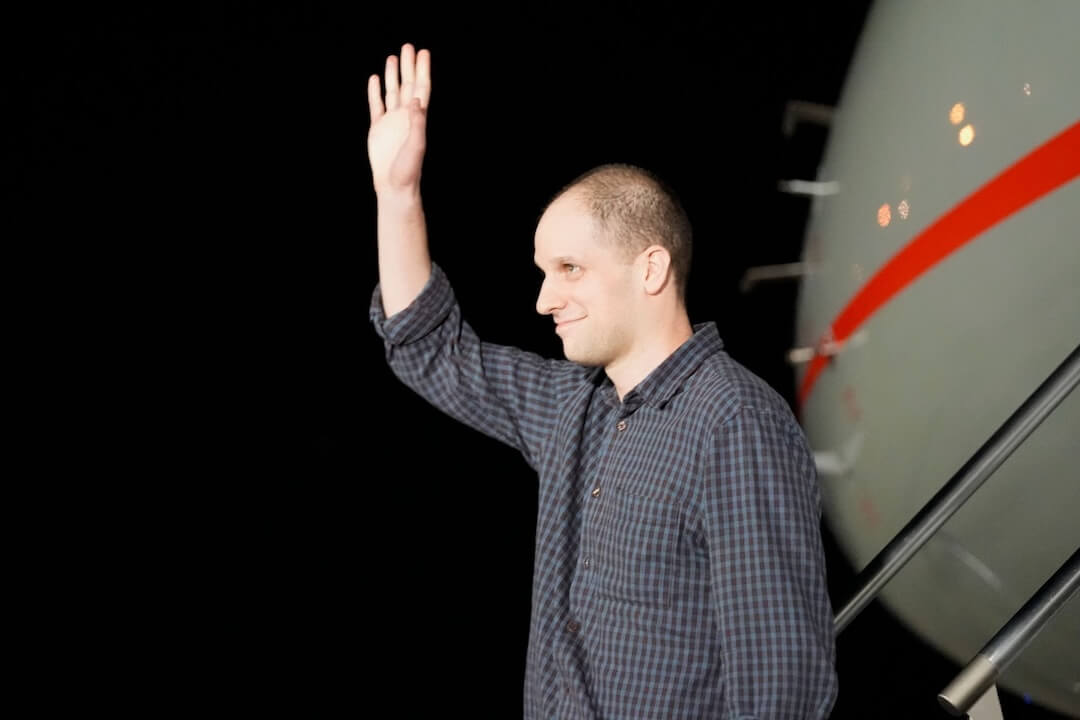
His release on August 1, 2024, was the culmination of an intricate, multi-national negotiation involving 24 prisoners across six countries. Gershkovich has been vocal in his credit to the Biden administration, stating clearly that the former president’s direct involvement was the primary catalyst for his return.
Broader Implications for Global Journalism
Gershkovich’s experience has sparked a necessary, somber conversation regarding the safety of journalists working in hostile environments. In his discussion with Emma Tucker, he articulated a shift in the "rules of engagement" for foreign correspondents.
"The accepted rules and norms are changing of what a foreign correspondent is," Gershkovich observed. He noted that historically, authoritarian regimes might limit a reporter’s reach by revoking visas or denying accreditation. Today, however, journalists are increasingly viewed as high-value hostages rather than observers. This shift in state behavior has created a chilling effect on international reporting, forcing news organizations to reconsider the risks their staff undertake in countries where the rule of law is subservient to political objectives.
Furthermore, Gershkovich suggests that these pressures are not confined to foreign soil. He noted that the environment for journalism in the United States has also become increasingly volatile, citing instances of public harassment and legal intimidation against reporters. His analysis suggests that the erosion of press freedom is a global trend, requiring a reassessment of how journalism is practiced and protected in an era of rising populism and state-sponsored hostility.
Media Industry Shifts: Bartiromo and Roker
In other media news, the landscape of cable news continues to shift. Fox News recently parted ways with long-time host Maria Bartiromo, a decision that followed reports suggesting she had shared internal network communications with the White House. While the specifics of her departure remain a subject of industry speculation, the network has tapped Larry Kudlow—the former director of the National Economic Council under the Trump administration—to assume her duties on "Sunday Morning Futures." Kudlow is expected to remain in the role through the post-midterm election period, highlighting the network’s strategy of leaning into established political voices during high-stakes news cycles.
Simultaneously, the "Today" show experienced a brief moment of levity and civic duty when meteorologist Al Roker was forced to depart mid-broadcast. Roker, who was summoned for jury duty, handled the interruption with his characteristic humor, later taking to social media to emphasize the importance of civic participation. The incident served as a brief reminder of the everyday responsibilities that ground even the most prominent public figures.
Reflection and Moving Forward
For Evan Gershkovich, the transition back to civilian life is an ongoing process. He describes the immediate aftermath of his release as a period of "joyous" adrenaline, followed by the slower, more deliberate work of processing trauma. In his new book, This Cursed Beautiful Land: A Russian-American Story, he offers a comprehensive account of his journey, viewing his imprisonment not as a defining tragedy, but as a singular, albeit harrowing, chapter in a larger narrative.
His return serves as a powerful reminder of the resilience of the human spirit and the vital necessity of a free press. As he integrates back into society, his insights into the mechanics of his detention and the shifting geopolitical landscape serve as an essential resource for those concerned with the future of international reporting. The 491 days in a Russian prison may have altered the course of his life, but they have also steeled his resolve to continue the work of a journalist in a world that, now more than ever, requires the courage to report from the front lines.