American Public Opinion on China Shows Modest Positive Shift Amid Persistent Negativity, Pew Research Center Reveals

While a predominant sentiment of negativity towards China has characterized American public opinion for nearly a decade, recent findings from a Pew Research Center survey indicate a notable, albeit modest, increase in favorable views. Conducted in March 2026, the survey reveals a nascent softening in perceptions across multiple fronts, signaling a subtle but potentially significant shift in the complex U.S.-China relationship as seen through the eyes of the American populace.
Evolving Sentiments: A Decade of Disfavor and Recent Warming
For much of the past ten years, Americans have largely held unfavorable views of China, a trend that solidified around 2013 and deepened significantly by the late 2010s and early 2020s. However, the latest data points to a discernible uptick in positive opinions. Currently, 27% of U.S. adults express a favorable view of China, marking a 6 percentage point increase since March 2025, when the figure stood at 21%. This upward trajectory is even more pronounced when compared to March 2023, where only 14% of Americans held a positive opinion, indicating a near doubling of favorability in just three years.
This recent shift contrasts sharply with the historical baseline. In the mid-2000s, favorable views of China were considerably higher, peaking at 52% in both 2006 and 2011. The decline began around 2012-2013, with unfavorable views surpassing favorable ones, and reaching a nadir in 2023 when 83% of Americans expressed a negative opinion, marking the lowest point in Pew Research Center’s tracking. The current 71% unfavorable rating, while still high, represents a slight retreat from that peak, underscoring the ongoing but subtly changing dynamics of public perception.
The period of heightened negativity, often referred to as the "China hawk" era, coincided with escalating trade tensions under previous administrations, growing concerns over human rights abuses in Xinjiang and Hong Kong, China’s assertive actions in the South China Sea, and increasing alarm over Beijing’s technological ambitions and geopolitical influence. The onset of the COVID-19 pandemic further exacerbated these negative sentiments, with many Americans attributing responsibility to China and expressing mistrust in its handling of the global health crisis. The recent increase in favorability, therefore, represents a departure from this deeply entrenched skepticism, suggesting that new factors or a recalibration of existing ones may be at play.
The Partisan Divide: Democrats Lead the Shift
A closer examination of the data reveals that the recent warming of attitudes toward China is not uniformly distributed across the American political spectrum. The increase in favorability is primarily driven by Democrats and Democratic-leaning independents. In March 2026, 34% of Democrats expressed a positive opinion of China, an 8-point jump from 26% last year. This trend indicates a more pronounced willingness among Democrats to reconsider their views or respond to evolving diplomatic signals.
Conversely, opinion among Republicans and Republican-leaning independents has remained largely stable, with 18% holding a favorable view in March 2026, a marginal increase from 16% in 2025. Despite this disparity, it is noteworthy that favorability has increased markedly in both parties since the low point of 2023, when only 10% of Republicans and 18% of Democrats held positive views. This suggests that while Democrats are leading the current upward trend, there might be a broader, albeit slower, movement across the political landscape away from peak negativity.
The perception of China’s role on the global stage also reflects this partisan divergence. A separate Pew Research Center survey conducted in January 2026 explored how Americans characterize the U.S.’s relationship with China. Fewer Americans now categorize China as an "enemy" of the United States, with the figure standing at 28% in January 2026, down from 33% in 2025 and a peak of 42% in 2024. Simultaneously, more Americans now view China as a "competitor," increasing from 56% in 2025 to 60% in 2026. The proportion considering China a "partner" has remained consistently low, hovering around one-in-ten in both years.

This shift from "enemy" to "competitor" is particularly stark among Democrats. Only 14% of Democrats now label China an enemy, a significant decrease from 22% in 2025 and 28% in 2024. For a large majority of Democrats (72%), China is primarily seen as a competitor. Republicans, while also showing a slight decline in viewing China as an enemy (44% in 2026 compared to 45% in 2025 and 59% in 2024), maintain a much higher proportion of "enemy" sentiment than Democrats. This persistent partisan gap underscores the deep ideological divisions in how the two major parties approach foreign policy and international relations with major powers like China.
Generational Gaps: Younger Americans More Amenable to China
Age also plays a significant role in shaping American perceptions of China, revealing distinct generational divides. Younger adults consistently hold more positive views than their older counterparts. Approximately a third of Americans under 50 (34%) express a favorable opinion of China, a stark contrast to just 19% of those aged 50 and older. This generational gap is consistent with broader trends often observed in surveys on foreign policy, where younger demographics tend to be more open to international engagement and less influenced by historical rivalries or Cold War-era perceptions.
This age-based difference is further highlighted in how different generations characterize China’s relationship with the U.S. Americans under 50 are considerably less likely than those 50 and older to label China an "enemy" of the United States (20% versus 38%). This divergence is particularly pronounced within the Republican party. Among Republicans and Republican-leaning independents, 55% of those aged 50 and older view China as an enemy, compared to 32% of those aged 18-49. Conversely, younger Republicans are more inclined to see China as a competitor (57%) or even a partner (10%), while older Republicans predominantly categorize it as an adversary.
For Democrats, while younger adults also show a slightly lower "enemy" perception (10% for 18-49 vs. 18% for 50+), the overwhelming majority across both age groups (73% of younger Democrats and 71% of older Democrats) identify China as a competitor. These generational differences suggest that as younger cohorts gain more influence in American society and politics, the overall discourse and policy approach towards China might continue to evolve, potentially favoring a more pragmatic or competitive, rather than adversarial, framework.

Confidence in Leadership: Trump’s Slipping Grip, Xi’s Marginal Gains
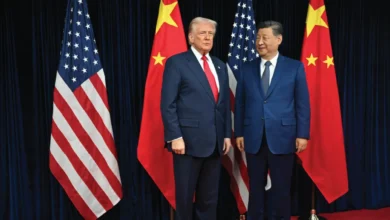
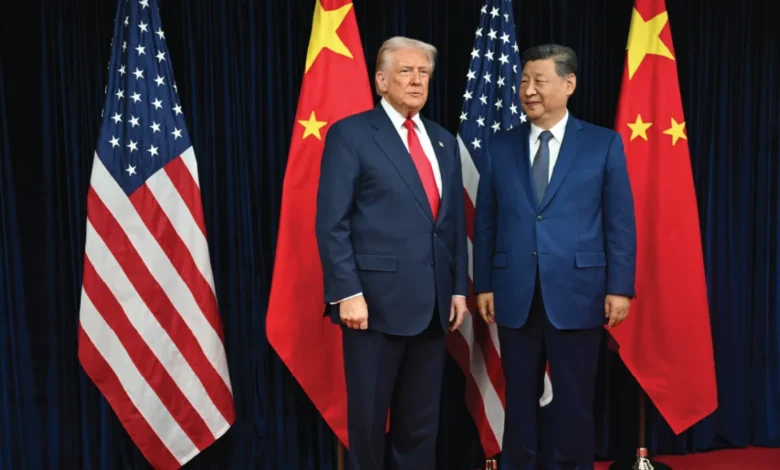
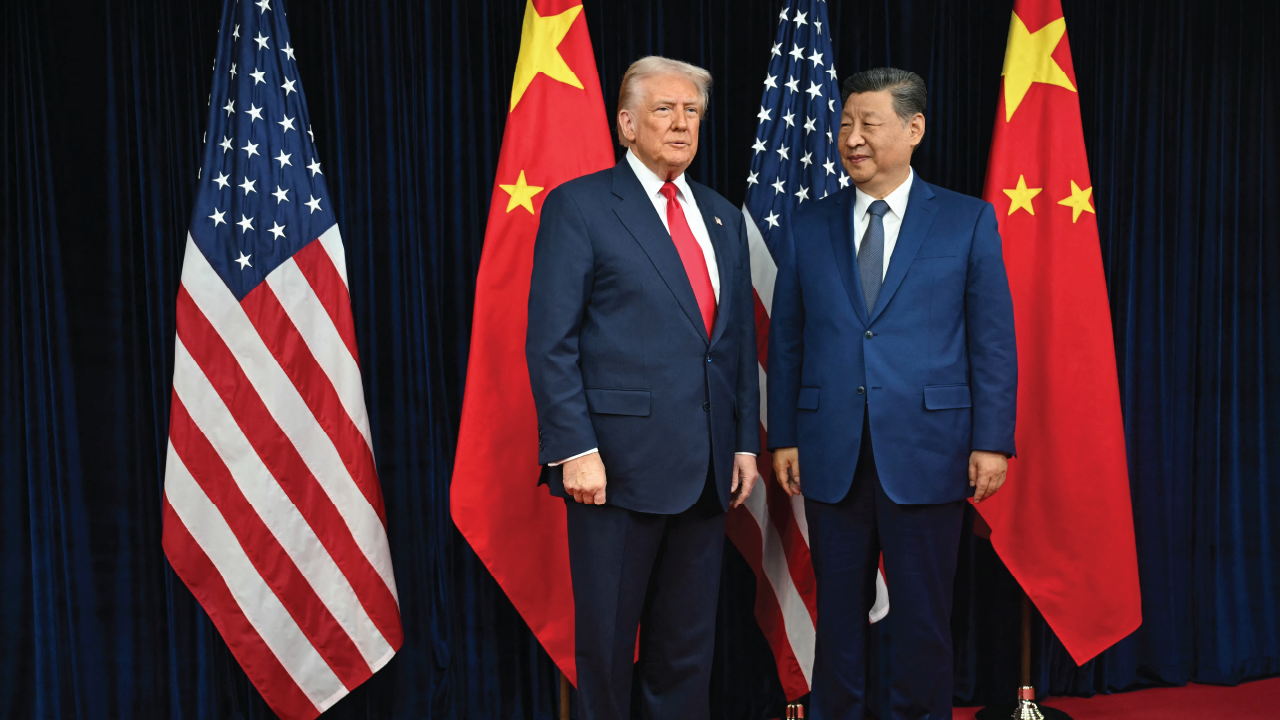
As U.S. President Donald Trump prepares for an anticipated May summit with Chinese President Xi Jinping, American confidence in his ability to effectively manage U.S. policy toward China appears to be waning. The March 2026 survey indicates that approximately four-in-ten Americans (39%) express confidence in President Trump to make good decisions regarding U.S.-China relations. This figure represents a decline from 45% in August 2025 and 48% in July 2024, signaling a growing public skepticism about his foreign policy acumen in this crucial bilateral relationship.
Unsurprisingly, partisan lines sharply divide opinions on Trump’s leadership. A substantial majority of Republicans (71%) express confidence in President Trump’s handling of China policy, yet even within his own party, confidence has seen a 7-point drop since last year. Among Democrats, confidence remains exceptionally low, with only 11% believing Trump can make sound decisions on China policy, a figure largely unchanged over the past year. This entrenched partisan divide reflects not only specific policy disagreements but also broader approval ratings for the President.
Similar to overall views of China, younger adults exhibit less confidence in President Trump’s China policy than older adults. This generational gap is again particularly evident among Republicans: 64% of Republicans under 50 express confidence, compared to a robust 78% of those 50 and older. This generational split within the Republican base could become a factor in future political considerations regarding foreign policy. The public’s assessment of Trump’s China policy aligns broadly with their confidence in his handling of relations with other nations like North Korea, Cuba, and Venezuela, suggesting a consistent pattern in how his foreign policy is perceived.
Regarding Chinese President Xi Jinping, Americans generally lack confidence in his ability to make "the right thing regarding world affairs." However, there has been a subtle, consistent increase in this metric over the past two years. In March 2026, 17% of Americans expressed "a lot" or "some" confidence in Xi, a 4-point increase from 13% in 2025 and 9% in 2024, and more than double the 8% recorded in 2023. While still a minority view, this incremental rise could be linked to a perceived stabilization of U.S.-China relations or a softening of negative rhetoric from Beijing. Consistent with other trends, Democrats and younger adults tend to express slightly more confidence in Xi than their Republican and older counterparts.

Broader Implications for U.S.-China Relations and Domestic Politics
The findings from the Pew Research Center’s latest surveys offer crucial insights into the evolving landscape of U.S.-China relations. The modest uptick in American favorability towards China, coupled with a decrease in viewing it as an "enemy," suggests a potential shift away from the most confrontational narratives that have dominated public discourse. This could create a more fertile ground for diplomatic engagement and de-escalation, even as fundamental disagreements persist.
For the upcoming May summit between President Trump and President Xi, these public opinion trends could influence the tone and substance of discussions. A U.S. administration facing declining public confidence in its handling of China policy, particularly from its own base, might feel pressure to demonstrate tangible results or a strong stance. Conversely, a public less inclined to view China as an outright "enemy" might be more receptive to outcomes that emphasize cooperation or managed competition over outright confrontation.
The partisan divergence, with Democrats driving the positive shift, highlights the increasing politicization of foreign policy. This could lead to different approaches to China depending on which party controls the presidency and Congress. A Democratic administration might find greater public support for engagement, while a Republican administration might lean into the more adversarial sentiments prevalent among its older base.
The generational divide also has long-term implications. As younger Americans, who hold more nuanced and often less negative views of China, become a larger part of the electorate and policy-making apparatus, the overall trajectory of U.S.-China relations could see further adjustments. This might involve a greater emphasis on multilateralism, climate cooperation, or areas of shared economic interest, even while maintaining vigilance on human rights and national security concerns.

It is important to note that a shift from "enemy" to "competitor" does not signify an end to strategic rivalry. Rather, it suggests a recognition that while China is a formidable economic and geopolitical challenge, it is not necessarily an existential threat requiring outright hostility. This framing could lead to policies that focus more on out-competing China through innovation and alliances, rather than through isolation or direct confrontation.
Ultimately, while the underlying current of skepticism and concern about China’s global role remains strong, the recent data suggests that American public opinion is not static. It is responsive to events, rhetoric, and diplomatic efforts. The challenge for policymakers will be to navigate this complex and evolving public sentiment while formulating a coherent and effective long-term strategy for one of the world’s most critical bilateral relationships.
About this Research
This Pew Research Center analysis provides a comprehensive overview of American attitudes toward China, including perceptions of its president and the handling of U.S.-China policy by President Donald Trump. The Center conducts this research to inform the public, media, and decision-makers on important topics, building upon its extensive history of tracking global views of China.
Methodology

The findings presented in this analysis are derived from two distinct surveys conducted by the Pew Research Center. The primary data points regarding overall views of China, confidence in leadership, and partisan breakdowns were gathered from a survey of 3,507 U.S. adults conducted between March 23 and March 29, 2026. Additional data pertaining to how Americans characterize the U.S.-China relationship (e.g., enemy, competitor, partner) was drawn from a separate survey of 8,512 U.S. adults conducted from January 20 to January 26, 2026. All participants in both surveys are members of the Center’s American Trends Panel, a nationally representative panel of randomly selected U.S. adults. The survey results are weighted to represent the views of the entire U.S. adult population. Detailed questionnaires, full response data, and methodological specifications for both the March and January surveys are publicly available from the Pew Research Center.
Laura Silver is an associate director focusing on global attitudes at Pew Research Center.
Laura Clancy is a research analyst focusing on global attitudes research at Pew Research Center.