Journalism Trauma and Ethics Retreat Launched for European Reporters by GCJT and iMEdD in Greece


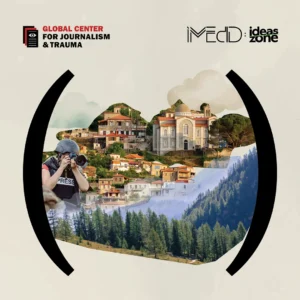
The Global Center for Journalism and Trauma (GCJT), in a significant partnership with iMEdD’s Ideas Zone, has opened applications for a crucial four-day retreat designed for European journalists. Slated to take place from October 14 to 18, 2026, in the serene setting of Vamvakou, Laconia, Greece, this initiative aims to provide a vital space for media professionals who regularly navigate the complexities of high-impact news coverage. The program is meticulously crafted to support reporters, editors, photographers, and multimedia journalists who are on the front lines of stories encompassing conflict, forced migration, climate crises, and the pervasive challenge of disinformation. This retreat underscores a growing recognition within the media industry of the profound psychological and ethical toll such reporting can exact, and the urgent need for dedicated resources to address these issues.
Addressing the Unseen Scars: The Imperative for Journalist Well-being
Journalism, particularly in its investigative and front-line forms, is often described as a calling, a commitment to shedding light on critical events and holding power accountable. However, this dedication frequently comes at a significant personal cost. Reporters covering traumatic events are exposed to graphic imagery, harrowing testimonies, and dangerous situations, leading to an elevated risk of developing post-traumatic stress disorder (PTSD), depression, anxiety, and burnout. Studies from organizations like the Dart Center for Journalism and Trauma indicate that a substantial percentage of journalists experience symptoms consistent with PTSD, a figure significantly higher than that of the general population. Beyond the direct psychological impact, the constant exposure to suffering and injustice can lead to moral injury, a sense of betrayal or violation of one’s deeply held moral beliefs, particularly when faced with insurmountable obstacles or the inability to effect change.
The digital age has further intensified these pressures. The 24/7 news cycle, coupled with the immediacy of social media, means journalists are continuously exposed to distressing content and often become targets of online harassment, threats, and sophisticated disinformation campaigns. This environment not only exacerbates psychological strain but also introduces complex ethical dilemmas regarding source protection, privacy, the dissemination of potentially harmful content, and the verification of information in a rapidly evolving landscape. The retreat’s focus on trauma-informed reporting practices is therefore not merely a therapeutic measure but a fundamental aspect of enhancing journalistic integrity and sustainability in a world awash with information and often, misinformation. By understanding the psychological impact of trauma on sources and themselves, journalists can approach their work with greater empathy, accuracy, and self-preservation, ultimately leading to more responsible and impactful storytelling.
A Sanctuary for Reflection: The Vamvakou Retreat’s Vision
The choice of Vamvakou, a picturesque village nestled in the Peloponnese region of Greece, is deliberate. Known for its tranquil environment and a recent revitalization project, it offers a stark contrast to the often chaotic and high-pressure environments journalists typically inhabit. This setting is intended to provide participants with a much-needed respite, allowing them to truly "step away from daily news pressures." The core objective is to create a confidential and collaborative space where journalists can engage in deep reflection on the ethical dimensions of their work, internalize trauma-informed reporting techniques, and construct personalized strategies for psychological resilience. The secluded nature of Vamvakou is ideal for fostering an atmosphere of trust and openness, essential for discussing sensitive topics related to personal well-being and professional challenges.
The retreat’s curriculum is designed to be comprehensive and interactive. It will feature expert briefings delivered by seasoned journalists who have navigated similar terrains, alongside trauma specialists who bring clinical expertise to the unique stressors of the profession. Group discussions will allow participants to share their experiences, validate their struggles, and learn from the collective wisdom of their peers. Workshops will offer practical tools and techniques, ranging from self-care strategies and mindfulness practices to advanced interviewing methods for vulnerable individuals and ethical frameworks for reporting on sensitive subjects. The confidential nature of the environment is paramount, ensuring that participants feel secure in sharing vulnerabilities and engaging in candid discussions without fear of professional repercussions or public exposure. This peer-to-peer learning, facilitated by experts, forms the bedrock of the program’s anticipated impact.
Who Are the Organizers? The Global Center for Journalism and Trauma and iMEdD
This collaborative initiative brings together two influential organizations committed to supporting and advancing the field of journalism.
The Global Center for Journalism and Trauma (GCJT) stands as a leading institution dedicated to addressing the profound impact of trauma on journalists and the communities they cover. Established with the understanding that journalists are often first responders to crises, the GCJT provides training, resources, and support to help media professionals report ethically and responsibly on violence, conflict, disaster, and human rights issues, while also safeguarding their own mental health. Their work emphasizes the importance of trauma literacy—the ability to recognize, understand, and respond effectively to the effects of trauma—not only in reporting on survivors but also in managing the vicarious trauma experienced by journalists themselves. GCJT advocates for systemic changes within newsrooms to foster healthier work environments and promote long-term well-being among media workers. Their programs typically focus on practical skills, peer support, and promoting a culture of care within the journalistic community.
iMEdD (incubator for Media Education and Development), an organization founded by the Stavros Niarchos Foundation (SNF), operates with a mission to support and promote independent, accountable, and impactful journalism. Through its various initiatives, including the Ideas Zone, iMEdD fosters innovation, collaboration, and continuous learning within the media sector. It provides resources, funding, and platforms for journalists to develop new skills, experiment with innovative storytelling formats, and address critical societal issues. iMEdD’s commitment extends to strengthening the ecosystem of journalism by empowering professionals and ensuring the vitality of a free and responsible press. The Ideas Zone, specifically, is a hub for thought leadership and program development, often serving as the incubator for projects that push the boundaries of journalistic practice and address emerging challenges. The partnership between GCJT and iMEdD is a natural synergy, combining GCJT’s specialized expertise in trauma with iMEdD’s broad commitment to journalistic excellence and innovation.

The Program: Fostering Resilience and Ethical Acumen
The four-day program is structured to offer an immersive experience that moves beyond theoretical concepts to practical application. While specific module titles will be finalized closer to the event, the overarching themes will include:
- Understanding Trauma and its Impact: In-depth sessions on the neurobiology of trauma, vicarious trauma, compassion fatigue, and burnout. Discussions will cover how these conditions manifest in journalists and affect their work.
- Trauma-Informed Interviewing and Reporting: Techniques for ethically interviewing vulnerable sources, minimizing re-traumatization, and reporting on sensitive topics with dignity and respect. This includes practical exercises on active listening, consent, and language use.
- Ethical Dilemmas in High-Impact Coverage: Case studies and facilitated discussions on challenging ethical scenarios, such as the use of graphic images, privacy concerns in public spaces, reporting on suicide or self-harm, and navigating conflicts of interest in crisis zones. The role of media ethics in combating disinformation will also be a key component.
- Personal Resilience and Self-Care Strategies: Workshops focused on practical tools for managing stress, building psychological resilience, and developing sustainable self-care routines. This may include mindfulness exercises, peer support techniques, strategies for debriefing, and fostering a healthy work-life balance.
- Newsroom Best Practices: Discussions on how to advocate for and implement trauma-informed policies and support systems within news organizations, fostering a culture of care from editorial leadership down to individual reporters.
The small group size of participants is intended to facilitate intimate discussions and personalized feedback, maximizing the learning potential within the confidential and supportive environment.
Eligibility and Application: A Gateway for Experienced European Journalists
The retreat is specifically tailored for experienced journalists who are deeply engaged in high-impact reporting. To ensure a cohort of peers who can meaningfully contribute to and benefit from the program, applicants must meet several stringent criteria:
- Professional Experience: A minimum of five years of professional experience in journalism is required. This ensures that participants bring a foundational understanding of the profession’s demands and have accumulated direct experience in covering the types of stories the retreat addresses.
- Geographic Base: Applicants must be based in a Council of Europe country. This criterion aims to foster a pan-European dialogue, acknowledging the shared challenges and diverse media landscapes across the continent, while also ensuring relevance to the European context of governance and human rights. The Council of Europe comprises 46 member states, covering a vast geographical and cultural area, allowing for a rich exchange of perspectives.
- Language Proficiency: All sessions will be conducted in English, necessitating strong English communication skills from all participants to fully engage with the content and discussions.
- Commitment to the Program: Applicants must demonstrate a clear interest in reflecting on their work’s ethical dimensions, learning trauma-informed practices, and building resilience strategies. This will likely be assessed through their application essay or statement of purpose.
The fellowship is comprehensive, covering all major expenses including travel to and from Vamvakou, accommodation for the duration of the retreat, and all meals. This removes financial barriers, allowing selected journalists to fully immerse themselves in the program without economic concern. The application window is now open, with a firm deadline of May 11, 2026. Prospective participants are strongly encouraged to submit their applications well in advance to avoid last-minute issues. The application portal, hosted on the iMEdD website, provides detailed instructions and forms.
A Crucial Timeline: From Application to Immersion
The timeline for this initiative is meticulously planned to ensure a thorough selection process and optimal preparation for the retreat:
- Application Period (Ongoing – May 11, 2026): Journalists are invited to submit their applications, detailing their experience, motivation, and how they meet the eligibility criteria.
- Selection Process (May – August 2026, inferred): Following the application deadline, a rigorous selection process will commence. This will likely involve a review committee comprising representatives from GCJT, iMEdD, and potentially external experts. The committee will evaluate applications based on professional experience, demonstrated need for the program, and the potential for participants to contribute to the collaborative environment. Given the comprehensive nature of the fellowship and the limited number of spots (typically around 16 for such retreats), this phase is crucial and highly competitive.
- Notification of Selection (August – September 2026, inferred): Successful applicants will be notified, allowing ample time for travel arrangements and pre-retreat preparation. Unsuccessful applicants may also receive notification.
- Pre-Retreat Orientation (September – October 2026, inferred): Participants may receive pre-reading materials, a detailed agenda, and potentially an online orientation session to familiarize themselves with the program’s objectives and the logistical details.
- The Retreat (October 14-18, 2026): The core four-day immersive program in Vamvakou, Laconia, Greece.
- Post-Retreat Engagement (Ongoing, inferred): While not explicitly stated, such programs often foster ongoing networking opportunities among participants and access to resources from the organizing bodies, creating a lasting community of practice.
The Broader Impact: Strengthening European Journalism in a Challenging Era
This retreat represents more than just a training program; it is an investment in the future of ethical and resilient journalism across Europe. The implications of this initiative are far-reaching:
- Enhanced Journalistic Quality: Journalists who are equipped with trauma-informed practices and strong ethical frameworks are better positioned to produce accurate, nuanced, and sensitive reporting. This leads to stories that are not only factually correct but also convey the human impact of events with greater depth and respect.
- Improved Journalist Well-being: By providing concrete tools for psychological resilience and fostering a supportive community, the retreat directly addresses the pervasive issue of mental health in journalism. A healthier journalistic workforce is more sustainable and less prone to burnout and attrition.
- Increased Public Trust: In an era marked by declining public trust in media and the proliferation of "fake news," ethical and empathetic reporting becomes a critical differentiator. Journalists who handle sensitive topics responsibly help to rebuild and maintain credibility with their audiences.
- Strengthened Democratic Discourse: Robust, independent, and ethical journalism is a cornerstone of democratic societies. By empowering European journalists to report on critical issues like conflict, migration, and disinformation with greater skill and resilience, the retreat contributes to a more informed citizenry and a healthier public sphere.
- Regional Collaboration: Bringing together journalists from across Council of Europe countries fosters a sense of shared purpose and facilitates cross-border collaboration on complex issues that often transcend national boundaries. This network can be invaluable for future investigative projects and mutual support.
Voices from the Organizers
While direct quotes are not yet available, the intent and philosophy behind this initiative can be inferred from the missions of GCJT and iMEdD. A representative from the Global Center for Journalism and Trauma would likely emphasize: "In an increasingly turbulent world, journalists are often the first witnesses to human suffering and societal upheaval. This vital role comes with immense personal cost. Our retreat in Vamvakou is not just about professional development; it’s about providing a sanctuary where these brave individuals can heal, reflect, and arm themselves with the tools for sustained resilience. We believe that by caring for our journalists, we empower them to tell stories that truly matter, stories that inform, provoke thought, and ultimately, drive positive change, all while protecting their own well-being."
Similarly, a spokesperson from iMEdD’s Ideas Zone would articulate: "The integrity of journalism hinges not only on factual accuracy but also on ethical responsibility and the well-being of those who practice it. Through our partnership with the Global Center for Journalism and Trauma, we are addressing a critical need within the European media landscape. This retreat is a testament to our commitment to fostering a generation of journalists who are not only skilled and innovative but also deeply attuned to the ethical implications of their work and equipped to navigate the psychological challenges inherent in covering today’s most impactful stories. By investing in their resilience, we are investing in the future of independent, high-quality journalism across Europe."
Conclusion: Investing in the Future of Ethical Reporting
The collaborative retreat organized by the Global Center for Journalism and Trauma and iMEdD’s Ideas Zone represents a timely and essential intervention for European journalists. By offering a unique opportunity for reflection, learning, and peer support in a serene environment, the program directly addresses the escalating pressures and ethical complexities faced by those reporting on high-impact stories. The comprehensive fellowship, covering all expenses, underscores the organizers’ commitment to making this vital resource accessible to deserving professionals. As the application deadline of May 11, 2026, approaches, this initiative stands as a beacon for a more ethical, resilient, and human-centered approach to journalism, ultimately strengthening the fabric of informed societies across the continent.