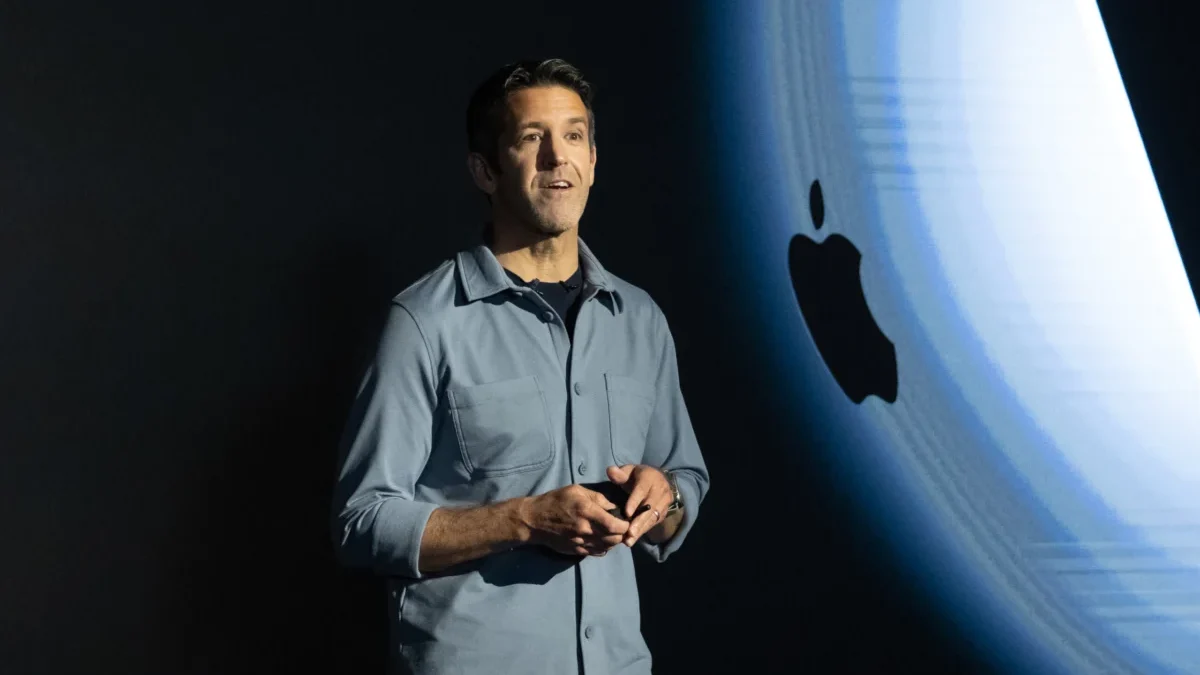
In a decisive opening to his first keynote as Apple’s chief executive, John Ternus has moved to definitively settle the speculation surrounding the company’s flagship product. During a high-stakes presentation on Wednesday, Ternus positioned the iPhone not as a legacy device in decline, but as the primary vessel for Apple’s future artificial intelligence strategy. By framing the smartphone as an "intelligent personal hub," Ternus signaled a strategic pivot that prioritizes the ubiquity of the iPhone over the industry-wide obsession with post-smartphone hardware.
This declaration represents a notable departure from the narrative cultivated by former CEO Tim Cook, who spent much of his tenure attempting to diversify Apple’s portfolio to prove the company was no longer tethered to a single device. While Cook successfully expanded the company’s services, wearables, and ecosystem, Ternus is doubling down on the foundational hardware that continues to generate the bulk of Apple’s revenue.
The Context of the Pivot
The current climate surrounding the smartphone industry is one of existential scrutiny. For months, analysts and technology pundits have argued that the era of the smartphone is reaching a terminal phase. Recent headlines have frequently suggested that AI-driven wearables, augmented reality glasses, and ambient computing platforms are destined to render the handheld device obsolete.
By taking the stage and stating, "There’s no product in the world better designed to be your intelligent personal hub than iPhone," Ternus is effectively offering a formal rebuttal to these predictions. He argues that the very attributes that critics claim are outdated—the screen, the pocketability, and the localized processing power—are exactly what make the device the perfect host for advanced AI integration.
A Historical Parallel: The 2001 Digital Hub Strategy
To understand the weight of Ternus’s claim, one must look back to 2001. During that year’s Macworld New York keynote, Steve Jobs faced a similar chorus of skepticism. Industry observers at the time were declaring the personal computer a relic, sidelined by the rise of specialized digital gadgets. Jobs famously used a slide depicting a tombstone for the "Beloved PC" to mock these analysts before delivering a masterclass in product positioning.
Jobs argued that the PC was not dying; rather, it was evolving into the "digital hub" of a new era. By connecting the PC to nascent technologies like digital camcorders and DVD players, Jobs proved that a central, powerful machine could enhance the utility of every peripheral device in a user’s life. Less than a year later, the introduction of the iPod—a product that integrated seamlessly with the Mac—validated this vision, ushering in a decade of unprecedented growth for Apple.
Ternus is essentially invoking this "Jobsian" playbook. He suggests that just as the PC was the center of the digital hub in the early 2000s, the iPhone is the center of the AI hub today. The implication is that any future wearable or ambient computing device Apple creates will not replace the iPhone, but will instead function as an extension of it.
The Technical Case for the iPhone
The argument for the iPhone’s continued dominance is rooted in its technical architecture. In an era where artificial intelligence requires massive computational throughput, the iPhone has a distinct advantage. With the latest iterations of the A-series processors, Apple has engineered chips that prioritize on-device neural processing, offering lower latency and higher privacy than cloud-based alternatives.
Data from recent benchmarks highlights why the iPhone remains a formidable computing powerhouse. The A18 Pro chip, for instance, provides a level of single-core and multi-core performance that rivals many modern laptops. This capability allows the iPhone to handle sophisticated generative AI models locally, a feat that smaller, battery-constrained wearables currently struggle to replicate.
Furthermore, the iPhone possesses a unique "stickiness" in the consumer market. While many users may choose to go without a tablet or a laptop on a given day, the smartphone has become a persistent, inseparable companion. According to industry surveys, the majority of smartphone users consider the device their primary gateway to digital services, banking, communication, and entertainment. By leveraging this existing high-frequency usage, Apple is placing its AI tools directly in the hands of its largest, most engaged audience.
Market Reactions and Implications
Financial analysts have noted that the move is a pragmatic one. Apple’s transition to an AI-first company requires a massive install base to generate the data loops necessary for model improvement. By keeping the iPhone as the central hub, Apple avoids the "cold start" problem that smaller startups face when launching new hardware platforms.
However, the strategy is not without its risks. By tethering its AI vision to the iPhone, Apple is making a bet that consumer demand for the smartphone form factor will not plateau. If the market for high-end smartphones begins to contract significantly due to market saturation or a shift in consumer behavior, Apple’s entire "intelligent personal assistant" strategy could be compromised.
Despite these risks, the market responded with confidence to the presentation. Investors have long expressed concerns about Apple’s pace in the AI race relative to competitors like Google and OpenAI. By clarifying that the iPhone is the chosen vehicle for its AI ambitions, Apple has provided a clearer roadmap for how it intends to monetize its software advancements through its hardware dominance.
Chronology of a Strategic Shift
- 2001: Steve Jobs introduces the "Digital Hub" strategy at Macworld, cementing the Mac’s role as the center of the consumer technology ecosystem.
- 2007: The launch of the original iPhone initiates a decade-long shift where the smartphone replaces the PC as the primary "hub" for most users.
- 2011–2024: Under Tim Cook, Apple diversifies its revenue stream, introducing the Apple Watch, AirPods, and Vision Pro, while services revenue grows to become a critical pillar of the company.
- 2026 (Q2): Industry analysts publish a series of reports questioning the longevity of the iPhone in the face of emerging AI wearable trends.
- 2026 (September): John Ternus, in his first keynote as CEO, formally rejects the "post-smartphone" narrative, explicitly labeling the iPhone as the "intelligent personal hub" for the AI era.
Looking Ahead
Ternus’s vision for the future is one of "intelligent augmentation." During his keynote, he described the ideal hub as requiring four critical pillars: a high-performance processor for local AI, high-resolution imaging for contextual awareness, persistent networking for cloud connectivity, and an intuitive user interface.
"If you were designing the ideal version of this hub from scratch," Ternus asked his audience, "how would you do it?" His answer, effectively, is that you would design the iPhone.
Whether this strategy will stand the test of time remains to be seen. The history of technology is littered with companies that held onto legacy form factors too long. Yet, Apple’s ability to iterate on the iPhone—from its early days as a media player and phone to its current status as a powerful mobile computing and AI platform—suggests that the company is adept at redefining the device’s purpose long before the public loses interest.
For now, the message from Cupertino is clear: the era of the iPhone is not ending. Instead, Apple believes it is just beginning its most transformative chapter yet. By integrating sophisticated AI into the hardware that is already in billions of pockets, Ternus is betting that the best way to lead the future is to master the present.