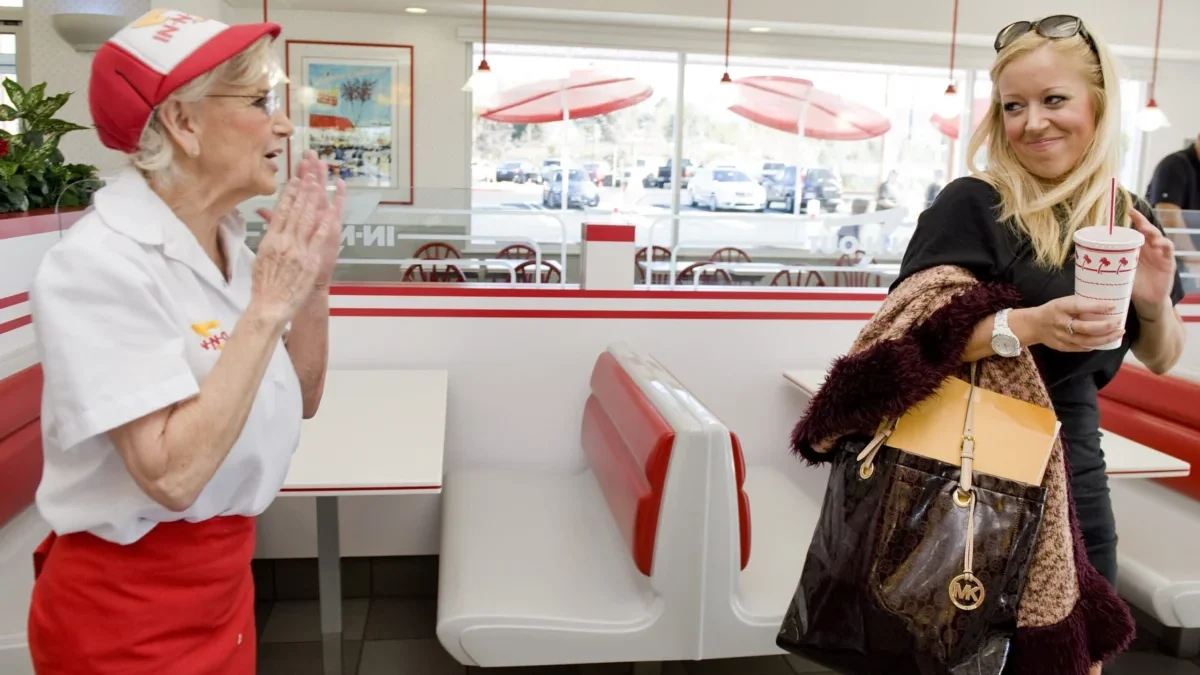
The enduring legacy of In-N-Out Burger, a staple of the American West, has recently become the subject of intense public speculation following the relocation of its billionaire owner, Lynsi Snyder, to Tennessee. As one of the most recognizable family-owned restaurant chains in the United States, In-N-Out occupies a unique position in the cultural landscape, balancing aggressive expansion with a fiercely guarded reputation for quality and consistency. Despite shifting her personal residence, Snyder has categorically dismissed rumors that the company intends to abandon its California heritage, characterizing such a move as an illogical business decision that would undermine the brand’s foundational identity.
A Legacy Rooted in the Golden State
The story of In-N-Out began in 1948, when Harry and Esther Snyder opened the first drive-thru hamburger stand in Baldwin Park, California. The concept was simple: fresh, never-frozen ingredients served with a focus on speed and customer service. Over the subsequent seven decades, the company evolved from a local Southern California favorite into a regional powerhouse.
Lynsi Snyder, the granddaughter of the founders and the sole heir to the business, assumed the presidency in 2010. Under her stewardship, the company has maintained its private status, resisting the pressures of public market fluctuations and private equity buyouts that have transformed much of the fast-food industry. This independence has allowed the company to grow at a deliberate, measured pace. Today, the chain operates hundreds of locations across the American West, including expansion into Nevada, Arizona, Utah, Texas, Oregon, Colorado, Idaho, and Washington.
The Tennessee Transition and Corporate Misconceptions
The conversation regarding the company’s future shifted in 2024 when reports emerged that Snyder and her family had relocated to Tennessee. For many industry observers, the move mirrored a broader trend of "corporate flight" from California. High-profile companies, including Tesla and SpaceX, have famously moved their headquarters to Texas, citing concerns over regulatory environments, taxation, and the general ease of conducting business.
Snyder, who holds an estimated net worth of $7.3 billion, acknowledged that her decision to leave California was influenced by the challenges of raising a family in the state, as well as the administrative difficulties of operating a massive business in a highly regulated environment. However, she was quick to draw a firm line between her personal residence and the corporate headquarters. In a recent interview with actor Terry Crews, published on the company’s official platform, Snyder addressed the rumors head-on.
"There were rumors about ‘they’re gonna close all their California stores.’ I’m like, where did this even come from? That’s unimaginable. I can’t even imagine that—it would be the dumbest business decision ever," Snyder stated. She reaffirmed that California remains the company’s "DNA," serving as the bedrock upon which the brand was built and where it continues to flourish.
Navigating a Changing Regulatory Landscape
The speculation surrounding In-N-Out’s potential departure is not entirely unfounded, given the company’s history of friction with California state authorities. The restaurant chain has occasionally found itself at odds with local mandates, most notably during the COVID-19 pandemic. In 2021, the company faced significant public scrutiny when it refused to enforce municipal ordinances requiring staff to verify the vaccination status of indoor diners, leading to the temporary closure of its San Francisco location.
Furthermore, the economic reality of operating in California has shifted significantly. The state’s 2024 implementation of a $20-per-hour minimum wage for fast-food workers forced the industry to absorb substantial labor cost increases. In-N-Out, which has long been known for paying above-market wages, was compelled to adjust its menu pricing to compensate for these rising operational expenses. While these economic pressures are significant, they have not deterred the company’s growth plans. Snyder confirmed that the firm continues to prioritize the development of new locations within California, even as it looks toward expansion in states such as Mississippi, Arkansas, Oklahoma, and New Mexico.
The Philosophy of "Slow and Steady" Expansion
In-N-Out’s expansion strategy is frequently contrasted with that of larger national competitors. While other chains prioritize rapid national footprint growth, In-N-Out adheres to a logistical mandate that requires all restaurants to be within a specific distance of their distribution centers to ensure that ingredients remain fresh. This "slow and steady" approach has created a scarcity-driven cult following, with new locations in states like Texas and Colorado often experiencing massive queues that can last for hours.
Snyder emphasizes that this growth model is non-negotiable. The company’s refusal to sacrifice quality for the sake of speed is a core tenet of the brand’s value proposition. As the company eyes further expansion into the Southern and Midwestern United States, the primary constraint remains the development of the necessary supply chain infrastructure. Snyder maintains that the company will not be able to fulfill every request for a new location, ensuring that the brand’s reputation for quality remains protected.
Cultural Impact and Market Implications
The loyalty In-N-Out commands is an outlier in the quick-service restaurant (QSR) sector. Market research consistently shows that the brand maintains one of the highest customer satisfaction scores in the industry. For many, the brand serves as a symbol of the "California Dream." The fear that the company might depart the state is rooted in a collective concern that the loss of such a business would signify the end of an era.
From a business perspective, the separation of the owner’s domicile from the corporate headquarters is a common practice among high-net-worth individuals, though it is often misconstrued by the public as a signal of divestment. Financial analysts note that In-N-Out’s decision to maintain its headquarters in California provides stability to its thousands of employees in the region. The company’s continued commitment to the state, despite the aforementioned regulatory hurdles, serves as a testament to the brand’s resilience and its deep-seated connection to its origin story.
Looking Toward the Future
As Snyder looks toward the future, her focus remains on preserving the core values established by her grandparents while managing the complexities of a multi-state operation. Her personal move to Tennessee, which she describes as a "God thing" that emerged through prayer and family discussion, has not altered the trajectory of the company. Instead, it has served to highlight the divide between the public perception of the brand and its actual operational strategy.
In the final analysis, In-N-Out’s trajectory appears to be one of sustained regional growth rather than departure. By bifurcating her personal life and her professional duties, Snyder has navigated a complex public relations challenge, clarifying that the "California DNA" of In-N-Out is a permanent fixture. As the chain expands into new territories, it will continue to carry the branding and operational standards that have defined it since 1948, ensuring that whether a customer is in Los Angeles, Dallas, or Nashville, the experience—and the quality of the product—remains synonymous with the legacy of the Snyder family.
For the time being, the rumors of a California exit have been thoroughly debunked by the company’s leadership. In-N-Out’s commitment to its birthplace is not merely a marketing slogan, but a fundamental aspect of its business strategy, one that ensures that the iconic burger chain will remain a permanent fixture of the California landscape for the foreseeable future.