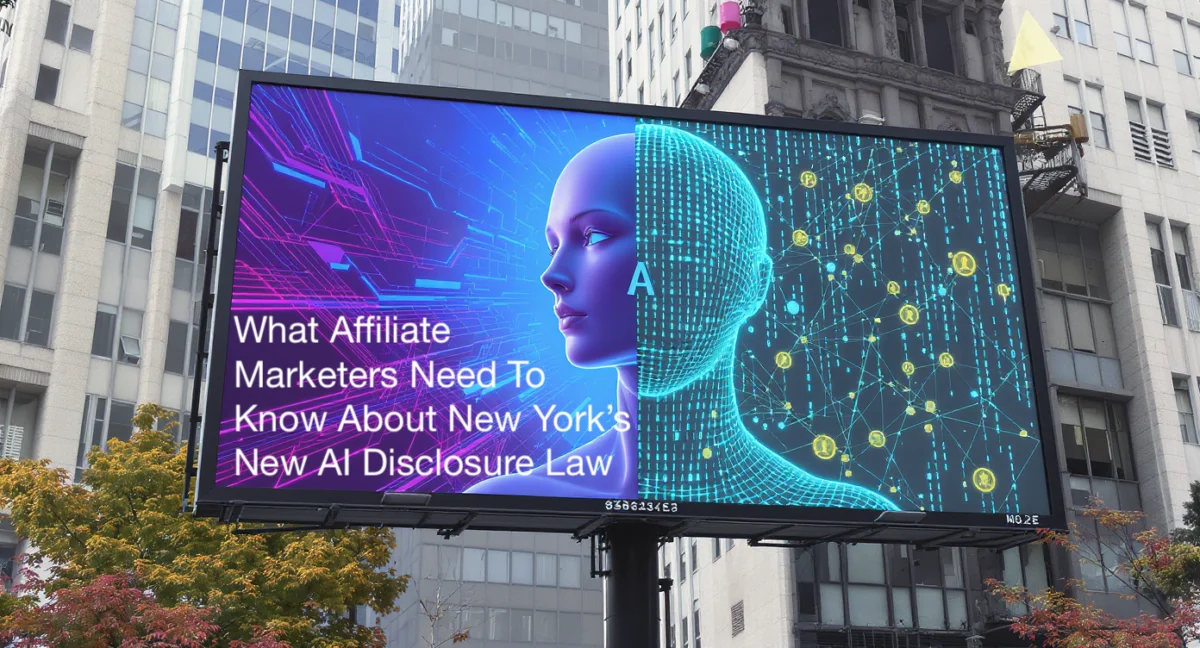
The rapid ascent of generative artificial intelligence has fundamentally altered the landscape of digital advertising, granting brands unprecedented capabilities to create high-fidelity content at a fraction of traditional production costs. However, this technological leap has triggered a significant regulatory response in New York, where state lawmakers have moved to curb the potential for consumer deception. On December 11, 2025, New York Governor Kathy Hochul signed S.8420-A/A.8887-B into law, establishing a pioneering mandate that forces transparency upon the use of synthetic human likenesses in commercial advertisements. This legislation marks a turning point in the intersection of digital marketing and consumer protection, setting a precedent that may soon be mirrored by other jurisdictions across the United States.
The Regulatory Landscape and Legislative Timeline
The impetus for this legislation stems from a growing legislative concern that AI-generated avatars—indistinguishable from real human actors—could lead consumers to believe they are receiving endorsements or information from authentic individuals. The passage of this bill is the culmination of a broader effort by state legislatures to address the "black box" nature of AI.
Following months of drafting and committee hearings, the bill moved through the New York State Senate and Assembly before receiving the Governor’s signature in late 2025. The law is scheduled for full implementation by June 2026. This six-month window provides a critical, though compressed, timeframe for brands, marketing agencies, and affiliate networks to audit their creative pipelines and update their compliance protocols. The law arrives in a complex regulatory environment, as it follows a recent executive order from the White House aimed at fostering AI innovation while preempting state laws that might conflict with a unified national policy. Whether this New York statute will withstand potential federal preemption challenges remains a subject of intense debate among legal scholars and industry lobbyists.
Understanding the Synthetic Performer Mandate
At the core of the new statute is the definition of a "synthetic performer." The law defines this as a digital asset created or modified by generative AI or complex software algorithms that creates the visual impression of a human performance, provided that the performance is not of a recognizable, identifiable natural person.
The mandate is explicit: any entity—including firms, corporations, or individual marketers—that produces an advertisement for the public in New York must provide a "conspicuous disclosure" when a synthetic performer is utilized. The burden of compliance falls on those with "actual knowledge" of the AI’s use. While the legislation does not dictate the exact wording of the disclosure, it emphasizes that the notice must be "prominent, unavoidable, and noticeable." Burying a disclosure in terms and conditions or using fine-print disclosures at the bottom of a webpage will likely fail to meet the state’s legal threshold.
Economic Implications and Statutory Penalties
The financial stakes for non-compliance are substantial. By formalizing these requirements into the state’s general business law, New York has established a clear penalty structure designed to deter deceptive practices. For a first-time violation, the state may impose a civil penalty of $1,000. For any subsequent violation, this figure increases to $5,000 per instance.
For large-scale affiliate marketing campaigns that run across multiple platforms and target thousands of consumers simultaneously, these penalties can aggregate rapidly. Beyond the direct civil penalties, advertisers face the risk of litigation and significant reputational damage. In an era where brand trust is a primary driver of consumer behavior, being labeled as deceptive or non-transparent can have long-term consequences that far outweigh the cost of regulatory fines. Furthermore, agencies may find themselves embroiled in contract disputes if they fail to disclose the use of synthetic performers to their clients, leading to a ripple effect of liability across the supply chain.
Exclusions and Navigating Regulatory Gray Areas
Not every use of AI is subject to this disclosure mandate. The law carves out specific exemptions to ensure that artistic and narrative creativity is not stifled. Advertisements for "expressive works"—such as motion pictures, television shows, streaming content, and video games—are largely exempt, provided that the synthetic performer’s role in the advertisement aligns with their role in the underlying work.
Additionally, the law excludes AI used solely for language translation. A notable, albeit narrow, exemption is also provided for media outlets and platforms that act as distributors of advertisements, likely intended to protect publishers from being held liable for the creative decisions of the third-party advertisers who purchase space on their platforms. Despite these exclusions, the burden of proof rests with the advertiser. Determining whether a specific campaign qualifies as an "expressive work" will require careful legal vetting, as the line between a commercial advertisement and a creative project is often blurred in modern influencer marketing.
The Broader Context: Right of Publicity and Digital Replicas
The disclosure law is part of a two-pronged legislative effort to regulate AI and likeness rights in New York. Running parallel to this disclosure requirement is the expansion of the state’s posthumous right of publicity law (S.8391/A.8882). This legislation addresses the unauthorized use of a deceased person’s name, voice, or likeness—the so-called "digital replica."
The posthumous law requires explicit consent from the heirs or executors of a deceased individual before their likeness can be used commercially. The statute specifically targets "deceased personalities" who were domiciled in New York and held commercial value at the time of their passing. Violators face statutory damages of at least $2,000 or the total profits generated from the unauthorized use, whichever is higher, alongside the potential for punitive damages. Combined, these two laws signal that New York is positioning itself as one of the most stringent jurisdictions regarding the intersection of human rights, AI technology, and commercial exploitation.
Strategic Recommendations for Digital Marketers
The transition toward mandated AI transparency requires a proactive, rather than reactive, approach. Advertisers should consider the following steps to mitigate their risk profile:
- Internal Audit Protocols: Agencies and brands should implement a rigorous audit process for all creative assets. Before any ad goes live, teams must identify if a synthetic human likeness is present and ensure that the appropriate disclosure mechanisms are integrated into the creative design.
- Contractual Indemnification: Marketers must update their service agreements with influencers, AI vendors, and content creators. These contracts should include warranties and representations regarding the use of AI and clearly define the liability for any failure to comply with New York’s disclosure requirements.
- Legal Consultation: Given the complexity of defining "conspicuous disclosure" and the evolving nature of federal versus state authority, firms should seek counsel from attorneys specializing in FTC regulatory compliance and internet law. Relying on generic templates or "best guesses" is no longer a viable strategy in the current enforcement climate.
- Monitoring National Trends: While New York has led the charge, other states are actively reviewing similar legislation. A campaign that is compliant in New York may need to be adjusted for compliance in other states as the regulatory patchwork continues to expand.
Final Outlook
The era of unchecked AI deployment in advertising is coming to an end. As lawmakers seek to balance the benefits of generative technology with the necessity of protecting consumers from misinformation, transparency will become the new standard for digital success. By viewing these regulations as a framework for building consumer trust rather than an obstacle to creativity, brands can differentiate themselves as leaders in the ethical use of technology. However, the costs of non-compliance—both legal and financial—make it clear that the time for careful, deliberate planning is now. With the June 2026 deadline approaching, the industry is entering a new phase of accountability that will fundamentally reshape how digital advertising is produced, distributed, and consumed.