The modern political landscape has undergone a foundational shift in how citizens consume information, make decisions at the ballot box, and interact with governing institutions. Recent survey data reveals that a significant majority of voters now rely on digital content creators and social media influencers rather than traditional journalism for their political news. This transition is particularly acute among younger demographics, fundamentally altering political campaigns, government communication strategies, and the structural integrity of public discourse.
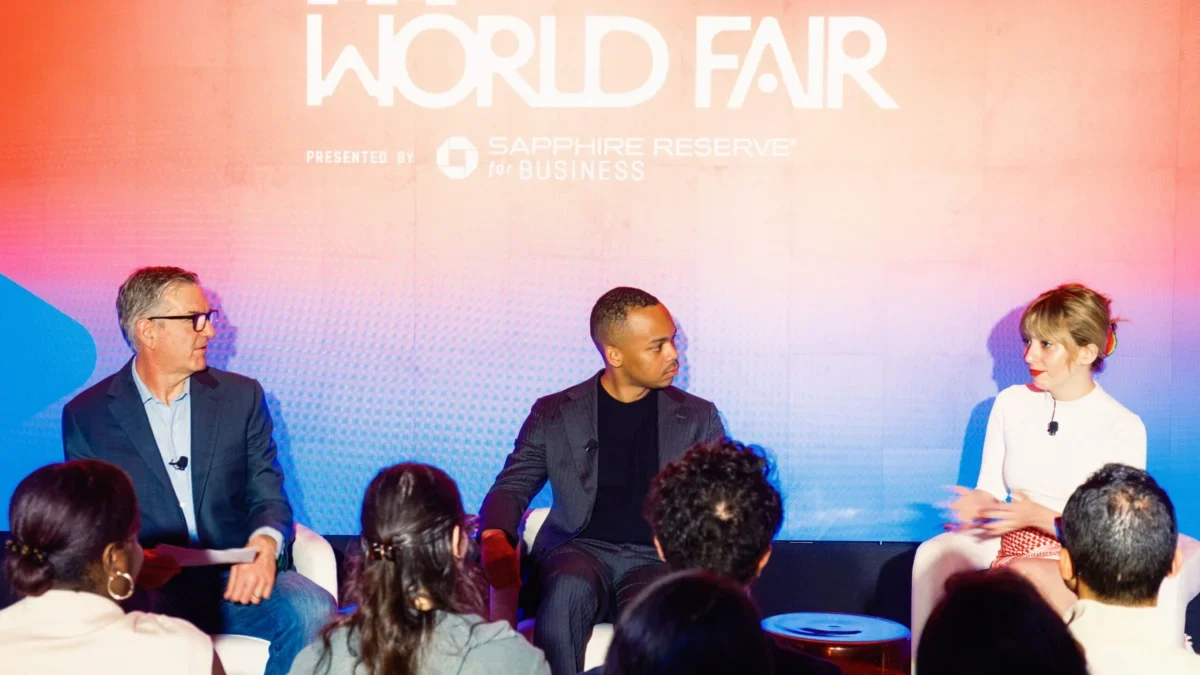
Against the backdrop of a historic legislative wave that saw sweeping changes across the United States Congress, media experts, political operatives, and former candidates gathered at the WIRED World Fair in Miami to dissect this transformation. Featuring perspectives from across the political spectrum—including former Democratic House candidate Kat Abughazaleh and Republican strategist CJ Pearson—discussions centered on the expanding role of algorithms, the mainstreaming of influencer-led briefings, and the growing concern over the erosion of a shared civic reality.
The Ascendancy of Digital Creators in Political Consumption
For decades, traditional news organizations—ranging from legacy print newspapers to major television networks—held a virtual monopoly on political reporting and voter education. Today, that hierarchy has inverted. According to recent findings from a YouGov survey of 2,000 adults, nearly 65 percent of respondents reported getting their political information primarily from digital creators and social media influencers rather than conventional news outlets.
When isolating Generation Z, that statistic climbs to an extraordinary 77 percent. This generational divide underscores a permanent structural shift rather than a temporary trend. Younger voters, who have grown up with smartphones as their primary window to the world, naturally gravitate toward personalities who communicate in native digital formats—utilizing short-form video, rapid-fire commentary, and personalized engagement.
This transformation in information consumption was visibly on display during recent election cycles, culminating in a dramatic political shift that saw Democrats secure sweeping victories in both the House and Senate. Yet, regardless of partisan outcomes, the primary gatekeepers of political knowledge are no longer newspaper editors or network anchors; they are independent creators operating on platforms such as TikTok, YouTube, and X (formerly Twitter).
Chronology of the White House Strategy Shift
The integration of digital creators into the apparatus of American governance did not happen overnight. It represents a deliberate, multi-year evolution in how administrations attempt to capture public attention.
In the years leading up to the current administration, political campaigns slowly began allocating resources to social media personalities, recognizing their ability to reach disengaged demographics. However, the Trump administration accelerated this trend by institutionalizing influencer access at the highest levels of government.

Last year, former White House Press Secretary Karoline Leavitt officially opened formal press briefings to digital creators, breaking decades of precedent that reserved those seats strictly for accredited members of the White House Correspondents’ Association. Shortly thereafter, the administration hosted influencer-specific briefings designed to cater directly to prominent online commentators. While these moves were championed by supporters as a democratization of access, they drew heavy criticism from traditional media watchdogs. Detractors argued that the administration was intentionally favoring commentators who asked softball questions, all while restricting or cracking down on the presence of traditional journalists in the press room.
This playbook quickly expanded beyond the executive mansion. Multiple federal agencies began adopting the White House’s strategy, recognizing that traditional press releases no longer suffice to capture public interest in an era defined by fractured media consumption.
The Mechanics of Attention: Perspectives from the Front Lines
Speaking at the WIRED World Fair, Republican strategist and former member of the RNC’s Youth Advisory Council CJ Pearson defended the administration’s digital-first approach as a fundamental necessity of modern communication.
"It’s a very chronically online administration," Pearson noted during the panel discussion. "With how short people’s attention spans are, you have to make [things] interesting." Pearson argued that engaging with creators is simply the cost of doing business in an environment where citizens are constantly bombarded with competing stimuli.
However, Pearson acknowledged that the strategy has not been without missteps. He pointed to the administration’s decision last year to distribute portions of sensitive investigative files—specifically portions of the Epstein documents—to 15 right-wing creators as a tactical error that complicated the administration’s messaging.
Conversely, Kat Abughazaleh—a prominent YouTuber, former Media Matters researcher, and Democratic congressional candidate in Illinois—viewed the administration’s deep embrace of online subcultures through a much darker lens. Abughazaleh argued that the strategy goes beyond mere outreach, serving instead to degrade public discourse and promote extremist tropes.
As evidence, Abughazaleh cited the Department of Education’s recent promotion of the "Malfoid" meme—a gender-bent, fascist-leaning caricature inspired by Harry Potter—which she argued was deliberately tailored to appeal to an online audience of disaffected young men and internet subcultures. Furthermore, she criticized the administration’s use of artificial intelligence-generated advertisements depicting aggressive immigration enforcement actions under Immigration and Customs Enforcement (ICE). According to Abughazaleh, such campaigns turn "cruelty into content," normalizing brutality while actively eroding the public’s attention span.
"They’re trying to ruin your attention span," Abughazaleh stated.
Clashing Ideologies and the Reality of Political Polarization

The Miami panel provided a microcosm of the broader ideological fractures dividing the United States. Abughazaleh and Pearson clashed repeatedly on substantive policy issues and historical terminology.
The debate grew particularly testy when discussing immigration enforcement facilities, with Abughazaleh consistently utilizing the term "concentration camps" to describe ICE detention centers—a phrase rooted in her history of activist engagement, which included being arrested while protesting outside an ICE facility last year (charges that were subsequently dropped following allegations of prosecutorial misconduct before a grand jury). Pearson, meanwhile, defended the administration’s border policies and pushed back against characterizations of government actions as authoritarian.
Another flashpoint centered on the transformation of social media platforms themselves. Pearson defended Elon Musk’s stewardship of X, characterizing the platform as a crucial "bastion of free speech." Abughazaleh and other critics, however, argued that changes to the platform’s moderation policies have amplified hate speech, misinformation, and partisan vitriol.
Echo Chambers, Algorithms, and the Threat to Democracy
Despite their stark political disagreements, both panelists converged on a sobering conclusion: the reliance on algorithmic content delivery systems is actively manufacturing impenetrable ideological echo chambers for young Americans across the political spectrum.
"Algorithms show us what you want to see," Pearson explained, noting that friends on the left frequently send him political articles and viewpoints that he has never encountered in his own curated feed. This observation led Pearson to pose a fundamental question for the digital age: "The deeper question is, is that good for society or for democracy?"
Abughazaleh concurred with this assessment, highlighting the societal cost of fractured information ecosystems. "We have no shared reality," she added.
Implications for the Future of Governance and Media
The shift toward influencer-driven politics carries profound implications for the future of democratic governance. When citizens no longer consume news from a shared set of vetted, factual baselines, democratic compromise becomes increasingly difficult. Policymakers are incentivized to optimize governance for virality rather than efficacy, transforming complex legislative debates into short-form entertainment meant to trigger emotional engagement.
As digital creators continue to displace traditional journalists as the primary arbiters of political reality, political parties on both sides of the aisle will be forced to adapt. For campaigns and administrations, ignoring the influencer ecosystem is no longer a viable option. However, as the panel in Miami made clear, the rush to meet voters where they are online risks trading substantive debate for algorithmic spectacle, leaving the health of American democracy hanging in the balance of the next viral feed.