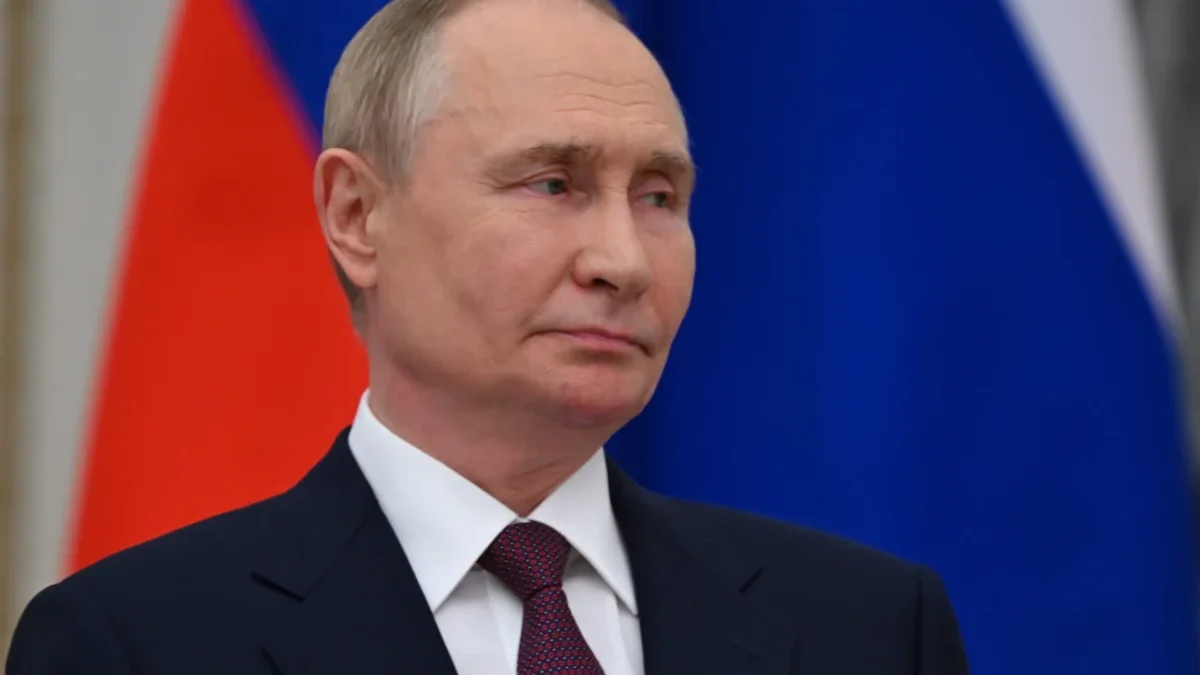
The landscape of modern warfare and global telecommunications has shifted into an era of unprecedented private sector influence, as evidenced by recent disclosures from the Kremlin regarding the burgeoning relationship between Russian leadership and SpaceX CEO Elon Musk. On October 29, 2026, speaking at the Russia-Africa Summit, President Vladimir Putin confirmed that he and the billionaire entrepreneur are in direct, "close contact" regarding the development of Rassvet, a Russian satellite project designed to compete directly with SpaceX’s ubiquitous Starlink constellation. This revelation, coming at a time of high geopolitical volatility, has intensified international scrutiny regarding the role of private technology firms in sovereign conflicts.
The Emergence of Rassvet and the Satellite Arms Race
For years, the global low-Earth orbit (LEO) market has been dominated by Starlink, which currently maintains a fleet of over 5,000 satellites, providing high-speed internet to remote regions, civilian infrastructure, and military units globally. Russia, recognizing the strategic disadvantage of relying on Western-controlled orbital infrastructure, has fast-tracked the Rassvet project.
During his address, President Putin offered an unusually candid appraisal of his American counterpart. "Elon Musk is a genius, truly a genius," Putin remarked to an audience of international delegates. "He has already had more than 5,000 such satellites in orbit, while we are only taking the first steps."
Industry analysts interpret this public praise not merely as admiration, but as a tactical signal. By acknowledging the technological superiority of SpaceX, the Kremlin is positioning itself to either acquire, license, or mimic the capabilities that have fundamentally altered the theater of the Ukraine conflict. The "close contact" mentioned by Putin suggests that discussions may involve the potential integration of Russian hardware or software protocols with existing orbital technologies, or perhaps a broader negotiation regarding the regulatory environment of space-based communications in the Eurasia region.
A Chronology of Connectivity and Conflict
The intersection of Starlink and the Russo-Ukrainian War has been marked by a series of technical and diplomatic escalations that have kept global policymakers on edge.
- February 2022: Following the full-scale Russian invasion of Ukraine, SpaceX provided thousands of Starlink terminals to the Ukrainian government, effectively maintaining the country’s digital and military communications infrastructure.
- 2023–2024: As the conflict stabilized into a grueling war of attrition, Starlink became an essential component for Ukrainian drone operations, artillery targeting, and real-time intelligence sharing.
- October 2026: Following a move by the United States government to ease specific economic sanctions on Russia, the geopolitical environment shifted. Simultaneously, Ukrainian forces reported a sudden, 10-day blackout in connectivity for drone units.
- October 24, 2026: Following widespread international reports of the outages, Elon Musk issued a statement on X (formerly Twitter), suggesting that the usage of Starlink for "offensive drone strikes to kill people" violated the company’s terms of service.
- October 29, 2026: President Putin publicly confirmed his engagement with Musk, heightening concerns among Western intelligence agencies regarding the security of the Starshield network.
The Implications of Private Control Over Military Assets
The concern regarding the "Starshield" network—the militarized derivative of Starlink—revolves around the concept of corporate sovereignty. Unlike traditional defense contractors, such as Lockheed Martin or Raytheon, which operate under strict government oversight and contractual obligations, SpaceX functions as a private entity with the ability to unilaterally toggle access to critical infrastructure.
When Musk claimed that the potential shutdown of Starlink would cause the Ukrainian front line to "collapse immediately," it was viewed by many military experts as a chilling statement of fact rather than a political threat. This creates a strategic vulnerability: a single individual now wields the power to dictate the operational capacity of a nation at war.

The recent reports—conflicting between directives from the White House and orders from Musk himself—regarding the restriction of satellite access underscore a breakdown in the traditional chain of command. If the United States government cannot guarantee that its technological partners will maintain service in a conflict zone, the strategic value of such partnerships is fundamentally compromised.
Official Responses and International Repercussions
The White House and the Pentagon have remained cautious in their public statements, yet sources within the Biden-Harris administration have indicated that the U.S. government is increasingly concerned about the potential for "dual-track" diplomacy. If the head of a major U.S. defense provider is maintaining a direct, private line of communication with the leader of an adversary state, it creates a potential conflict of interest that could violate the Logan Act or other statutes regarding unauthorized diplomatic negotiations.
European leaders, particularly those within the European Space Agency (ESA), have expressed frustration, arguing that the reliance on a single billionaire for European security infrastructure is unsustainable. Plans for a European-led satellite constellation, "IRIS²," have been accelerated, though officials admit that the project is years away from matching the operational maturity of Starlink.
Technical and Strategic Analysis
From a technical perspective, the Rassvet project aims to close the "satellite gap." Currently, the Russian military relies on a combination of legacy satellite systems that lack the low-latency, high-bandwidth capabilities of Starlink. By seeking "contact" with Musk, the Russian leadership is likely exploring whether the underlying technology of large-scale constellation management can be replicated or secured through third-party logistics.
Furthermore, the integration of space-based internet into modern military doctrine has rendered traditional electronic warfare, such as GPS jamming, less effective. If Russia can either neutralize Starlink or develop a viable, high-performing alternative, they regain the ability to disrupt Ukrainian tactical communication, thereby shifting the momentum of the ground war.
The Path Forward: A World of Privatized Geopolitics
The interaction between Putin and Musk represents a broader, tectonic shift in international relations. We are moving toward a world where private corporations possess the resources of mid-sized nations. As these companies become the backbones of national security, the ability of states to enforce policy and conduct warfare is increasingly dependent on the cooperation—or the whim—of a few key executives.
The immediate future will likely see increased legislative pressure on SpaceX. In the United States, there is growing bipartisan support for the creation of a regulatory framework that would prevent any company providing critical defense services from engaging in private negotiations with hostile heads of state. Whether such legislation can pass in a polarized climate, and whether it could be effectively enforced upon a company with the unique technical leverage of SpaceX, remains a matter of intense debate.
For now, the world watches as the boundaries between private enterprise and statecraft continue to dissolve. The "close contact" between the Kremlin and the CEO of SpaceX serves as a stark reminder that in the 21st century, the most significant geopolitical negotiations may no longer take place in the halls of the United Nations, but in the private communications of the individuals who control the hardware of the future. As the conflict in Ukraine continues to evolve, the status of the orbital infrastructure supporting it will remain the single most critical, and most contested, element of the war effort.