Effective nomenclature is the silent architecture of any successful digital product. In the realm of user interface (UI) design and software development, the language used to define components, variables, and design tokens dictates the efficiency of communication between cross-functional teams. When terminology is inconsistent, technical debt accumulates, developer velocity slows, and user experience (UX) suffers. This guide examines the critical methodologies, industry-standard resources, and strategic frameworks necessary for creating a scalable and intuitive naming taxonomy.

The Linguistic Challenge in Digital Architecture
Naming is fundamentally an exercise in cognitive mapping. In professional environments, the lack of a standardized lexicon often leads to "semantic friction," where designers, developers, and product managers describe the same UI element using different terms. For instance, a single interactive element might be referred to as a "button," a "call-to-action," or an "action-trigger" depending on the stakeholder’s background.
Industry analysis suggests that teams without a shared naming convention spend approximately 20% more time on maintenance and onboarding compared to those with documented design systems. This confusion is not merely aesthetic; it is a systemic hurdle that complicates the implementation of design tokens and the maintenance of CSS architectures. Generic names like "blue-box" offer no context, while overly specific names such as "header-login-button-small" prevent component reuse, forcing engineers to create redundant code.

Foundational Resources for Naming Conventions
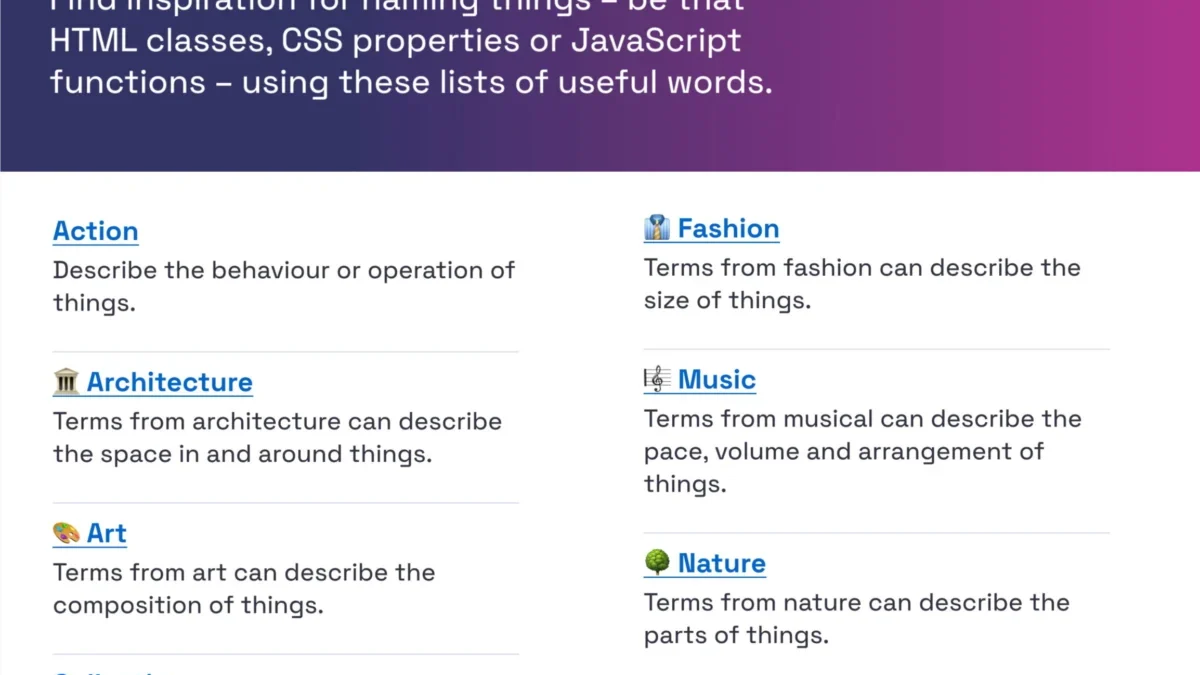
To move beyond ad-hoc naming, practitioners are increasingly turning to curated repositories that provide linguistic structure. Resources like Classnames offer thematically grouped vocabularies that help teams categorize components based on behavior, hierarchy, and function. By drawing from fields as diverse as architecture, music, and publishing, these tools encourage designers to adopt metaphors that are both descriptive and abstract enough to remain flexible.
For color systems, the complexity is even higher. Developers often grapple with legacy hex codes that lack descriptive meaning. Modern design systems now prioritize descriptive naming conventions, such as "action-primary-hover" or "surface-secondary-muted," over visual descriptors like "dark-blue-light." Tools such as the Color Parrot repository serve as essential references, hosting over 30,000 unique color names that help maintain consistency across global design teams.

Structuring Layers and Component Libraries
The standardization of layer and group naming is the first step toward building a scalable design system. Best practices, as outlined by design experts like Javier Cuello, emphasize that a name must be logical, concise, and entirely decoupled from visual properties. A robust naming structure typically follows a hierarchical path:
- Category: The broad grouping of the element (e.g., "Button," "Input").
- Type: The specific variant (e.g., "Primary," "Ghost").
- State: The interaction status (e.g., "Hover," "Disabled," "Active").
By adhering to this structure, design systems remain "source-of-truth" compliant, meaning any change in the base component propagates predictably across all instances. This is particularly vital in large-scale organizations like Intuit, which manages a vast ecosystem of products including QuickBooks and Mailchimp. Their shift toward a flexible token taxonomy—designed to serve multiple brands under one umbrella—highlights the necessity of separating foundational values (primitives) from semantic usage.

The Role of Design Tokens in Scalable Systems
Design tokens are the atomic units of a design system. They store visual attributes such as spacing, color, and typography in a format that is platform-agnostic. The challenge lies in creating a taxonomy that is both intuitive and extensible.
Recent trends indicate a move toward four-tier token architectures:

- Global Tokens: Raw values (e.g., "blue-500").
- Alias Tokens: Context-specific values (e.g., "brand-primary").
- Component Tokens: Usage-specific values (e.g., "button-primary-background").
- System Tokens: Dynamic values that account for themes and modes (e.g., "dark-mode-surface").
The Vodafone UK Design System provides a prominent case study in this area. Their "Variables Taxonomy Map" effectively visualizes how these tiers connect. By mapping these dependencies, teams can ensure that a color update at the brand level automatically cascades to the correct semantic components without manual intervention.
Improving Feature Discoverability Through Language
Naming is not limited to internal development; it is a primary driver of product adoption. Feature adoption cycles are frequently stunted by poor nomenclature. If a feature’s name does not clearly articulate the value proposition or the "job-to-be-done," users are unlikely to engage with it.
Research into UX writing suggests that the most effective feature names mirror the user’s internal vocabulary. When a product team names a feature, they should conduct linguistic research—asking users to describe the problem they are trying to solve in their own words. If the engineering term is "Data Synchronization Engine" but the user calls it "Auto-Save," the latter is significantly more discoverable. Aligning feature names with user mental models reduces the learning curve and increases long-term retention.
Strategic Implications and Future Directions
The evolution of design systems is trending toward automation. With the rise of AI-assisted coding and design, the consistency of naming conventions has become a prerequisite for machine-learning tools to interpret design intent correctly. If a component library is poorly named, AI agents will struggle to generate accurate code snippets or interpret design constraints, leading to a breakdown in automated workflows.

Furthermore, as companies expand into multi-brand architectures, the ability to "theme" systems via naming becomes a competitive advantage. A well-named system allows a company to rebrand a product—or launch a new one—by simply swapping the primitive token values while keeping the component names identical. This modularity reduces time-to-market for new features by weeks, if not months.
Conclusion: A Collaborative Endeavor
The process of naming is ultimately a collaborative, ongoing negotiation between engineering, design, and product management. It is a form of documentation that never stops evolving. Teams that invest in creating a "Living Dictionary"—a shared, accessible, and version-controlled document of terms—drastically reduce the "tribal knowledge" required to build and maintain their software.

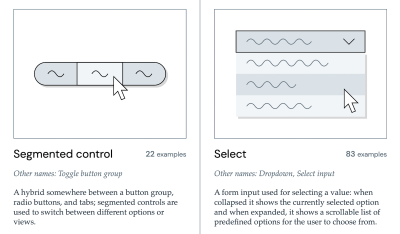
The resources mentioned—from the Component Gallery for UI inspiration to the Onym repository for branding—are not just tools; they are foundational assets. By treating naming as a critical technical requirement rather than an afterthought, organizations can eliminate the confusion that plagues modern digital product development. As the web continues to grow more complex, the ability to clearly define, categorize, and communicate the components of our digital world will remain one of the most important skills in the industry.
In summary, the next time a naming conflict arises within a team, it should not be dismissed as a minor detail. It should be treated as an opportunity to refine the team’s common language, strengthen the design system’s architecture, and improve the final user experience. The clarity of the code is only as strong as the clarity of the language used to describe it.