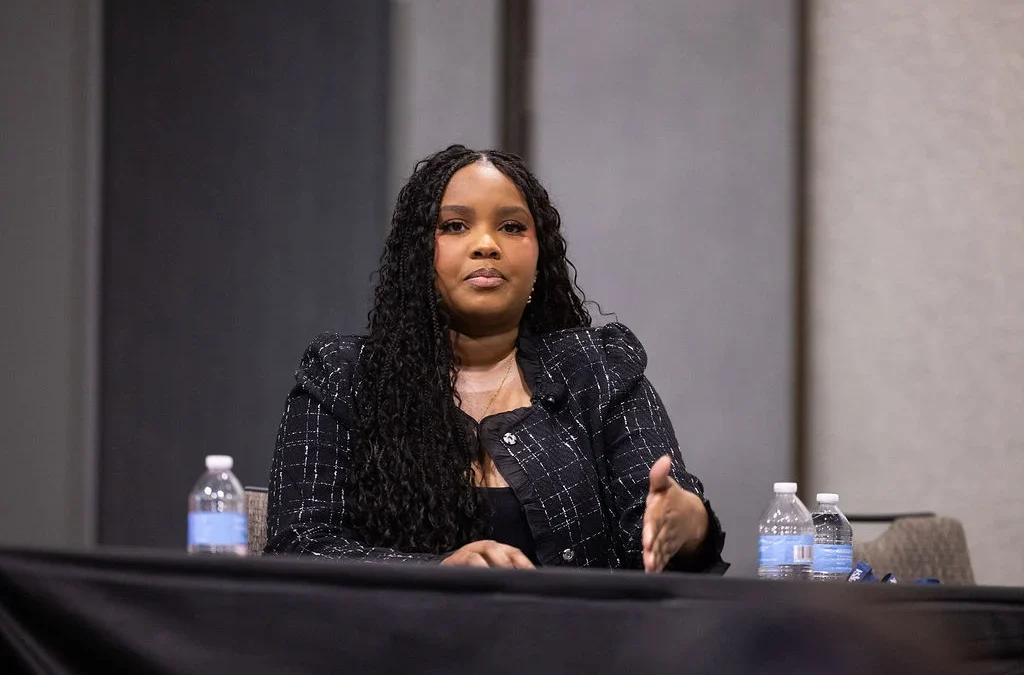
The event, which served as a crucible for industry discourse, highlighted a fundamental shift in how leadership is perceived and practiced within the communications sector. At the heart of this transformation was a keynote session featuring Sabrina Browne, co-chair of the PRSA Black Voices Affinity Group, and Fatou Barry, founder and CEO of The PR Girl Manifesto. Their dialogue addressed a pressing, industry-wide question: What happens when women stop waiting for traditional institutions to define their leadership and instead begin forging their own paths?
A Convergence of Paths at ICON 2026
The PRSA ICON 2026 conference brought together thousands of communications professionals, academics, and industry leaders to discuss the rapid evolution of public relations in an era defined by artificial intelligence, geopolitical instability, and a shifting media landscape. Within this high-stakes environment, the session titled The Power of Presence: Women Defining the Future of PR stood out for its focus on the human and structural elements of professional advancement.
The pairing of Browne and Barry was deliberate. Sabrina Browne, a seasoned communications strategist, has navigated the complexities of global corporate environments, offering counsel to C-suite executives and managing high-stakes reputational challenges. Her career trajectory is rooted in the traditional, high-level corporate ladder, where she has leveraged her position to advocate for equity and representation. Conversely, Fatou Barry represents the modern entrepreneurial spirit. As the founder of The PR Girl Manifesto, she identified a systemic void in the industry—a lack of centralized, accessible support networks for women of color—and built an organization to fill it.
Their combined perspectives provided a comprehensive view of the industry, bridging the gap between established institutional influence and grassroots community building.

Chronology of the Shift in Industry Leadership
To understand the weight of the conversation in Orlando, one must look at the timeline of the industry’s recent evolution. Over the past decade, the public relations sector has seen a marked demographic shift. According to the U.S. Bureau of Labor Statistics, women now comprise more than 60% of the public relations workforce. However, the "broken rung" phenomenon—a term popularized by McKinsey & Company’s Women in the Workplace reports—remains a critical issue, as women, and particularly women of color, continue to face systemic hurdles in reaching the most senior leadership roles.
The conversation between Browne and Barry reflects a growing movement that began to gain significant momentum around 2020. During that year, the global reckoning regarding racial justice forced many industries, including communications, to perform an audit of their internal cultures. The PRSA Black Voices Affinity Group, which Browne leads, emerged as a direct response to the need for sustained advocacy, mentorship, and policy reform within the profession. Meanwhile, platforms like The PR Girl Manifesto capitalized on the digital transformation of networking, utilizing social media and virtual forums to democratize access to mentorship that was previously gated by expensive memberships or exclusive corporate ladders.
Supporting Data and Industry Context
The implications of this shift are supported by a body of data regarding organizational health and leadership. Research from the Harvard Business Review consistently indicates that diverse leadership teams correlate with a 19% increase in innovation revenue. Despite this, the PR industry has historically struggled with retention at the mid-to-senior levels.
A recent industry survey conducted by the Institute for Public Relations (IPR) suggests that 42% of mid-career women in communications are considering leaving their firms, citing a lack of clear advancement pathways and inadequate sponsorship. This data point underscores the necessity of the themes discussed at ICON 2026. Barry’s emphasis on "community as a career safety net" is not merely a social sentiment but a strategic necessity. By building external support systems, professionals are better equipped to navigate the volatility of the current market, including the "great reshuffling" of talent and the frequent pivots necessitated by technological disruptions.
Official Perspectives and Strategic Implications
During the session, Browne emphasized the nuance of "presence." For many, presence is often conflated with mere visibility. Browne argued that in the executive suites where she operates, presence is defined by the ability to influence business decisions, manage crisis, and act as a steward of organizational reputation. "Visibility without sponsorship is a glass ceiling that looks like a window," Browne noted during the session, highlighting the necessity of having advocates within the boardroom who speak on one’s behalf when opportunities for promotion arise.

Barry’s perspective provided the necessary counterbalance. She argued that while corporate advancement is a vital goal, the creation of independent spaces is equally critical for the health of the profession. By building The PR Girl Manifesto, she has created a pipeline for talent that exists outside the purview of any single corporation. This creates a more resilient ecosystem, ensuring that if an individual leaves a firm, their professional network and development resources remain intact.
The Broader Impact on the Communications Profession
The discourse in Orlando has significant implications for how agencies and corporate communications departments will be required to operate in the coming years. The "power of presence" as defined by these two leaders suggests that the next generation of talent will prioritize organizations that do more than offer competitive salaries. They will seek out companies that demonstrate active investment in talent sponsorship, transparent promotion criteria, and inclusive leadership structures.
Furthermore, the integration of entrepreneurial skill sets into traditional corporate roles is becoming a standard expectation. The ability to pivot, to network effectively, and to advocate for one’s own value are no longer "soft skills"—they are foundational competencies.
A Call to Action for Future Leaders
As the session concluded, the challenge issued to the audience was clear: leadership is not an end state but a cycle of contribution. Browne and Barry challenged the attendees—particularly those in senior management—to move beyond passive mentorship. They argued for active sponsorship, where leaders are expected to use their political capital to create opportunities for others.
The legacy of the PRSA ICON 2026 conference, specifically regarding this session, will likely be measured by the actions taken in the months following. With the industry facing increasing pressure to perform in an environment where brand reputation is more fragile than ever, the need for diverse, resilient, and confident leadership has never been greater.
As the industry looks toward the next decade, the message from Browne and Barry serves as both a roadmap and a warning: the future of public relations will be defined by those who have the agency to shape their own environments. Whether through climbing the corporate ladder with strategic intent or by building new, community-driven organizations from the ground up, the path forward for women in PR is being carved by those who understand that presence is the precursor to power.
The success of these initiatives will ultimately depend on the industry’s willingness to evolve. As corporations continue to navigate the demands of a globalized, digitally connected society, the inclusion of voices that have traditionally existed on the periphery of leadership will be the ultimate barometer of success. The session in Orlando was not just a discussion about identity or career development; it was a diagnostic of the industry’s future, confirming that the most effective communicators of tomorrow are those who are already redefining the parameters of power today.