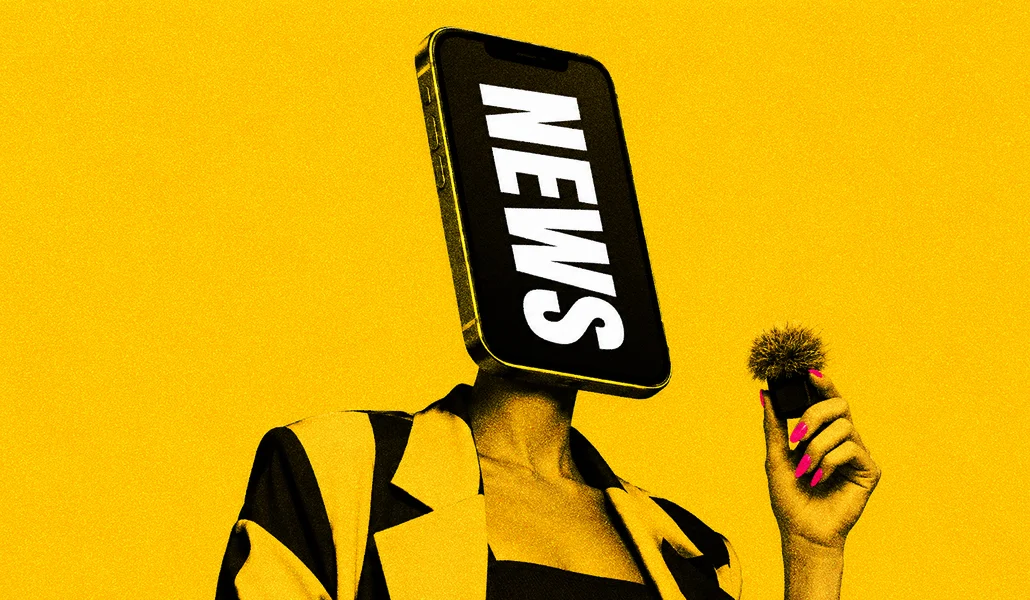
The shifting landscape of media consumption in the United States has reached a critical inflection point, as nearly 60 percent of Americans now rely on social media platforms as their primary source for news, effectively bypassing traditional broadcast and print networks. This seismic migration has birthed a new class of digital professionals: the independent news creator. Whether they are disillusioned veterans of mainstream legacy media or digital natives who cut their teeth on short-form video platforms, these individuals are currently grappling with the paradoxical challenge of building a viable business model in an ecosystem defined by platform dependency, algorithmic instability, and the persistent difficulty of attracting stable brand partnerships.
The Fragmentation of Information Consumption
The transition toward social-first news consumption is not merely a change in habit but a fundamental restructuring of the information economy. A recent study from Syracuse University highlights a growing public perception that differentiates these independent voices from traditional institutional journalism. More than 79% of surveyed Americans report sensing a "meaningful difference" between the two, often viewing independent creators as more authentic or transparent. However, this perceived authenticity comes at a high professional cost.
While the broader creator economy is projected to generate $43.9 billion in 2026, the subset of that industry dedicated to news and political analysis remains in a precarious state. Unlike lifestyle, gaming, or beauty influencers, news creators operate in a high-risk environment. The topics they cover—often political, polarized, or inherently controversial—create a "brand safety" nightmare for corporate advertisers. Consequently, the reliance on traditional ad revenue models has proven insufficient for many, forcing a pivot toward subscription-based infrastructure and direct audience support.
The Anatomy of a Volatile Industry
The timeline of this transition reflects the broader evolution of the internet. The early 2010s were dominated by the rise of social media giants, while the mid-2020s have been defined by the struggle to monetize these platforms. Following the ownership changes at major social platforms in early 2026, many creators reported a marked decline in engagement. For many, the "freedom" of independent reporting has been eclipsed by the "shackles" of algorithmic suppression.
Creators like Adam Mockler, who has cultivated an audience of 2.2 million subscribers on YouTube, represent a new archetype of the digital journalist. Having cut his teeth with independent networks like Meidas Touch, Mockler represents a generation that prioritizes audience trust over sheer scale. When asked about monetization, he echoes a common sentiment among his peers: the necessity of maintaining ideological alignment with sponsors. "I get messages in the inbox all the time from brands that I’m sure are great, but they just don’t fit and they don’t feel authentic," says Mark Istook, a veteran anchor who transitioned from local news to independent creation. For Istook, the sensitivity of the audience to branded content is not a hurdle, but a primary concern that dictates his business strategy.
Institutional Challenges: The Brand Safety Dilemma
From the perspective of talent management firms, the "news creator" category is notoriously difficult to represent. Kurt Stadelman, vp of talent management at Pearpop, characterizes the sector as one of the most challenging in the creator economy. The inherent risk of controversial discourse makes these creators unattractive to risk-averse brands.
This creates a structural deficit in revenue. While a fashion creator can easily integrate a skincare product into a post, a political commentator faces immediate backlash if their editorial stance clashes with a corporate partner’s values. This friction has led many to reconsider the viability of the ad-supported model entirely. Brendan Feldman, director of news, civics, and podcast partnerships at YouTube, notes that there is a "sensitivity" regarding partnerships in this space, though the platform remains committed to courting this new wave of talent. YouTube’s strategy has been to frame itself as a destination for the "renaissance of journalists," providing tools and guidance for those looking to exit traditional newsrooms and establish their own sustainable business operations.
The Pivot to Subscription-Based Sustainability
Recognizing that algorithmic reach is a fickle foundation, many journalists are moving toward direct-to-consumer models. Platforms like Substack, Patreon, and various newsletter-focused tools have become the bedrock of this new economy. The logic is simple: a smaller, paying audience is more valuable than a massive, passive one.
Grant Hermes, an AP Award-winning journalist and host of the Make It Make Sense podcast, argues that the industry made a strategic error decades ago by providing news for free online. "We sort of let the horse out of the barn," Hermes says. "Once we started giving away the news for free online, and then trying to claw it back—that was either an on or off switch."
The subscription fatigue currently being felt by consumers is now driving a new wave of consolidation. Rather than operating in silos, creators are beginning to experiment with collective platforms. The launch of apps like SaySo, which focuses exclusively on short-form video news vetted by creators, represents a significant shift in infrastructure. Ramin Beheshti, CEO of Caliber, the parent company of SaySo, suggests that the future of independent news lies in platforms that prioritize direct revenue for the creator, bypassing the traditional advertising middleman entirely.
Broader Implications for the News Ecosystem
The implications of this shift are profound for the future of the American media landscape. If the primary vehicle for political and social information becomes a collection of independent creators operating on niche subscription platforms, the "shared reality" fostered by traditional journalism may further fragment.
However, there is also a distinct opportunity for increased accountability. By removing the need to appease corporate advertisers or legacy media conglomerates, creators have the potential to produce more rigorous, localized, and specialized content. Yet, the burden of proof remains on these individuals. Maintaining journalistic standards while operating as a one-person business—acting as editor, fact-checker, producer, and sales agent—is an unsustainable long-term model for many.
The industry is currently in a state of rapid experimentation. Some creators will inevitably consolidate into larger independent networks; others will find themselves being absorbed back into hybrid roles with traditional media outlets that are increasingly looking for "social-first" talent. The next two years will be decisive. As Istook notes, the current era may feel like the "death knell" for traditional news, but it is also a period of intense innovation.
Conclusion: The Road Ahead
The professionalization of the news creator is still in its infancy. As the industry matures, the divide between professional journalism and independent content creation will likely blur further. For now, the successful news creator must be a hybrid—a journalist by trade, a marketer by necessity, and a technologist by circumstance. The shift from an algorithmic-dependent model to one built on community-funded subscriptions and creator-centric platforms like SaySo signals a maturation of the space. Whether this will lead to a healthier public discourse or further entrench partisan silos remains to be seen, but one thing is certain: the era of the traditional news anchor as the sole gatekeeper of information has definitively ended. The future of news is personal, platform-agnostic, and increasingly, paywalled.