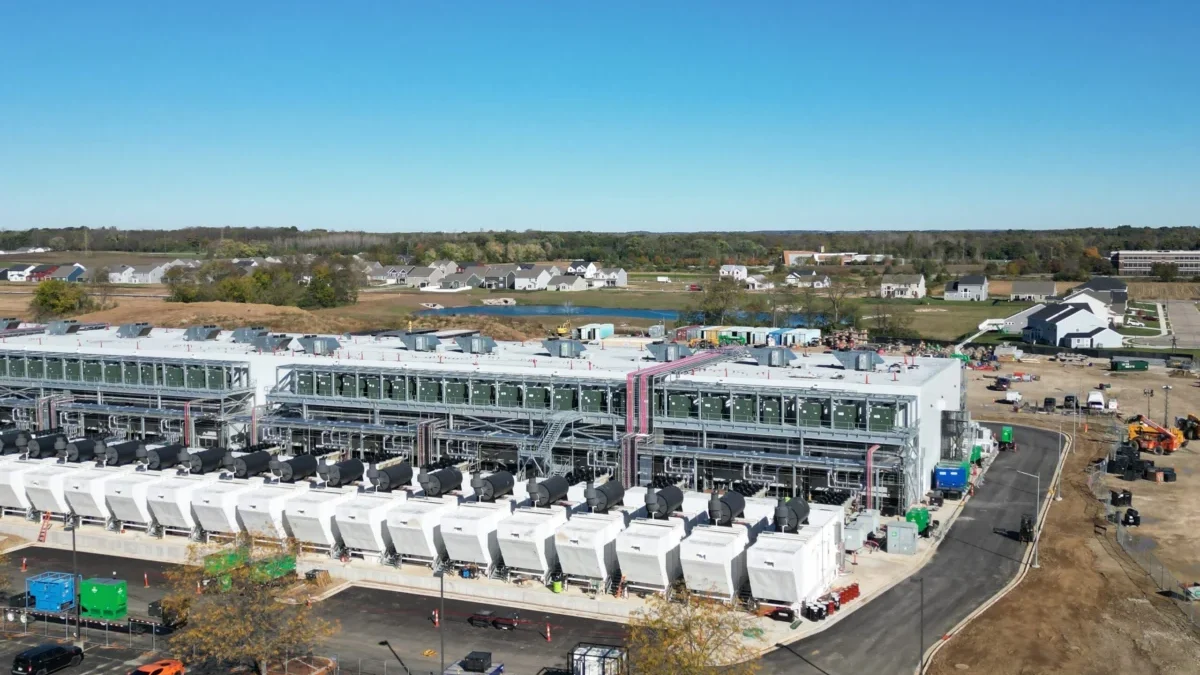
The recent turbulence in global financial markets, characterized by a distinct cooling of investor enthusiasm toward artificial intelligence (AI) stocks, has been punctuated by a series of sharp, data-driven warnings from Apollo Global Management’s chief economist, Torsten Slok. Over the past week, Slok has challenged the foundational narrative of the AI bull market, arguing that the massive capital expenditures currently being funneled into data centers and compute capacity may not be yielding the economic dividends promised by Silicon Valley proponents. His assessment suggests a growing disconnect between the trillions of dollars in projected investment and the tangible productivity gains observed across the broader corporate landscape.
The Economic Mismatch: Cost Versus Utility
At the heart of Slok’s critique is the assertion that the demand for compute power is not an infinite, inelastic resource, but rather a price-sensitive commodity. In a series of briefings, Slok highlighted a noticeable deceleration in token spending growth, a metric often used as a proxy for the actual utilization of AI models. He argues that the marginal cost of producing the compute required to train and run these advanced models has begun to outpace the marginal benefit delivered to end users.
For businesses, the integration of AI has largely functioned as a cost center rather than a catalyst for revenue growth. In traditional enterprise investment cycles, capital expenditure is justified by a clear path to return on investment (ROI), whether through labor cost reduction, enhanced output, or market expansion. Slok contends that there is little empirical evidence to suggest that the current wave of AI adoption is driving these outcomes at scale. He posits that until AI can demonstrably boost corporate earnings or revenue through improved judgment and operational efficiency, firms will remain reluctant to commit to the high price points currently demanded by AI service providers.
A Chronology of Growing Concern
The skepticism articulated by Slok reflects a shift in market sentiment that has been building since early 2026. The following timeline illustrates the escalation of these concerns:
- Early 2026: Hyperscalers (including Microsoft, Alphabet, Meta, and Amazon) solidify plans for historic capital expenditure budgets, with collective spending estimates reaching $800 billion for the year.
- Q2 2026: Analysts begin to note the lack of widespread AI-driven margin expansion outside of the "Magnificent Seven" technology giants.
- October 20, 2026: Slok releases his initial findings on the stagnation of compute demand, noting that the demand curve is flattening.
- October 22, 2026: A secondary report emerges detailing "circularity" in AI financing, where capital flows between startups and their investors in ways that obscure true market demand.
- October 24, 2026: Financial markets react sharply as credit default swap (CDS) spreads for major AI-exposed companies widen significantly.
- October 25, 2026: Slok concludes the week by asserting that AI has provided zero financial payoff to the broader S&P 500, suggesting that the "AI revolution" may be experiencing a premature plateau.
The Problem of Circular Financing
One of the most concerning aspects of the current AI boom, according to Slok and echoed by market analysts, is the prevalence of "circular" financing structures. Evidence suggests that many AI startups are effectively being fueled by the same venture capital firms that also represent their primary customer base. When startups use venture-backed capital to purchase compute power from hyperscalers—who in turn invest in the startups—the appearance of organic growth is created.
Slok notes that approximately 80% of the top 1% of AI spenders are backed by venture capital firms. This reliance on external funding rather than organic revenue generation raises significant questions regarding the sustainability of the industry’s growth. If these companies are paying for their compute bills with cash infusions from investors rather than profits generated from their own products, the entire ecosystem becomes highly vulnerable to shifts in venture capital availability or changes in investor sentiment.
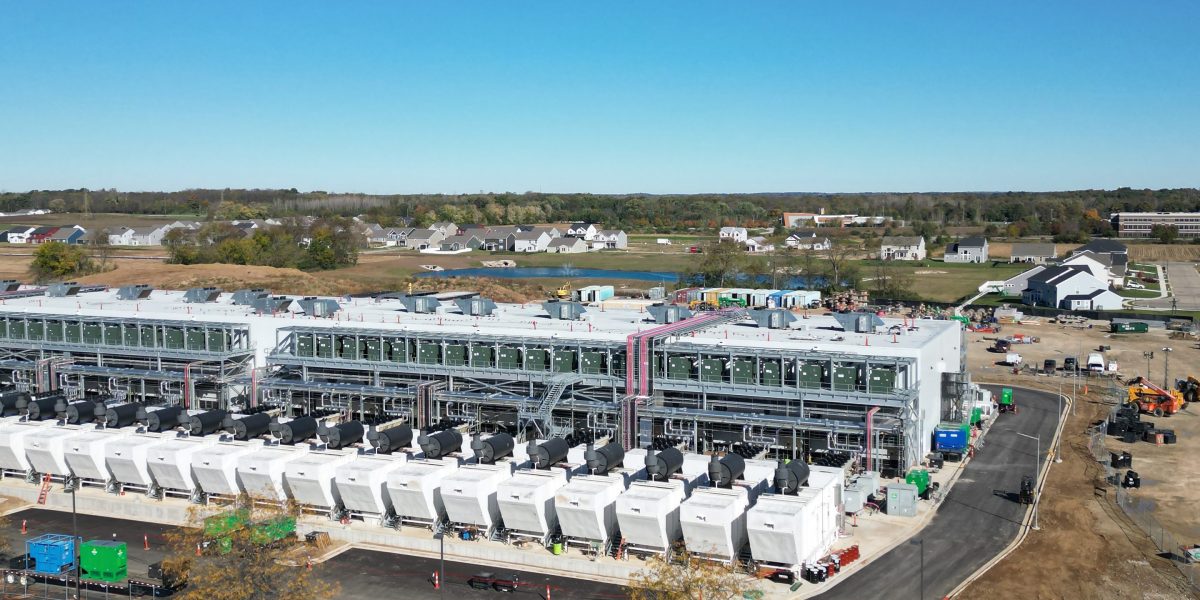
Institutional Risk and Debt Exposure
The implications of this investment structure are not limited to the tech sector; they extend into the broader credit markets. Mark Habib, the Global Head for Digital Infrastructure at S&P Global, has warned of the risks associated with opaque financing arrangements. During a recent industry roundtable in London, Habib highlighted that "interconnected financing structures" between hyperscalers and data center projects often lack the transparency required for proper risk assessment.
The debt market has begun to price in these risks. Meta, for instance, has seen its five-year credit default swaps widen to record levels, reflecting investor anxiety over the company’s massive $135 billion to $145 billion annual spend. Simultaneously, smaller firms—often referred to as "neoclouds"—are facing more acute pressure. CoreWeave, a prominent player in the AI infrastructure space, has experienced a significant decline in its market valuation, with its credit default swaps spiking to over 1,100 basis points, signaling extreme investor concern regarding its long-term solvency.
The "Judgment" Gap: Why AI Fails the Mainstream
Beyond the financial mechanics, Slok offers a more philosophical, yet practical, observation regarding the limitations of AI. While large language models are highly effective as calculators or data processors, they currently lack the nuance required for high-level business decision-making.
"AI may be a great calculator, but in business, intelligence is mostly judgment," Slok wrote. He emphasizes that business success is often tied to intangible factors—such as culture, trust, accountability, and the navigation of ethical trade-offs—that AI models are currently ill-equipped to manage. Because these factors drive reputational risk and, ultimately, long-term profitability, the current iteration of AI may struggle to gain traction in industries that rely heavily on human-centric institutional knowledge and discretion.
Broader Market Implications
The divergence between the performance of the Magnificent Seven and the rest of the S&P 500 serves as a critical indicator of the current economic environment. While the tech giants have leveraged their massive scale to optimize their own internal operations using AI, the majority of the U.S. corporate sector has yet to see a meaningful impact on revenue per worker or profit margins.
The projected $1 trillion in capital expenditure for 2027 represents an enormous bet on future productivity. However, if the current trend of "AI as a cost center" continues, investors may force a drastic re-evaluation of these spending plans. The current market volatility suggests that the "orgy" of capital expenditure is facing a reality check. Wall Street is increasingly demanding that AI investments translate into hard, bottom-line results, and as the "circular" nature of the financing becomes more apparent, the pressure on companies to justify their AI-related debt will only intensify.
As of late October 2026, the consensus among cautious market observers is that the AI sector is approaching a "show me" moment. The era of unchecked growth fueled by abundant capital may be transitioning into a period of consolidation. Whether these massive investments in data centers and compute capacity will eventually yield the promised transformative economic returns or become stranded assets remains one of the most significant questions facing global capital markets. For now, the cautionary notes from analysts like Slok serve as a sobering reminder that technology, no matter how sophisticated, must ultimately adhere to the fundamental laws of economics.