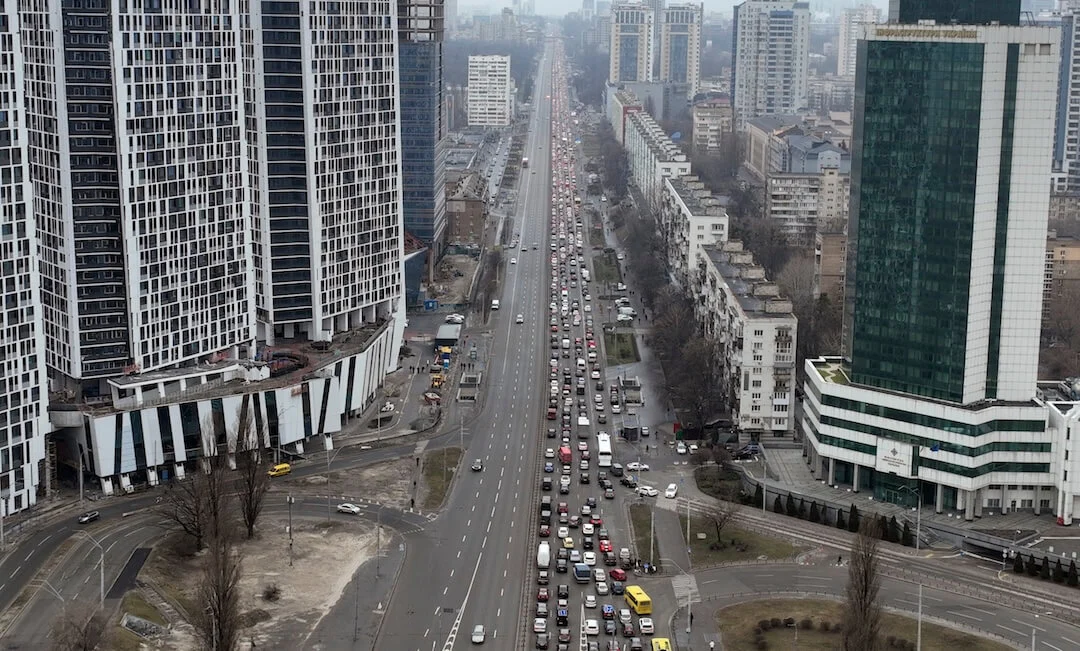
In February 2022, the Russian Federation initiated a full-scale military invasion of Ukraine, an event that fundamentally reshaped the geopolitical landscape and presented news organizations with an immediate, high-stakes linguistic and ethical dilemma. As newsrooms scrambled to document the unfolding humanitarian crisis, they were forced to confront a foundational question: how to accurately, fairly, and responsibly frame a conflict that would dominate the global news cycle for years to come. For editors at major networks, including NBC News, this was not merely a matter of semantics; it was a decision with significant implications for public discourse, the allocation of media resources, and the international perception of the conflict.
The decision-making process during those initial days reflects the immense pressure placed on news organizations when the standard rulebooks of journalism fail to provide clear guidance. When a conflict of this magnitude erupts, the terminology used in headlines, banners, and broadcast scripts acts as a lens through which the public processes reality. Choosing between terms like "conflict," "special military operation"—the framing preferred by the Kremlin—or "war" carries the weight of institutional credibility.
A Chronology of Conflict and Coverage
The invasion, which began in the early hours of February 24, 2022, followed months of military buildup along Ukraine’s borders. By the time Russian forces launched strikes on Kyiv, Kharkiv, and Odesa, the global media was already on high alert. However, the pivot to using the word "war" was a deliberate, collective shift within the industry.
Within the first 72 hours, the consensus among major Western outlets transitioned rapidly. This shift was not coincidental; it followed an internal vetting process where editors scrutinized the accuracy of their reporting against international definitions of aggression. The implications of this labeling were immediate: the designation of "war" triggered a surge in investigative resources, the deployment of specialized foreign correspondents to frontlines, and an increase in airtime dedicated to the humanitarian and political fallout. By labeling the event a war, newsrooms signaled to their audiences that the situation was not a localized dispute but a systemic threat to global security.
The Anatomy of Newsroom Standards
The role of a standards editor—often described as the conscience of the newsroom—has become increasingly vital in an era of rapid-fire digital reporting. At NBC News, the standards team functioned as a critical gatekeeper, tasked with sifting through a deluge of raw footage, social media clips, and official state propaganda. This "social media forensics" process is essential in the age of misinformation.
In the weeks following the invasion, the volume of digital content surged, with both Ukrainian and Russian sources flooding platforms like X (formerly Twitter) and Telegram with imagery. Standards editors had to verify the authenticity of these files, cross-referencing metadata, geolocation data, and weather patterns to ensure that what was being broadcast was not manufactured or repurposed content. This level of verification is now a standard requirement for all sensitive reporting, from coverage of domestic school shootings to police body camera footage.
Data, Accuracy, and the Ethics of Transparency
Modern journalism operates under the constant pressure of the "24-hour cycle," yet the core mission remains rooted in the Society of Professional Journalists’ (SPJ) Code of Ethics: seek the truth, minimize harm, act independently, and remain accountable. The standards editor serves as the bridge between these abstract principles and the concrete, often messy, reality of breaking news.
Quantitative data shows that public trust in media is currently at a historic inflection point. According to the Reuters Institute for the Study of Journalism, audience confidence is heavily dependent on the perceived transparency of a newsroom. When an organization fails to explain why it chose a specific frame for a story, or why it decided to withhold certain graphic details, it risks losing its audience. The standards editor’s role in this context is to ensure that every editorial decision—whether it is the inclusion of a controversial interview or the blurring of a face in a protest video—is defensible and consistent.
The Challenges Facing Local and Smaller Newsrooms
While major national networks possess the resources to maintain dedicated standards teams, the reality for smaller, local newsrooms is starkly different. These organizations often operate with minimal staff, limited budgets, and no internal mechanism for high-level ethical review. When a local newsroom is faced with a breaking story involving sensitive subject matter, the pressure on a single editor to make a split-second decision can be overwhelming.
There is a growing consensus among media researchers that even small newsrooms must designate an "in-house standards expert." This individual does not necessarily need to be a full-time position dedicated solely to ethics; rather, it is a role that requires specific training, the authority to pause publication, and the support of senior management to prioritize accuracy over the speed of the news cycle. As the adage goes in the industry, "It is better to be late and right than to be fast and wrong."
The Standards Editor as a Structural Safeguard
Beyond vetting individual stories, a standards editor performs the essential task of pattern recognition. If a local newsroom consistently relies on police statements for its crime reporting without seeking independent verification or community context, the standards editor is responsible for identifying this bias and implementing a more balanced, multi-perspective approach.
This involves:
- Systematic Audits: Reviewing recurring types of coverage to ensure that the newsroom is not inadvertently perpetuating stereotypes or failing to represent marginalized communities.
- Documentation: Building a "living" repository of internal guidelines. When a difficult call is made regarding the use of anonymous sources or the naming of suspects, that reasoning should be documented so that future editors can build upon a consistent ethical framework.
- Communication: Acting as the primary point of contact for reporters who feel unsure about the ethical implications of their work. This fosters a culture of inquiry rather than one of fear.
Implications for the Future of Public Discourse
The influence of newsroom standards extends far beyond the walls of the editorial suite. Every headline is a data point in the national conversation. When a news organization adopts a consistent, ethically rigorous approach, it provides the public with a reliable baseline of information. Conversely, when standards are treated as an afterthought, the result is a fragmented media environment where misinformation flourishes.
As the international community continues to navigate the complexities of the Russia-Ukraine conflict and other global crises, the need for robust standards oversight will only intensify. Technological advancements, including the proliferation of generative AI in news production, will present new challenges for verification and authorship. A standards editor must now also be an expert in the ethical deployment of new technology, ensuring that automation does not come at the expense of human judgment.
The work of a standards editor is often invisible to the public. It is a process of deliberation that occurs in conference rooms, via encrypted chat channels, and in the quiet moments before a broadcast goes live. However, the consequences of this work are visible every day in the clarity and integrity of the journalism we consume. By prioritizing the role of the standards editor—and providing them with the time, training, and institutional authority they require—newsrooms can ensure they remain a reliable pillar of democratic society.
Ultimately, the goal is to create a newsroom culture where ethical questioning is not viewed as an obstacle to publication, but as an essential part of the journalistic process. Whether reporting on a global war or a local school board meeting, the principles remain the same: accuracy, fairness, and a commitment to the public’s right to know. As the media landscape continues to evolve, the standards editor will remain the most critical guard against the erosion of truth, serving as the final line of defense in an increasingly complex world.