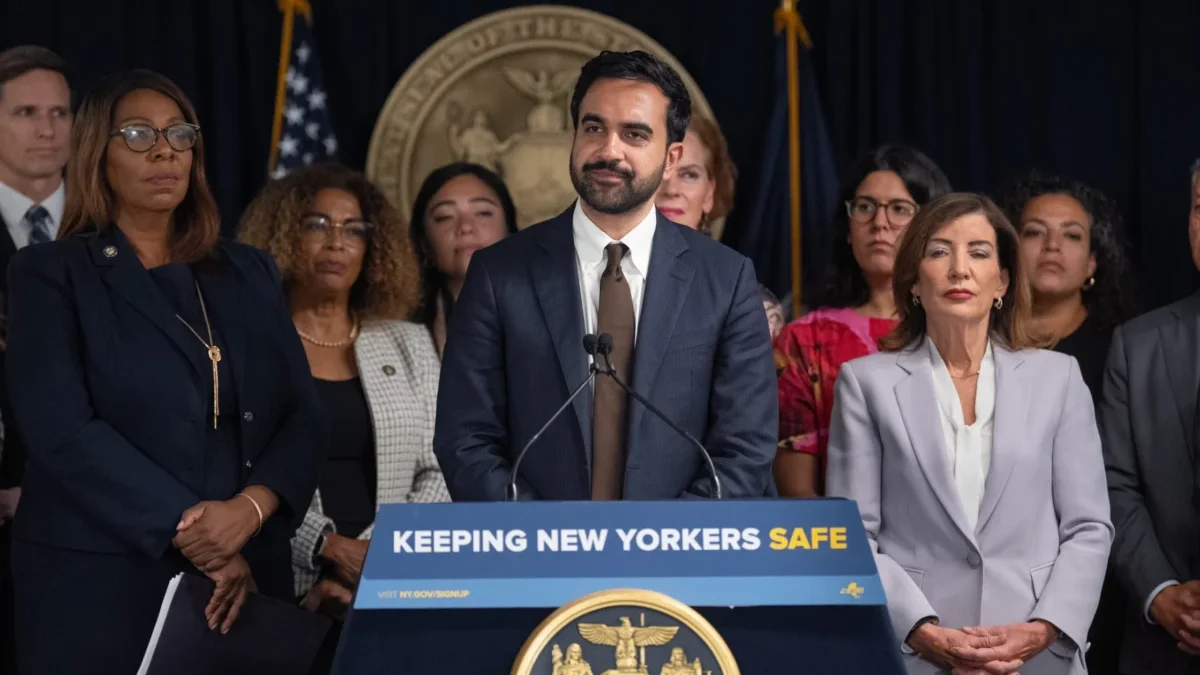
A Staten Island Supreme Court judge has issued a significant legal setback to Mayor Zohran Mamdani’s administration, effectively freezing the city’s ambitious new pied-a-terre tax program. In a ruling delivered on Tuesday, Justice Wayne Ozzi ordered the city to cease the issuance of surcharge notices and void those already sent, citing a fundamental failure in how the Department of Finance identified liable property owners. While the ruling does not address the underlying legality of the tax itself, it strikes at the core of the city’s execution, mandating that officials perform a thorough, individualized review of property records before levying any financial penalties.
The ruling marks the latest chapter in a high-stakes confrontation between the Mamdani administration’s progressive fiscal agenda and a coalition of wealthy property owners and influential political figures. The tax, a signature policy intended to generate approximately $500 million annually to fund municipal services, schools, and infrastructure, has faced a barrage of legal challenges since its inception on July 1.
A Chronology of the Pied-a-Terre Tax Dispute
The trajectory of the pied-a-terre tax has been marked by rapid implementation and immediate friction. The following timeline outlines the key milestones of the initiative:
- January 2026: Mayor Mamdani formally proposes the surcharge as a centerpiece of his fiscal year budget, framing it as a necessary measure to ensure that luxury non-primary residences contribute their fair share to city coffers.
- July 1, 2026: The tax officially takes effect. It targets one-, two-, and three-family homes valued above $5 million and condos or co-ops valued above $1 million, provided they are not the owner’s primary residence.
- Mid-July 2026: The Department of Finance issues approximately 17,000 notices to property owners, flagging them for potential tax liability. The process is immediately criticized for its lack of due diligence.
- August 2026: Former Deputy Mayor Randy Mastro, acting as a lead plaintiff in a lawsuit against the city, challenges the administration’s methods. Reports surface that the city failed to cross-reference income tax filings before sending notices, resulting in thousands of primary homeowners being erroneously flagged.
- August 11, 2026: The legal momentum against the city accelerates as high-profile figures, including former Commerce Secretary Wilbur Ross and casino magnate Steve Wynn, initiate a separate federal challenge, arguing that the tax is unconstitutional.
- September 2026: Justice Wayne Ozzi rules in favor of the plaintiffs in the Staten Island case, ordering the city to halt the rollout and rectify its administrative process.
The Administrative Misstep: A Data-Driven Failure
The crux of Justice Ozzi’s decision lies in the city’s procedural negligence. During the initial rollout, the Department of Finance adopted a "guilty until proven innocent" framework, casting a wide net that relied on automated property databases rather than verified income tax or residency data.
According to municipal records and subsequent testimony, the city’s failure to cross-reference existing tax data meant that thousands of residents were incorrectly served with tax warnings. The error was not merely a logistical oversight; it became a point of significant public outcry, particularly among established homeowners who found themselves suddenly labeled as non-residents. Randy Mastro, whose lawsuit highlighted these flaws, noted that he himself was issued a notice despite living in Manhattan for decades.
Justice Ozzi’s order stipulates that the city must now produce specific records justifying each claim before a tax can be levied. This requirement effectively forces the Department of Finance to pivot from a broad-based automated strategy to a more resource-intensive, case-by-case audit model. This shift will likely delay the revenue collection the administration projected for the current fiscal year.
Official Responses and the Stance of the Administration
The Mamdani administration has remained defiant, characterizing the judicial ruling as a temporary obstacle rather than a defeat. Matt Rauschenbach, a spokesperson for the Mayor, issued a statement following the ruling: "The pied-a-terre surcharge is about a basic principle of fairness: If you can afford a luxury second home in New York City, you can afford to pay your fair share. Today’s decision is wrong, and we will invoke a stay of the injunction."
Rauschenbach emphasized that the city views the legal challenges as a coordinated effort by the ultra-wealthy to maintain tax loopholes. "New York is a city for the many—not a tax haven for the wealthy few," he added.
Governor Kathy Hochul’s office, while maintaining some distance from the specific administrative disputes, has signaled continued support for the tax’s underlying intent. Jen Goodman, the Governor’s director of rapid response, stated, "While this lawsuit about the administration of the tax is a matter for the city and the courts to work through, the governor continues to believe that people who can afford a multimillion-dollar second home in New York City can afford to pay their fair share."
Broader Implications and Legal Challenges
The legal landscape surrounding this tax is bifurcated. The Staten Island case, led by Mastro, is strictly limited to the process of implementation. By focusing on the administrative burden and the violation of due process, the plaintiffs have successfully forced a pause in the city’s revenue stream.
However, a more existential threat to the tax exists in the form of the lawsuit filed by Wilbur Ross and his co-plaintiffs. Unlike the Staten Island case, the Ross lawsuit challenges the constitutionality of the tax itself, arguing that it creates an discriminatory class of taxpayers based solely on their residency status. If a court were to agree with this argument, it could potentially invalidate the tax in its entirety, rendering the administrative fixes demanded by Justice Ozzi moot.
For the city, the stakes are high. With a target of $500 million in annual revenue, the tax was intended to bridge gaps in funding for public schools and infrastructure projects. The current injunction and the looming threat of further constitutional litigation place this revenue in jeopardy, forcing the administration to reconsider its fiscal projections for the coming year.
Economic and Real Estate Impact
The uncertainty surrounding the tax has already begun to ripple through the New York City real estate market. High-end real estate brokers report a sense of "wait and see" among potential buyers of luxury properties. When a tax is tied to the designation of a "primary residence," the burden of proof falls on the taxpayer, a prospect that has increased the administrative costs for prospective owners.
Moreover, the city’s decision to publish an online database containing the names and addresses of over 900,000 property owners as part of its transparency effort has raised significant privacy concerns. Critics argue that this database, coupled with the erroneous notices, has created a "hit list" of the wealthy, potentially exposing homeowners to unwanted scrutiny and security risks.
As the city prepares to file for an automatic stay of the injunction—a move expected by many observers to occur by Tuesday evening—the legal battle is far from over. The administration remains committed to its goal, but it must now navigate a complex regulatory landscape that demands greater transparency and precision than it originally anticipated. For now, the "pied-a-terre" tax remains in a state of suspended animation, a casualty of a rollout that prioritized speed and revenue generation over the procedural requirements of the law.
The resolution of this case will likely set a precedent for how the city implements future revenue-generating measures that target specific demographics. If the city is forced to conduct extensive, individualized reviews for every tax notice, it may find that the cost of enforcement significantly erodes the projected net revenue of the tax, potentially necessitating a reevaluation of the policy’s overall viability. As both the city and the plaintiffs prepare for the next round of litigation, the question of who truly bears the burden of New York City’s fiscal requirements remains at the center of the debate.