The modern landscape of social entertainment is undergoing a profound acoustic transformation. Across living rooms, backyards, and urban parks, a new generation of high-output party speakers is breathing fresh life into the communal listening experience. Striking a functional and aesthetic middle ground between conventional wireless bookshelf speakers and professional portable Public Address (PA) systems, these robust audio devices evoke the spirit of the classic 1980s block-party boombox while incorporating cutting-edge digital signal processing, extended battery chemistries, and dynamic lighting arrays.
This resurgence in heavy-duty portable audio hardware is not happening in a vacuum. Rather, it directly mirrors sweeping macroeconomic and cultural shifts in how younger demographics choose to socialize.
The Macroeconomic Shift: The Rise of At-Home Entertaining
Where generations past frequently looked to crowded bars, commercial nightclubs, and ticketed venues for weekend entertainment, contemporary consumers—particularly Generation Z—are increasingly turning inward. Financial pressures and evolving lifestyle preferences have fundamentally altered weekend itineraries across North America.
According to data published in a July Harris Poll examining weekend habits, an overwhelming 68 percent of US Gen Z adults report that traditional going-out activities have simply become prohibitively expensive. Concurrently, market research from Attest highlights a dramatic migration in social drinking and gathering spaces: roughly 64 percent of Gen Z consumers now report drinking and socializing primarily at home, representing a steep increase from just 42 percent recorded a year prior.
This retreat to the domestic sphere does not, however, translate to a diminished appetite for vibrant social atmospheres. While standard Bluetooth speakers offer admirable convenience and fidelity for personal listening, they routinely falter when tasked with driving a crowded room or projecting sound across an open-air patio. Modern party speakers—engineered with substantial power outputs, rugged chassis designs, physical control interfaces, and synchronized LED light shows—were explicitly designed to bridge this performance gap.

Deconstructing the Modern Party Speaker
Technologically speaking, contemporary party speakers occupy a specialized niche in consumer electronics. Operating typically on internal, rechargeable battery packs, these units deliver power outputs ranging from 100 to upwards of 800 watts, sustaining continuous playback anywhere from 12 to 40 hours depending on operational volume and lighting configurations.
Engineers achieve this acoustic scale through oversized woofer drivers, dedicated high-frequency tweeters, and sophisticated digital signal processing (DSP) modes. Furthermore, modern iterations frequently incorporate practical physical features such as integrated wheels, telescopic or molded handles, weather-resistant ingress protection (IP) ratings, and modular, field-replaceable batteries. Connectivity options have likewise expanded far beyond basic wireless pairing, routinely including auxiliary 3.5mm inputs, RCA lines, optical ports, balanced XLR connections, and dual microphone or instrument pre-amps.
Key Hardware Considerations for Buyers
For consumers navigating the expanding market of high-output audio hardware, manufacturers and reviewers emphasize several core metrics:
- Power and Output (Watts): While raw wattage provides a baseline indicator of potential volume, advanced DSP algorithms utilized by brands like JBL, Sony, and LG allow smaller power draws to achieve remarkable decibel levels without introducing catastrophic audio distortion.
- Battery Management: Claimed playback times often reflect moderate listening levels with auxiliary lighting disabled. High-volume stress testing and continuous light-show deployment can drastically reduce operational endurance, making rapid-charge capabilities and swappable batteries highly desirable features.
- Wired vs. Wireless Latency: For users integrating DJ hardware, traditional Bluetooth protocols introduce noticeable audio latency that complicates cueing and beat-matching. Consequently, physical cabling via RCA, quarter-inch, or XLR connections remains the industry standard for live mixing environments.
- Ecosystem Integration: Features such as Bluetooth multipoint, Spotify Jam, Apple Music SharePlay, and proprietary daisy-chaining technologies (like Sony’s Party Chain or JBL’s Auracast) enable multiple users to curate collaborative playlists or link dozens of speakers simultaneously.
Market Landscape: Top-Tier Models Reviewed
Evaluating the current hardware ecosystem reveals a diverse spectrum of options tailored to distinct user priorities, ranging from balanced domestic performance to extreme outdoor durability.
LG Xboom Stage 501: Best Overall Party Speaker
Developed in collaboration with recording artist and producer will.i.am, LG’s Xboom Stage 501 exemplifies the ideal equilibrium between raw party projection and refined indoor fidelity. Equipped with twin 5.25-inch woofers and dual 2.5-inch full-range drivers, the unit delivers 160 watts on battery power, scaling up to 220 watts when connected to an AC outlet. Weighing 25.8 pounds, it remains manageable for solo transport while offering deep, clean bass that avoids muddying vocal clarity at normal listening volumes—a common pitfall for hardware in this class. Companion app integration provides customizable EQ, synchronized lighting, and AI-driven karaoke controls, rounded out by dual microphone inputs and integrated device stands.
JBL PartyBox 130: The Balanced Contender
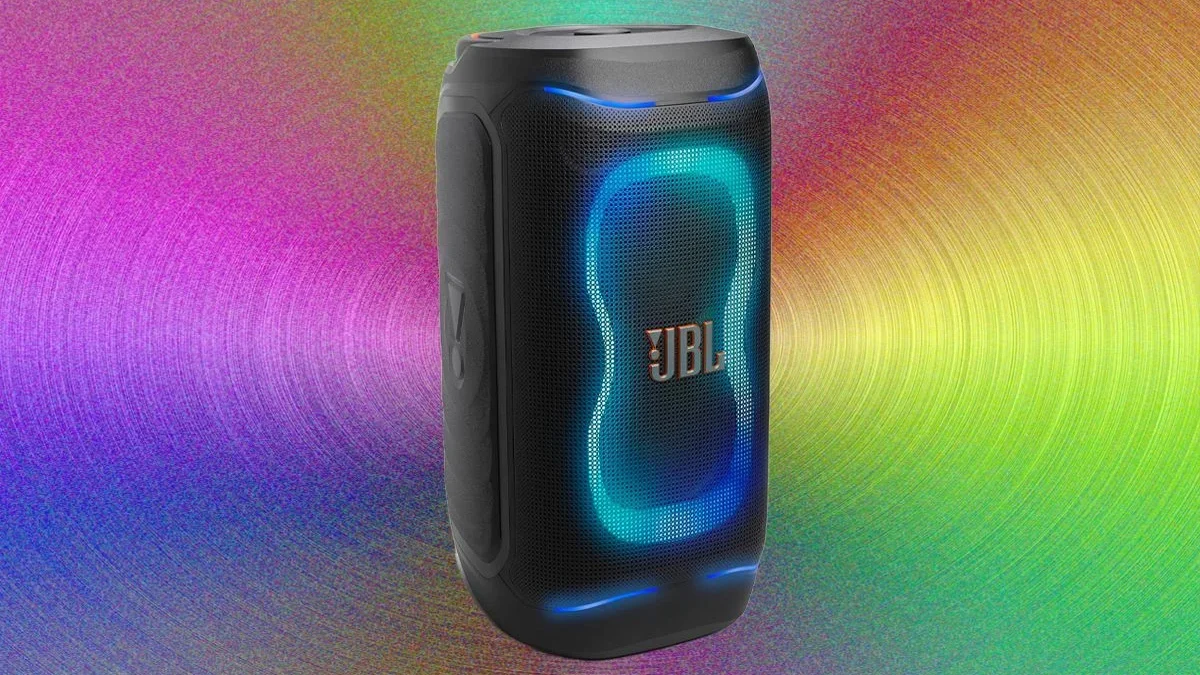
Scaling in at 24.8 pounds, the JBL PartyBox 130 strikes an accessible sweet spot for apartment dwellers and suburban backyards alike. Generating 200 watts of output via dual 5.25-inch woofers and twin 1-inch tweeters, the unit leverages JBL’s proprietary AI Sound Boost to suppress distortion at elevated volumes. While its 15-hour replaceable battery sits on the shorter end of the spectrum, a 10-minute quick-charge feature restores over an hour of playback. An IPX4 splash-proof rating, Auracast support, and dual instrument inputs solidify its standing as a versatile mid-tier choice.

Marshall Bromley 450: Best Premium Option
Bringing decades of stage-audio heritage to the consumer market, Marshall’s mid-tier Bromley 450 channels classic rock aesthetics into a high-performance wireless chassis. Tipping the scales at 27.2 pounds, the unit utilizes two 6.5-inch woofers powered by 90-watt Class D amplifiers, four full-range drivers, and dual passive radiators for a combined 400 watts of output. Its 360-degree driver layout disperses sound evenly across large spaces. Featuring an impressive 40-plus-hour replaceable battery, IP55 environmental protection, and tactile physical brass-and-metal controls, it caters to users prioritizing robust build quality and sophisticated acoustic staging.
Soundcore Rave 3S: Best Value and Karaoke Integration
Anker’s Soundcore Rave 3S ($350) carves out a distinct market position by prioritizing vocal versatility. Alongside a robust 200-watt output, powerful bass profiles, and beat-synced lighting, the unit features an innovative AI Vocal Removal tool capable of stripping vocal tracks from streamed music in real-time. Bundled with two wireless microphones and boasting a 6.5-inch woofer alongside three full-range drivers, it functions as both an effective backyard sound system and a dedicated, user-friendly karaoke hub.
Sony ULT Tower 7: Best for DJing and Expanded Setups
For users requiring professional-grade connectivity, Sony’s ULT Tower 7 delivers a formidable package. Pumping out a combined 420 watts through an 11-inch woofer, dual midrange drivers, and four tweeters, the system easily saturates large environments. Beyond standard wireless duties, the unit accommodates RCA and balanced XLR inputs and outputs, allowing DJs to integrate hardware mixers seamlessly. Sony’s Party Chain functionality further permits the linking of up to 100 compatible speakers, though users must contend with its substantial 50.3-pound footprint.
Soundboks Rider: Best Rugged Outdoor Speaker
For consumers prioritizing extreme durability over built-in lighting effects, the Soundboks Rider represents a purpose-built solution. Weighing 14.3 pounds, the speaker utilizes an 8-inch woofer and 1.2-inch tweeter to generate up to 118 decibels of clear, distortion-resistant audio. Encased in a reinforced plastic cabinet with a steel grille and silicone corner bumpers, the Rider boasts an IP66 dust and water resistance rating. Its swappable battery delivers up to 35 hours of playback at mid-volume, making it an exceptional choice for off-grid environments and high-impact outdoor excursions.
Industry Implications and Future Outlook
The commercial success of high-output party speakers highlights a broader evolution in consumer electronics toward multifunctional, durable hardware that adapts to changing economic landscapes. As younger demographics continue to prioritize home-centric socialization over commercial nightlife venues, manufacturers are responding by refining acoustic precision, integrating advanced AI features, and expanding physical connectivity options.
Ultimately, these devices represent a democratization of high-output sound. By packing professional-grade PA performance, extended battery longevity, and versatile mixing capabilities into portable consumer enclosures, modern party speakers ensure that the energy of the live music experience remains accessible wherever consumers choose to gather.