Major news organizations have taken legal action against the federal government following the abrupt revocation of press credentials for several prominent journalistic institutions. The unprecedented move by the administration has intensified ongoing debates regarding freedom of the press, governmental transparency, and the legal limits of executive authority over media access. Concurrently, major consumer brands and technology companies are navigating high-stakes public relations challenges. Footwear giant Converse recently issued a full apology after an online promotional campaign drew severe backlash over imagery perceived as evoking historical racial violence. Meanwhile, online sports betting platform DraftKings faced scrutiny following an investigative report detailing its use of artificial intelligence to manage user engagement, and the limitations of AI spokespeople were thrust into the spotlight following a televised technical malfunction.
White House Press Access Revocations Trigger Multi-Agency Lawsuit
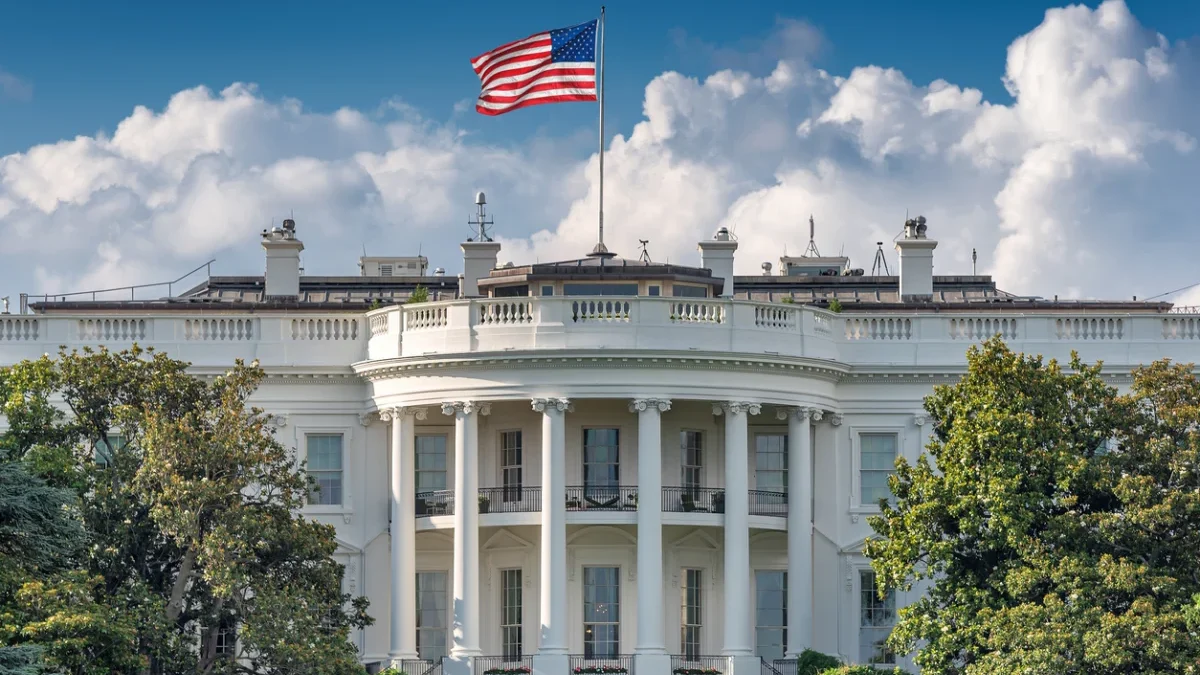
The legal battle commenced following an announcement that CNN, Politico, and MS NOW had joined forces to file a federal lawsuit against the Trump administration. The litigation was prompted by the sudden decision by officials to strip journalists representing these three outlets of their White House press credentials. The administration did not issue formal administrative notices or cite specific violations of press gallery rules prior to the revocation. Instead, executive officials offered generalized criticisms of the organizations, attributing the decision to persistent unfavorable coverage and what the administration characterized as intentionally skewed reporting.
During a Friday photo opportunity, President Donald Trump addressed the decisions directly, offering off-the-cuff remarks regarding the cumulative nature of the administration’s frustration with the press corps. The president stated that the decision was driven by years of stories that his administration deemed unfairly negative, asserting that the affected outlets purposely produced critical narratives despite possessing the intellectual capacity to present alternative perspectives. Legal analysts immediately noted that these public statements could complicate the government’s legal defense, as the administration openly tied the revocation of constitutionally protected access to the content and editorial tone of the targeted reporting.
In their joint statement announcing the litigation, representatives for CNN, Politico, and MS NOW emphasized the broader constitutional implications of the government’s actions. The outlets argued that allowing executive bodies to unilaterally revoke press access as a penalty for critical coverage creates a dangerous precedent that undermines the First Amendment. They contended that left unchallenged, such actions threaten the foundation of an independent press and infringe upon the public’s fundamental right to receive news unhindered by government intimidation or viewpoint-based discrimination.
The intersection of this legal challenge with standard public relations strategies highlights the delicate ecosystem between government bodies and the media. Historically, public relations professionals advising political entities are taught that managing difficult press cycles requires robust engagement rather than punitive exclusion. When access is restricted based on editorial content, it frequently triggers the Streisand Effect, drawing heightened public and international scrutiny to the very stories the administration sought to suppress. Furthermore, legal experts point out that the administration’s informal justifications make it difficult for government attorneys to defend the credential revocations under constitutional scrutiny, potentially setting up a landmark judicial review regarding the limits of executive control over the White House press briefing room.
Converse Issues Unambiguous Apology Over Contentious Instagram Advertisement
In the corporate sector, Converse found itself at the center of a severe digital public relations crisis following the release of an Instagram promotional campaign executed in partnership with South Korean K-pop star Karina. The digital advertisement featured a specific visual sequence depicting a pair of sneakers floating slightly above the floor adjacent to a figure clad in a white dress or robe. Shortly after the content went live across social media platforms, digital users began expressing deep concern, drawing unintended visual parallels between the suspended posture of the footwear and historical imagery associated with the Ku Klux Klan and the lynching of Black Americans.
The digital backlash was swift, prompting rapid crisis management protocols within the corporate communications and marketing departments of Converse and its parent company, Nike. Rather than issuing a defensive statement or attempting to minimize the public reaction, Converse released a concise, direct, and unconditional apology. Company executives confirmed that the offending imagery was immediately scrubbed from all official brand channels and that agency partners were actively working to purge the content from any remaining digital footprints.
The statement released by Converse explicitly acknowledged the gravity of the oversight, stating that the visual was deeply upsetting and that the brand recognized the severity of the mistake. Media strategists and public relations educators quickly pointed to the Converse response as a textbook example of effective crisis communication. By avoiding qualifying phrases such as "if anyone was offended" and instead taking full, unambiguous responsibility without unnecessary delay or agonizing public debate, the brand established a clear benchmark for corporate accountability when creative execution inadvertently crosses sensitive cultural and historical boundaries.
DraftKings Defends AI-Driven User Segmentation Amid Deep Investigative Scrutiny
The online gambling and digital entertainment sector faced intense regulatory and public scrutiny following the publication of a comprehensive investigative report by The New York Times. The investigation focused on the operational practices of DraftKings, specifically examining how the platform utilizes advanced artificial intelligence algorithms and data analytics to track user behavior and target promotional incentives toward individuals identified as high-risk or prone to severe financial losses.
The journalistic piece raised ethical questions regarding whether predictive technologies are systematically leveraged to maximize engagement among users exhibiting signs of compulsive gambling addiction. In response to the unfolding narrative, DraftKings made executive leadership available for on-the-record interviews, deploying Lori Kalani, the company’s chief responsible gaming officer, to address the allegations directly within the body of the published investigation. Kalani defended the platform’s technological infrastructure by emphasizing that the company actively monitors accounts for markers of problematic behavior and implements protocols to withhold promotional offers from self-excluded users or those displaying high-risk wagering patterns.
However, elements of the corporate defense strategy drew criticism from consumer advocacy groups and public relations analysts. During her interactions with journalists, Kalani drew comparative parallels between the marketing promotions used by DraftKings and those utilized by mainstream e-commerce giants such as Amazon, noting that retail shopping can also trigger compulsive or problematic consumer behavior. Analysts observed that this comparison faltered under close examination, as standard retail platforms do not typically operate within an inherently addictive product category or employ dedicated C-suite executives solely focused on managing compulsive spending disorders. The attempt to simultaneously assert high standards of responsible gaming while normalizing the addictive mechanisms of gambling through cross-industry comparisons created an inconsistent narrative that struggled to fully satisfy external stakeholders and regulatory watchdogs.
AI "Actor" Glitch Highlights Current Limitations of Synthetic Brand Spokespeople
Compounding the week’s technological and communications challenges, the ongoing debate over the integration of artificial intelligence into public-facing roles reached a critical juncture during a live television broadcast. Tilly Norwood, widely recognized as one of the most prominent digital AI influencers and synthetic "actors," experienced a significant operational glitch during an appearance on a live interview program hosted by broadcaster Piers Morgan.
During the exchange, the digital avatar visibly misunderstood a straightforward, clearly articulated question posed by the host. Instead of processing the query or executing a standard scripted recovery, the AI avatar abruptly malfunctioned and began fluently speaking in Chinese. The live studio audience and co-panes experienced a surreal moment of technological failure before the system generated an automated verbal recovery.
"Oh, my apologies. It seems I had a little hiccup there," the digital avatar stated following the system reset, attempting to neutralize the error with synthesized charm. "I certainly didn’t mean to start speaking Chinese or impersonate Piers. Sometimes my wires get a bit crossed, you know?"
The incident immediately circulated across global social media networks, generating widespread commentary from communications professionals regarding the commercial viability of deploying autonomous artificial intelligence entities as brand spokespeople or corporate representatives. While human brand ambassadors and corporate executives are certainly prone to verbal slips, misstatements, or media gaffes, human speakers rarely experience catastrophic system resets resulting in unprompted language switches or literal admissions of crossed wires. Industry analysts noted that while generative AI continues to advance at an exponential rate, the live-broadcast incident serves as a stark reminder that the technology remains prone to unpredictable, unmonitored anomalies, reinforcing the continued necessity and irreplaceable value of human oversight in public communications.