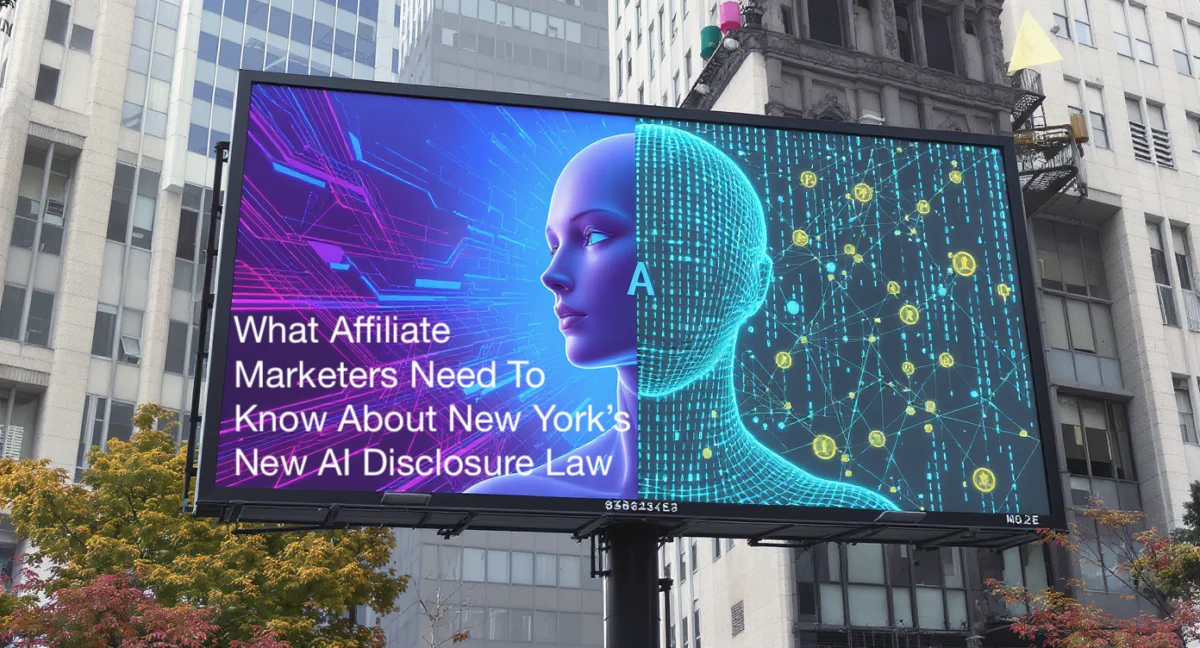
The rapid evolution of generative artificial intelligence has fundamentally altered the landscape of digital advertising, prompting a legislative response from New York State that marks a significant shift in how brands and agencies must operate. On December 11, 2025, New York Governor Kathy Hochul signed into law S.8420-A/A.8887-B, a pioneering piece of legislation that mandates strict transparency requirements for commercial advertisements utilizing "synthetic performers." As the digital marketing industry increasingly leans on AI to generate lifelike avatars and human-mimicking assets, this law establishes clear guardrails, compliance obligations, and financial penalties for non-compliance, effectively setting a new standard for AI disclosure in the United States.
The Legislative Landscape and Regulatory Context
The enactment of this law follows a period of intense debate regarding the ethical use of AI in commercial media. Lawmakers in New York aimed to address the blurring lines between authentic human performances and algorithmic creations. By requiring a "conspicuous disclosure" when an advertisement features a synthetic performer, the state seeks to protect consumers from being deceived by computer-generated imagery that mimics human behavior.
This legislation arrives at a critical juncture for the artificial intelligence industry. While proponents of AI in advertising argue that it reduces production costs and increases creative scalability, consumer advocates have voiced concerns regarding the potential for deepfakes and the erosion of trust in digital media. The New York law serves as a direct intervention, ensuring that as AI-driven content becomes ubiquitous, the consumer’s right to distinguish between human and synthetic influence remains protected.
Defining the Synthetic Performer
Central to the legislation is the specific definition of a "synthetic performer." According to the statute, this term refers to any digitally created asset—whether produced, reproduced, or modified by computer, generative AI, or complex software algorithms—intended to give the impression of a human performance where the entity depicted is not an identifiable, living natural person.
This definition is intentionally broad to encompass the rapid pace of technological change. Whether a brand utilizes a photorealistic avatar for a social media campaign or a voice-cloning algorithm to narrate a commercial, if the asset is designed to mimic a human, it falls under the scope of the new law. The statute specifically targets performances that are "audiovisual" or "visual" in nature, ensuring that the visual representation of the synthetic entity is clearly labeled for the viewer.
Disclosure Requirements and Compliance Standards
The law stipulates that any person, firm, or corporation engaged in commercial advertising that reaches the New York public must include a disclosure when a synthetic performer is utilized. Crucially, the law requires that this disclosure be "conspicuous." While the statute does not mandate a specific script or phrasing, the burden is on the advertiser to ensure the disclosure is prominent, unavoidable, and noticeable. Fine-print disclaimers that are easily overlooked will likely fail to meet the legal threshold for compliance.
For affiliate marketers, brands, and advertising agencies, this creates an immediate operational challenge. It necessitates the integration of compliance checks into the creative workflow. Before an ad goes live in the New York market, teams must audit the content to identify if any AI-generated human likenesses are present. If a synthetic performer is detected, the disclosure must be integrated into the final media asset.
Timeline and Enforcement Mechanisms
The law is set to become effective in June 2026, providing a transition period for marketers to audit their existing assets and adjust their production pipelines. Failure to adhere to these requirements carries escalating financial consequences. The statute outlines a civil penalty structure: $1,000 for the first violation and $5,000 for each subsequent violation.
While the dollar amounts may seem manageable for large-scale campaigns, the potential for high-volume violations—where a single campaign runs across multiple digital platforms—could lead to significant cumulative liability. Beyond the monetary fines, businesses face the intangible but severe risks of reputational damage and the potential for regulatory scrutiny from the New York Attorney General’s office.
Strategic Implications for Digital Marketing
The shift toward mandatory disclosure will likely force a re-evaluation of contractual agreements between brands, agencies, and AI vendors. Marketing professionals should consider updating their influencer and agency contracts to include specific representations and warranties regarding the use of AI. This includes shifting liability exposure, requiring disclosure documentation, and implementing rigorous internal auditing processes.
Furthermore, legal experts suggest that those involved in the digital marketing ecosystem consult with counsel specialized in FTC and state regulatory compliance. Understanding how this state-level law interacts with broader federal guidelines is essential, especially as other states may soon follow New York’s lead with their own variations of AI disclosure legislation.
Scope and Exclusions: Protecting Creative Expression
Recognizing the need to preserve artistic freedom, the legislation provides specific exemptions. Notably, the law does not apply to "expressive works," including motion pictures, television shows, documentaries, video games, or other similar streaming content. For these mediums, the use of a synthetic performer is permitted without the same level of disclosure, provided the use is consistent with the nature of the expressive work.
Additionally, the law provides narrow exemptions for media outlets and platforms that merely publish or distribute advertisements, provided they are not the entity responsible for the production or creation of the synthetic content. Furthermore, the use of AI for language translation purposes—a common practice in global advertising campaigns—is explicitly excluded from the disclosure requirements, as it does not inherently aim to create the impression of a synthetic human performance.
The Broader Regulatory Environment
The New York legislation is part of a larger, multifaceted effort to regulate the digital frontier. Concurrently, New York has expanded its right of publicity law to address the use of deceased persons’ likenesses. This legislation (S.8391/A.8882) requires prior consent from the heirs or executors of a deceased individual before their name, voice, or image can be used in a "digital replica" for commercial purposes. Violations here carry even steeper risks, including statutory damages of $2,000 or the total profits generated from the unauthorized use, whichever is higher, alongside the potential for punitive damages.
These laws exist in a complex federal environment. In December 2025, President Trump signed an executive order intended to streamline national AI policy and potentially preempt state-level regulations that conflict with federal objectives. However, the legal boundaries between state consumer protection laws and federal AI policy remain a subject of active litigation. Advertisers should remain vigilant, as the tension between state-specific mandates and federal policy may continue to evolve.
Analysis: A Shift Toward Transparency
The implementation of the New York AI disclosure law signifies that the era of "unregulated experimentation" with AI in advertising is coming to a close. For the industry, this represents a transition from a Wild West environment to one defined by transparency and accountability.
The primary takeaway for stakeholders is that the "synthetic performer" is no longer a hidden tool but a regulated asset. As the June 2026 deadline approaches, marketing departments must prioritize the development of clear internal protocols for identifying and labeling AI content. Those who successfully integrate these compliance measures will likely avoid the financial and legal pitfalls that await less prepared competitors. As other jurisdictions observe the outcomes of the New York law, it is highly probable that the requirement for "conspicuous disclosure" will become a standard benchmark for digital advertising campaigns across the United States.
In conclusion, while the technology powering digital marketing continues to advance at an unprecedented rate, the fundamental requirement for honesty in advertising remains unchanged. By mandating disclosure, New York is ensuring that the evolution of AI does not come at the expense of consumer trust, setting a clear path forward for brands that wish to leverage the power of artificial intelligence while maintaining legal and ethical integrity.