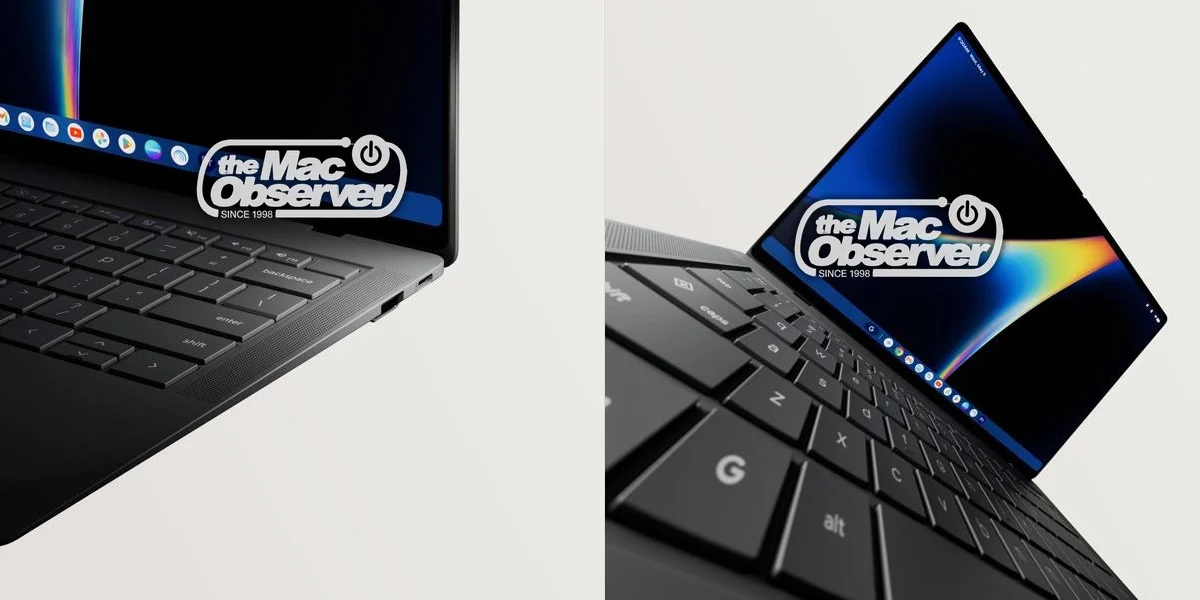
The latest visual leak regarding the upcoming Asus-manufactured Googlebook provides the most comprehensive look yet at the hardware specifications of a device that aims to redefine Google’s position in the high-end laptop market. Obtained by The Mac Observer, these high-resolution images confirm several key design choices that signal a departure from the traditional Chromebook aesthetic, moving toward a chassis that prioritizes both functional connectivity and premium industrial design.
![Asus Googlebook shows off a big trackpad and plenty of ports in leaked images [Gallery]](https://9to5google.com/wp-content/uploads/sites/4/2026/09/asus-googlebook-leak-6.jpg?quality=82&strip=all&w=1200)
A Closer Look at the Hardware Design
The leaked images highlight a device that feels engineered for productivity, evidenced by a generous port selection that accommodates modern professional workflows. Unlike many ultra-thin notebooks that have abandoned legacy connectivity, this Googlebook appears to feature at least two USB-C ports alongside a pair of USB-A ports. The inclusion of USB-A is a notable choice, suggesting that Google and Asus are targeting users who require compatibility with peripherals such as external drives, legacy mice, or audio interfaces without the need for additional dongles. Additionally, the presence of a dedicated 3.5mm headphone jack underscores the device’s focus on versatility.
The keyboard layout appears to offer significant travel, suggesting a tactile experience that avoids the shallow, "chicklet" feel common in ultra-slim Windows and ChromeOS devices. The inclusion of a fingerprint sensor integrated into the chassis—likely near the power button—aligns with modern security standards, allowing for biometric authentication that integrates seamlessly with the Google ecosystem. Perhaps most striking is the oversized trackpad, which occupies a substantial portion of the palm rest. This design choice implies a high-precision glass surface, likely designed to leverage the gesture-heavy navigation of the operating system.
![Asus Googlebook shows off a big trackpad and plenty of ports in leaked images [Gallery]](https://9to5google.com/wp-content/uploads/sites/4/2026/09/asus-googlebook-leak-3.jpg?quality=82&strip=all)
A unique feature visible in the new imagery is an external lightbar located on the lid. While decorative lighting is often reserved for gaming hardware, its inclusion here suggests a potential notification system or a status indicator for the user, perhaps signaling battery levels, incoming messages, or system states without the need to open the device. The display bezels are remarkably thin, with the screen extending close to the corners, providing a high screen-to-body ratio that enhances the immersive nature of the display.
The Rise of the "G-Key" and Internal Cooling
One of the most intriguing elements revealed in the recent batch of images is the presence of a dedicated "G" key. Positioned in the space typically occupied by the Windows key on a standard PC or the Command key on a MacBook, this button represents a significant shift in user interface interaction. While Google has not officially detailed the functionality of this key, industry analysts speculate that it serves as a system-wide hardware shortcut for the Google Assistant, Gemini AI integration, or perhaps a launcher for the user’s most frequently accessed web applications.
![Asus Googlebook shows off a big trackpad and plenty of ports in leaked images [Gallery]](https://9to5google.com/wp-content/uploads/sites/4/2026/09/asus-googlebook-leak-4.jpg?quality=82&strip=all)
Furthermore, the internal components visible through the ventilation ports suggest the presence of an active cooling system. While many entry-level Chromebooks utilize fanless designs to remain thin and silent, the inclusion of a cooling fan indicates that this model is intended to handle more intensive workloads. This points to a processor capable of sustained high performance—likely a high-tier mobile chip—which would differentiate this Googlebook from the lower-power devices that have historically populated the ChromeOS ecosystem.
Chronology of the Googlebook Development
The journey toward this device began in earnest earlier this year, as reports of a collaboration between Google and Asus began to circulate. The following timeline outlines the progression of the project:
![Asus Googlebook shows off a big trackpad and plenty of ports in leaked images [Gallery]](https://9to5google.com/wp-content/uploads/sites/4/2026/09/asus-googlebook-leak-5.jpg?quality=82&strip=all)
- August 2026: The first credible rumors regarding the "Googlebook" emerged, indicating that Google was pivoting toward a flagship hardware strategy. This period saw the first leaked renders, which confirmed that the device would be manufactured by Asus, a long-time partner for both Google and the Windows laptop market.
- Early September 2026: Leaks began to accelerate, with industry insiders suggesting that Google intended to move away from the "Chromebook" branding for this specific product line. The rebranding to "Googlebook" is widely interpreted as an attempt to elevate the product’s status to compete directly with high-end premium laptops like the MacBook Pro and the Microsoft Surface Laptop.
- Mid-September 2026: The release of the latest images confirmed the physical design elements, including the port configuration, the lightbar, and the mysterious "G" key.
- Late September 2026: Google officially confirmed that pre-orders for the device are scheduled to open next week, effectively ending months of speculation regarding the device’s existence and market readiness.
Market Context and Strategic Implications
The introduction of the Googlebook arrives at a critical juncture for the desktop and laptop computing market. For years, Google’s hardware presence in the laptop space was dominated by the education and entry-level enterprise sectors via the Chromebook. These devices were defined by affordability and long battery life but were often criticized for hardware compromises. The Googlebook represents a strategic shift toward the "prosumer" and high-end enterprise markets.
By partnering with Asus, Google is leveraging a manufacturer with extensive experience in creating high-build-quality devices. This partnership allows Google to focus on the software—likely a highly optimized version of ChromeOS or an evolved iteration of Fuchsia—while relying on Asus to execute the physical construction, thermal management, and hardware reliability.
![Asus Googlebook shows off a big trackpad and plenty of ports in leaked images [Gallery]](https://9to5google.com/wp-content/uploads/sites/4/2026/09/asus-googlebook-leak-2.jpg?quality=82&strip=all)
The inclusion of an active cooling fan and a high-performance keyboard suggests that Google intends for this machine to be used for more than just browser-based tasks. With the increasing integration of on-device AI and the growing demand for cloud-based development environments, the Googlebook appears to be positioned as a primary workstation for software developers, content creators, and corporate professionals who rely on the Google Workspace ecosystem.
Analysis of the Hardware Shift
The decision to include legacy ports like USB-A in 2026 is an interesting nod to practicality over absolute minimalism. In an era where most manufacturers are pushing for a "USB-C only" future, Google’s willingness to include a variety of ports suggests that they are prioritizing the needs of current professionals who maintain a mix of new and old equipment.
![Asus Googlebook shows off a big trackpad and plenty of ports in leaked images [Gallery]](https://9to5google.com/wp-content/uploads/sites/4/2026/09/asus-googlebook-leak-1.jpg?quality=82&strip=all)
Furthermore, the "G" key is the most outward-facing symbol of Google’s attempt to create a unique hardware identity. By formalizing a proprietary key, Google is attempting to create a "Google keyboard layout" that is as recognizable as the Windows or Mac layouts. This creates a psychological link between the physical hardware and the Google software ecosystem, reinforcing the idea that this is a "first-party" experience regardless of who manufactured the chassis.
Looking Ahead: The Pre-order Phase
With pre-orders opening next week, the industry is waiting for definitive data on pricing, display technology (such as OLED or Mini-LED options), and battery life. While the aesthetic has been revealed, the internal specifications—specifically the processor architecture and RAM configurations—remain the final major variables.
![Asus Googlebook shows off a big trackpad and plenty of ports in leaked images [Gallery]](https://9to5google.com/wp-content/themes/ninetofive/dist/images/google-preferred-source-badge-dark.png)
If the Googlebook is to succeed as a competitor in the premium laptop space, it must deliver a level of performance that justifies a higher price point than traditional Chromebooks. The shift toward a design that includes active cooling and a more robust build quality suggests that Google is prepared to compete on performance rather than just price.
As Google transitions from a software-first company to one that is increasingly defined by its integrated hardware and software ecosystems, the Googlebook stands as a flagship effort. Whether it can gain significant market share from established players in the professional laptop space will depend on how effectively the operating system can leverage the hardware, and whether the "G" key becomes a gateway to a truly elevated computing experience. For now, the hardware itself signals a bold, confident direction for the next phase of the Google hardware portfolio.